
Panic Hardware Types: EN 1125 Panic Bars, EN 179 Emergency Exit Devices and Panic Locks
European exit hardware splits into two standards and three mechanical forms. EN 1125 covers horizontal bars for public doors where panic is foreseeable, EN 179 covers levers and push pads for occupants who know the exit, and either can sit on a rim latch, a mortise panic lock or vertical rods. This guide sorts the types, explains the German panic lock functions B, D and E, and sets out what a specification line has to say.

Johnson LiuDigital Communications, Canton HylandMA Digital Media, Johns Hopkins University
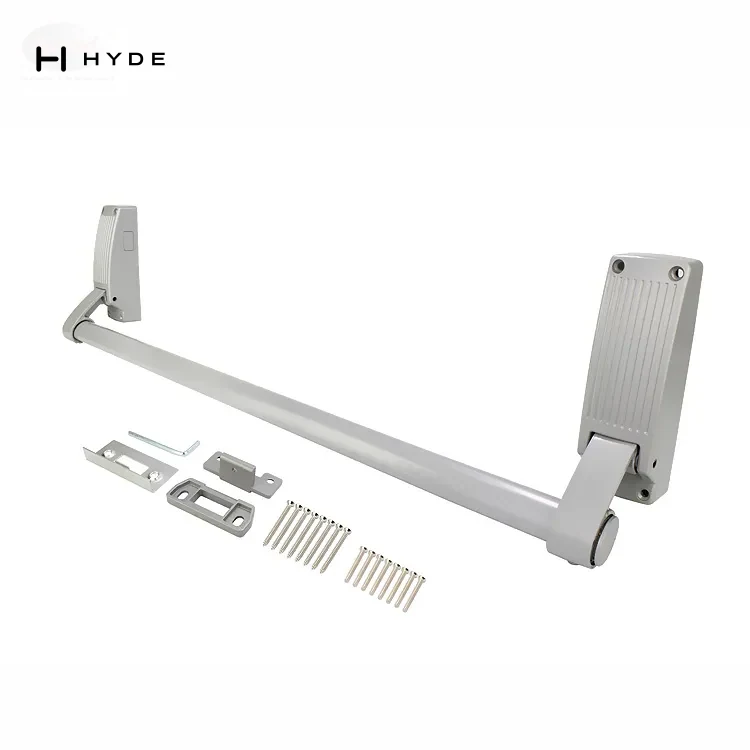
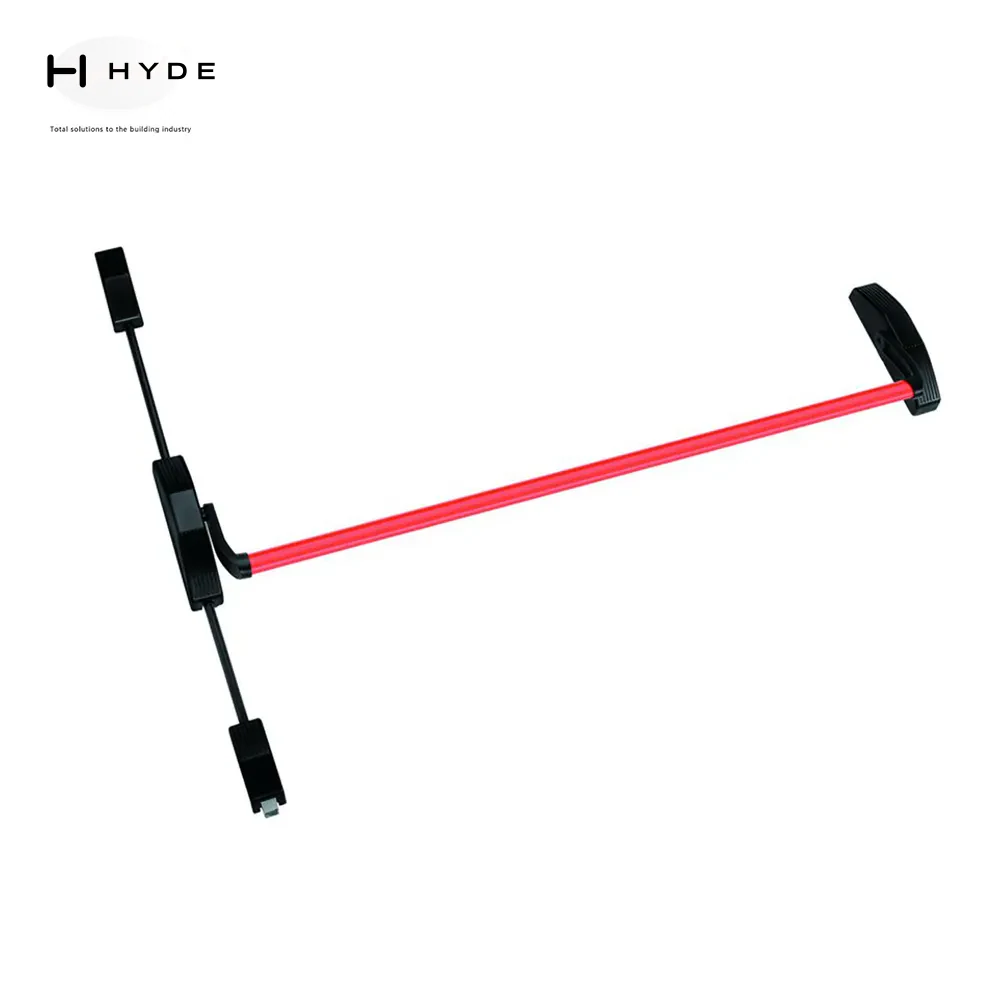
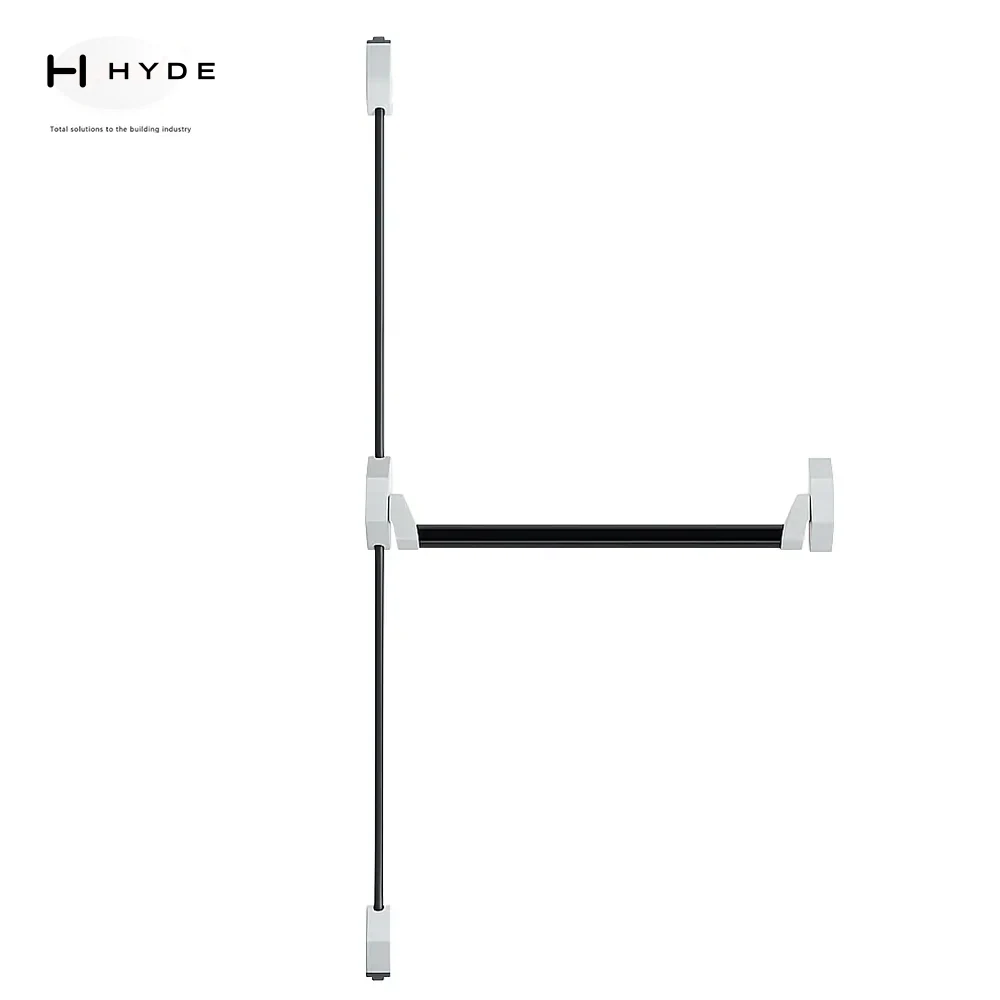
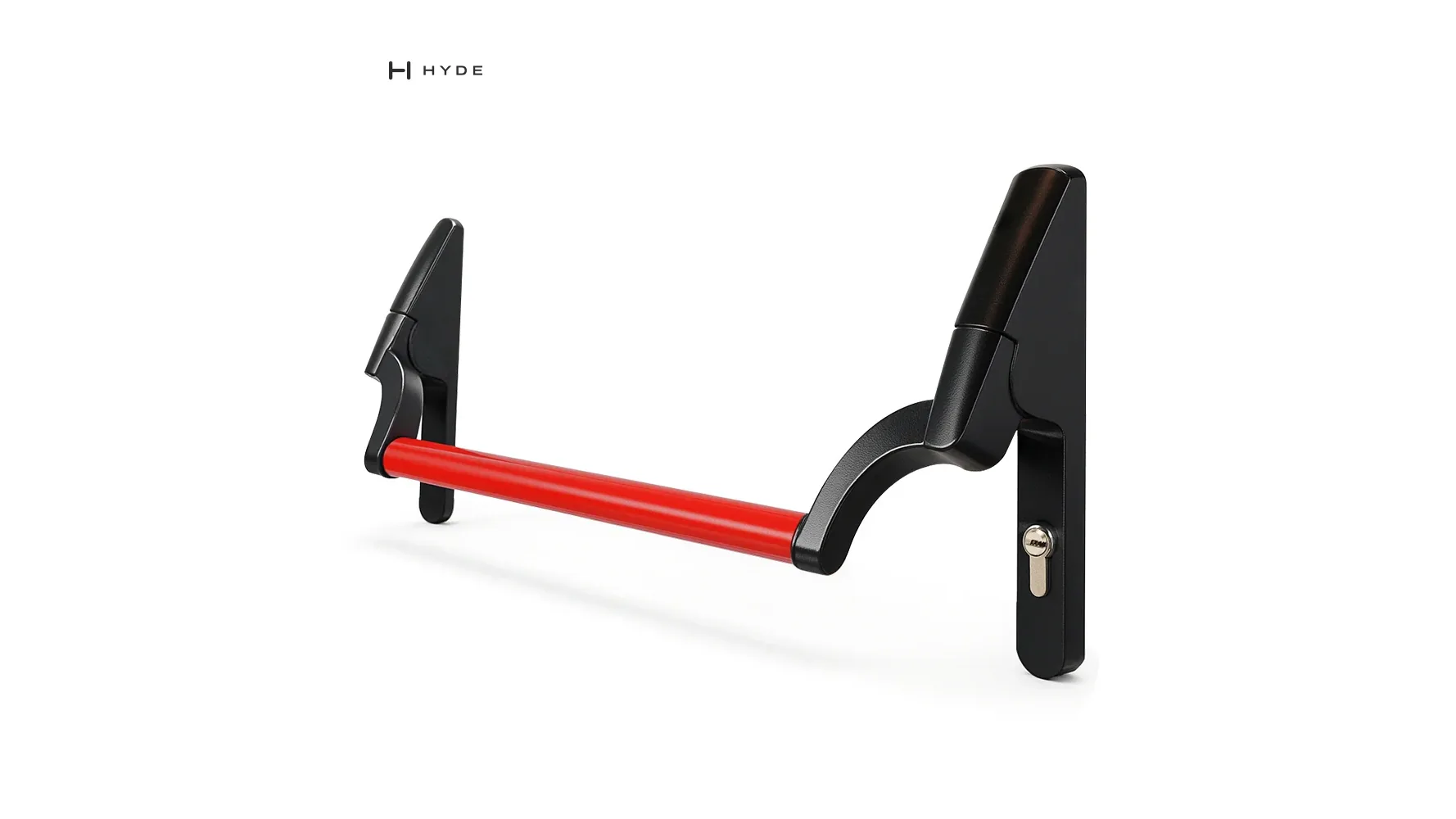
European panic and emergency exit hardware comes in two families, set by two standards. EN 1125 covers panic exit devices worked by a horizontal bar, the Panikstange of a German specification, and is meant for doors used by the public, where people may not know the building and panic is foreseeable. EN 179 covers emergency exit devices worked by a lever handle or a push pad, the German Notausgangsverschluss, and is meant for occupants who know the exit and are not expected to panic.
Either family can be built in three ways: on a rim latch carried in the device itself, on a mortise lock set into the door edge, or on vertical rods that latch at the head of the frame and the floor. Panikschloss, the word German buyers search alongside Panikbeschlag, is not a third standard. It is the mortise lock inside a mortise-type device, and the letters B, D and E printed against it describe what the outside of the door does. On the inside, every one of them must open with one movement of the bar or lever, whether or not the door has been locked with the key.
Two standards, sorted by who uses the door
The dividing line is the person at the door, not the importance of the exit. A public escape route in a shop, a school, a cinema or a hospital takes an EN 1125 bar, because a bar works for somebody pressed against the door by a crowd, somebody who cannot lift an arm, and somebody who has never seen the building before. A staff door to a plant room or a small office, used by people who walk through it every day, can take an EN 179 lever or push pad. Where the case is borderline, the bar is the safe answer: EN 1125 hardware can stand where EN 179 would be enough, and not the other way round. The building regulations and the fire-safety concept for the building decide which applies, and our separate guide to choosing between EN 1125 and EN 179 works through that occupancy test in detail. This page is about what each family physically consists of.
Scroll sideways to compare columns. Select a column heading to sort; select it three times to restore source order.
| Push bar on two arms | EN 1125, type A | Panikstange, Druckstange | The bar swings toward the door when pressed anywhere along its length | The public; crowds; panic foreseeable |
|---|---|---|---|---|
| Touch bar in a housing across the leaf | EN 1125, type B | Panikstange, Touchbar | The bar sinks into its housing when pressed anywhere along its length | The public; crowds; panic foreseeable |
| Lever handle | EN 179, type A | Notausgangsverschluss mit Drücker | One downward movement of the lever | Occupants who know the exit |
| Push pad | EN 179, type B | Notausgangsverschluss mit Stoßplatte | One push on a flat pad | Occupants who know the exit |
4 rows · Source order
One trap sits in that table. The letter B means a touch bar in EN 1125 and a push pad in EN 179, and neither has anything to do with the B of a German Panikfunktion B. Three different things share one letter, so a schedule that says only "type B" or "function B" has not said anything a supplier can quote against. Write the standard, the operating element and the function in words.
EN 1125: the bar, in two shapes
A push bar stands off the door on two arms and swings toward the leaf when pressed; a touch bar sits in a housing that runs across the leaf and sinks into it. Our page on push bars and touch bars compares the two mechanisms, so the point here is only what they share. Both are horizontal, both release with pressure anywhere along the operating part, and both are fitted on the push side of a door that opens in the direction of escape. The height usually quoted from EN 1125 is 900 to 1100 mm above the finished floor with the door closed, and the bar should be as long as the leaf allows, because a short bar leaves part of the door where pressure does nothing.
EN 179: a lever or a pad, for people who know the door
An EN 179 device often looks like an ordinary lever set, which is exactly why it ends up where it should not. What makes it an emergency exit device is the lock behind it: a mortise lock whose inside lever withdraws the latch and, if the door is locked, the bolt as well, in one movement. The push pad, type B, does the same with a flat plate. In EN 179 the lock, the lever or pad and the strike are tested as one set, and the same logic applies to a mortise-type EN 1125 device: the classification belongs to the combination that was tested together, not to the bar or the lever alone. A lever from one source on a panic lock from another is a new combination, and the classification of either part does not carry across to it.
Rim, mortise or vertical rods: where the door actually latches
Scroll sideways to compare columns. Select a column heading to sort; select it three times to restore source order.
| Rim | A latch in the device's own end case, into a strike on the frame | Single leaf; both leaves of a pair with a mullion between them | 308-S |
|---|---|---|---|
| Mortise | A mortise lock in the door edge, driven through a spindle | Single leaf; active leaf of a pair | 307 with the 072 lock case; 313 |
| Surface vertical rods | Bolts into the head of the frame and the floor | Inactive leaf of a pair; tall leaves | 320; 309-D |
| Concealed vertical rods | The same two points, with the rods inside the leaf | Pairs where visible rods are not wanted | No concealed-rod model is listed in our records |
4 rows · Source order
The operating element says how a person releases the door; the configuration says where the door holds, and it is chosen from the door rather than from the people. 308-S is the plain case of a rim device. Our record describes it as surface-mounted, for a single door, supplied without a lock body, with a push bar between two side cases, an aluminum alloy body and an iron bar. Its dimensions are confirmed on drawing before an order, so none are quoted here.
307 is a mortise-type device. Its record names the lock case, 072, which has a 65 mm backset, a 72 mm center distance, a 9 × 9 × 130 mm follower and two euro-profile cylinder apertures; the bar is 1000 mm, the outside handle is 015 or 9080E, and the cylinder length is set to the door thickness. 313 is specified the same way, by a center distance of 72 or 92 mm and a 9 mm spindle. Its record adds installation for DIN left and DIN right doors, a maximum door of 2520 mm high, 1500 mm wide and 200 kg, a working temperature of −10 to +60 °C, and linkage to top and bottom bolts for double doors.
320 is the rod form: our record calls it a two-point locking device engaging head and threshold, non-handed, with an 8 × 8 or 9 × 9 mm square spindle and a length made to the customer's request. 309-D is a paired set for double doors that coordinates the active and the inactive leaf, with a 1110 mm bar and a powder-coated finish. On a pair, whatever the active leaf uses, the inactive leaf has to hold at head and floor or against a mullion, and where the leaves overlap, a coordinator makes sure the inactive leaf closes first.
Panikschloss: what the panic function letters B, D and E mean
A panic lock is a mortise lock with a split follower. The inside, the panic side, always withdraws the latch and the deadbolt together with one movement of the lever or bar, even when the door has been locked with the key, and that is what lets a locked door remain an escape door. The function letters describe the other side, the side people enter from. They are a convention of German lock makers, not digits in the EN 1125 or EN 179 classification code.
Scroll sideways to compare columns. Select a column heading to sort; select it three times to restore source order.
| B | Umschaltfunktion (changeover) | A working lever, idle while the lock is locked | The key switches the outside lever between working and idle |
|---|---|---|---|
| D | Durchgangsfunktion (passage) | A working lever, idle while the lock is locked | The outside lever works whenever the lock is unlocked |
| E | Wechselfunktion (key retraction) | A fixed knob or pull, no working lever | Only by turning the key, which withdraws the latch |
3 rows · Source order
E is the least ambiguous: there is nothing to turn outside, so entry is by key alone. B and D both have a working outside lever, and the difference shown in the table is the one most makers describe. Where descriptions differ from maker to maker is what happens after somebody has escaped through a locked door from the inside: whether the outside lever then stays usable until the door is locked again, or returns to idle. We have not been able to confirm one rule for that, so treat it as a question for the data sheet of the exact lock. Some panic locks are also self-locking, selbstverriegelnd in German: the bolt throws by itself each time the door closes, so the door is locked without anybody using the key. Our 072 lock case and our 313 record do not state a panic function letter. Do not infer one from a photograph; ask for it in writing with the order.
Outside trim: the half of the door the standards leave to you
Neither standard requires anything on the outside of the door, and exit only, with a blank outside face, is a valid choice. Where people must enter, a rim or vertical-rod device takes a separate outside handle, usually with a cylinder, connected through the door to the device's head. A mortise device takes the outside lever or knob of the lock itself, which is why the panic function letter and the outside trim have to be chosen together. The 307 record lists 015 or 9080E as its outside handles. Our guide to exit device outside trim compares the trim functions one by one, so this page adds only the rule that admits no exception: on a fire door, the latch of an exit device must never be held back mechanically.
The specification line
A schedule entry a supplier cannot misread names six things. First, the standard and its full classification code, as stated on the certificate for the device offered. Second, the operating element: push bar, touch bar, lever or push pad. Third, the configuration: rim, mortise, surface rods or concealed rods. Fourth, for a mortise device, the panic function, in words as well as the letter. Fifth, the outside trim, or exit only. Sixth, the door: single leaf, active or inactive leaf, thickness, and handing written as DIN left or DIN right together with the side it is viewed from. Escape doors that are locked electrically and released electrically belong to a different standard, EN 13637, and are outside this page.
What our records state, and what they do not
The records named on this page describe dimensions, materials and configurations. None of them states an EN 1125 or EN 179 classification, and nothing on this page should be read as one. Whether a particular combination of bar, lock, strike and trim holds a classification is answered only by a certificate naming that combination: ask for it against the model being quoted, and treat the absence of one as an answer.
Questions this answers
What is the difference between EN 1125 and EN 179?
EN 1125 covers panic exit devices operated by a horizontal bar, either a push bar or a touch bar, for doors used by the public where panic is foreseeable. EN 179 covers emergency exit devices operated by a lever handle or a push pad, for occupants who know the exit. EN 1125 hardware may be used where EN 179 would be enough; the reverse is not acceptable. The building regulations and the fire-safety concept decide which one applies.
What do panic functions B, D and E mean on a panic lock?
They describe the outside of the door; the inside always opens with one movement, even when locked. E (Wechselfunktion) has a fixed knob or pull outside, so entry is by key only. B (Umschaltfunktion) and D (Durchgangsfunktion) both have an outside lever that is idle while the lock is locked: with D it works whenever the lock is unlocked, with B the key switches it between working and idle. Behavior after a panic opening varies by maker, so confirm it on the data sheet of the exact lock.
Is a panic lock the same as a panic bar?
No. A panic lock (Panikschloss) is the mortise lock in the door edge; the panic bar or lever is the operating element that drives it. A mortise-type device needs both, and the classification belongs to the combination tested together, not to either part alone. A rim device has no mortise lock: its latch sits in the device's own case.
Can a push pad be used on a public escape door?
Not as an EN 1125 device. A push pad is an EN 179 operating element, type B in that standard, intended for occupants who know the exit. On a door where panic is foreseeable, EN 1125 calls for a horizontal push bar or touch bar. Type B in EN 1125 means a touch bar, a different object with the same letter.
Which panic hardware configuration suits a pair of escape doors?
Usually a rim or mortise device on the active leaf and a vertical-rod device on the inactive leaf, latching at head and floor, with a coordinator where the leaves overlap. Two rim devices latching against a mullion between the leaves is the other common answer. Check that each device's classification covers the leaf it is fitted to.
Related products
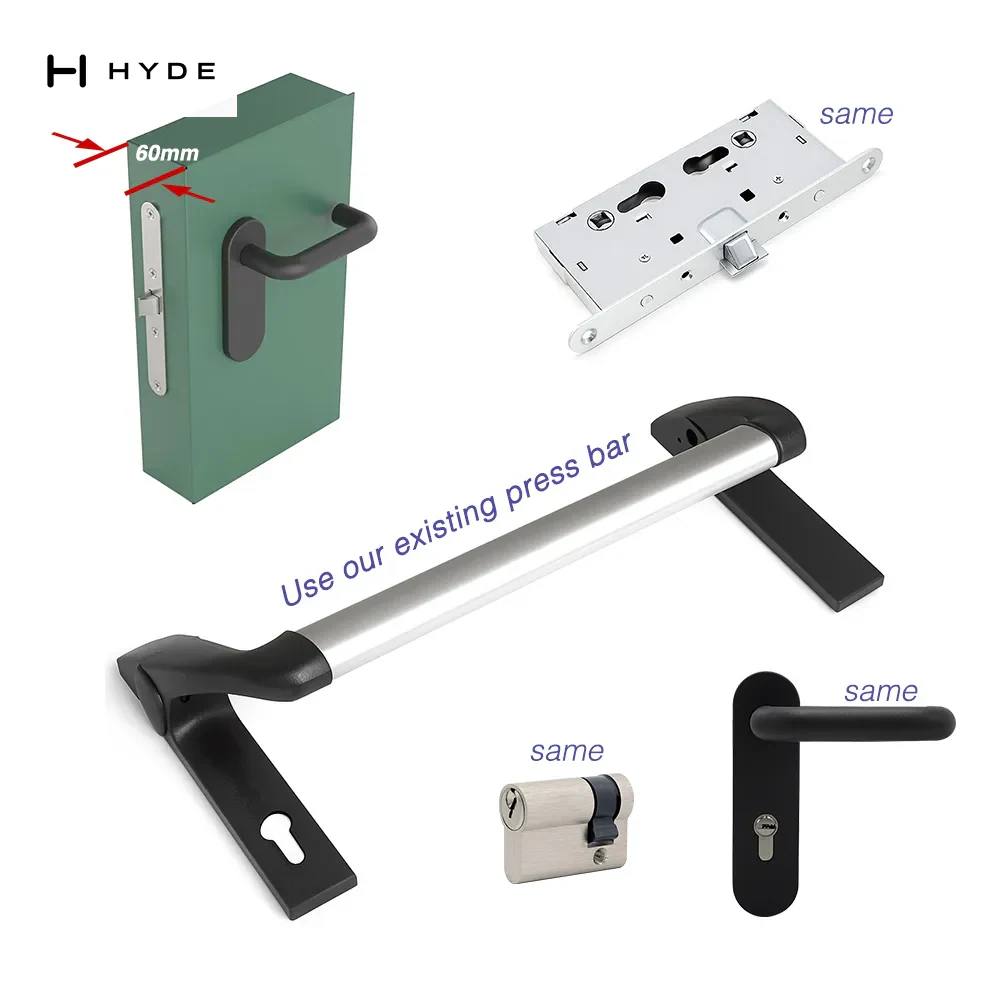
Size 1000mm
Panic Exit Device
Model 307 · Video
Aluminum alloy body, iron bar
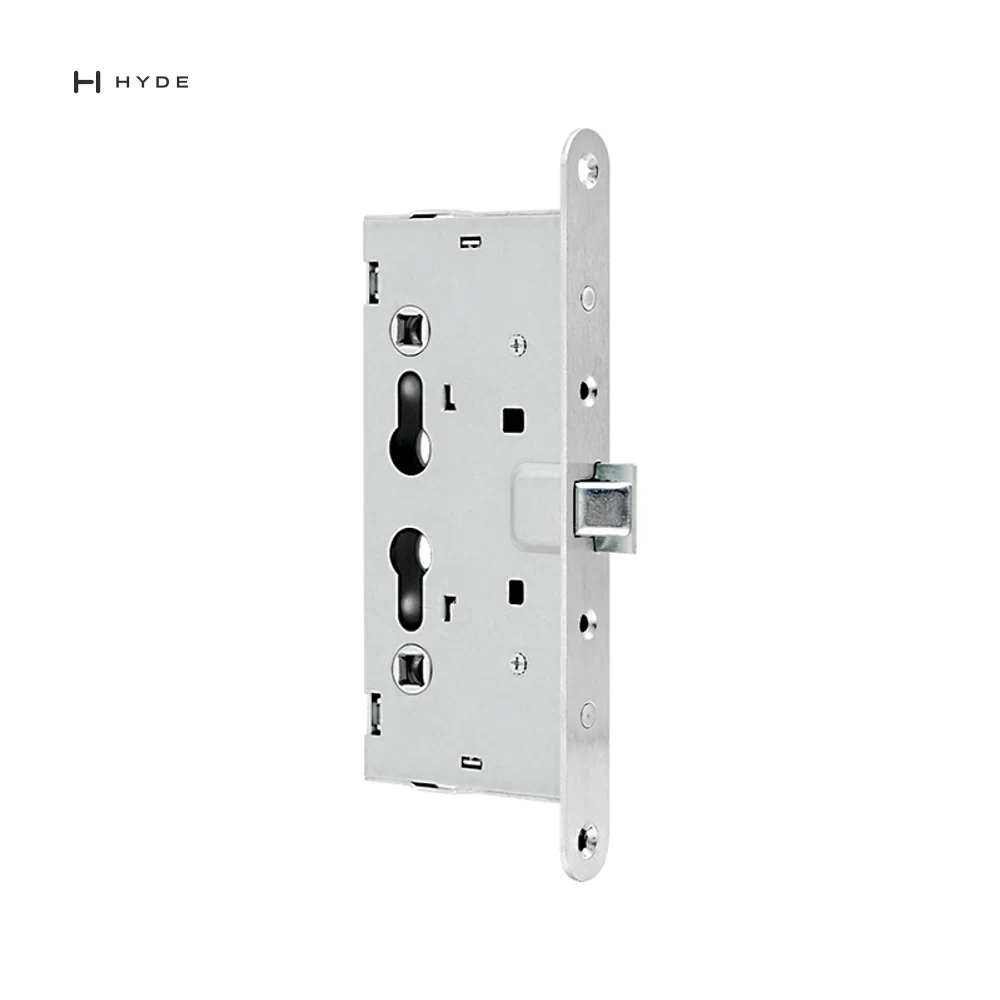
Backset 65mm
Panic Exit Device Lock Case
Model 072 · Video
Iron
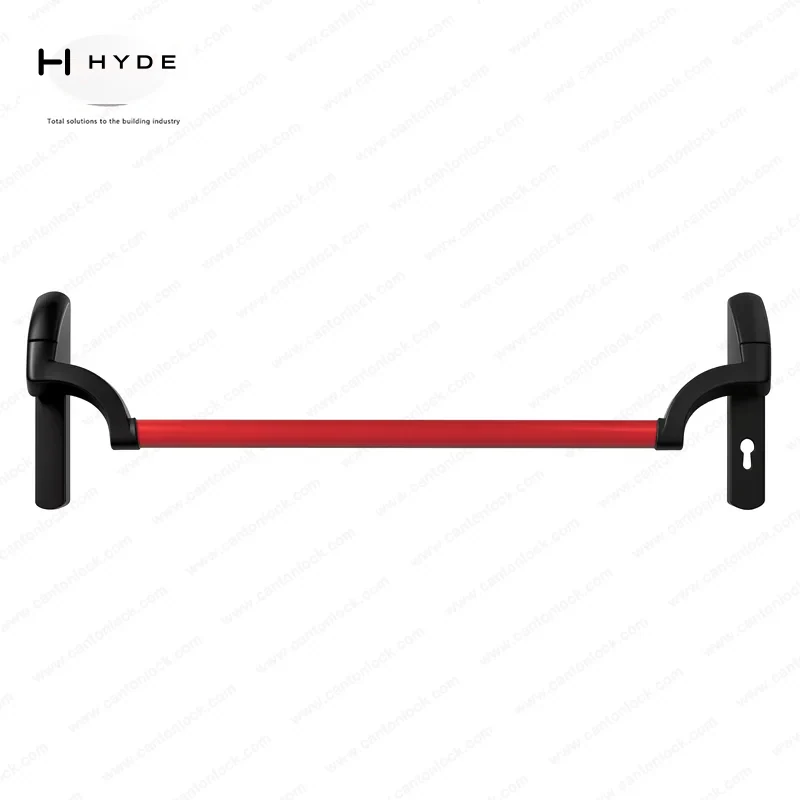
Panic Exit Device
Model 313 · Video
Aluminum alloy body, iron bar
About Canton Hyland — Canton Hyland manufactures panic exit devices, locks and architectural door hardware for commercial and institutional projects, supplying specifiers and distributors internationally.