
NBR 11785 vs EN 1125: What Changes for a Panic Bar in Brazil
NBR 11785 and EN 1125 deal with the same panic bar, but one is the Brazilian standard in its 2018 edition and the other the European standard of 2008 tied to CE marking. We compare scope, tests, identification and who issues the evidence, side by side, and show why a report to one does not stand in for the other.

Johnson LiuDigital Communications, Canton HylandMA Digital Media, Johns Hopkins University
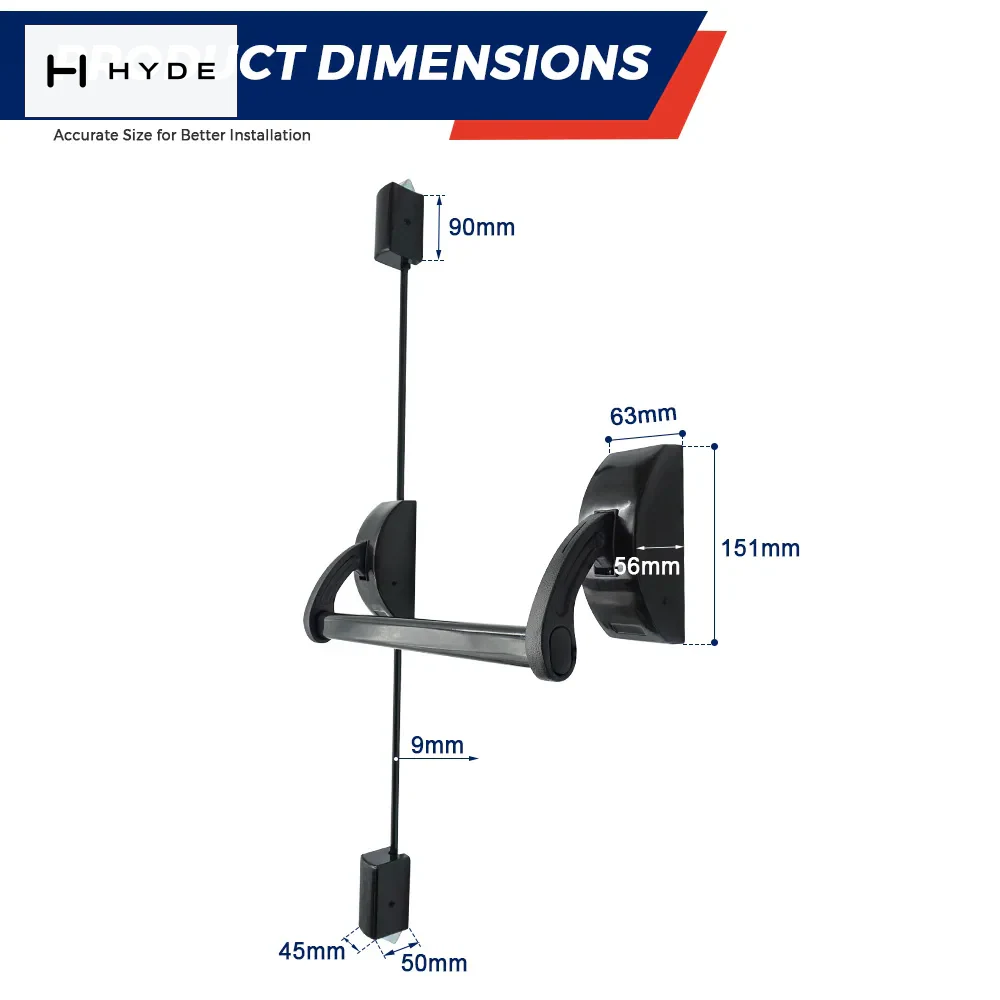
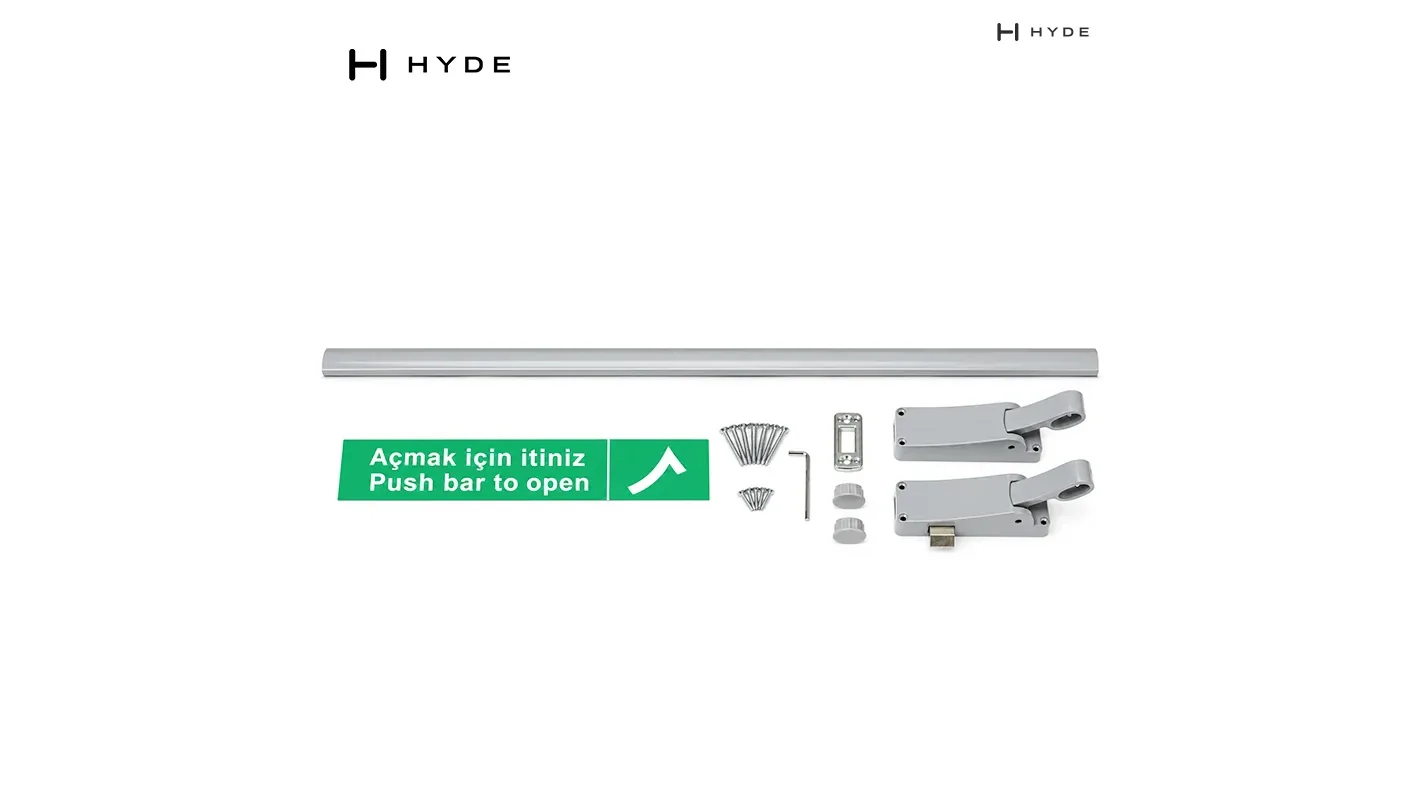
NBR 11785 and EN 1125 deal with the same product, the panic bar, but they are not interchangeable. NBR 11785, in its 2018 edition, is the Brazilian standard for panic bars; EN 1125, in the 2008 edition most specifications still cite, is the European standard tied to CE marking. A test report to EN 1125 is not a report to NBR 11785, and the reverse is also true.
They differ on four points: what each covers, what each tests, how the product is identified, and who issues the evidence of compliance. EN 1125 publishes figures that can be quoted with confidence, such as a maximum force of 80 N to open the door with no load on it. For NBR 11785 this article quotes no performance figures: whoever writes the specification has to consult the edition in force, which ABNT makes available.
This piece is the comparison only. What a Brazilian inspection checks on the hardware of a fire door, the choice between a push bar and a touch bar, and reading the European code digit by digit each have their own article on our site, mentioned here by topic.
Scope: what each standard covers
NBR 11785 covers the panic bar for emergency exit doors and classifies it three ways. By actuation: push bar or touch bar. By locking: horizontal, vertical, or horizontal and vertical. And by use: class C for an emergency exit door with no fire rating, class F for a fire door, and class H for doors in very frequent use. The fire door itself is the subject of another standard, NBR 11742.
EN 1125 covers panic exit devices operated by a horizontal bar, on escape-route doors that open in the direction of escape, where the people using them may not know the door and may be panicking. It covers two types: Type A, a push bar, and Type B, a touch bar. Exits used by people who know the door, with a lever handle or a push pad, fall under a different standard, EN 179.
What each standard tests
EN 1125 tests the device as an assembly: bar, latch, strike and fixings, mounted on a test door. The force to release the door must not exceed 80 N with the door unloaded, nor 220 N with a load of 1000 N pushing the door against its latch, which is the condition of an exit with people leaning on it. Durability is graded 6, for 100,000 cycles, or 7, for 200,000 cycles. Corrosion resistance is graded to EN 1670, and the effective length of the bar has to be at least 60% of the door width.
NBR 11785 also sets requirements for the bar, and since the 2018 edition a minimum length in proportion to the width of the leaf. Whether it fixes a value for operating force, for the number of cycles or for mounting height, and what that value is, is in the text of the edition in force. We do not reproduce those numbers from memory: a wrong figure in a specification costs more than a blank field.
The two standards side by side
Scroll sideways to compare columns. Select a column heading to sort; select it three times to restore source order.
| Edition cited | 2018 | 2008; check whether a newer edition applies to your project |
|---|---|---|
| Scope | Panic bars for emergency exit doors | Panic exit devices operated by a horizontal bar, on escape-route doors opening in the direction of escape |
| Classification | Actuation (push or touch); locking (horizontal, vertical, or both); use: class C, F or H | Ten-digit code; Type A push bar or Type B touch bar in the ninth digit |
| Opening force | Consult the edition in force | 80 N maximum unloaded; 220 N maximum with 1000 N on the door |
| Durability | Consult the edition in force | Grade 6: 100,000 cycles; grade 7: 200,000 cycles (second digit) |
| Bar length | A minimum in proportion to leaf width; consult the edition in force | Effective length at least 60% of the door width |
| Mounting height | Consult the edition in force | 900 to 1100 mm above the finished floor, door closed (installation guidance) |
| Fire doors | Class F; the door is tested to NBR 11742 with its hardware fitted | Fourth digit: A (smoke) or B (fire and smoke), subject to a fire test of the door to EN 1634-1 |
| Product identification | Identification requirements in the edition in force; get brand, model and class in writing | CE marking with the standard's number and the classification code |
| Who issues the evidence | A laboratory tests and reports, usually in the name of the brand selling the bar; acceptance is the fire department's, at inspection | A notified body certifies constancy of performance; the manufacturer issues the declaration of performance and affixes the CE marking |
10 rows · Source order
The classes do not translate from one standard to the other
The temptation is to read the Brazilian class F as the equivalent of the European grade B, because both concern fire doors. They are not equivalent. Class F applies to the bar on a door tested to NBR 11742 with its hardware fitted; grade B under EN 1125 is given only subject to a fire test of the door to EN 1634-1. Each depends on a door test carried out in its own system, and neither proves the other.
Locking shows the same difference from another angle. NBR 11785 classifies the bar by its locking: horizontal, vertical, or both. The EN 1125 code has no digit for locking points; the tenth digit says which door the device may be used on: A on a single door or either leaf of a pair, B on a single door only, C on the inactive leaf of a pair only. A two-leaf bar with vertical rods has to be described differently in each system.
Identification, and who issues the evidence
In Europe, EN 1125 is a harmonized standard under the Construction Products Regulation, and the bar is placed on the market with CE marking. A notified body tests the model and certifies the constancy of its performance; the manufacturer issues the declaration of performance and affixes the CE marking, which carries the standard's number and the classification code. What the buyer reads is that set: the certificate, the declaration, and the model named in them.
Brazil has no CE marking. ABNT publishes the standard, a laboratory tests the bar against it and issues the report, normally in the name of the brand that sells the product, and acceptance happens at the fire department inspection that clears the building. The identification requirements for the bar itself are in the edition in force; when buying, get the brand, model and class in writing, and check that the report names exactly that model.
A European report does not replace a Brazilian one, nor the other way round. A report to EN 1125 shows the result of a test against another text; whether an inspection accepts that document is a decision for the authority, not something a supplier can promise. And a report to NBR 11785 gives no right to CE marking.
What this changes when you buy
For an importer of bars for Brazil, the order that works is: define the door (one or two leaves, with or without a fire rating), define the class under NBR 11785, choose the model, and only then test samples identical to production in the brand's own name. A buyer serving both markets with the same model needs both kinds of evidence, each naming the model, and should check that the order repeats the model, material and finish of the tested samples.
Our models, and what our records publish
Our catalog records describe how the bars are built, not a compliance. The table below shows what is published for four models that usually come into this conversation. Where a value is not published, the table says so.
Scroll sideways to compare columns. Select a column heading to sort; select it three times to restore source order.
| 306-S | Single | Lateral latch | Not published | None |
|---|---|---|---|---|
| 306-D | Double | Vertical rods | Not published | None |
| 305 | Not stated | Single point, outside lever trim, cylinder aperture | 1040 mm | None |
| 316-D | Double | Top and bottom latching | Not published | None |
4 rows · Source order
None of our records publishes a certification to NBR 11785 or EN 1125, and this article makes no such claim. The catalog name of the 305 mentions a fire door; that describes the door the model is meant for, not a class F or a grade B. The split between the 306-S, with a lateral latch, and the 306-D, with vertical rods, answers the locking question NBR 11785 asks, and that is where the choice starts.
For a project in Brazil, we supply samples identical to production, drawings and a data sheet for testing in your brand's name. The test result, not the catalog, is what goes to the inspection.
Questions this answers
Is EN 1125 accepted in Brazil?
The Brazilian standard for panic bars is NBR 11785, in its 2018 edition. A report to EN 1125 shows a test made against another text; whether an inspection accepts it is a decision for the fire department, not for the supplier.
What is the maximum opening force for a panic bar?
Under EN 1125, 80 N with the door unloaded and 220 N with 1000 N pushing on the door. For NBR 11785, consult the edition in force; this article does not quote the figure.
Is NBR 11785 class F the same as EN 1125 grade B?
No. Both concern fire doors, but each depends on a door test in its own system: NBR 11742 in Brazil, EN 1634-1 in Europe. One does not prove the other.
Are Canton Hyland panic bars certified to NBR 11785 or EN 1125?
None of our records publishes such a certification. We supply samples identical to production, drawings and a data sheet for testing in your brand's name.
Related products
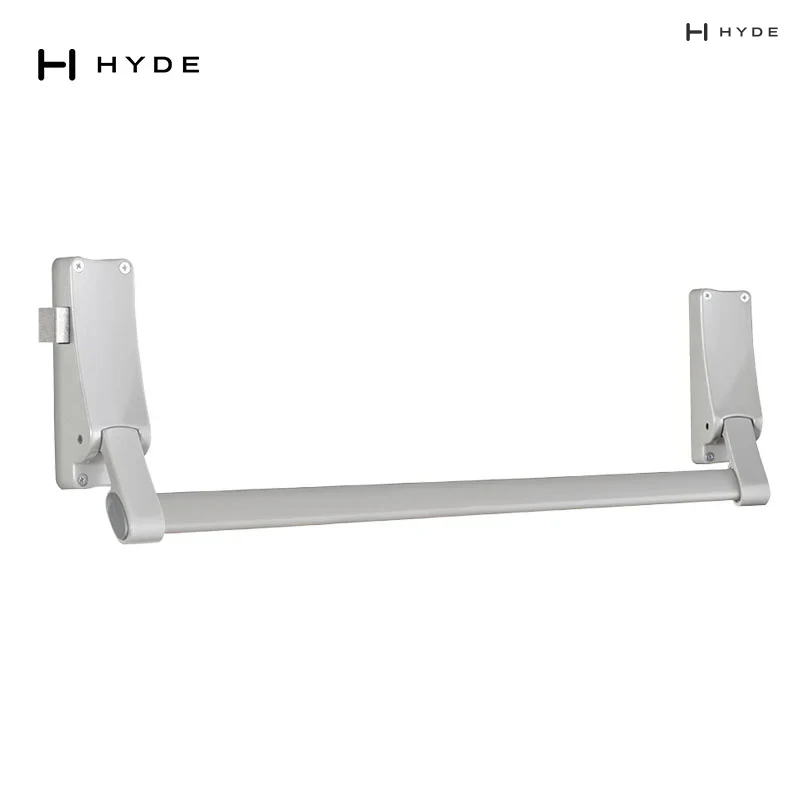
Single Door Panic Exit Device
Model 306-S · Video
Aluminum alloy body, iron bar
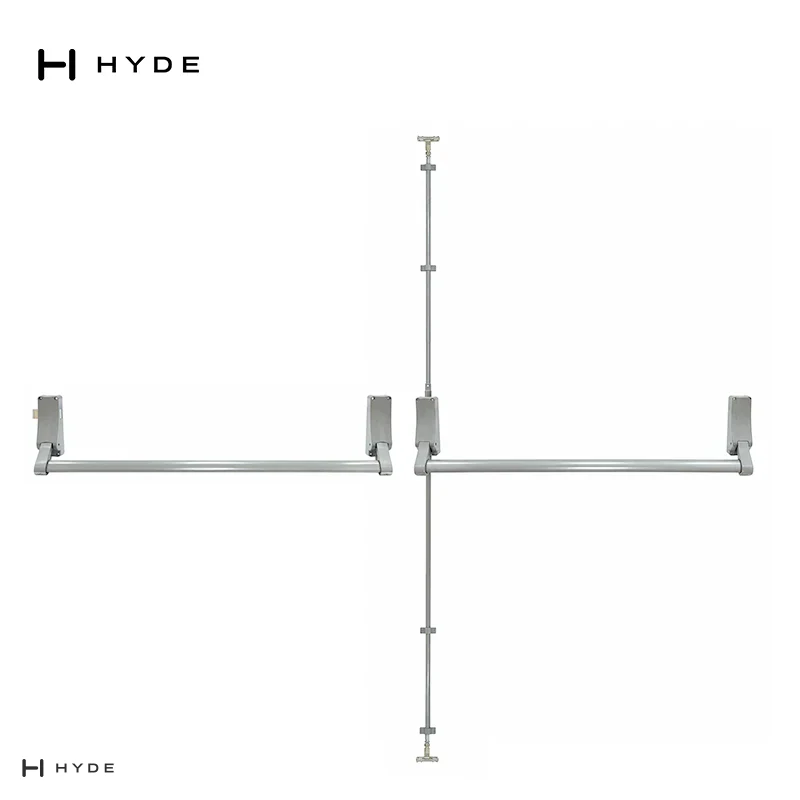
Double Door Panic Exit Device
Model 306-D · Video
Aluminum alloy body, iron bar
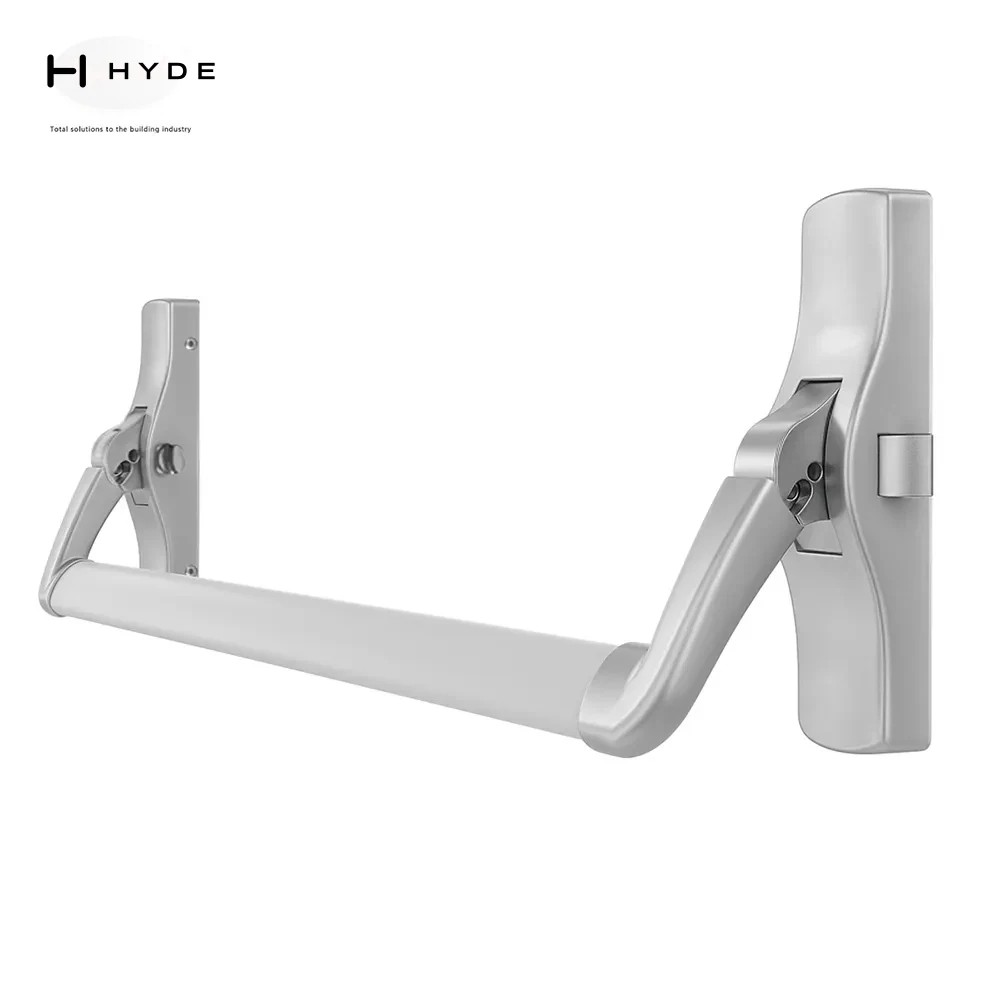
Length 1040mm
Fire Door Panic Exit Device
Model 305 · Video
Aluminum alloy body, iron bar
About Canton Hyland — Canton Hyland manufactures panic exit devices, locks and architectural door hardware for commercial and institutional projects, supplying specifiers and distributors internationally.