
Panic Bars for Glass Doors: Through-Bolted or VHB Tape, and Glass Thickness
A panic bar goes on a glass door in one of two ways: through-bolted through holes drilled before tempering, or bonded to the glass with VHB-type tape. This explains what each method depends on, why the glass thickness has to suit every fitting on the leaf, and what to ask for on our BR8-SG and BR8-DG, whose glass figures are not yet published.

Johnson LiuDigital Communications, Canton HylandMA Digital Media, Johns Hopkins University
A panic bar is fixed to a glass door in one of two ways: through-bolted, with bolts passing through holes drilled in the glass before it is tempered, or bonded to the face of the glass with double-sided acrylic tape of the VHB type. Check the glass thickness before choosing between them: the tempered-glass fittings in our catalog publish ranges such as 8–12mm, 10–12mm and 10–14mm, and the bar has to suit the same leaf.
On the glass-door bars of our Brazil collection, BR8-SG for a single leaf and BR8-DG for a pair, the glass thickness range, the hole diameter and the fixing method are not yet published. We also publish no holding load for VHB tape. This article explains what each method requires and what to ask for in writing before the order is placed.
First: is the door framed, or frameless glass?
An aluminum-framed glass door is not, as far as the panic bar is concerned, a glass door. The end housings are fixed to the stile of the profile, with machine screws in tapped holes or with through-bolts, as on any metal door, and the glass stays out of it. The care here is the width of the stile: a narrow profile needs room for the end housing and, if the bar latches at the side, for the latch and its strike.
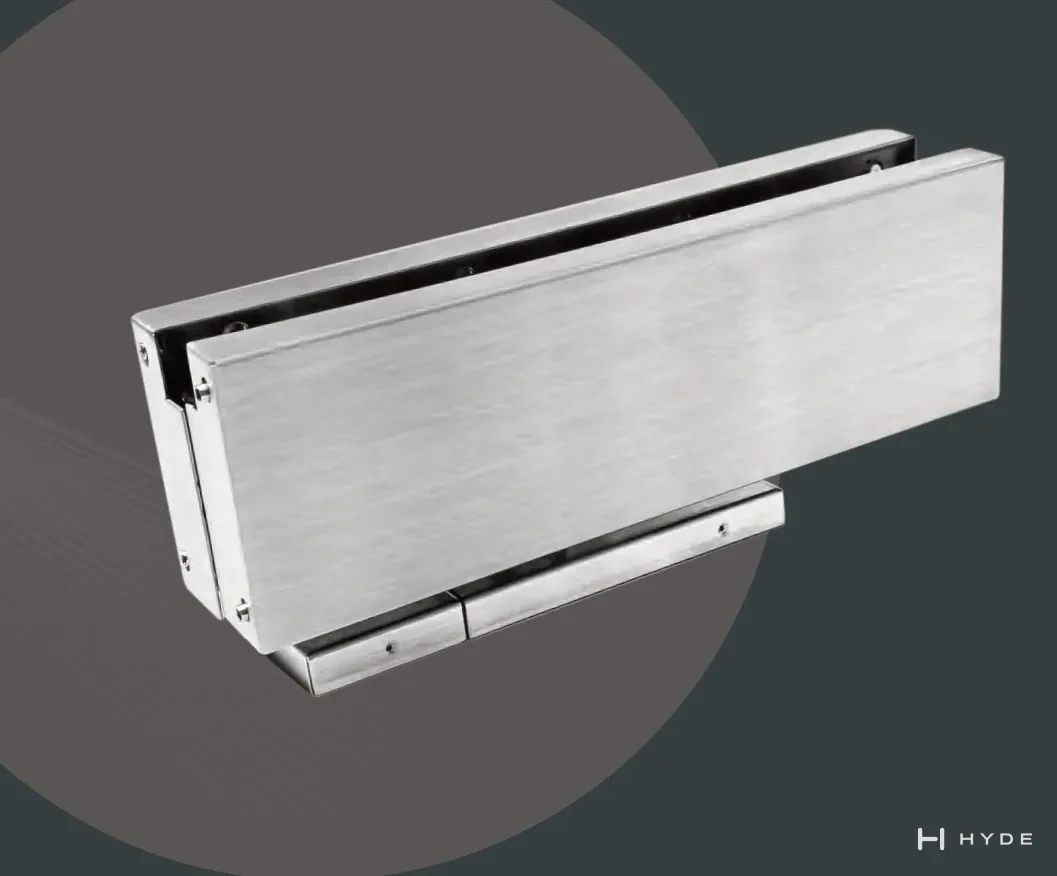
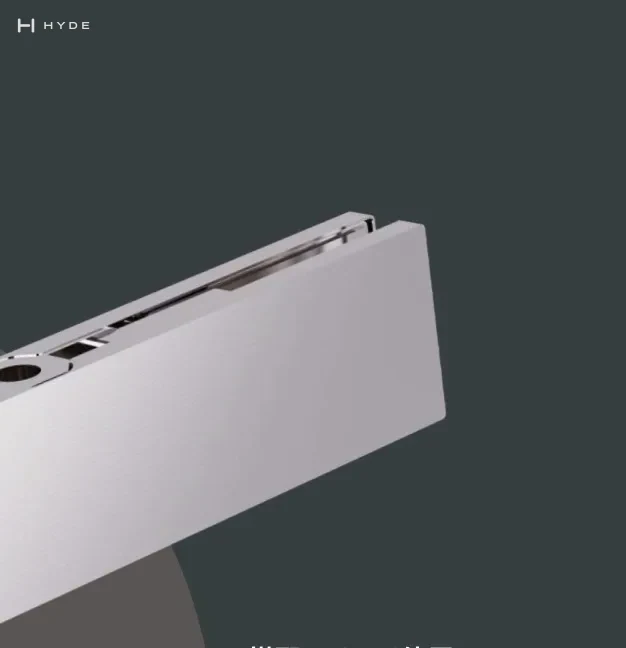
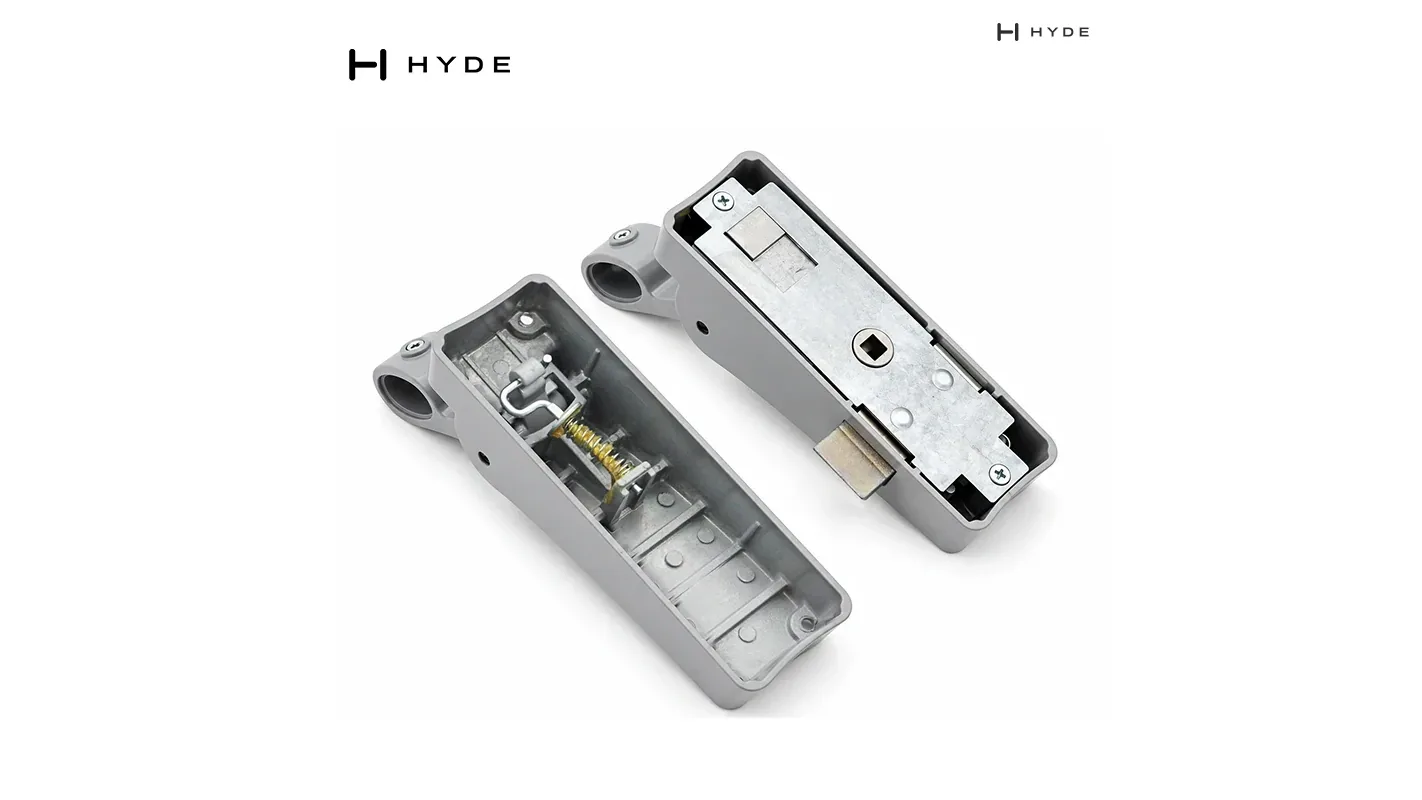
A frameless tempered-glass door is a different case. The leaf turns on a floor spring and a top patch fitting, and there is no profile to screw into. The bar has to bear on the glass itself, and that is where the choice between bolts and tape appears. Ordinary bars such as the 306-S and 306-D (aluminum alloy body, iron bar) are made to be screwed to a solid face, as the mounting side of the 306-S end housings in the photograph shows; neither record publishes a glass fixing.
Through-bolted fixing
In a through-bolted fixing, each end housing takes bolts that pass through the glass and tighten against a plate or cap on the opposite face. Isolating sleeves and washers sit between metal and glass, so that metal never bears directly on the glass. The load is carried by the bolt and the plate, not by a layer of adhesive, so the result does not depend on how clean the surface was or on the temperature on the day of installation.
The price is that the holes are permanent and have to exist before tempering. Tempered glass cannot be drilled or cut after tempering: it shatters. The position, diameter and number of holes for each end housing, and the height of the bar, go on the drawing the glass processor uses before the furnace. A hole in the wrong place means a new sheet. The processor also sets the minimum distance from a hole to the edge and between holes, which depends on the thickness; our article on glass door pull handles covers that rule.
On the pull face, a through-bolted fixing leaves plates or caps in view. If a pull handle or an outside lever goes on that face, its holes belong on the same drawing, so that the two parts do not compete for the same area of glass.
VHB tape fixing
VHB is a line of double-sided acrylic foam tapes made by 3M. In a taped fixing, the end housings and, on some designs, a base along the bar are bonded to the face of the glass with no holes at all. It is the natural route when the door is already installed and the glass was tempered without holes for a bar.
The strength of that bond is not a figure of the bar. It depends on which tape is used, its thickness and contact area, the cleaning and primer the tape maker requires, the temperature at application and the cure time before the door goes into use. 3M publishes technical data for each tape in the VHB line. We cite none of it, and no record of ours publishes a pull-off load for a bonded bar.
Think about the direction of the load as well. Pushing the bar presses the housing against the glass, which puts the tape in compression. But a person who pulls the door shut from inside by the bar, or hangs on it, pulls the housing away from the glass, and that peeling effort is what a tape resists worst. On an escape route, the bar is also pushed by several people at once.
So, on a bonded bar, ask: which tape, by the maker's code; what thickness and contact area per housing; whether the installation instructions accept tape alone or require tape plus a mechanical fixing; what the cleaning and primer procedure is; how long to wait before the door is released; and whether a pull-off test of the mounted bar exists, with its report. If the answer is only “it is very strong”, that is not an answer.
Glass thickness: one number the whole leaf has to accept
A sheet of glass has one thickness, and every fitting mounted on it has to accept that thickness. In practice, the usable thickness is the overlap of the ranges of all the parts. The table lists the ranges published on the glass fittings in our catalog.
Scroll sideways to compare columns. Select a column heading to sort; select it three times to restore source order.
| Floor spring | D-3015 | 8–12mm |
|---|---|---|
| Floor spring | D-3016 | 8–12mm |
| Floor spring | D-1031 | 10–14mm |
| Top patch fitting | D-1042 | 10–12mm |
| Glass door patch lock | GL125 SS | 8–10mm |
| Glass-door panic bar, single leaf | BR8-SG | Not published |
| Glass-door panic bar, pair of doors | BR8-DG | Not published |
7 rows · Source order
Read the table as a sum. The D-1042 is published to pair with the D-1031: one accepts 10–14mm, the other 10–12mm, so the pair serves 10 to 12mm glass, and a 14mm sheet no longer works with the top patch. The D-3015 and D-3016 floor springs cover 8–12mm. The thickness the bar accepts enters the same sum, which is why it has to be written on the bar's quotation before the order. On a through-bolted bar the thickness also sets the length of the bolts and sleeves; on a bonded bar it matters less to the bar and more to the rest of the leaf.
Where the bar latches on a frameless door
A panic bar only locks if its latch has something to engage. On a frameless door there is often no side frame: the latch may engage a strike on the fixed glass panel beside it or on the wall, or, on vertical-locking versions, points in the floor and at the head. The D-3015, D-3016 and D-1031 floor springs are published as double action, meaning the leaf swings both ways. An escape door with a bar has to open in the direction of escape and close against something. Ask the bar supplier whether the bar is designed for a double-action leaf and where its strike goes; none of our records publishes that combination.
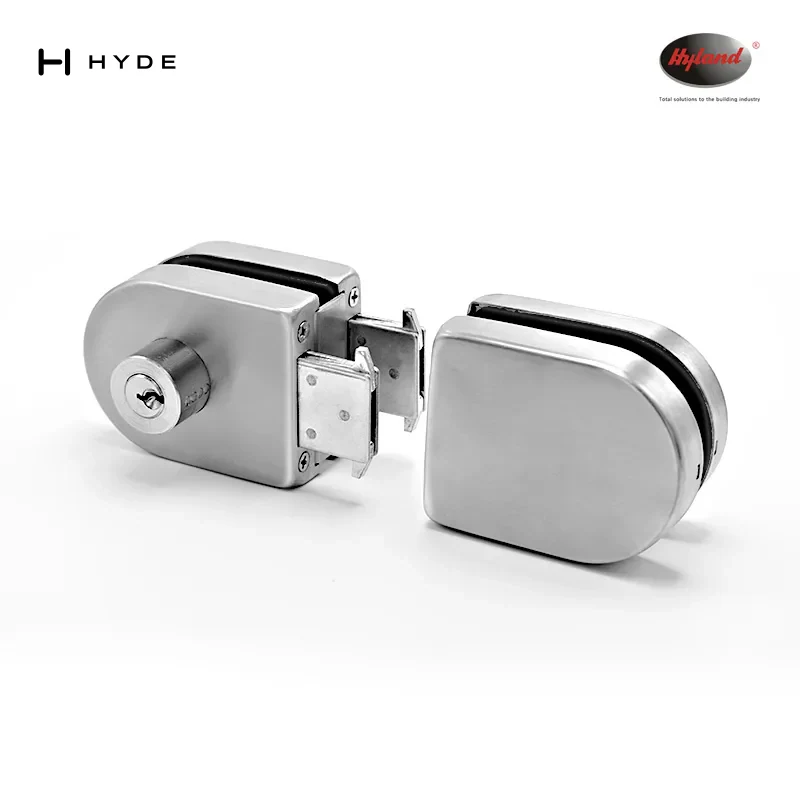
One more rule applies to every door with a panic bar: no additional lock may stop the door opening from the inside. A glass door patch lock with a deadbolt and cylinder, such as the GL125 SS, locks the leaf with a key; on a leaf that is an emergency exit it defeats the bar if it can be left locked with people inside. Access from outside, where it is needed, comes from the bar's own outside device.
Standards
In Brazil, NBR 11785 covers panic bars, and in Europe EN 1125 covers panic exit devices operated by a horizontal bar. Both look at the device as a product; whether a bar bonded to glass is accepted on an escape route is a decision for the project's fire safety design and the local authority, such as the fire department. None of our records states compliance with NBR 11785 or EN 1125, and this article makes no such claim. Our article on NBR 11742 and NBR 11785 explains what an inspection checks.
What to send with the inquiry
Scroll sideways to compare columns. Select a column heading to sort; select it three times to restore source order.
| Framed or frameless door | Decides whether the bar goes on the stile or on the glass |
|---|---|
| Glass thickness, in mm | Has to fall in the range of the bar and of the other fittings |
| Single leaf or pair | BR8-SG or BR8-DG |
| Through-bolted or tape | Bolts need a hole drawing before tempering |
| Leaf width | Decides the bar length |
| Floor spring and top patch, by model | Confirms the common thickness and the swing |
| Access from outside | Decides whether there is an outside device and more holes |
7 rows · Source order
Ask for these back in writing: the bar's glass thickness range, and either the hole drawing with diameters and positions if it is bolted, or the tape code and bonding instructions if it is taped. Until these figures are published for the BR8-SG and BR8-DG, they are part of the quotation, not a detail to settle on site.
Questions this answers
Can a panic bar be installed on a glass door?
Yes. On an aluminum-framed glass door the bar is fixed to the stile like on any metal door. On a frameless tempered-glass door it is either through-bolted, through holes drilled before tempering, or bonded to the glass with VHB-type tape. Our glass-door bars are BR8-SG for a single leaf and BR8-DG for a pair; their glass thickness range and hole sizes are not yet published.
Is VHB tape strong enough to hold a panic bar on glass?
That depends on the tape, its thickness and contact area, the surface preparation, the temperature and the cure time, not on the bar. 3M publishes data for each VHB tape; we publish no load figure for a bonded bar. Ask which tape is specified, whether the instructions also require a mechanical fixing, and for a pull-off test report of the mounted bar.
What glass thickness does a glass door panic bar need?
The thickness of your leaf, and every fitting on that leaf has to accept it. Our glass fittings publish 8–12mm (D-3015 and D-3016 floor springs), 10–14mm (D-1031) and 10–12mm (D-1042 top patch), so a D-1031 with a D-1042 works on 10 to 12mm glass. Get the bar's range in writing before ordering.
Can tempered glass be drilled for a panic bar?
Not after tempering: tempered glass shatters if it is drilled or cut. The holes for a through-bolted bar have to be on the glass processor's drawing before the sheet goes into the furnace, and a hole in the wrong place means a new sheet.
Related products
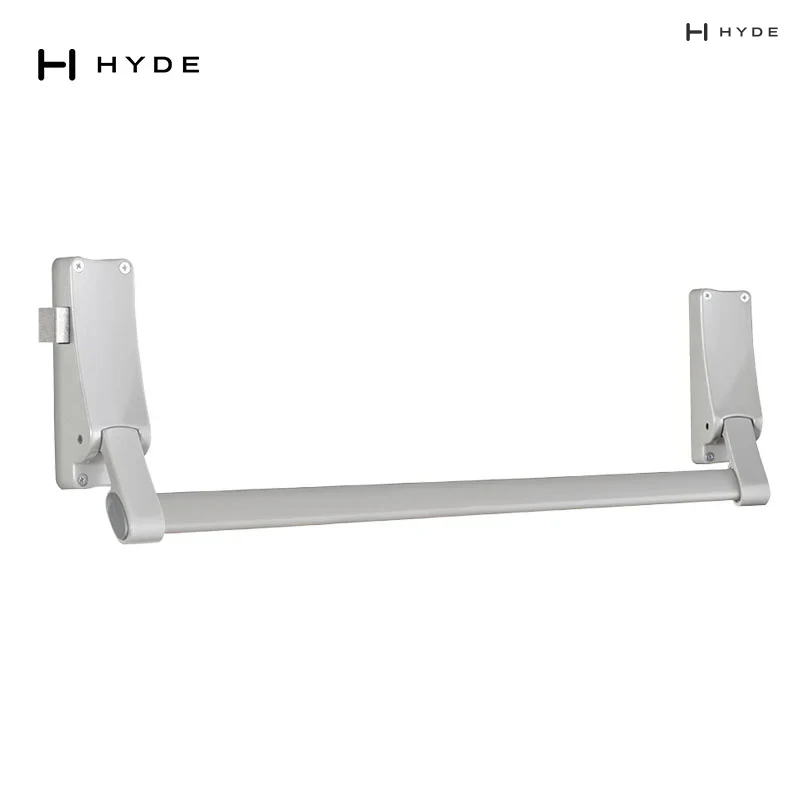
Single Door Panic Exit Device
Model 306-S · Video
Aluminum alloy body, iron bar
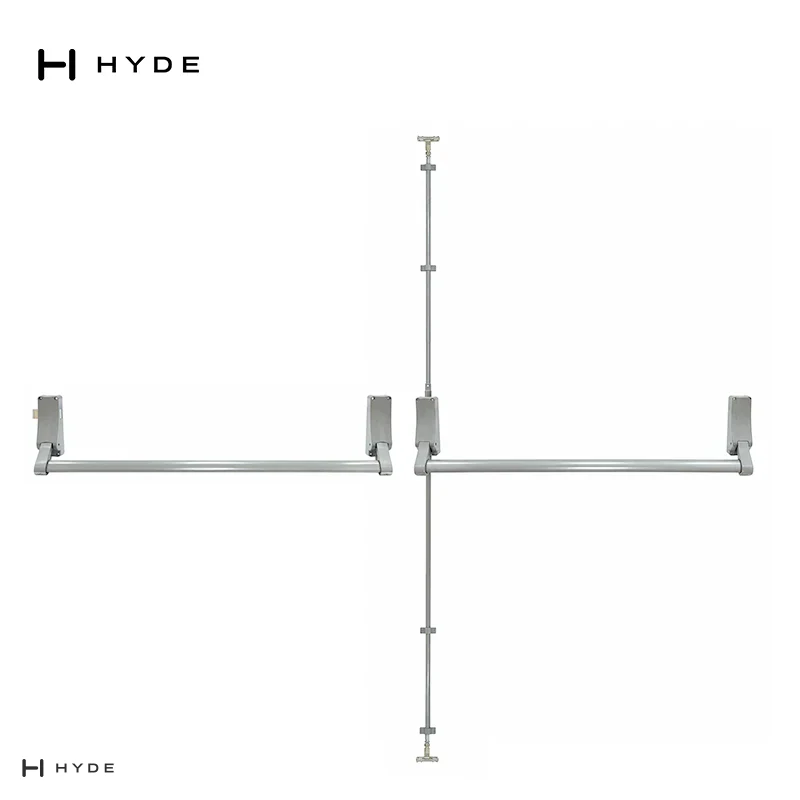
Double Door Panic Exit Device
Model 306-D · Video
Aluminum alloy body, iron bar
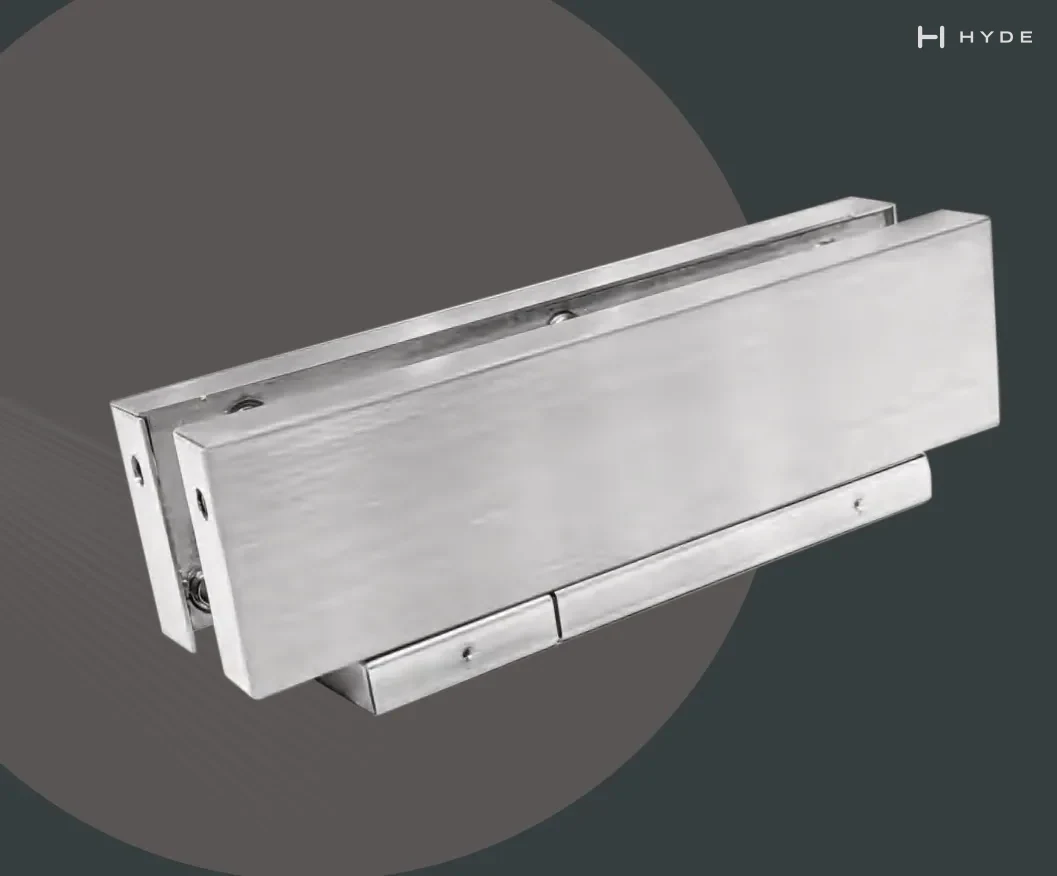
Floor Spring
Model D-3015
304 Stainless Steel
About Canton Hyland — Canton Hyland manufactures panic exit devices, locks and architectural door hardware for commercial and institutional projects, supplying specifiers and distributors internationally.