
Parts of a Mortise Lock: Case, Forend, Latch, Deadbolt, Follower and Strike, Labeled
A mortise lock has six parts a buyer needs to name: the case, the forend, the latch bolt, the deadbolt, the follower and the strike. Each does one job and fixes one dimension that the door, the frame or the handle must match. This glossary labels them, gives the Dutch trade names, and shows which figures our records publish for six models.

Johnson LiuDigital Communications, Canton HylandMA Digital Media, Johns Hopkins University
A mortise lock is a metal box set into a pocket cut in the edge of a door, and six parts on it matter when you buy one: the case, the forend, the latch bolt, the deadbolt, the follower and the strike. Each part does one job, and each one fixes one dimension that the door, the frame or the handle has to match.
In short: the case sets the size of the pocket. The forend covers the pocket on the door edge and is the face every other measurement starts from. The latch bolt holds the door shut, the deadbolt locks it, and the follower takes the handle's spindle and draws the latch back. The strike, the only part on the frame, receives both bolts. Two holes in the case, the follower and the cylinder aperture, set the center distance, and the distance from the forend face to the cylinder sets the backset.
The parts, labeled
Scroll sideways to compare columns. Select a column heading to sort; select it three times to restore source order.
| Case | Lock body, lock case | Slotkast | Holds the mechanism inside the door | Pocket height, depth and thickness |
|---|---|---|---|---|
| Forend | Faceplate, front plate | Voorplaat | Covers the pocket; the only part seen on the door edge | Forend length, width and corner shape; the zero point for backset |
| Latch bolt | Latch, spring latch | Dagschoot | Holds the door shut; pushed in by the strike or drawn back by the handle | Latch hole position in the strike |
| Deadbolt | Bolt, dead bolt | Nachtschoot | Locks the door; moved only by key or thumbturn | Bolt hole position and depth in the strike |
| Follower | Hub | Kruknoot | Turns with the handle's spindle and draws the latch back | Spindle square size; with the cylinder hole, the center distance |
| Cylinder aperture | Cylinder hole | Cilindergat | Takes the cylinder, whose cam throws the deadbolt | Cylinder profile; with the forend, the backset |
| Strike | Keep, strike plate | Sluitplaat | Fixed to the frame; receives both bolts | The cut-out in the frame |
7 rows · Source order
Two things in that table are not part of the case at all. The spindle, the square bar the handle turns, normally comes with the handle set, and the cylinder comes separately. The case only decides what size and shape each of them must be.
The case
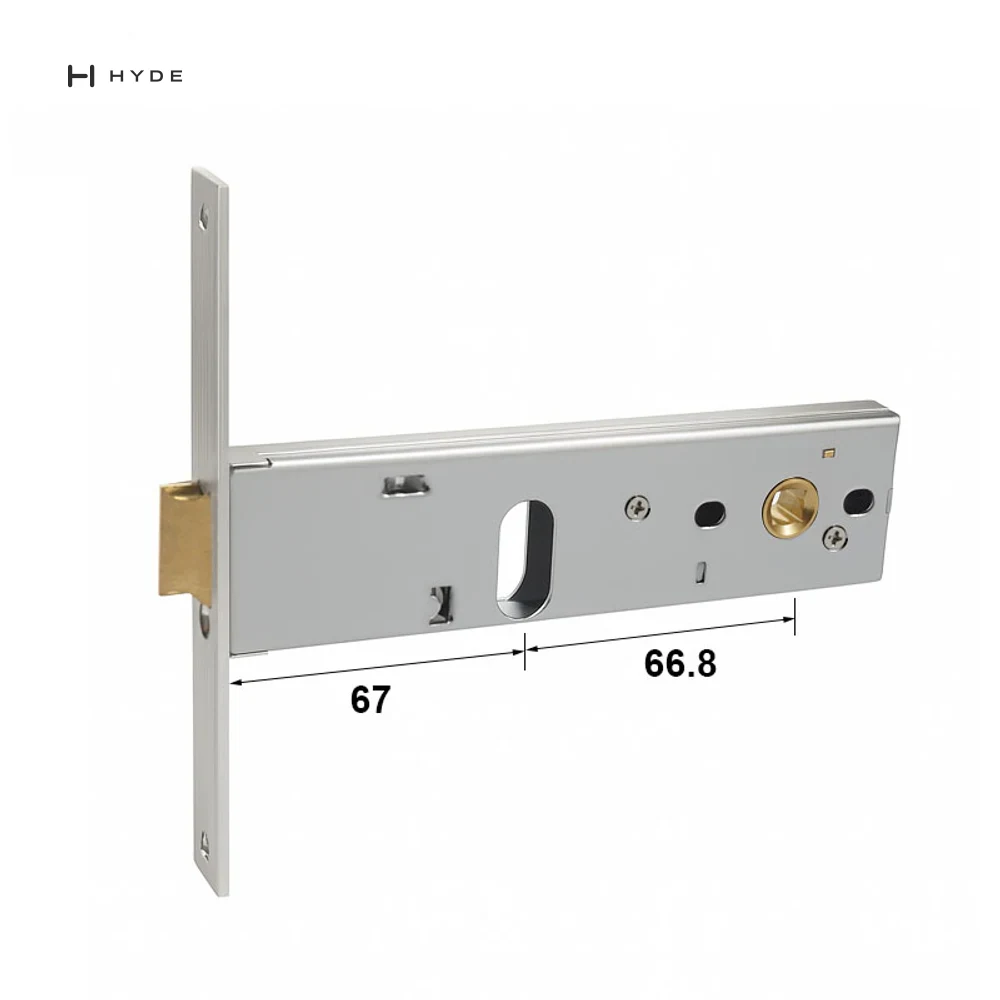
The case is the box. Its height and depth decide whether it enters the pocket, its thickness decides the width of the cut, and its material decides how it stands up to being forced. Of the six models discussed here, only the 7066 publishes an outside size: 164 × 44mm. That is a horizontal case, laid into the door rather than up the stile, so the 164mm runs inward from the edge and the 44mm is its height. Our records list the case material as iron for the LC8525, LC8530PS, HY006ET and 072, and as an aluminum case for the AI8530. The case material says nothing about the forend or the bolts, which are often a different metal, as the next sections show. Case thickness is not published for any of the six.
The forend
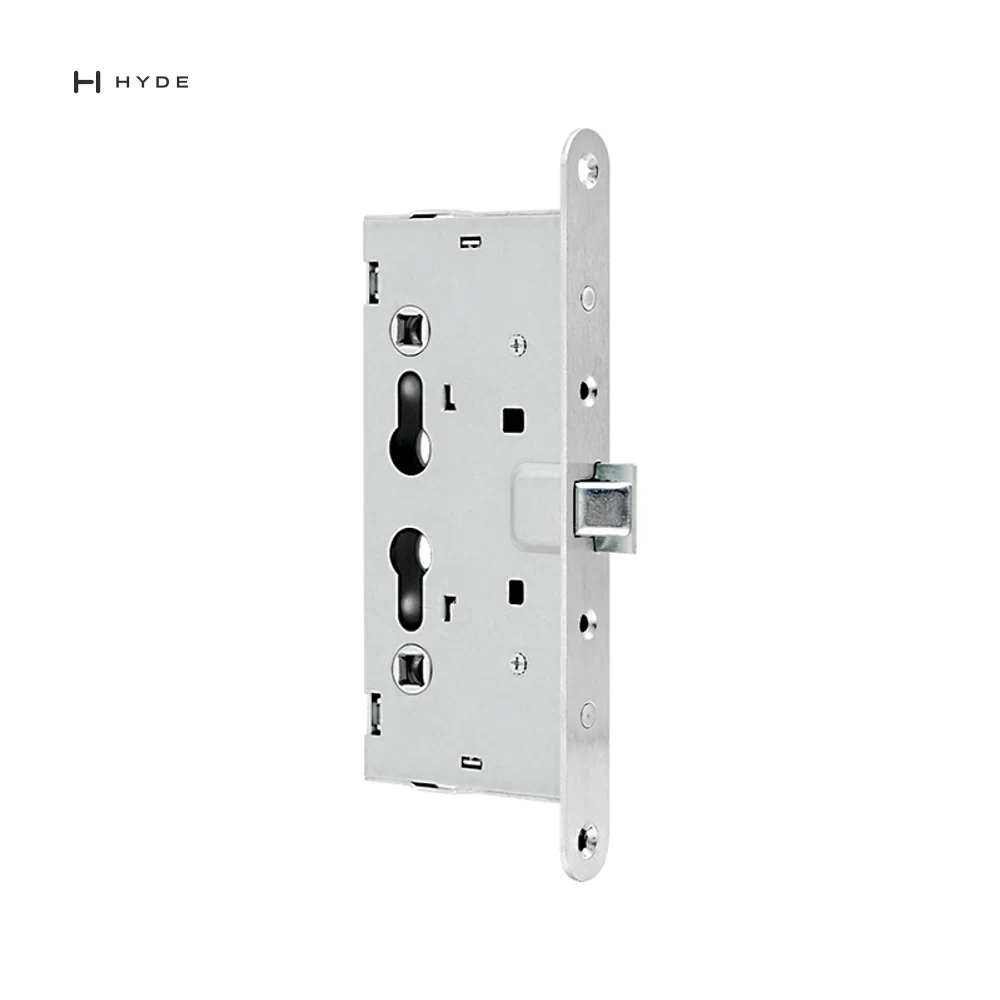
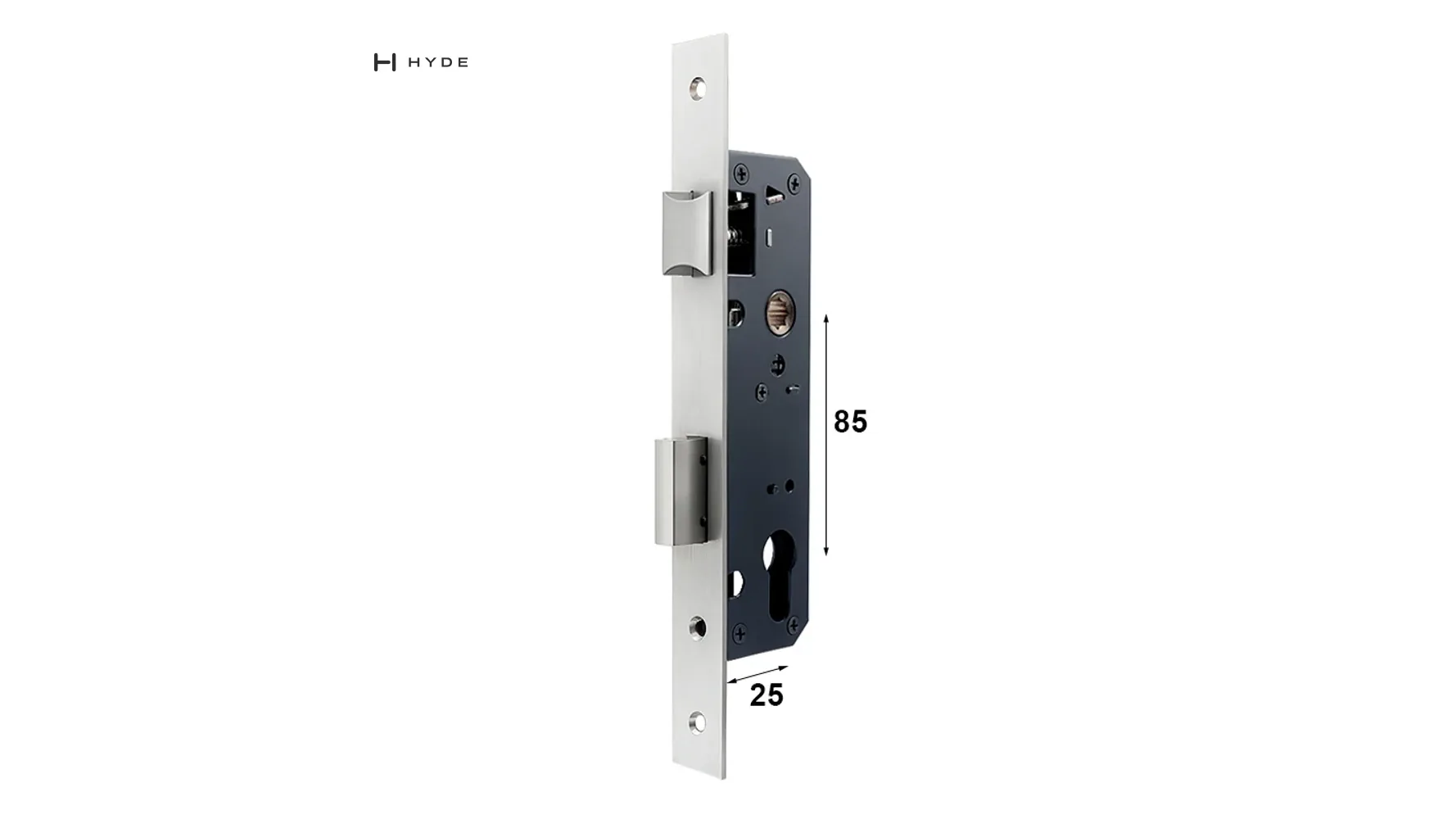
The forend is the plate screwed to the door edge, and it is the only part of the lock a person sees from the edge. It has three properties to match: length, width, and whether its ends are square or round. The 072 photograph shows round ends; the LC8525 and LC8530PS photographs show square ones. The 7066 publishes a forend length of 160mm. Forend width is not published for any of the six.
Its second job is less visible. Backset is measured from the outside face of the forend, so a forend let in too deep, or left standing proud of the edge, shifts the follower and the cylinder against the holes already drilled through the door. Why forend size is the dimension most often missed on a replacement lock is covered in our guide to dimensional interchangeability; here it is enough to name the part.
The latch bolt
The latch bolt is the bevelled, spring-loaded bolt that keeps a closed door closed. As the door shuts, the lip of the strike pushes it in against its spring and it springs back out into the strike hole. Turning the handle draws it back through the follower. Because the bevel must face the closing direction, the latch has to suit the door's handing; on many cases it is reversed by taking it out and turning it over. Whether a given model of ours reverses on site is not stated in its record, so ask before ordering one hand for a whole project. The LC8525, LC8530PS and AI8530 records list the latch material as copper. The LC8530PS photograph shows a roller at the latch position instead of a bevelled latch. A roller holds a door closed against light pressure and releases when the door is pushed or pulled; it does not lock anything. The record lists the LC8530PS function as passage.
The deadbolt, and the hook bolt
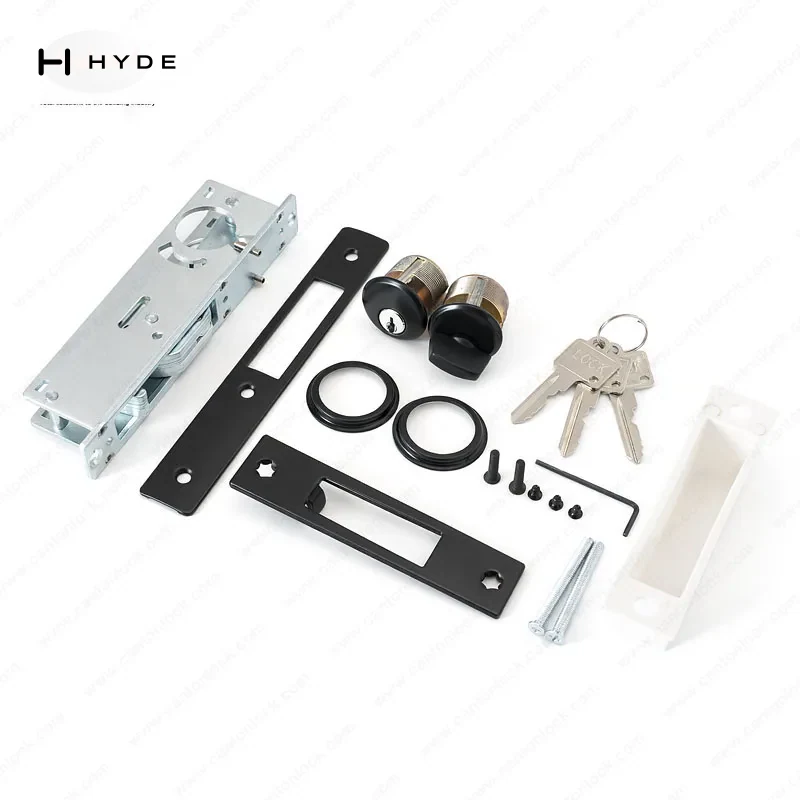
The deadbolt is moved only by the key or the thumbturn, through the cam on the cylinder. Once thrown it cannot be pushed back from the door edge, which is what makes it a lock rather than a catch. The dimension it sets is its throw, how far it projects into the frame. None of the six records publishes a throw, so treat it as a question for the quotation. On a narrow aluminum stile a straight bolt is often replaced by a hook. The HY006ET swings a hook out of the forend and behind the strike, so the door cannot be pulled off the strike once locked. Its record lists four bolt options: single hook, double hook, double flat and single flat. It lists the function as entrance, keyed outside, and a brass American-style cylinder, which the photograph shows threaded into the case from the face of the door.
The follower
The follower, also called the hub, is the part with the square hole that the handle's spindle passes through. Turning the handle turns the spindle, the spindle turns the follower, and an arm on the follower draws the latch back. It sets two things: the spindle square, which the handles must match, and, together with the cylinder aperture, the center distance. A worn follower is one of the usual reasons a lever starts to droop. Our 072 record, the iron case for the 307 panic exit device, lists a 9 × 9 × 130mm iron bar under the label follower. Strictly that bar is the spindle that passes through the follower, but the figure is the one a buyer needs: the follower on that case takes a 9mm square. The LC8525, LC8530PS and AI8530 records describe the spindle hole construction as copper and do not publish the square. For those, ask, because a handle set with the wrong square either will not enter or will turn loose.
The cylinder aperture, and where the two dimensions come from
The aperture fixes the type of cylinder, and it cannot be changed on site. The AI8530 lists a euro-profile cylinder, and the LC8525 and LC8530PS photographs show euro-profile holes. The 072 lists two euro-profile apertures. The 7066 has an oval cylinder hole. The HY006ET takes a threaded American-style cylinder.
Scroll sideways to compare columns. Select a column heading to sort; select it three times to restore source order.
| LC8525 | 25mm | 85mm | Euro profile (photograph) |
|---|---|---|---|
| LC8530PS | 30mm | 85mm | Euro profile (photograph) |
| AI8530 | 30mm | 85mm | Euro profile |
| 072 | 65mm | 72mm | Two euro-profile apertures |
| 7066 | 67mm, forend to cylinder | 66.8mm, cylinder to spindle | Oval |
| HY006ET | Not published | Not published | Threaded, American style |
6 rows · Source order
On an upright case such as the LC8525, the follower sits above the cylinder, so the center distance runs up the door and the handle sits at the same backset as the cylinder. On the horizontal 7066 the follower sits behind the cylinder, deeper into the door. Its cylinder is 67mm from the forend face and its spindle is 67 + 66.8 = 133.8mm from it. The same two words, backset and center distance, describe different geometry on the two kinds of case, and reading a horizontal case as if it were upright puts the spindle hole in the wrong place.
The strike, briefly
The strike is the only part on the frame. Its holes must line up with the latch and the deadbolt, and its lip must reach far enough to push the latch in as the door closes. The LC8525, LC8530PS and AI8530 records list a stainless steel strike plate. A hook bolt such as the HY006ET's needs a strike made for a hook; a flat strike gives the hook nothing to hold. Strike sizes, lip lengths and keeps are covered in our article on strike plates.
Words that get confused on an order
Nachtschoot is the deadbolt, though it translates literally as night bolt. In English a night latch is a different product, a rim lock fixed to the inside face of the door, so a Dutch order translated word by word can bring back the wrong item. Dagschoot, literally day bolt, is the latch bolt. The follower and the spindle are also confused. The follower is inside the case; the spindle (krukstift) is the loose bar that passes through it. The forend and the strike are both plates, but the forend is on the door and the strike is on the frame, and some catalogs call the strike a keep. In British usage a sashlock has both a latch and a deadbolt, a deadlock has only the deadbolt, and a mortise latch has only the latch. Naming the parts this way on an order removes the guesswork.
What our records do not publish
For the six models here, the records do not publish case thickness, forend width or deadbolt throw, and only the 072 gives a spindle square. Whether a latch reverses on site is not stated for any of them. These are not reasons to avoid the models; they are the questions to put in writing before a quotation is accepted, alongside the backset and center distance that the records do give.
Questions this answers
What are the main parts of a mortise lock?
The case, which holds the mechanism inside the door; the forend, the plate on the door edge; the latch bolt, which holds the door shut; the deadbolt, which locks it and is moved only by key or thumbturn; the follower, which the handle's spindle turns to draw the latch back; and the strike, fixed to the frame, which receives both bolts. The case also has a cylinder aperture; the spindle comes with the handles and the cylinder separately.
What is the follower in a mortise lock?
The follower, or hub, is the part inside the case with a square hole that the handle's spindle passes through. Turning the handle turns the follower, which draws the latch back. It sets the spindle square the handles must match and, together with the cylinder hole, the center distance.
What is the difference between a latch bolt and a deadbolt?
The latch bolt is bevelled and spring-loaded: it is pushed in by the strike as the door closes and drawn back by the handle, so it holds the door shut without locking it. The deadbolt is square-ended and moved only by the key or thumbturn; once thrown it cannot be pushed back from the door edge.
What do dagschoot and nachtschoot mean in English?
Dagschoot is the latch bolt and nachtschoot is the deadbolt. Translating nachtschoot word by word as night latch is a common error: in English a night latch is a rim lock fixed to the inside face of the door, a different product.
Where is backset measured from on a mortise lock?
From the outside face of the forend to the center of the cylinder hole. On an upright case the handle sits at the same backset. On a horizontal case such as our 7066 the spindle sits further in: 67mm to the cylinder plus 66.8mm to the spindle, 133.8mm from the forend face.
Related products
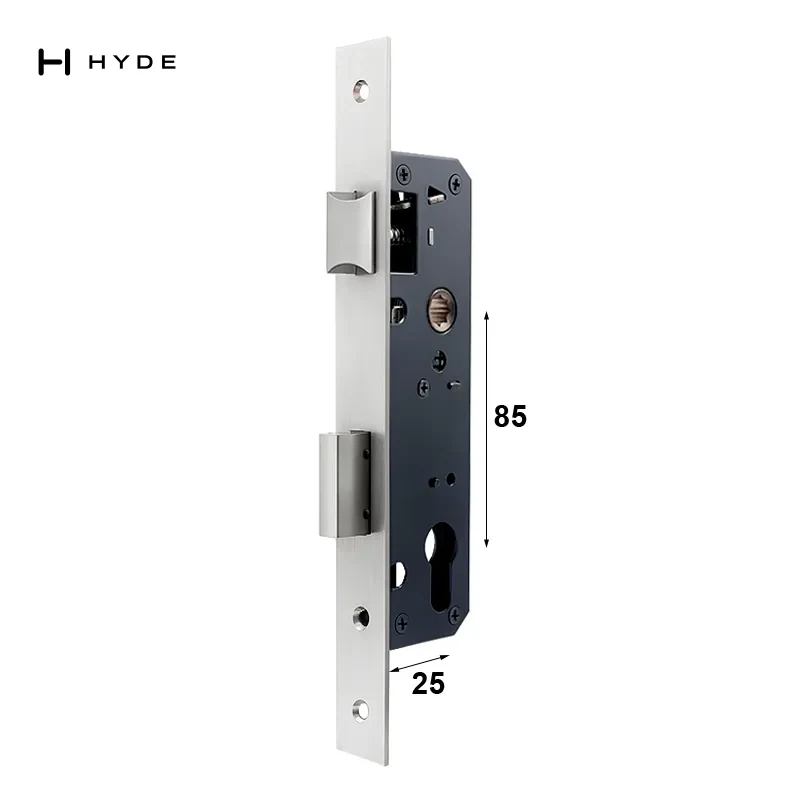
Backset 25mm
Lock Case
Model LC8525
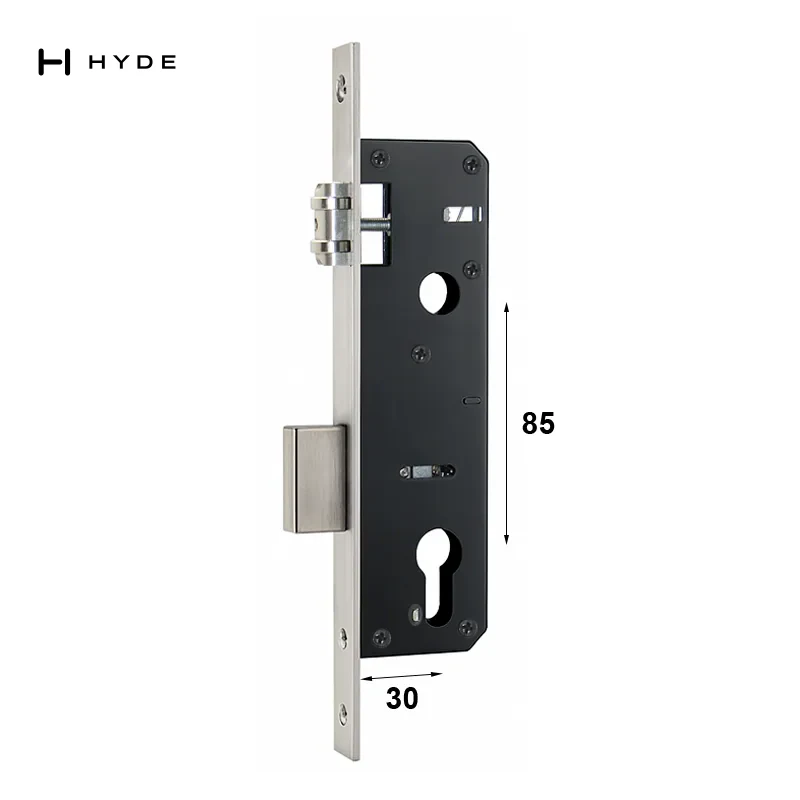
Backset 30mm
Lock Case
Model LC8530PS
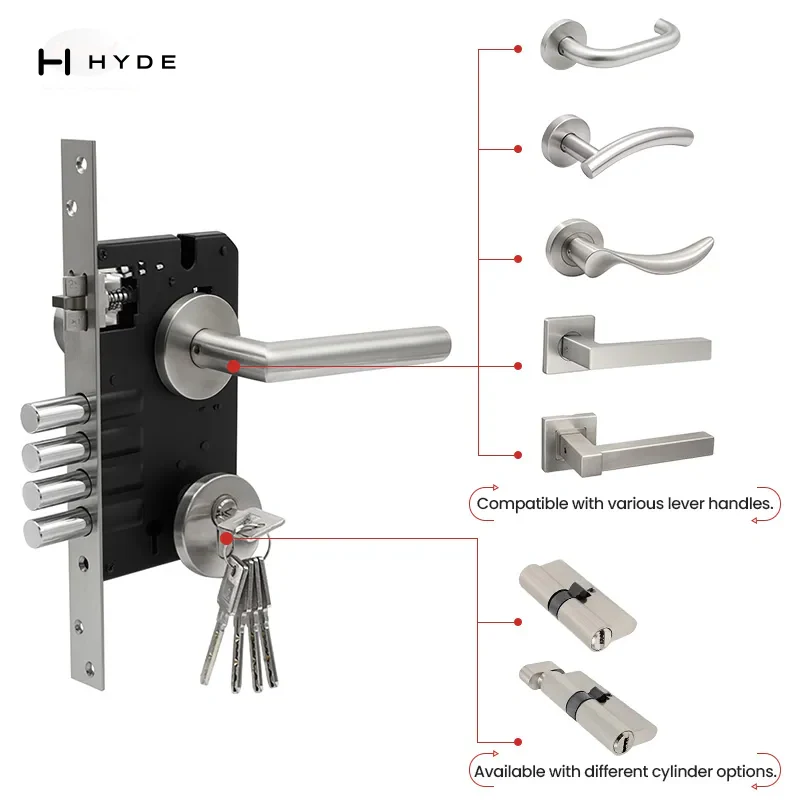
Backset 30mm
Lock Case
Model AI8530
About Canton Hyland — Canton Hyland manufactures panic exit devices, locks and architectural door hardware for commercial and institutional projects, supplying specifiers and distributors internationally.