
Why Aluminum Doors Drop, and What the Lock Case Has to Do With It
A narrow-stile aluminum door that no longer latches has almost never broken its lock: the leaf has dropped a few millimeters at the far edge. On a stile only 30 to 50mm wide, the hinge or pivot side wears first, the frame's corner joints open second, and the latch shows it third, because it sits in a strike with perhaps 2mm of tolerance. Only the lock case is a hardware decision: our narrow-stile cases run at 30, 40 and 45mm backsets.

Johnson LiuDigital Communications, Canton HylandMA Digital Media, Johns Hopkins University
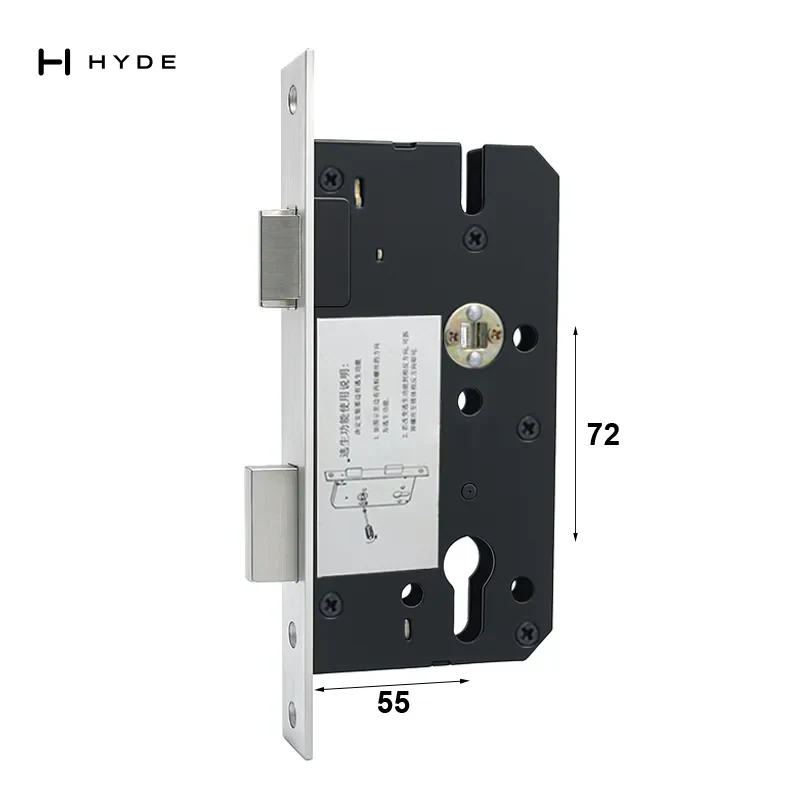
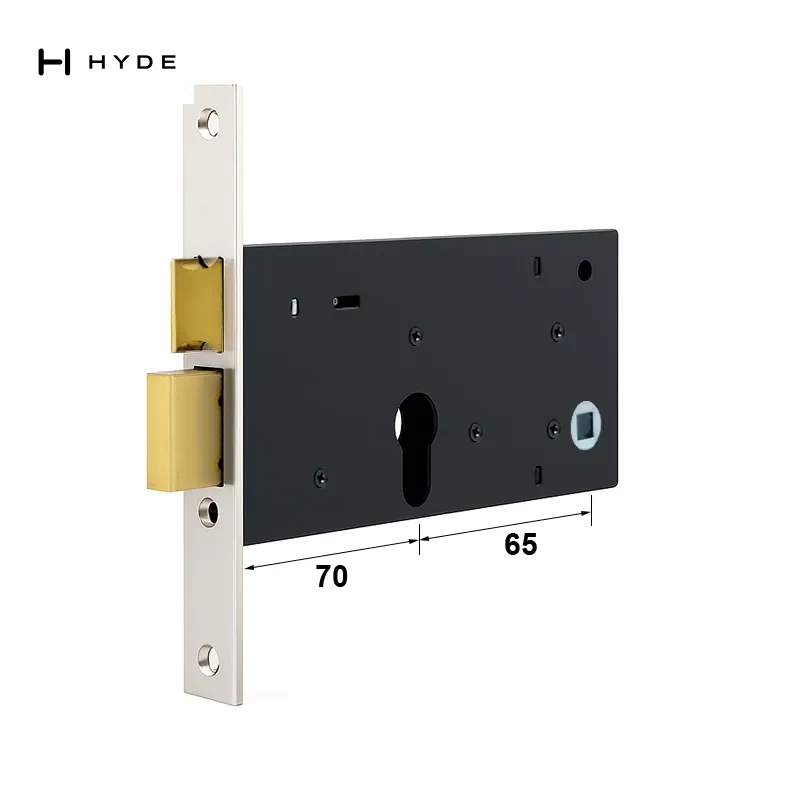

The complaint arrives in the same words every time: the lock has failed, the door will not latch, the key turns but the bolt misses the strike. In a narrow-stile aluminum door the lock is almost never the fault. The leaf has dropped (often by two or three millimeters at the lock edge) and the latch is now presenting itself below the hole it is supposed to enter. Replacing the lock case fixes nothing, and it is the most common wasted purchase in this category.
Five minutes with a tape measure, before anything is ordered
Four checks separate a dropped leaf from an actual lock fault, and all four can be done by whoever is already standing at the door.
Read the gap along the lock edge, top and bottom: on a square door that reveal is parallel. If it is wider at the top than at the bottom (or the reverse) the leaf is no longer square to the frame, and that taper is the fault. Two millimeters of difference over the height of the leaf is enough to make a latch miss.
Look for the witness mark on the strike: a latch that has been striking the plate instead of entering the hole leaves a bright scuff, and that scuff sits exactly where the latch now arrives. If the bright mark is below the hole, the leaf has dropped; if it is beside the hole, the frame has moved in or out. This is the single most direct piece of evidence available and it costs nothing to look at.
Open the leaf to ninety degrees and lift the free edge: take the weight on your hands and raise it gently. Any perceptible lift (a millimeter is perceptible) is wear in the pivot or hinge, not in the lock. A door that lifts and then drops back is telling you where its next repair is.
Check the frame diagonals if the door is in a frame you can reach. Corner to corner, both ways. A difference between them means the frame itself has racked, and no amount of hardware will fix a frame that is out of square; the strike can be moved to follow it, which is a repair, or the frame can be re-squared, which is the fix.
The order in which these fail is the order of the repair. Pivot first, strike second, lock case last, and in most of the calls that reach us, the job stops after the second.
Understand what a narrow stile is and the reason becomes obvious. The stile is the vertical member at the edge of the leaf, and on a commercial aluminum door it is often only 30 to 50mm (1-3/16" to 1-15/16") wide, because the client wanted glass and not frame. That leaves a 30mm (1-3/16") section of extruded aluminum to carry the entire weight of a large glazed leaf, resist the leverage of someone pulling on a handle a meter from the hinge, and house a lock cavity cut into the middle of it. The lock pocket removes material from the one part already doing the most work.
Three things move, in this order. The hinge or pivot side wears first, because every opening is a lever with the leaf as its arm, a 2.2 meter glazed door concentrates a great deal of moment onto a top pivot. Second, the corner joints of the frame open slightly; a mitred aluminum corner held by cleats and screws is stiff but not infinitely so, and once it racks by a fraction of a degree the diagonal shortens and the free corner falls. Third, and only third, the door furniture shows it, because the latch is a precision fit into a strike with perhaps 2mm (1/16") of tolerance, and it is the first component in the assembly with no slack left to absorb the movement.
This is why the hardware choice that matters most on a narrow-stile door is not the lock at all: it is what carries the leaf. A floor spring set into the slab takes the weight into the structure rather than into the frame corner, which is why a heavy glazed door on a floor spring stays square for years while the same leaf on butt hinges racks its frame. If you are specifying a door that is tall, wide, glazed, or used hundreds of times a day, the pivot decision is the anti-sag decision, and it has to be made before the floor is poured.
Floor spring, pivot or hinge, what each one actually does to the frame
Since the anti-sag decision is the carrying decision, it is worth setting the four options side by side. They are not four grades of the same thing; they route the load to four different places.
Floor spring: a closer body set into the slab, with the leaf turning on a spindle above it. The weight of the leaf goes down into the structure, and the frame carries almost nothing. This is why a heavy glazed door on a floor spring stays square for years. The costs are real and they are not hardware costs: a recess has to be formed in the floor before it is poured, the cement box must be sealed against water, and replacing the unit later means opening the floor. Specify it early or do not specify it at all.
Top-centre and bottom pivot, no closer: the same load path (weight into the threshold and the head) without the closing function. Cheaper, thinner, and the right answer for an internal leaf that does not need to self-close. It is also the arrangement most often found sagging, because the bottom pivot is a small bearing under a large load and nobody inspects it.
Offset pivots: the pivot sits inboard of the door edge, which lets the leaf clear an adjacent wall and keeps the load close to the frame member rather than out at the corner. Common on aluminum entrances with an overhead closer.
Butt hinges: load enters the frame as a pair of horizontal forces at the top and bottom hinge, and the top hinge pulls outwards on a jamb that in an aluminum system is an extrusion a few millimeters thick. This is fine on a small, light leaf and it is the mechanism behind most racked aluminum frames. If you have a wide glazed leaf on butt hinges, the sag is not a defect; it is the system working as designed, at a size it was not designed for.
The rule that falls out of this: anything tall, wide, glazed or high-traffic goes on something that puts the weight into the floor, not into a frame corner. Everything else is a preference.
Now the part that genuinely is a lock-case decision. In a 30mm stile there is very little metal either side of the lock pocket, so the case has to be narrow, and its backset (the distance from the door edge to the center of the follower) is fixed by the profile rather than chosen. Our narrow-stile cases run at 30, 40 and 45mm (1-3/4") backsets for exactly this reason; a 60mm (2-3/8") backset case simply will not fit a narrow stile, and forcing a wider pocket into the extrusion removes the material the stile needs to stay stiff. Ordering by backset first, and by everything else second, is the correct sequence for aluminum.
Two more details decide whether the installation survives. The first is latch throw. A door that has moved a millimeter still latches if the bolt is long enough to find the strike, and fails if it is not, which is why a hook bolt or a longer deadbolt throw is worth specifying on a wide leaf, and why our sliding hook-lock cases exist for aluminum sliders where a straight latch has nothing to bite. The second is the strike itself: an adjustable or slotted strike gives the installer a millimeter or two of vertical adjustment, and that is often the entire repair on a door that has dropped slightly. It costs almost nothing at order time and saves a site visit.
So the checklist, in the order that prevents the problem rather than chases it. Decide how the leaf is carried, floor spring for anything heavy, tall or glazed. Measure the stile and pick the backset from it, not from a catalog habit. Choose a bolt with enough throw for the leaf width, and a hook rather than a latch on sliders. Specify an adjustable strike. And when a door does drop, adjust the pivot and the strike before ordering anything: the lock case is the symptom, and replacing a symptom is how the same fault comes back next season.
Six measurements that let a supplier answer in one reply
Almost every slow quotation on a narrow-stile door comes from the same place: the inquiry described the door in words and the supplier had to ask for numbers. These are the numbers.
Stile width: the face width of the vertical member at the lock edge, in millimeters. This is what decides whether a case fits at all, and it is measured on the door, not read off the system's brochure, the same profile family is sold in several widths.
Backset: on an existing door, from the face of the forend in the door edge to the center of the handle spindle hole. If the door is new, the backset comes from the stile and not from preference.
Center distance: handle spindle center to cylinder center. It is the measurement that decides whether a lever plate or escutcheon lines up with the case, and it is the one most often left out.
Leaf size, and glazed or solid: width and height, and whether the infill is glass. This is what determines how the leaf should be carried, which (per everything above) is the decision that actually prevents the fault.
Which cylinder the case is to take: euro profile, oval or something else, and the length once that is settled. A euro cylinder also needs its split, not just its total length, and that is a separate subject with its own article on this site.
Handing, and the profile system name: handing decides the latch orientation. The system name (the extrusion family the door is built from) tells an engineer more about the pocket than a paragraph of description will.
Six lines in an email. A supplier who has all six can quote a model number; a supplier missing two of them is guessing, and on aluminum a guess arrives as a case that does not fit a pocket already cut.
One honest note on what we publish. Our lock cases carry backset, center distance, case size and bolt throw on the product pages, because those are the numbers this decision turns on and several of them came off our own production drawings rather than out of marketing copy. What we do not yet publish is a load rating for the doors these cases suit, that depends on the leaf, the glazing and the pivot far more than on the lock, and a number invented for the lock alone would be worse than no number. Send the leaf size, the stile width and the profile system, and the export team will tell you which backset fits and what to carry it on.
Questions this answers
Why will an aluminum door not latch any more?
Usually because the leaf has dropped (often by two or three millimeters at the lock edge) so the latch is presenting itself below the hole it is supposed to enter. The lock is almost never the fault, and replacing the lock case fixes nothing. It is the most common wasted purchase in this category. Adjust the pivot and the strike before ordering anything.
What actually moves when a narrow-stile door sags?
Three things, in this order. The hinge or pivot side wears first, because every opening is a lever with the leaf as its arm. Then the mitred corner joints of the frame open slightly, and once the frame racks by a fraction of a degree the diagonal shortens and the free corner falls. The door furniture shows it third and only third, because the latch is a precision fit into a strike with perhaps 2mm (1/16") of tolerance, the first component in the assembly with no slack left to absorb the movement.
What prevents a glazed aluminum door from dropping?
What carries the leaf, not the lock. A floor spring set into the slab takes the weight into the structure rather than into the frame corner, which is why a heavy glazed door on a floor spring stays square for years while the same leaf on butt hinges racks its frame. On a door that is tall, wide, glazed or used hundreds of times a day, the pivot decision is the anti-sag decision, and it has to be made before the floor is poured.
Which lock case backset fits a narrow stile?
Ours run at 30, 40 and 45mm (1-3/4") for narrow stiles, because in a 30mm stile there is very little metal either side of the lock pocket and the backset is fixed by the profile rather than chosen. A 60mm (2-3/8") backset case simply will not fit, and forcing a wider pocket into the extrusion removes the material the stile needs to stay stiff. Order by backset first and everything else second. An adjustable or slotted strike is worth specifying at the same time: a millimeter or two of vertical adjustment is often the entire repair on a door that has dropped.
Related products
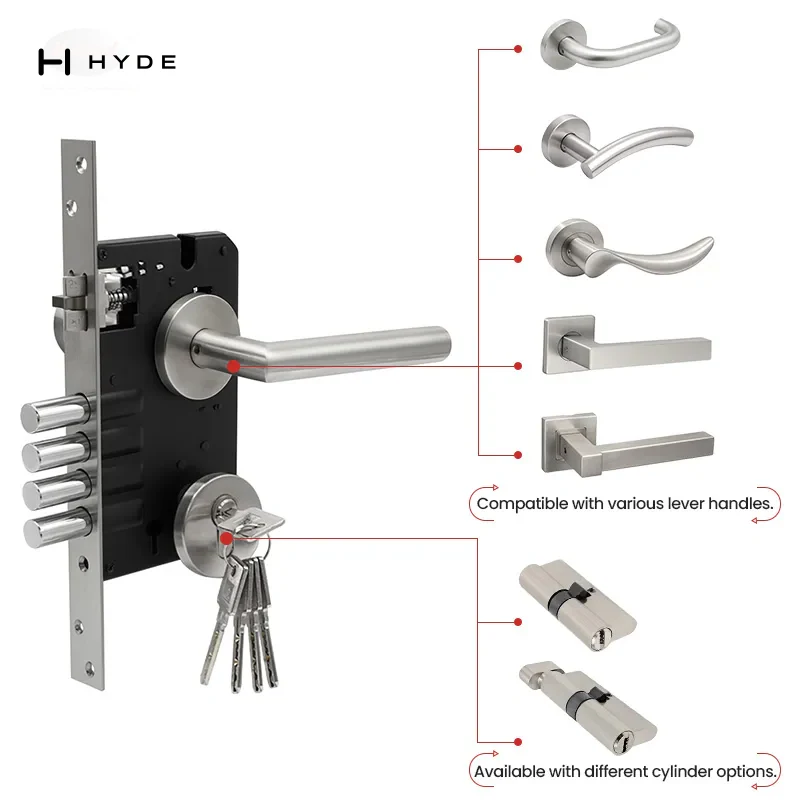
Backset 30mm
Lock Case
Model AI8530
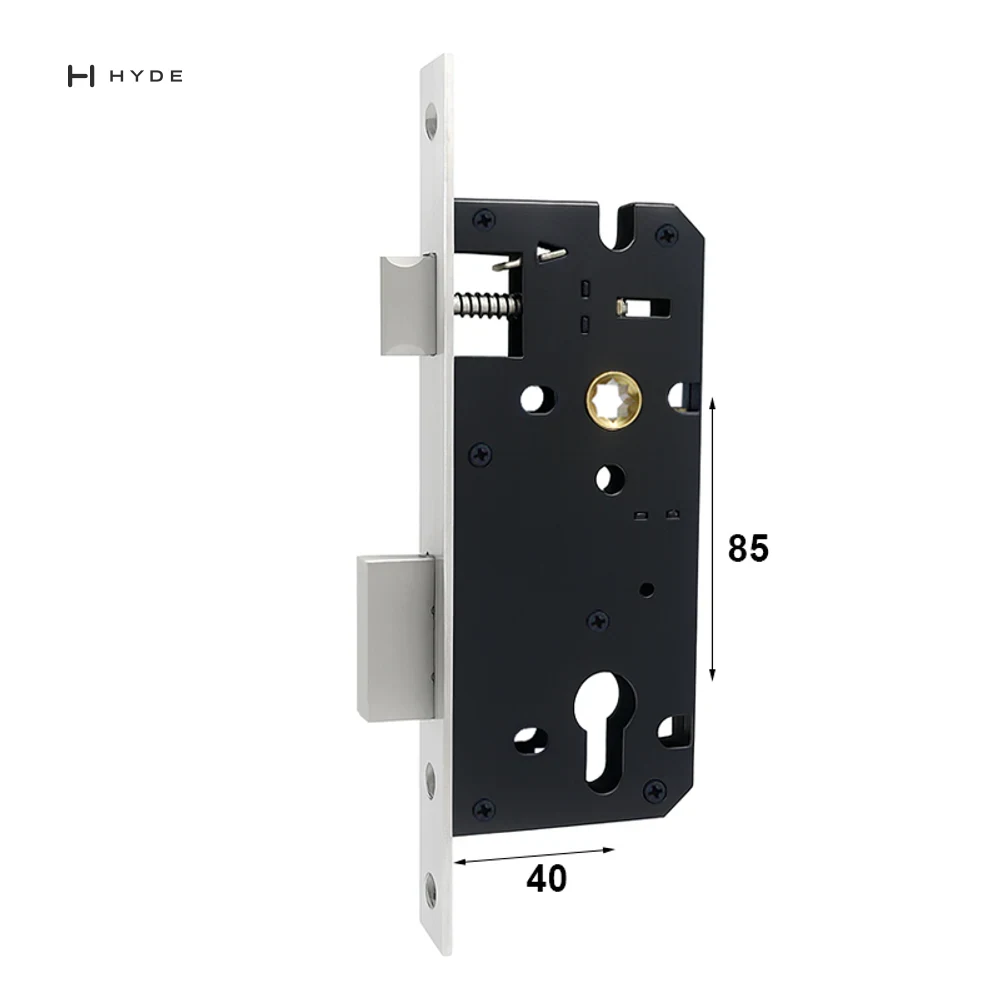
Backset 40mm
Lock Case
Model LC02 85×40mm
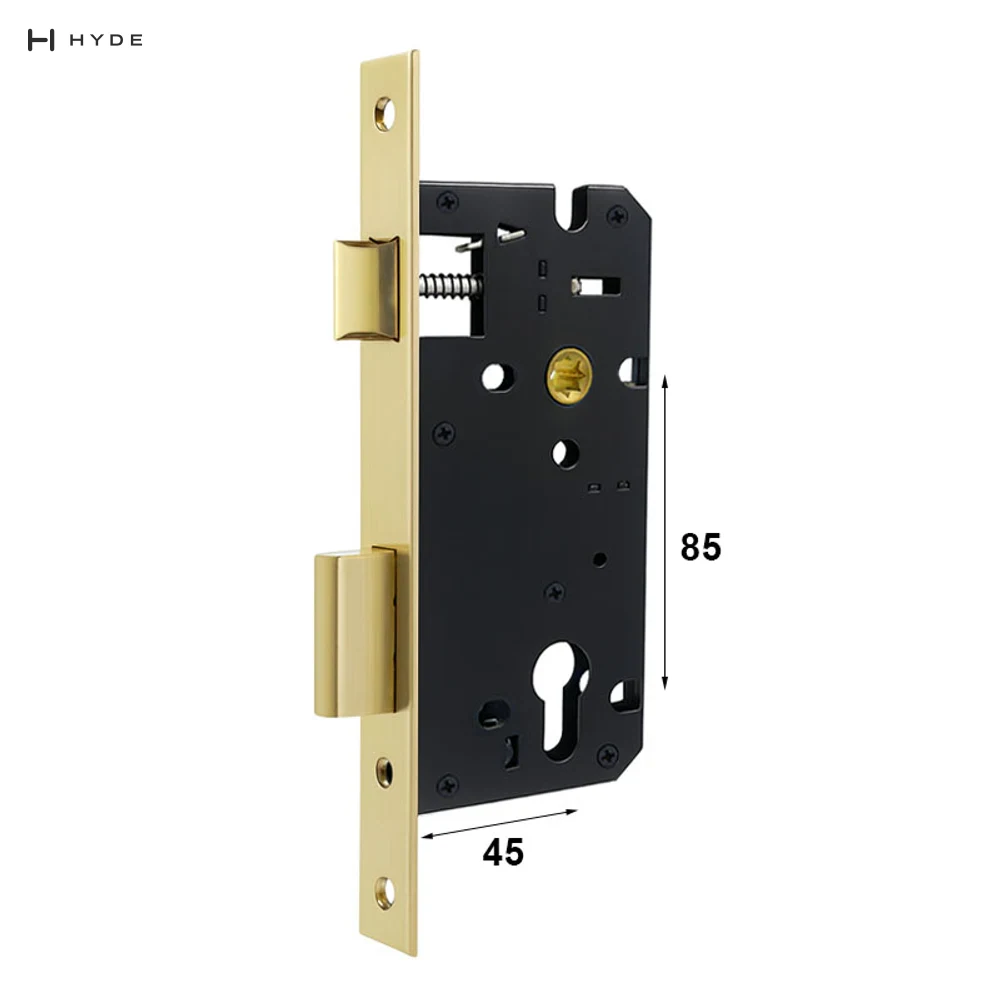
Backset 45mm
Lock Case
Model LC03 85×45mm
About Canton Hyland — Canton Hyland manufactures panic exit devices, locks and architectural door hardware for commercial and institutional projects, supplying specifiers and distributors internationally.