
Mortise Lock vs Rim Lock: Which Door Takes Which, and What to Put on the Order
A mortise lock fits into a pocket cut in the edge of the door; a rim lock is screwed to its inside face, with the keeper on the frame. How each one is fitted, which doors take which, the numbers that must match (backset, center distance, door thickness) and what to write on the order.

Johnson LiuDigital Communications, Canton HylandMA Digital Media, Johns Hopkins University
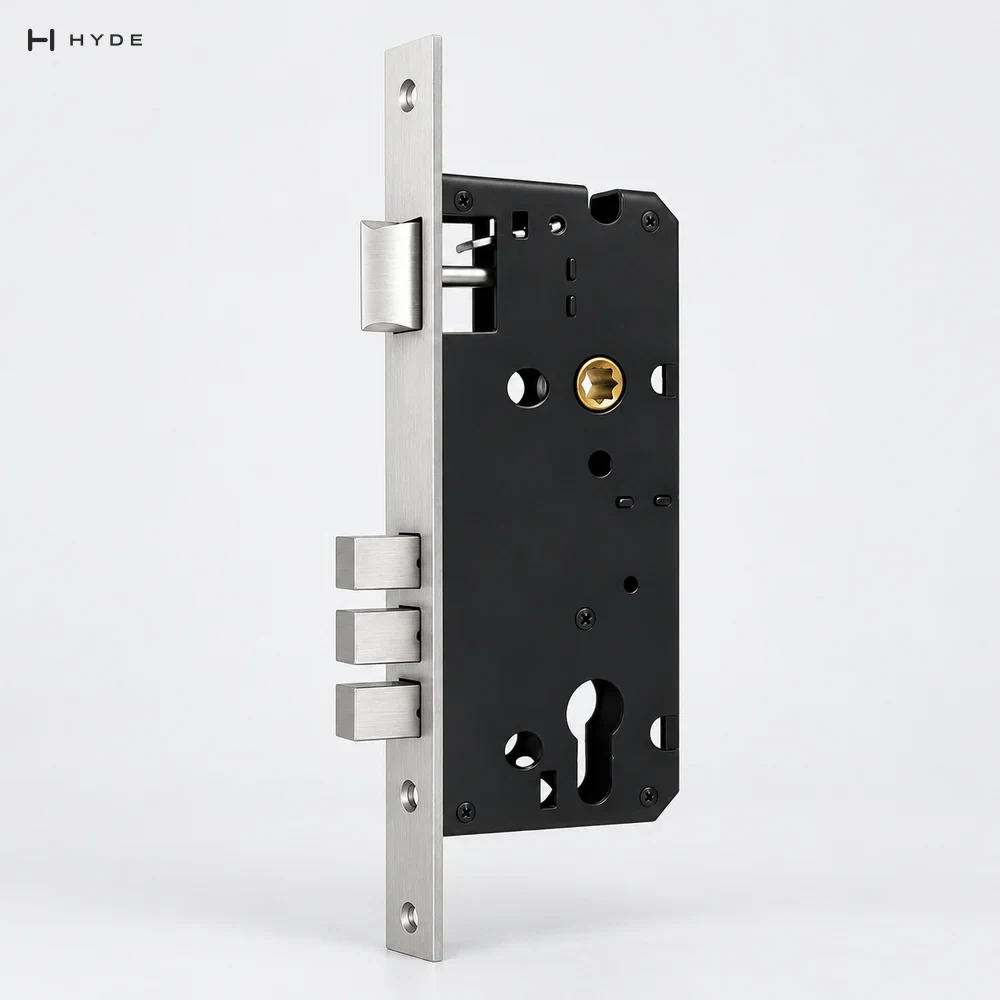
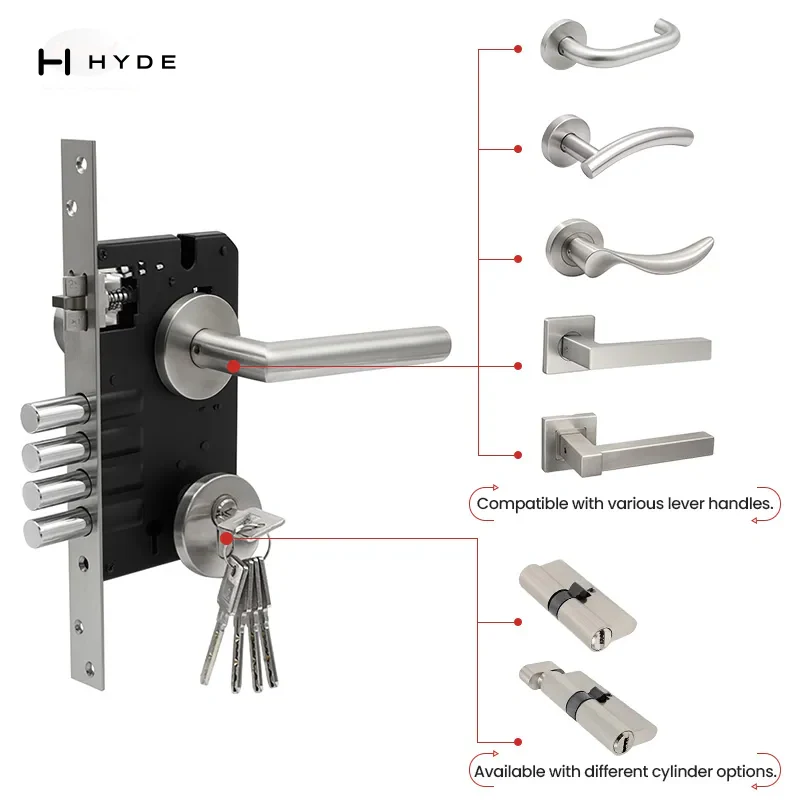
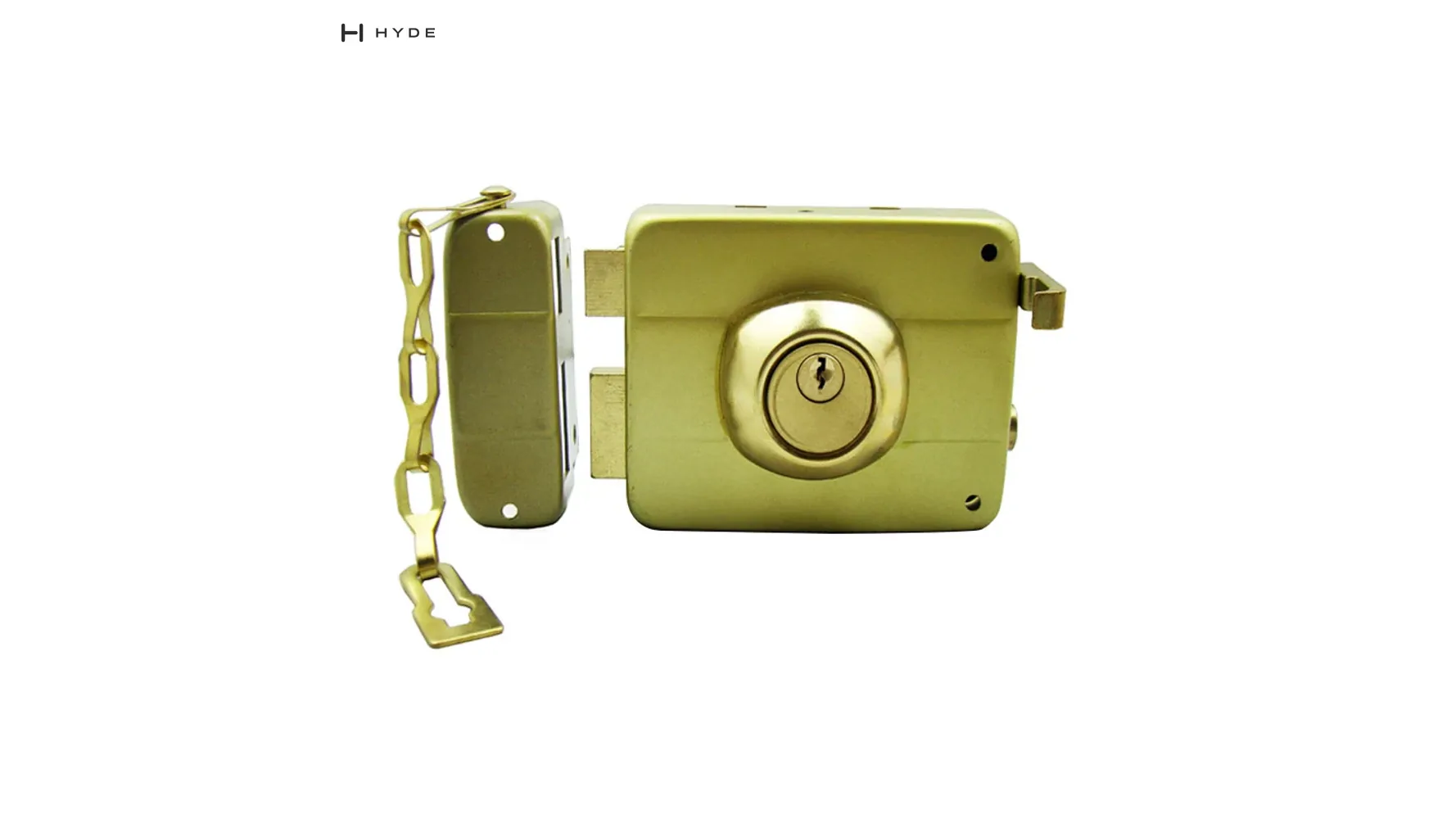
A mortise lock is built into a pocket cut in the edge of the door; a rim lock is screwed to the inside face of the door, with its keeper screwed to the frame. That is the whole difference, and the rest follows from it: what the door has to be made of, how the lock is fitted, which cylinder it takes and what goes on the order.
Neither type is better in general. A rim lock goes on almost any door, including one that already has holes in it, and comes off again with a screwdriver. A mortise lock needs a door edge wide and solid enough to take its case, and in return leaves only the lever, the cylinder and a narrow faceplate in view.
How each one is fitted
A rim lock needs one hole through the door for the cylinder, and screws. The case sits on the inside face. The cylinder goes in from the outside and turns the lock through a flat connecting bar that passes through the door and is cut to its thickness. The keeper, the box or angle that receives the bolts, is screwed to the inside face of the frame. On a steel door or gate the case can also be welded: our 5835 and 5836 are listed for screws or welding.
A mortise lock needs a pocket. The fitter cuts a slot into the door edge to the depth of the case, recesses the faceplate so it sits flush, and drills two holes across the door, one for the lever spindle and one for the cylinder. The strike goes into the frame. Our LC07 case shows the scale: a 240 × 23 mm faceplate on a case 173 mm high and 72 mm deep, so the door edge has to be wider than 23 mm and solid for 72 mm in from the edge.
Which door takes which
A rim lock suits a door that cannot be cut, or should not be: a thin or hollow door, a steel gate, an outbuilding or shop back door, or a door that already has a lock and needs a second one. Our rim locks are listed for doors 35 to 55 mm thick as standard and 30 to 60 mm on request.
A mortise lock suits a solid timber or steel door with a stile wide enough for the case: apartment entrance doors, offices, hotels and most new commercial work where the hardware schedule calls for lever handles. Aluminum and glass doors with narrow stiles take a separate family of slim mortise cases, such as our AI8530 with a 30 mm backset.
The numbers that must match
On a rim lock, the backset is the distance from the door edge to the center of the cylinder, and the cylinder hole is drilled there. A replacement with a different backset leaves the old hole in the wrong place. Most of our rim locks have a 60 mm (2-3/8 in) backset; the 5833, 5835 and 5836 have 50 mm and the S564 has 40 mm.
On a mortise lock, two numbers fix the holes: the backset, from the faceplate to the center of the cylinder, and the center distance, from the spindle to the cylinder. The lever plate or roses have to be drilled to the same center distance. The LC07 is 85 mm center distance with a 45 mm backset; our cases also come on 72, 68 and 65 mm center distances.
The cylinder is different too
A rim lock takes a rim cylinder, whose tailpiece reaches through the door into the back of the case. A European mortise lock takes a euro profile cylinder, held by one screw through the faceplate, and a North American mortise lock takes a threaded mortise cylinder. The three are not interchangeable; our article on mortise, euro profile and rim cylinders explains how to tell them apart.
Handing and the way the door opens
A rim lock is mounted on the inside face, so the swing of the door matters. On an inward-opening door the keeper is an angle strike, which is how our rim locks ship; an outward-opening door needs a flat strike, which is available. The models that list handing, such as the 5682, are reversible for left- or right-hand doors.
A mortise lock sits inside the door, so the swing does not change the case, but the bevel of the latch has to face the closing direction. Check whether the latch can be turned over on site or the case has to be ordered left or right.
What to put on the order
For a rim lock: the backset, the door thickness, whether the door opens inward or outward, timber or steel, and whether the case is screwed or welded. For a mortise lock: the center distance and backset, the faceplate size and shape, the cylinder profile and length, and a lever on roses or a plate drilled to the same center distance. With those on the order, either lock arrives ready to fit.
Questions this answers
What is the difference between a mortise lock and a rim lock?
A mortise lock fits into a pocket cut in the edge of the door; a rim lock is screwed to the inside face of the door, with its keeper on the frame. A mortise lock needs a door edge wide and solid enough for its case; a rim lock fits almost any door.
Is a mortise lock more secure than a rim lock?
That depends on the lock and the frame more than on the type. A mortise lock throws its bolt into a strike set in the frame; a rim lock's bolts go into a keeper screwed to the frame face, so its hold depends on those screws. Our vertical-bolt rim deadlocks drop twin bolts into a two-loop angle keeper.
Can a rim lock be replaced with a mortise lock?
Only if the door edge is wide and solid enough to cut a pocket for the case, and the old cylinder hole can be reused or covered. Most rim locks are replaced with another rim lock of the same backset, so the existing hole still lines up.
Which doors use a rim lock?
Doors that cannot or should not be cut: thin or hollow doors, steel gates, outbuildings, shop back doors and doors that need a second lock. Ours are listed for doors 35 to 55 mm thick as standard and 30 to 60 mm on request.
What do I specify when ordering a mortise lock case?
The center distance and backset, the faceplate size and shape, the cylinder profile and length, and the lever furniture drilled to the same center distance. For our LC07 that is 85 mm center distance and 45 mm backset, with a 240 × 23 mm faceplate.
Related products
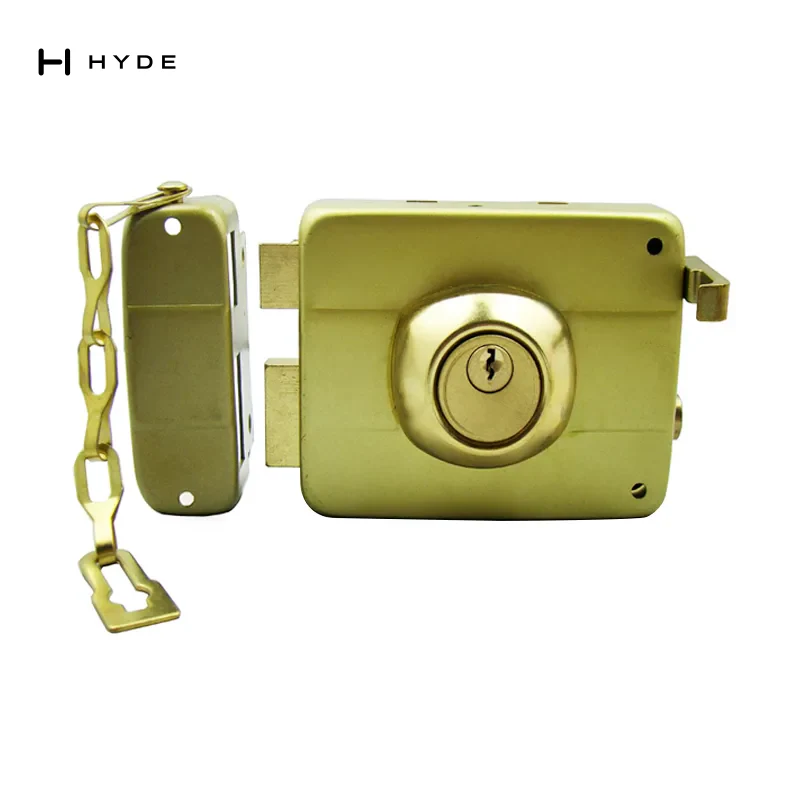
Backset 60mm
Night Latch And Rim Lock
Model 5682
Iron case, with 3 pcs brass keys , zinc alloy latch and cylinder
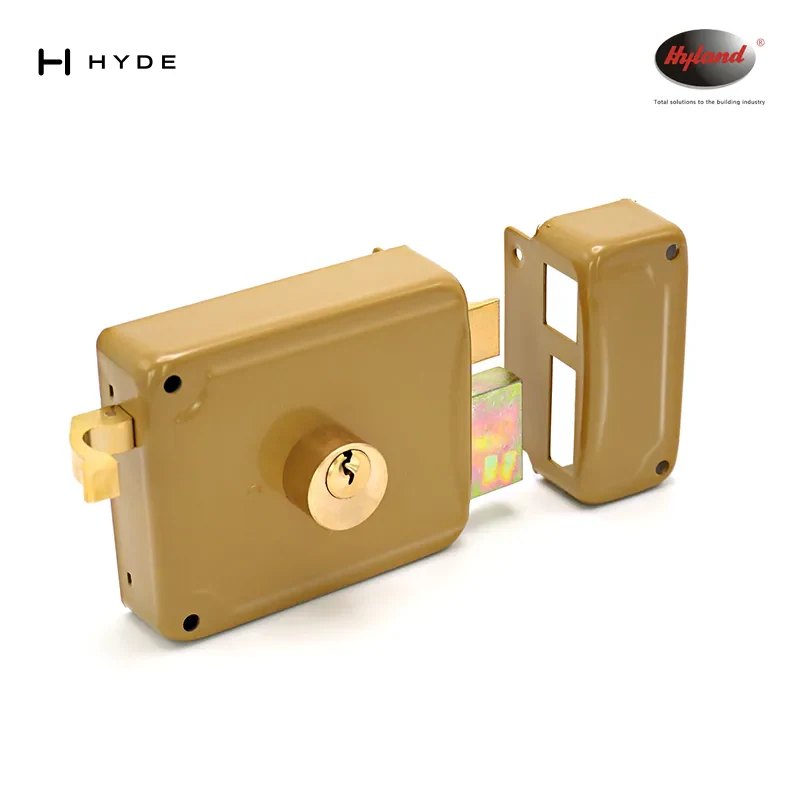
Backset 50mm
Night Latch And Rim Lock
Model 5835 · Video
Steel sheet 1.2mm case, zinc alloy and copper alloy internal components, solid brass cylinders
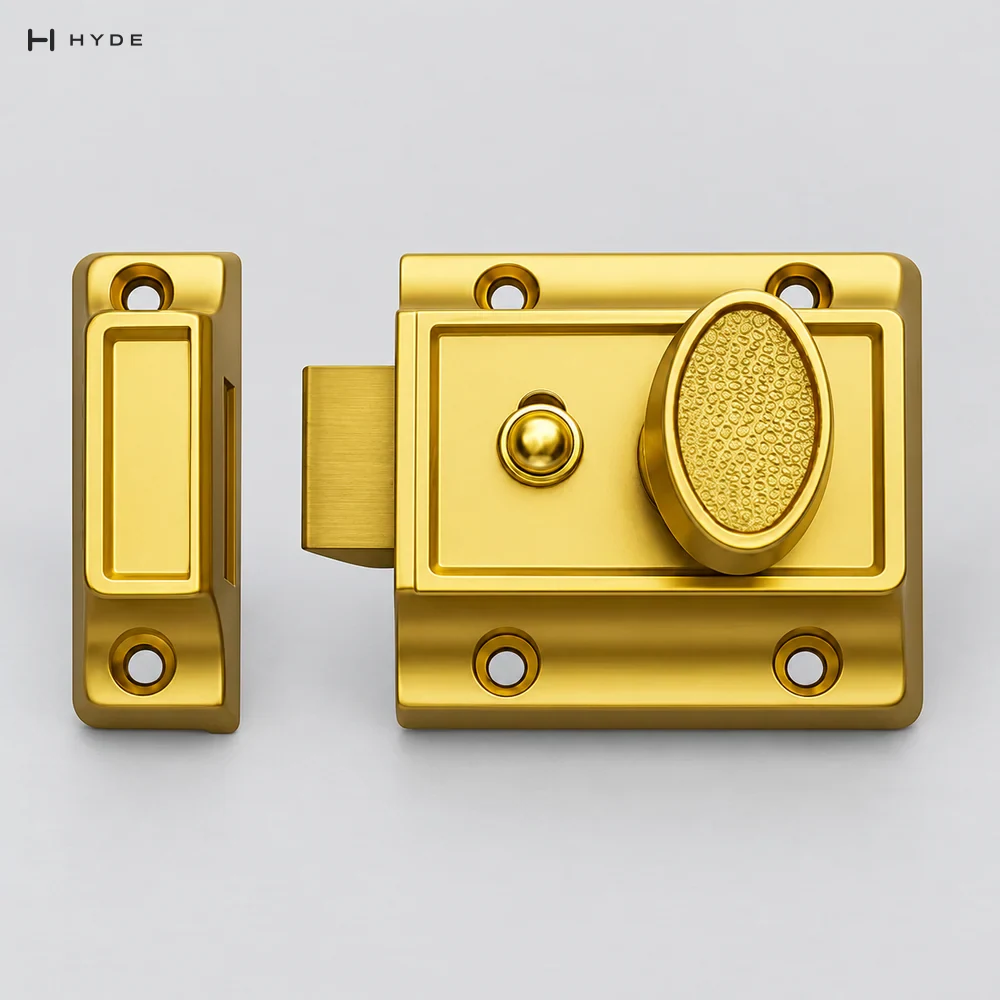
Backset 40mm
Night Latch And Rim Lock
Model S564
case is made of zinc alloy die-casting,
About Canton Hyland — Canton Hyland manufactures panic exit devices, locks and architectural door hardware for commercial and institutional projects, supplying specifiers and distributors internationally.