
How to Write a Keying Schedule, With a Blank Template
A keying schedule is the door-by-door table cylinders are pinned from: door, cylinder type and length, function, key symbol, the master levels that open it, key quantity and notes. Here are the columns, how symbols such as AA1 and AB2 are named, a worked example for a small office, a blank template to copy, and what to send with an order.

Johnson LiuDigital Communications, Canton HylandMA Digital Media, Johns Hopkins University
A keying schedule is a table with one row per cylinder. Each row names the door, says what kind of cylinder goes in it and how long it is, what it does, which key symbol it is pinned to, which master keys also open it, how many keys to cut, and anything unusual about it, such as cross-keying or construction keying. Whoever pins the cylinders works from that table, so a blank cell becomes a guess and a wrong cell becomes a wrong cylinder.
Writing one is four passes over the same list. Number every door that takes a cylinder, using the numbers on the drawings. Fill in the physical columns from measurement: lock case, profile, length, function. Assign key symbols from the hierarchy the building has agreed. Then mark the exceptions. Below are the columns, the symbol convention, a worked example for a small building, a blank template to copy, the mistakes that most often send cylinders back, and what to send a supplier. How many master levels a building needs, and why each level costs capacity, is a separate question with its own articles; this is the working document that comes after that decision.
Three tables that share door numbers
A hardware schedule lists the set of hardware on each door. A key chart lists keys: who holds each one and which doors it opens. A keying schedule lists cylinders, one row per cylinder, read across. They describe the same building from three directions, and the door number is the column that ties them together. If door 07 is the plant room on the drawings and the cleaner's store on the keying schedule, the cylinder will be pinned correctly for the wrong room, and nobody finds out until the keys are handed over.
The columns, and what each one controls
Scroll sideways to compare columns. Select a column heading to sort; select it three times to restore source order.
| Door number | The number on the drawings and the hardware schedule | It is the only thing joining this table to the others |
|---|---|---|
| Location | The room name the users know | People check a schedule by room, not by number |
| Door or hardware type | Leaf material, and the lock case the cylinder serves | A euro mortise case, an oval case, a rim lock and a narrow-stile case take different cylinders |
| Cylinder type and length | Profile, overall length and split | Length is set by the door, not by the keying; a blank here is a guess on site |
| Function | Key both sides, key and thumbturn, or single; the thumbturn side | It decides what a key operates and how people get out |
| Key symbol | The change-key symbol the cylinder is pinned to, such as AA1 | The same symbol on two rows means keyed alike, intended or not |
| Master key level | Every key above the change key that also opens it | It lets a reviewer check the hierarchy door by door |
| Quantity of keys | Change keys to cut for this cylinder or keyed-alike set | Keys are counted per symbol, so a keyed-alike set is counted once |
| Notes | Cross-keying, construction keying, doors kept off a master, finish exceptions | Systems fail at their exceptions, so the exceptions must be visible |
9 rows · Source order
Many schedules add a finish column. On a project with one finish it is cleaner to state the finish once in the header and use the column only for exceptions, because one cylinder in a different finish on a run of matching doors is noticed by every visitor.
Naming key symbols
Most schedules use the standard key coding convention of the North American door-hardware trade, set out in the Door and Hardware Institute's keying nomenclature and reflected in the BHMA recommended practice for mechanical keying systems, A156.28. Its value is that every symbol carries its own position in the hierarchy, so a reviewer can read a row without looking anything up.
In a four-level system the top key is GGM. Each grand master below it takes one letter: A, B. Each master adds a second letter, so the masters under A are AA and AB, and the first master under B is BA. Change keys add a number: AA1, AA2, AB1, AB2. Read AB2 from the left and it says change key 2, under master AB, under grand master A, under the GGM. A five-level system puts a sub-master between master and change key by adding a third letter, AAA, with change keys AAA1, AAA2. A three-level system starts lower: the top key is GM, the masters are A and B, and the change keys are A1, A2, B1.
Two more marks appear on almost every real schedule. An X in front of a symbol, as in XAB2, means the cylinder is cross-keyed: pinned to AB2 but also opened by a key from another branch, which the notes column must name. And a symbol that appears on more than one row means those doors are keyed alike. That is often intended, two doors into one office, and sometimes it is a typing error, so a schedule should state every keyed-alike set in the notes rather than leave the reader to spot the repeat. Whatever convention you use, put a legend at the top of the sheet and keep it the same on every page.
Worked example: a small single-storey office
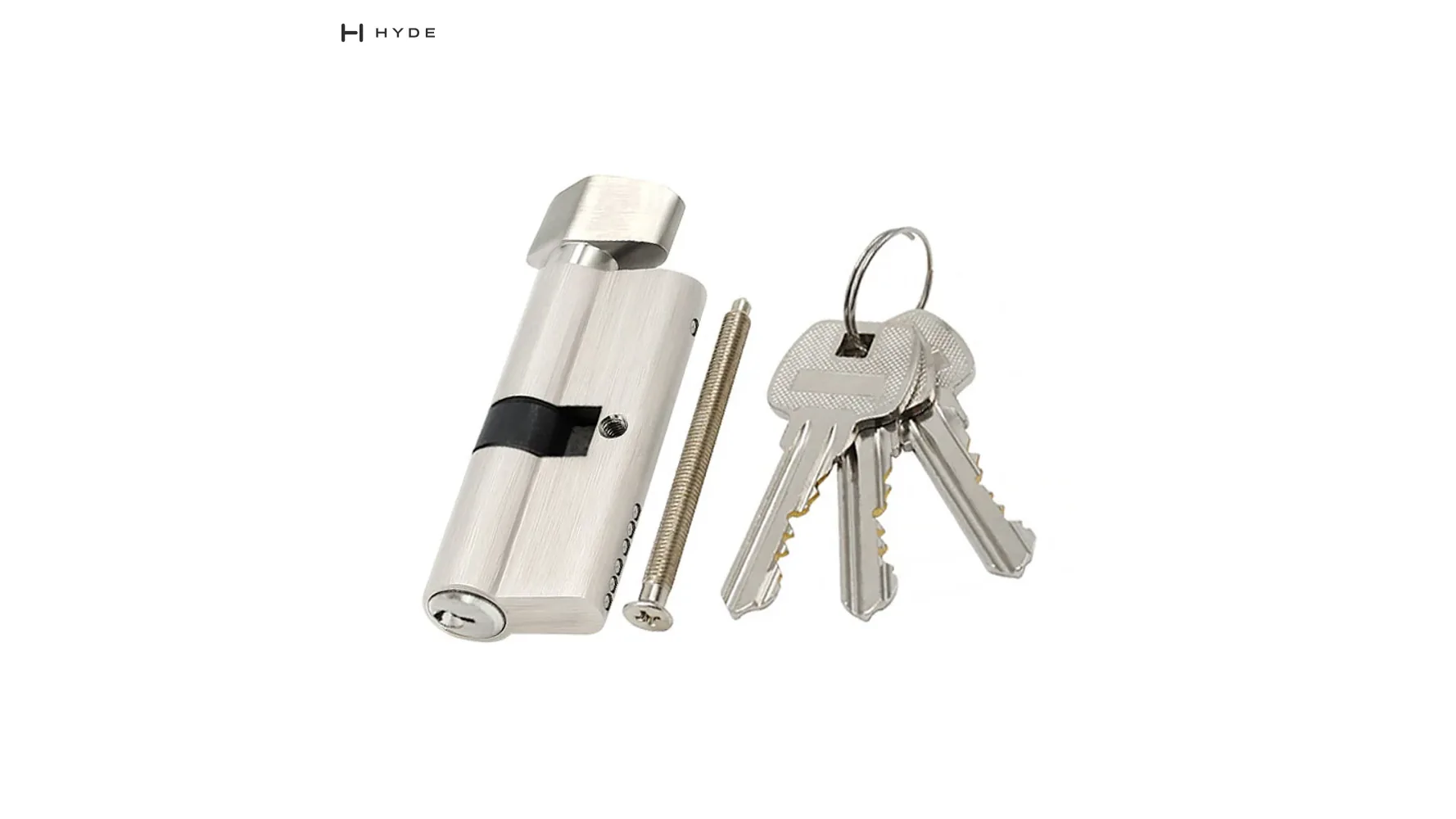
Take a small office with seven lockable doors and three levels: a GM held by the owner, master A for the office side, held by the office manager, and master B for the service side, held by the cleaning contractor. The cylinders are three of our euro profile models, entered only as their records publish them. 70 SNKT-2 is 70mm overall and its record gives the split as 30/10/30; its photograph shows a key on one face and a thumbturn on the other. 60 SNDK is 60mm and 70 SNDK is 70mm, both with double key function. All three are listed in satin nickel (SN). Neither SNDK record publishes a split, so the schedule says so instead of filling one in. The two lengths follow the doors as measured, and they show a point worth keeping: one system can mix lengths, but not profiles.
Scroll sideways to compare columns. Select a column heading to sort; select it three times to restore source order.
| 01 | Main entrance | Timber, euro mortise sashlock | 70 SNKT-2, euro, 70mm, split 30/10/30 | Key outside, thumbturn inside | A1 | A, GM | 6 | One per staff member plus a spare; construction keyed until handover |
|---|---|---|---|---|---|---|---|---|
| 02 | Reception | Timber, euro mortise sashlock | 60 SNDK, euro, 60mm, split to confirm | Key both sides | A2 | A, GM | 2 | |
| 03 | Office 1 | Timber, euro mortise sashlock | 60 SNDK, euro, 60mm, split to confirm | Key both sides | A3 | A, GM | 3 | Keyed alike with 04; keys counted here |
| 04 | Office 2 | Timber, euro mortise sashlock | 60 SNDK, euro, 60mm, split to confirm | Key both sides | A3 | A, GM | 0 | Keyed alike with 03 |
| 05 | Meeting room | Timber, euro mortise sashlock | 60 SNDK, euro, 60mm, split to confirm | Key both sides | XA4 | A, B, GM | 2 | Cross-keyed: B (cleaning) also opens |
| 06 | Cleaner's store | Timber, euro mortise deadlock | 70 SNDK, euro, 70mm, split to confirm | Key both sides | B1 | B, GM | 1 | Not on master A |
| 07 | Plant room | Timber, euro mortise deadlock | 70 SNDK, euro, 70mm, split to confirm | Key both sides | B2 | B, GM | 1 | Not on master A |
7 rows · Source order
Under the table go the master keys themselves, because they belong to no single row: GM ×2, one for the owner and one kept locked away, A ×2 and B ×1. Three things in the example are deliberate. Doors 03 and 04 share A3 because one team uses both rooms; the notes say so, and the keys are counted once. The cleaner's store and the plant room sit under B only, so the office manager's A key does not open them, and the rows state it rather than leaving it to be inferred. And row 05 is the only cross-keyed cylinder: the cleaner's B key opens the meeting room. That is the row to question at review. In a building this size it is usually simpler to move the meeting room into the B group, or to lend the cleaner a key, than to add shear points to the cylinder. The schedule does not make that decision. It makes it visible.
A blank template to copy
Above the table, write four lines: the project name and revision date; the profile and keyway used throughout the system; the levels in use, each with its holder; and the legend for any marks, such as X for cross-keyed and CON for construction keyed. Then write one row per cylinder, not per door. A door with a sashlock and a separate deadlock has two cylinders and takes two rows.
Scroll sideways to compare columns. Select a column heading to sort; select it three times to restore source order.
8 rows · Source order
Mistakes that send cylinders back
Missing or ambiguous lengths. A row that says only 70mm has given half the answer. A euro cylinder is described by its overall length and by its split either side of the cam, and the split decides whether the cylinder sits right on both faces of this particular door. Two conventions add to the confusion. Our 70 SNKT-2 record writes its split as 30/10/30, two 30mm sections either side of a 10mm cam section; the common habit of measuring each side to the center of the cam writes the same cylinder as 35/35. A schedule that uses one convention without naming it can be read as 30/40. Write overall length and split, say which convention you used, and mark a cell 'to measure' rather than leaving it empty. How to measure the door itself is covered in our notes on cylinder length.
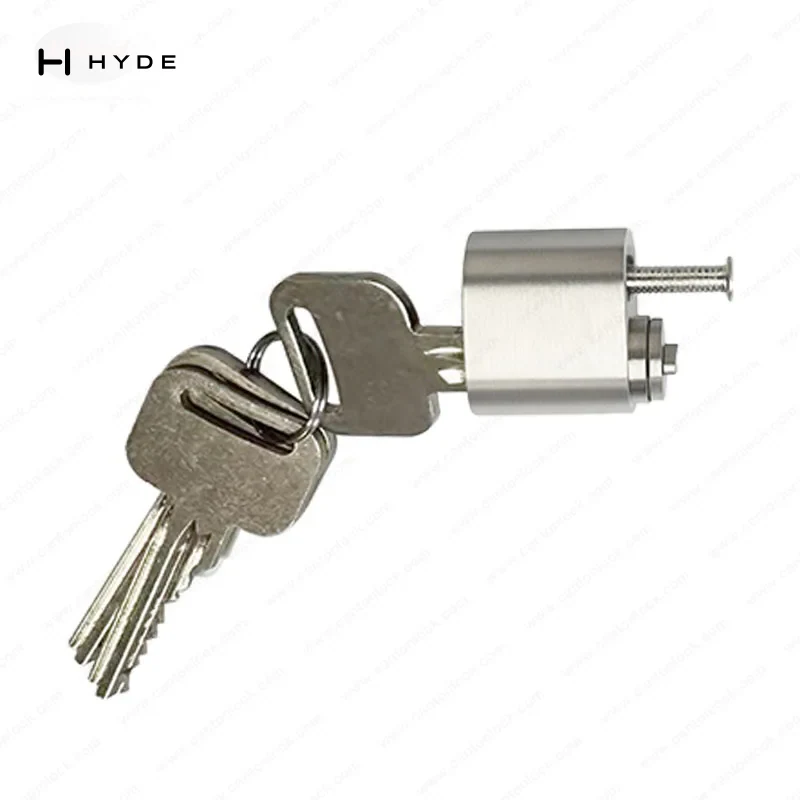
Mixing profiles. Every cylinder in one master-keyed system has to share a profile and a keyway, because a master key has to physically enter every cylinder it opens. A euro cylinder and an oval cylinder are not interchangeable, and neither fits the other's lock case. Our Single oval cylinder is a cylinder of the second kind: its record lists it as an external single cylinder, 30mm with extension sizes optional, 6-pin, supplied with 3 keys. It is a correct product for an oval lock case and an impossible one on a euro-profile schedule. This mistake usually comes from a schedule assembled out of two lock suppliers' catalogs, so check the lock-case column against the profile column before you assign a single symbol.
Cross-keying that eats capacity. Each cross-keyed cylinder answers to keys from more than one branch, which means extra shear points, which removes combinations the rest of the system could have used. Granted one door at a time, it adds up until no further unique change keys can be cut. The defense on the schedule is simple: mark every cross-keyed row with an X, name the second key in the notes, and count the X rows before the schedule goes out. If the count surprises you, the hierarchy probably needs another group rather than more exceptions.
Smaller ones that still cost a reorder: the same symbol typed on two rows by accident, so two rooms end up keyed alike; a key-and-thumbturn cylinder with no note of which face the thumbturn goes on; door numbers that no longer match the latest drawings; and key quantities left blank, which a supplier will fill with whatever comes in the box.
What to send a supplier with the order
Scroll sideways to compare columns. Select a column heading to sort; select it three times to restore source order.
| The schedule, with a revision date | Cylinders are pinned from it; the date settles which version was quoted |
|---|---|
| Profile and keyway for the system | Every cylinder must share them; say if the order extends an existing system and who holds its records |
| Length and split for every row, with the convention | The door decides the length, and the supplier cannot measure your door |
| Function, and the thumbturn side where there is one | Key both sides, key and thumbturn, or single |
| The key summary: each master symbol and how many copies | Master keys appear on no single row, so they are easy to leave off |
| Construction keying, if any, and how it ends at handover | It changes how the cylinders are made, not only how they are packed |
| Finish | One finish across the job unless a row says otherwise |
| How keys are to be marked and packed | Usually by key symbol, so the handover can be checked against the schedule |
8 rows · Source order
On our side, the records for our euro cylinders publish overall length and finish, say where a model has double key function, and on some models give the split. They do not publish master-keying options, so ask, and attach the schedule to the question. A quote written against a schedule can be checked row by row. A quote written against a one-line description cannot, and the difference shows up on the day the keys are handed over.
Questions this answers
What is a keying schedule?
A table with one row per cylinder that records the door, the cylinder type and length, its function, the key symbol it is pinned to, the master keys that also open it, how many keys to cut, and notes such as cross-keying or construction keying. Cylinders are pinned from it, so every blank cell becomes a guess.
What columns should a keying schedule include?
Door number, location, door or lock-case type, cylinder profile with overall length and split, function including the thumbturn side, key symbol, the master levels that also open the cylinder, quantity of keys, and notes for cross-keying, construction keying and doors kept off a master. Add finish as a column or state it once in the header.
What do key symbols like AA1 and AB2 mean?
In the standard key coding convention each character marks a level. In a four-level system GGM is the top key, a single letter such as A is a grand master, two letters such as AB are a master under A, and a number added, as in AB2, is a change key under that master. An X prefix, as in XAB2, marks a cross-keyed cylinder.
What is the difference between a keying schedule and a key chart?
A key chart lists keys: who holds each one and which doors it opens. A keying schedule lists cylinders, one row per cylinder, with the physical data needed to make it: profile, length, split and function. They share door numbers and should be checked against each other.
What should I send a supplier with a master-keyed cylinder order?
The schedule with a revision date, the profile and keyway for the whole system, the length and split for every row with the measuring convention, the function and thumbturn side, a summary of master keys and copies, any construction keying, the finish, and how keys should be marked and packed.
Related products
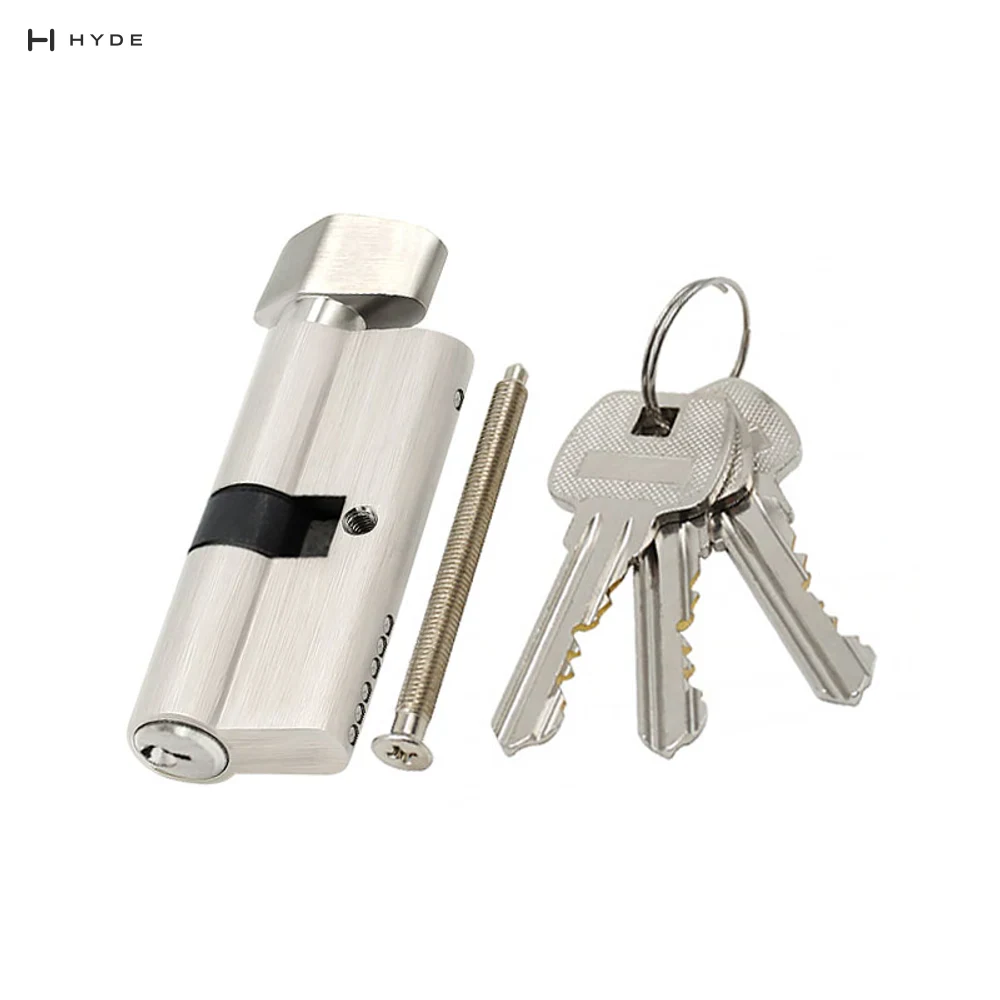
Size 70mm
Lock Cylinder
Model 70 SNKT-2
Solid Brass
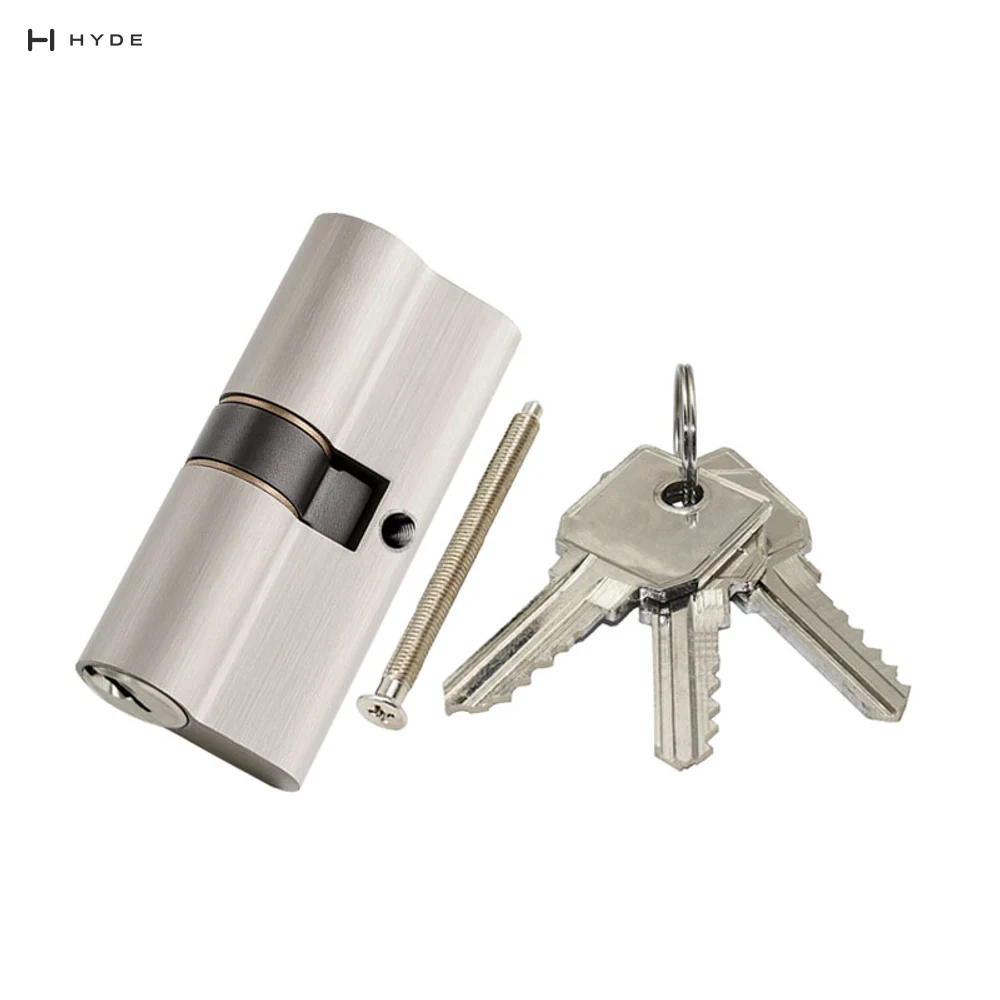
Lock Cylinder
Model 60 SNDK
Solid Brass
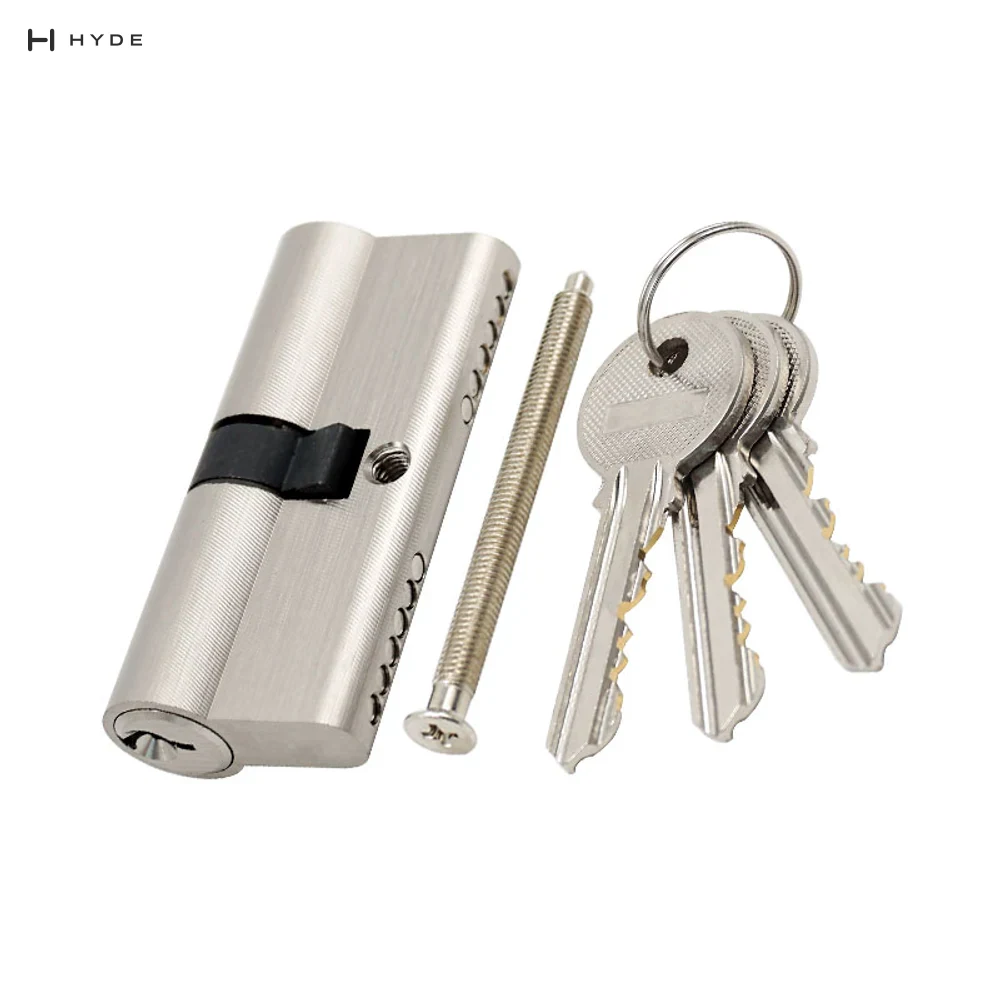
Lock Cylinder
Model 70 SNDK
Solid Brass
About Canton Hyland — Canton Hyland manufactures panic exit devices, locks and architectural door hardware for commercial and institutional projects, supplying specifiers and distributors internationally.