
45 to 90: Reading Our Euro Cylinder Range
In this range the model number is the overall length in millimetres, so 45, 54, 60, 70, 80 and 90 are six lengths rather than six products. All are solid brass. What the letters after the number mean is partly documented and partly not, and this article says which is which.
Insight
Johnson LiuDigital Communications, Canton HylandMA Digital Media, Johns Hopkins University
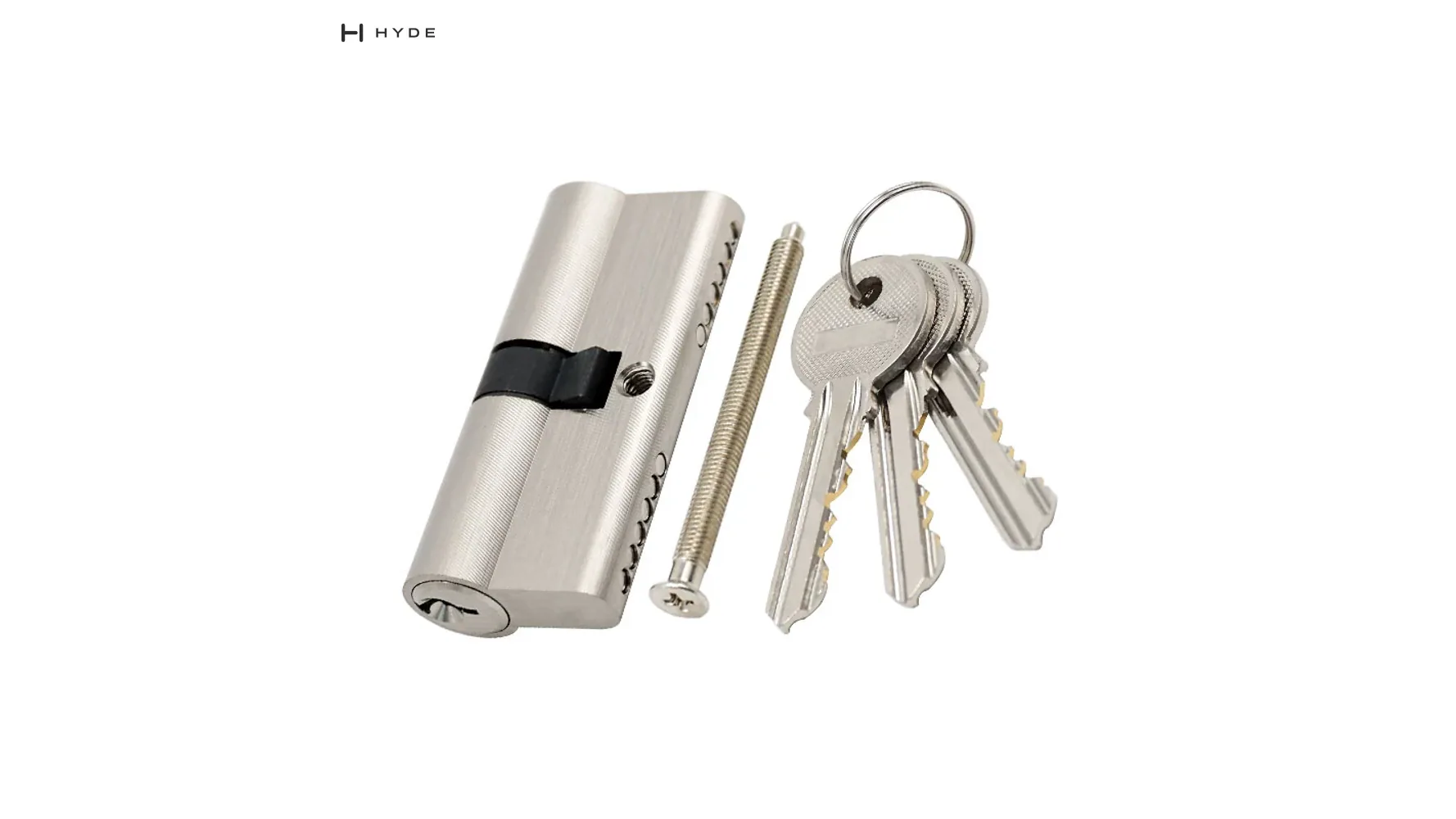
The euro-profile cylinder is the one part of a European door that a buyer can order wrong in the most ways, because almost everything about it is encoded into a short string. In our catalogue that string starts with a number, and the number is the total length of the cylinder in millimetres. The selected range runs 45, 54, 60, 70, 80 and 90, which is six lengths of one product rather than six different products.
That total is not the split. A 70mm cylinder is most often 35/35, but 30/40 and 40/30 are also 70, and they are different parts that fit different doors — the split is measured from the centre of the cam outwards, and the cam is where the fixing screw passes through. We have written that out at length in a separate article, because it is the single most common ordering mistake on this component, and this piece will not repeat it.
Every cylinder in this range is published as solid brass. That is worth stating because brass is not the cheapest way to make a cylinder and the difference is not visible from outside: a brass body machines to a tighter tolerance than a zinc casting, which is what keeps a five-pin mechanism turning smoothly after a decade of a key being pushed at it slightly off-axis. It is also the reason these cylinders can carry a BHMA finish number where a zinc-alloy part cannot — A156.18's base groups are steel, brass and stainless, and zinc is not one of them.
The finishes are published as a list rather than per variant: polished brass (PB), chrome plated (CP), satin nickel and the rest of our standard set. Those letters are documented on our finish and order-code pages, and a finish code on a cylinder behaves the same way as a finish code on any other product — it names an appearance, and the BHMA number needs the base metal as well, which here is always brass.
The letters after the finish are the part that is not fully documented, and we would rather say so than invent it. Several variants in this range carry DK, KT or IK, and those are function codes in our own internal system whose meanings the factory has not yet confirmed to us in writing. They are on the list of six order codes we are waiting on — one finish letter and five function letters. Until that comes back, ask for the function in words in your enquiry and we will match it to the code rather than the other way round.
Two lengths in the selected range carry no published specification rows at all: the 60 and the 90. Five variants of the 60 and four of the 90 are in the catalogue with photographs and no material, finish or size row. The length is in the model number and that is genuinely all we publish about them today. It is on the factory list with the rest, and until it comes back the honest answer to "what is the 60 made of" is that we will ask rather than that it is brass like its neighbours — even though it almost certainly is.
The 70 is the one to look at first if you are choosing a standard for a project, simply on the weight of the range: nineteen published variants against six for the 80 and three for the 45. That is the length the catalogue is built around, and a project standardised on 70mm has the widest choice of finish and function without a special order. If your doors need something else, the length is a manufacturing variable rather than a stock decision, so ask.
A cylinder is also the component most often keyed, and keying is a separate conversation from length. Any of these can be supplied keyed alike within a group, or built into a master key system — our article on master key levels sets out how many tiers a building actually needs, and the answer is usually fewer than the enquiry asks for. What matters at the ordering stage is that keying is decided before the cylinders are cut, and that the keying chart is a document somebody has to own.
About Canton Hyland — Canton Hyland manufactures panic exit devices, locks and architectural door hardware for commercial and institutional projects, supplying specifiers and distributors internationally.