
Master Key Chart: How to Read and Draw One, With a Worked Example
A master key chart lists keys down the side and doors across the top, with a cross wherever a key opens a door. This page reads a worked three-level example for an eight-door clinic (symbols A, AA, AA1), shows how to check rows, columns and a lost key, and gives five steps to draw one and a blank chart to print.

Johnson LiuDigital Communications, Canton HylandMA Digital Media, Johns Hopkins University
A master key chart answers two questions about a building in one table: what does each key open, and which keys open each door. Keys run down the side, doors run across the top, and a cross marks every place a key works. Read along a row and you have everything one key opens; read down a column and you have every key that opens one door. The second reading is the one people need on the day a key goes missing.
This page draws a chart for a small three-level system, explains how to read it, gives five steps for drawing one for your own building, and ends with a blank chart to print. The symbols follow the convention most North American keying schedules use, from the Door and Hardware Institute's handbook Keying Systems and Nomenclature. How many levels a building needs, and why each level costs key capacity, is covered in our article on master key levels.
Three documents, one building
A master key system is described by three tables that share door numbers, and they are easy to confuse because all three get called a chart. The key chart is the one on this page: keys against doors. The keying schedule lists cylinders, one row per cylinder, and the cylinders are pinned from it. The key list records the physical keys: every copy that was cut and who holds it. The chart comes first, because the schedule and the list are both read off it.
Scroll sideways to compare columns. Select a column heading to sort; select it three times to restore source order.
| Key chart | Key | What does this key open, and which keys open this door? | The owner and whoever approves the system |
|---|---|---|---|
| Keying schedule | Cylinder | How is this cylinder pinned, and what fits this door? | The supplier who pins the cylinders |
| Key list | Physical key | Who holds this copy of this key, and since when? | Whoever issues and collects keys |
3 rows · Source order
The symbols, in one paragraph
Letters are master keys and numbers are change keys. In a two-level system the master is AA and the change keys put their number first: 1AA, 2AA, 3AA. In a three-level system the grand master is one letter, A; the masters under it take two letters, AA, AB, AC; and the change keys put the number last: AA1, AA2, AB1. A four-level system adds a great grand master, GGM, above grand masters A and B. A cylinder that no change key opens carries the symbol of the master that does, so a room opened only by master AB and the grand master is written AB. An X in front of a symbol, as in XAA2, marks a cross-keyed cylinder: one also opened by a key from another branch.
A worked example: a two-floor clinic
Take a small clinic with eight lockable doors. The ground floor has reception and two consulting rooms; the first floor has an office, a records room and a staff room; the basement has a plant room and a cleaner's store. The owner wants one key for everything. The practice manager runs the ground floor, the office manager the first floor, and a maintenance contractor needs the service rooms and nothing else. That is three levels: grand master A, three masters, and change keys under each.
Scroll sideways to compare columns. Select a column heading to sort; select it three times to restore source order.
| A | Clinic owner | 2 | × | × | × | × | × | × | × | × | 8 |
|---|---|---|---|---|---|---|---|---|---|---|---|
| AA | Practice manager | 1 | × | × | × | 3 | |||||
| AB | Office manager | 1 | × | × | × | 3 | |||||
| AC | Maintenance contractor | 1 | × | × | 2 | ||||||
| AA1 | Reception staff | 2 | × | 1 | |||||||
| AA2 | Doctor, room 1 | 2 | × | 1 | |||||||
| AA3 | Doctor, room 2 | 2 | × | 1 | |||||||
| AB1 | Office staff | 2 | × | 1 | |||||||
| AB2 | All staff | 4 | × | 1 | |||||||
| AC1 | Maintenance contractor | 1 | × | 1 | |||||||
| AC2 | Cleaning staff | 2 | × | 1 | |||||||
| Keys per door | 3 | 3 | 3 | 3 | 2 | 3 | 3 | 3 |
12 rows · Source order
Across the top, 101 is reception, 102 and 103 the consulting rooms, 201 the office, 202 records, 203 the staff room, 001 the plant room and 002 the cleaner's store. Use the door numbers on the drawings rather than room names, because the same numbers have to appear on the keying schedule and on the hardware schedule.
How to read it
Read a row to check a person. The AB row has crosses on 201, 202 and 203 and nowhere else, which is exactly what an office manager should open. A cross in a row that its holder has no business with means the chart is wrong, and it is far cheaper to fix on paper than in brass.
Read a column to check a door. Column 202 has two crosses, A and AB, and no change key: nobody below the office manager opens the records room, which is why its cylinder is written AB. Every other column has three crosses, the grand master, one master and one change key. That is the normal shape of a column in a three-level system, and a column that departs from it is the one to look at.
Read the bottom line to see the load on each cylinder. The number of keys that open a door is the number of keys its cylinder must accept, and each key beyond the change key generally needs extra splits in the pin stacks. A column with crosses from two masters is a cross-keyed cylinder. It should carry an X in its symbol and a note naming both keys, and it is the first column to question, because cross-keying uses capacity the rest of the system may need.
Read a row again when a key is lost. Lose AB and its row lists what is exposed: 201, 202 and 203, three cylinders to recore and one master to recut. Lose A and every door in the building is exposed, which is why the chart gives the grand master the fewest copies, and why the key list should say exactly where each copy is.
The same building as a tree
Many charts are drawn as a tree instead of a grid: the top key at the head, a branch for each master, a leaf for each change key. A tree shows the hierarchy at a glance and hides the door numbers, so it makes a good cover sheet and a poor working document. Written as a table, the clinic's tree reads:
Scroll sideways to compare columns. Select a column heading to sort; select it three times to restore source order.
| Grand master | A | AA, AB, AC |
|---|---|---|
| Master | AA | AA1, AA2, AA3 |
| Master | AB | AB1, AB2, and the records room cylinder AB |
| Master | AC | AC1, AC2 |
4 rows · Source order
If the clinic did not need a master per floor, the same doors would make a two-level system: one master, AA, and change keys 1AA, 2AA and onward. The grid is drawn the same way, with one master row instead of three. A four-level system adds a great grand master row at the top, GGM, with a cross in every column, and a second grand master, B, with masters BA and BB under it.
We build master key systems of up to five levels. Above four levels the DHI handbook leaves the symbols to the manufacturer, so a five-level chart has to carry its own legend, written on the sheet, before anyone can read it.
Drawing one for your building
Five steps, in this order. First, write every door that takes a cylinder across the top, using the numbers on the drawings. Second, write every person or role that holds keys down the side, and next to each one what they must open. Third, group the doors that the same people open: each group becomes a master, and groups that answer to the same manager sit under one grand master. Fourth, assign symbols from the top down, letters for masters and numbers for change keys. Fifth, mark the crosses, count every row and every column, and look for the exceptions: a door with crosses from two masters, a door with no change key, and a change key with crosses in two columns, which means those two cylinders are keyed alike.
Before the chart goes out, check it against capacity. How many masters and change keys one level can hold is worked out in our article on master key levels; the short version is that the number of masters and the size of the largest group have to be settled together, and the chart is where both are visible. Then date the chart, give it a revision number, and keep it with the keying schedule. A chart that disagrees with the schedule is worse than no chart, because both look authoritative.
A blank chart to print
The sheet attached to this article is the same grid on one landscape page: sixteen door columns, twenty key rows, a header for the project, keyway, levels in use and revision, and the clinic example on the second page. Print it, or use your browser's Save as PDF. For a handful of doors, the table below can be copied straight into a spreadsheet.
Scroll sideways to compare columns. Select a column heading to sort; select it three times to restore source order.
8 rows · Source order
What to send us
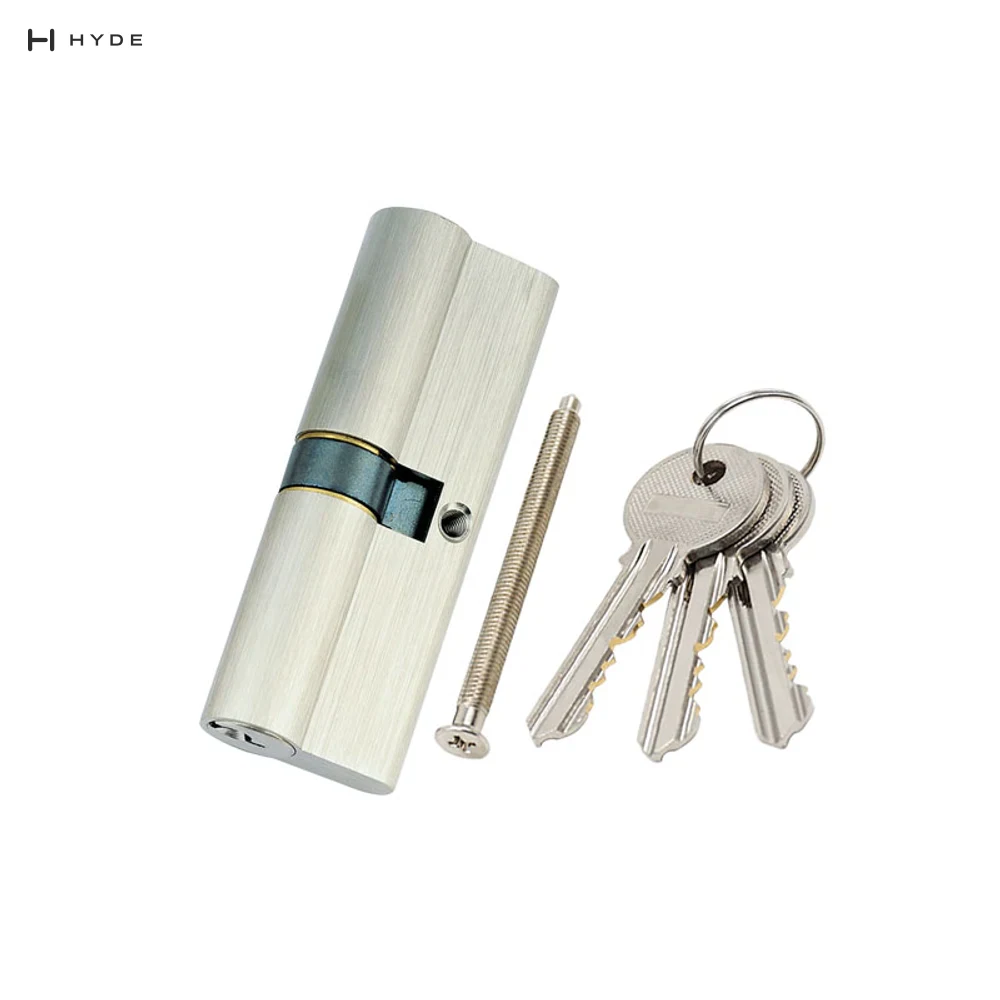
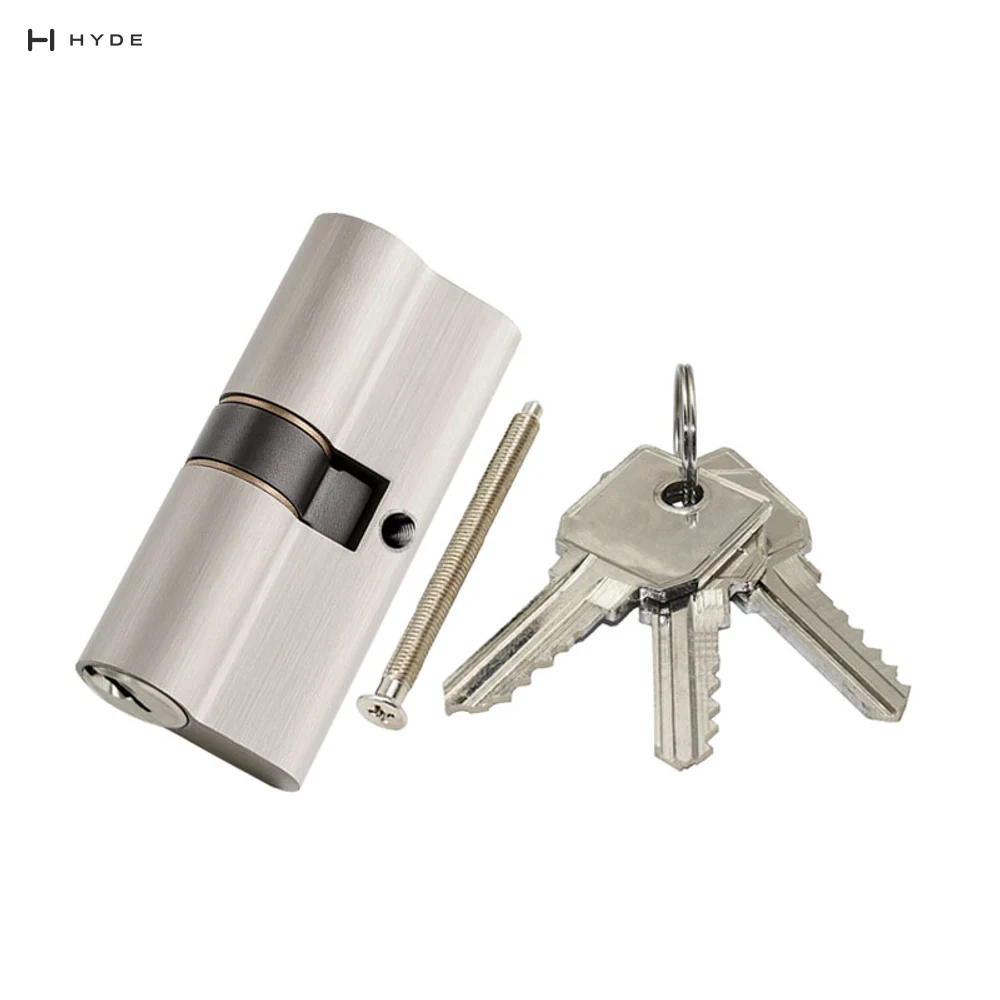
Send the chart, or the door list and who needs what if the chart is not drawn yet, together with the keyway the system should use and the door thickness at each cylinder. Our euro profile cylinders, such as the 60 SNDK, 54 SNDK and 90 SNDK, published with double key function, and the 80 SNKT, are pinned to the symbols on the chart, and the keying schedule that comes back carries the same symbols, so the two can be checked against each other line by line. A system is drawn for one building, and we would rather question a cross on paper than ship a cylinder that opens a door it should not.
Questions this answers
What is a master key chart?
A table with keys down the side and doors across the top, and a cross wherever a key opens a door. Read a row to see everything one key opens; read a column to see every key that opens one door. It is drawn before the keying schedule, which lists cylinders, and the key list, which records who holds each copy.
How do you read a master key chart?
Across a row to check a person: the crosses should match the doors that holder needs. Down a column to check a door: in a three-level system a normal column has three crosses, the grand master, one master and one change key. A column with crosses from two masters is a cross-keyed cylinder, and the row of a lost key lists every cylinder to recore.
What do A, AA and AA1 mean on a master key chart?
They are the DHI symbols for a three-level system: A is the grand master, AA and AB are masters under it, and AA1 and AA2 are change keys under master AA. A two-level system writes the master as AA and the change keys as 1AA, 2AA. An X in front, as in XAA2, marks a cross-keyed cylinder.
Is a master key chart the same as a keying schedule?
No. The chart has one row per key and shows who opens what. The keying schedule has one row per cylinder and is what the cylinders are pinned from. They share door numbers and key symbols, so each can be checked against the other.
How many levels can a master key chart show?
As many as the system has. We build master key systems of up to five levels. The DHI handbook gives symbols for up to four; above that the manufacturer's own notation applies, so a five-level chart must carry its own legend.
Related products
Lock Cylinder
Model 90 SNDK
Solid Brass
Lock Cylinder
Model 60 SNDK
Solid Brass
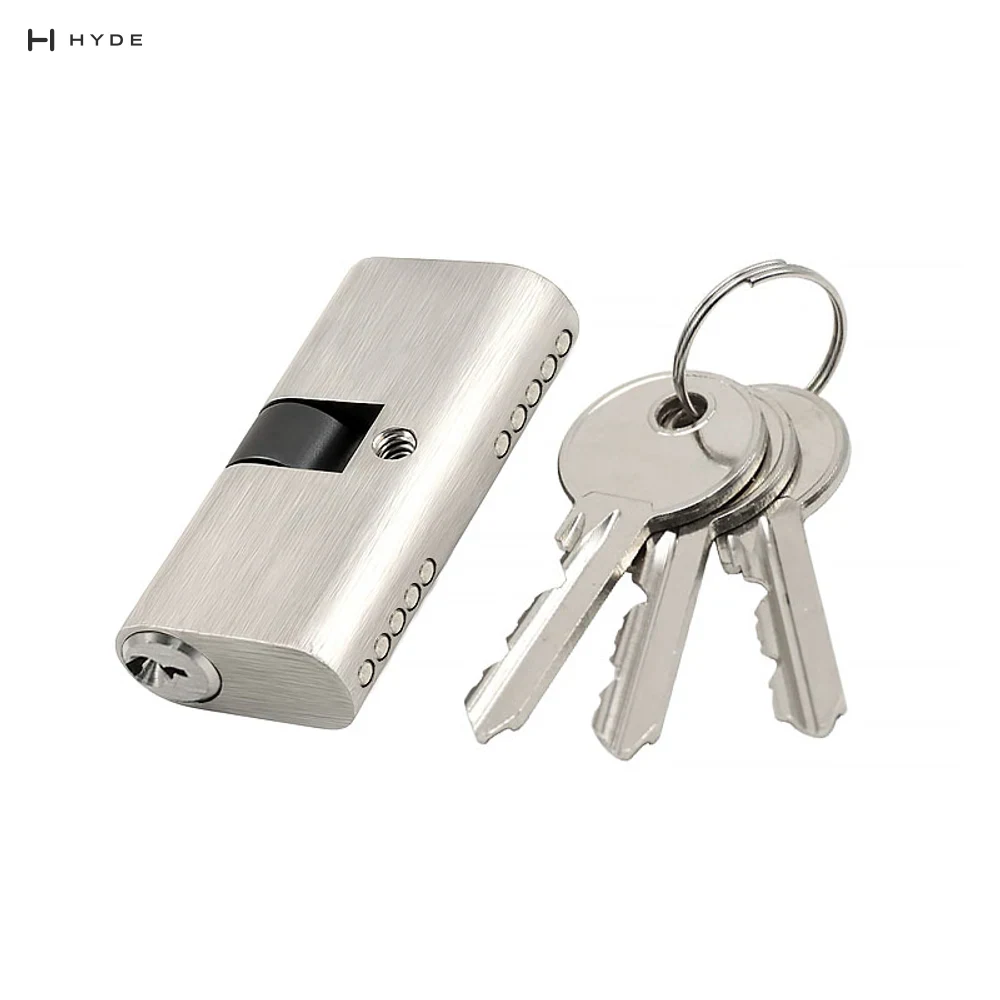
Lock Cylinder
Model 54 SNDK
Solid Brass
About Canton Hyland — Canton Hyland manufactures panic exit devices, locks and architectural door hardware for commercial and institutional projects, supplying specifiers and distributors internationally.