
Rim Locks on Steel Doors and Gates: Welded or Screwed, and the Double Cylinder
A rim lock can be screwed or welded to a steel door or gate: screwing keeps it serviceable, welding makes it permanent. This article compares six steel-door rim locks, the 5835, 5836, 5833, 5688, 5689 and G559, on fixing method, case, backset and double cylinder, and says which figures are still being confirmed.

Johnson LiuDigital Communications, Canton HylandMA Digital Media, Johns Hopkins University
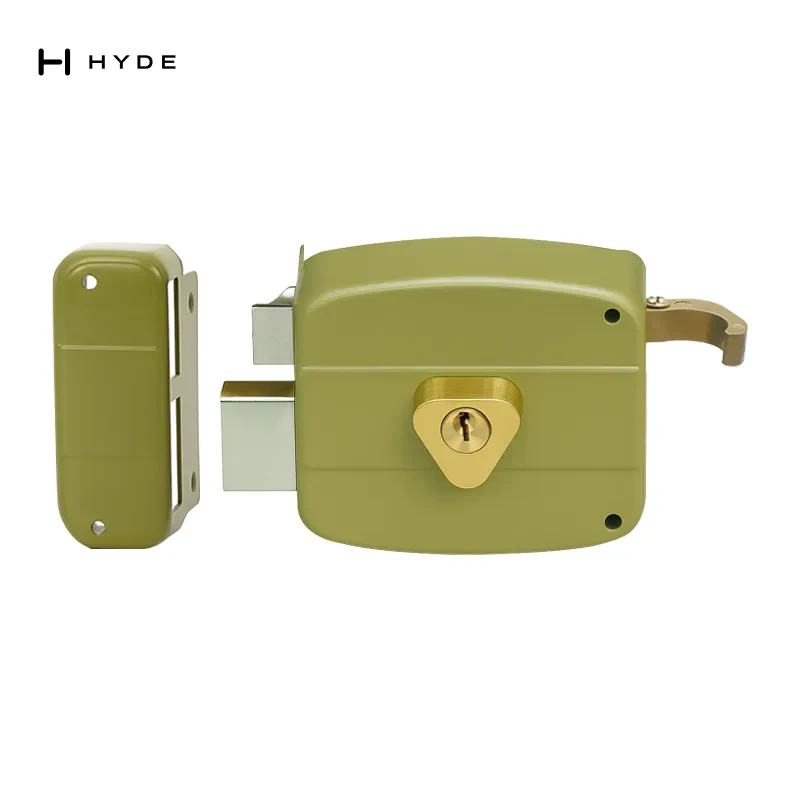
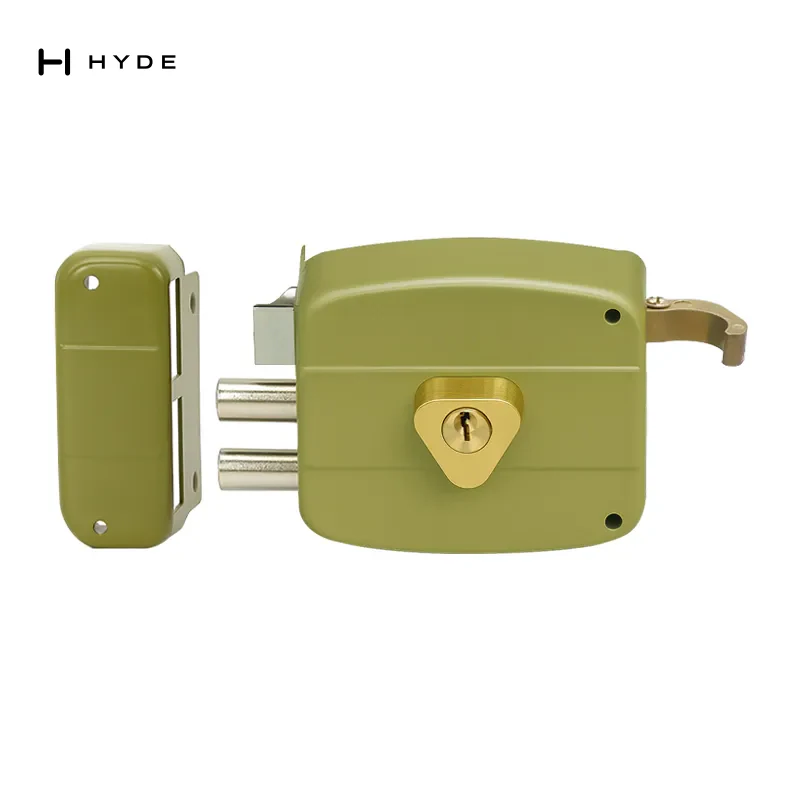
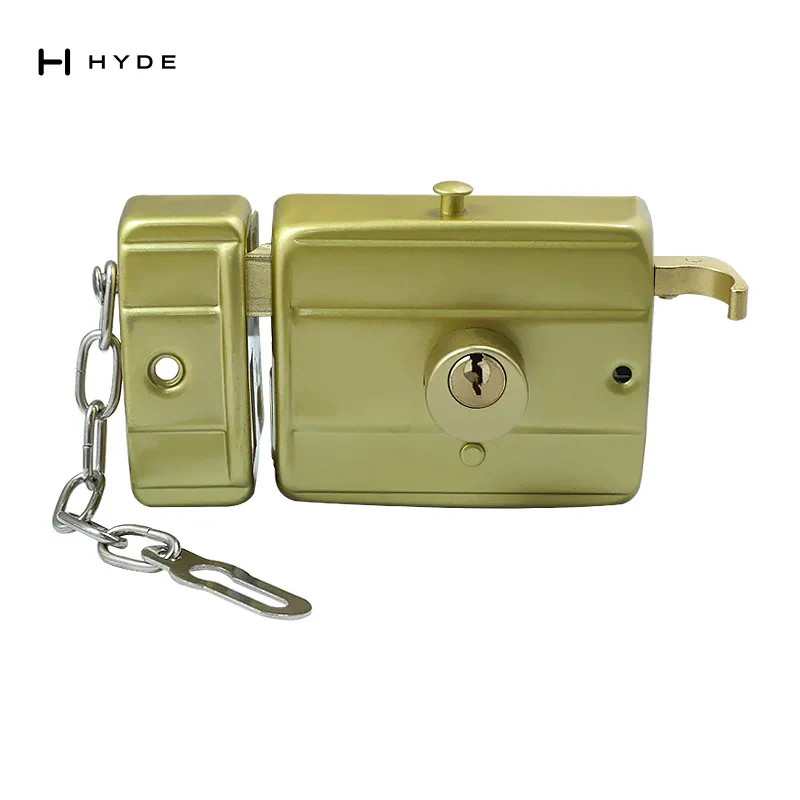
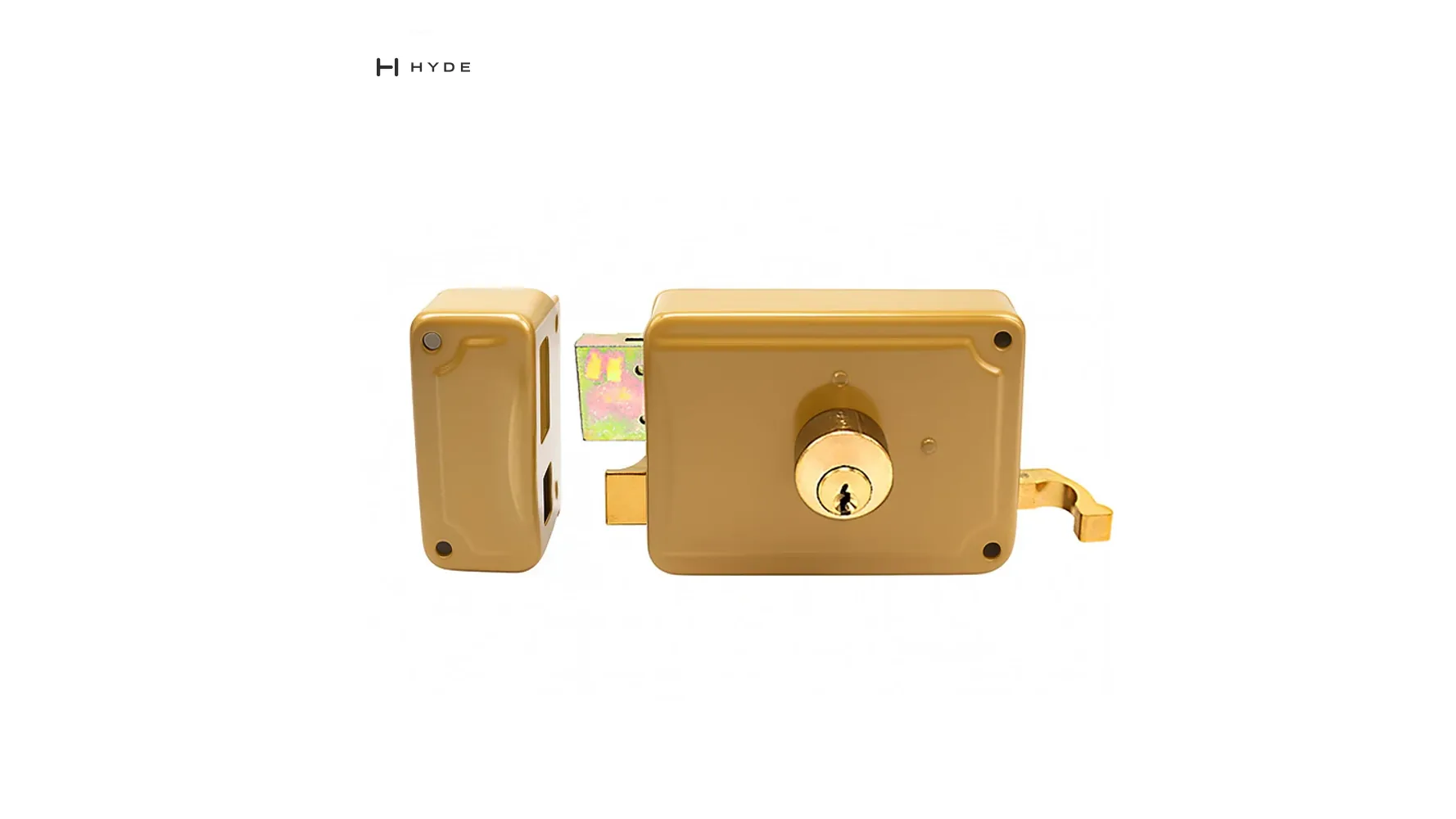
Both work, and the choice is about the life of the lock rather than its strength. A rim lock screwed to a steel door or gate can be taken off, rekeyed, moved or replaced. A welded one cannot be removed by anyone with a screwdriver, and comes off only with a cutting disc. Of the six steel-door rim locks in this article, two publish both methods: the 5835 and the 5836 are listed for screws or welding, with installation accessories included. The others publish what they fit rather than how: the 5833 is listed for iron doors, and the 5688 and 5689 for wooden or iron doors, with installation screws included. The G559 record publishes neither a door type nor a fixing method.
The second half of the question is the cylinder. On a gate, and on any steel door with a grille or glass beside the lock, the inside of the lock is within reach from outside, so the usual answer is a double cylinder: a key on both faces, and no knob for a hand through the bars to find. The 5833, 5688, 5689 and G559 records each state a double cylinder, and the 5835 and 5836 list brass cylinders inside and outside. The price is a door that nobody can open from inside without the key, which matters wherever that door or gate is also the way out. This article is about steel. Night latches on timber doors, with their backset, door thickness and strike questions, are covered in our earlier article on the 564 and the 1073, and that ground is not repeated here.
Why a steel door changes the fixing
On a timber door a screw cuts its own thread in the wood and holds along the whole length of that thread. Sheet steel offers a thread no deeper than the sheet is thick, so a wood screw in a hollow steel door or a thin gate plate holds on a turn or two and strips under the first hard pull. The general options on steel are self-tapping screws sized for sheet, machine screws into tapped holes or rivet nuts, bolts through the full section with a nut on the far side, or welding. Which of these the screws in our boxes are meant for is not published, so if you are fixing to thin sheet, ask before the order rather than after.
A gate adds a second problem: there is often no leaf to fix to. The lock goes on the stile, the vertical member at the closing edge, or on a plate fixed across the stile and the infill, and the keeper goes on the post. The cylinder has to pass through whatever the lock is mounted on, so the door thickness row matters here as much as on a door. On all six models it is 35mm to 55mm as standard and 30mm to 60mm on request, and on a gate that figure is the depth of the stile or plate the cylinder passes through, not the thickness of the bars.
Screwed: the lock you can still service
Screwing keeps every later option open. A rim lock on a gate lives outdoors, takes the shock of the gate swinging shut against its post, and gets rekeyed when keys go missing. A screwed lock comes off in minutes for any of that. The 5688 and 5689 list installation screws in the box, and the 5835 and 5836 list installation accessories, packed one set per box with fasteners. None of the records itemizes screw sizes or lengths, so check them against your steel when the samples arrive.
The weakness of a screwed lock on a gate is that the screw heads may be reachable. The case sits on the inside face, and if the infill is open bars or mesh, someone outside may be able to reach the fixings. On a solid sheet door they are on the protected side and the point does not arise. That reach-through problem is the same one that calls for a double cylinder, and it is the usual reason people weld.
Welded: permanent, and hot
Welding is common on steel gates because a welded case cannot be unscrewed from either side and does not depend on a thread in thin metal. The cost is permanence. A welded rim lock that fails, or whose keys are all lost, comes off with a cutting disc, and the gate needs refinishing where it was.
Heat is the second cost. The 5835 and 5836 are steel sheet cases with zinc alloy and copper alloy internal components and solid brass cylinders, and the case and strike plate carry an electrostatic powder coating. General practice on a lock built like that is to weld in short tacks with time to cool between them, keep the heat well away from the cylinder and the moving parts, and expect to touch up the coating at every weld. The records list the cylinder as fixed or loose type. Confirm which one you are ordering, because a cylinder that comes out can be kept out of the heat. We do not publish weld tabs or a weld plate for any of these models, and the installation accessories included with the 5835 and 5836 are not itemized. Ask what is in the box before you plan where the welds go.
There is a middle way that many gate fabricators use: weld the fixing points to the gate, not the lock. A plate or a set of nuts welded to the stile, with the lock bolted to them from the inside, gives a fixing that cannot be unscrewed from outside and still leaves the lock removable. It also keeps welding heat away from the lock altogether.
The case gauge, and one open question
The 5835 and 5836 share a case size of 100 × 85 × 25mm, a 50mm backset and the powder-coated steel case and strike. Gauge is where they are meant to differ. The 5835 is published with a 1.2mm steel sheet case. For the 5836, our own records disagree, one giving 1.2mm and another 1.5mm, and the figure is being confirmed with the factory. We would rather say that than pick one. If case gauge is part of your specification, ask for it in writing with the quotation. Gauge matters to both fixing methods: thin sheet is easier to burn through when welding, and it gives a screw less to hold. It is one input among several, though. On a rim lock the bolt, the keeper and the fixings carry the load as well as the case.
The other published differences between the two are the deadbolt and the keys. The 5835 deadbolt is color zinc-plated iron; the 5836 deadbolt is brass. Both are listed as two- or three-throw, meaning each turn of the key extends the bolt further. The 5835 comes with five keys and the 5836 with three, with brass or iron keys as options. On a gate in the weather, a brass bolt will not rust, while plated iron depends on its plating.
Double cylinder: when it is right, and when it is not
A single-cylinder rim lock has a key outside and a knob inside. On a solid door that is the safe arrangement, because nobody needs a key to get out. On a gate of bars or mesh, or a steel door with a glazed panel beside the lock, the inside knob is a handle for anyone who can reach it, and that is the case the double cylinder exists for.
The objection to a double cylinder is the same everywhere: in a fire or any emergency, the key has to be found before anyone gets out. Many jurisdictions restrict key-operated locks on doors that form part of a means of escape. A perimeter gate that is locked only when the property is empty is a different case from the front door of an occupied building, and the decision belongs to whoever is responsible for the building, under local rules. Our family sheet lists single-cylinder, double-cylinder and self-locking functions; if you need a single-cylinder version of one of these six, ask whether that model is made that way.
The six models side by side
Scroll sideways to compare columns. Select a column heading to sort; select it three times to restore source order.
| 5835 | Steel sheet 1.2mm, 100 × 85 × 25mm, powder coated | 50mm | Brass, inside and outside | 5 | Screws or welding |
|---|---|---|---|---|---|
| 5836 | Steel sheet, gauge being confirmed, 100 × 85 × 25mm, powder coated | 50mm | Brass, inside and outside | 3 | Screws or welding |
| 5833 | Iron and brass | 50mm | Double | 3 brass | Not published; listed for iron doors |
| 5688 | Iron, 100 × 100mm | Not published | Double, double throw | Not published | Installation screws included |
| 5689 | Iron, zinc-plated steel internals, 100 × 100mm, painted | 60mm | Double, solid brass plug | Not published | Installation screws included |
| G559 | Iron body, painted | 60mm | Brass double cylinder | 3 iron | Not published |
6 rows · Source order
Read the blanks as blanks. The 5688 publishes its case size but no backset and no key count; the 5689 publishes its backset but not its key count; the G559 publishes neither a fixing method nor a case size. The family sheet gives a 25mm deadbolt throw on rim deadbolt versions, but the throw of each model here is not published separately. None of these is a reason to guess, and we have not.
Backset on a gate stile
On a gate, backset decides whether the cylinder hole lands in metal. The 5833, 5835 and 5836 have a 50mm backset, the 5689 and G559 a 60mm backset. Measured from the closing edge, that is where the cylinder passes through, and on a gate it has to pass through the stile or a plate, not through the gap beside it. Measure the stile before choosing between the two.
The keeper gets the same choice as the lock, welded or screwed, on the post. The angle strike is standard for inward-opening doors and a flat strike is available, and all six are fully reversible, left or right hand. Gates also sag over time; when the bolt stops meeting the keeper, the fix is usually at the hinges rather than at the lock. That is one more reason to screw whichever part you may need to move.
What to tell us when you ask
Steel door or gate; the depth the cylinder passes through and the width of the stile; which way it opens; welded, screwed, or screwed to welded fixing points; single or double cylinder, and whether the door is on an escape route; and how many keys per lock. If several locks should open with one key, say so. Keying options for these six are not published, so that is answered per order rather than promised here.
Questions this answers
Can you weld a rim lock to a steel gate?
Yes, if the lock is made for it. Of our models, the 5835 and 5836 are listed for screws or welding. Welding makes the lock permanent: it comes off only with a cutting disc. General practice is to weld in short tacks, keep the heat away from the cylinder and the moving parts, and touch up the coating afterward. A common alternative is to weld fixing points to the gate and bolt the lock to them, which keeps it removable.
What is the G559 rim lock?
The G559 is a rim lock with a painted iron body, a brass double cylinder, a 60mm backset and three iron keys. It takes doors 35mm to 55mm thick as standard and 30mm to 60mm on request, has a latch with an inside deadlocking button, and is fully reversible. Its record does not publish a fixing method or a case size.
Should a gate lock have a double cylinder?
Usually, when the inside of the lock can be reached through bars, mesh or glass, because an inside knob is then a handle for anyone outside. The cost is that nobody can open it from inside without the key, so on a door or gate that is part of an escape route, local rules decide, and many jurisdictions restrict key-operated locks there.
Is the 5836 case 1.2mm or 1.5mm steel?
Our records disagree, one giving 1.2mm and another 1.5mm, and the figure is being confirmed with the factory. The 5835 is published with a 1.2mm steel sheet case. If case gauge is part of your specification, ask for it in writing with the quotation.
Related products
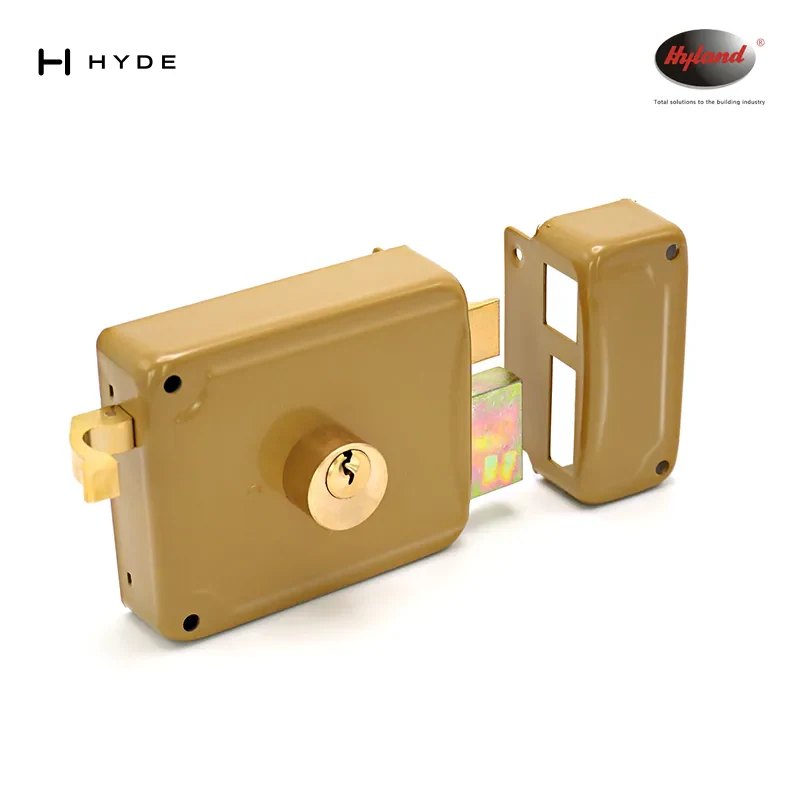
Backset 50mm
Night Latch And Rim Lock
Model 5835 · Video
Steel sheet 1.2mm case, zinc alloy and copper alloy internal components, solid brass cylinders
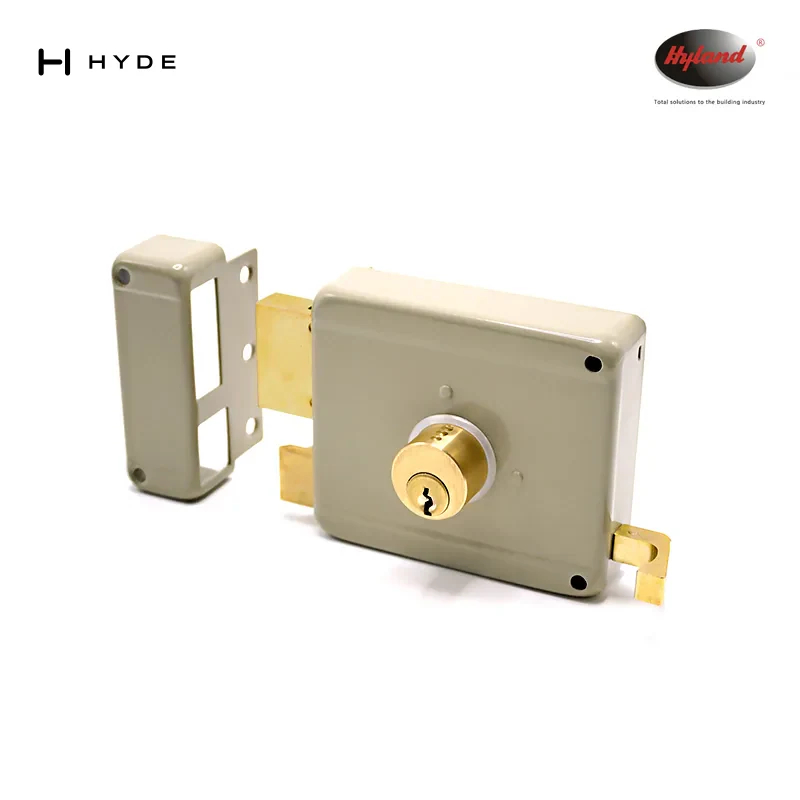
Backset 50mm
Night Latch And Rim Lock
Model 5836 · Video
Steel sheet 1.2mm case, zinc alloy and copper alloy internal components, solid brass cylinders
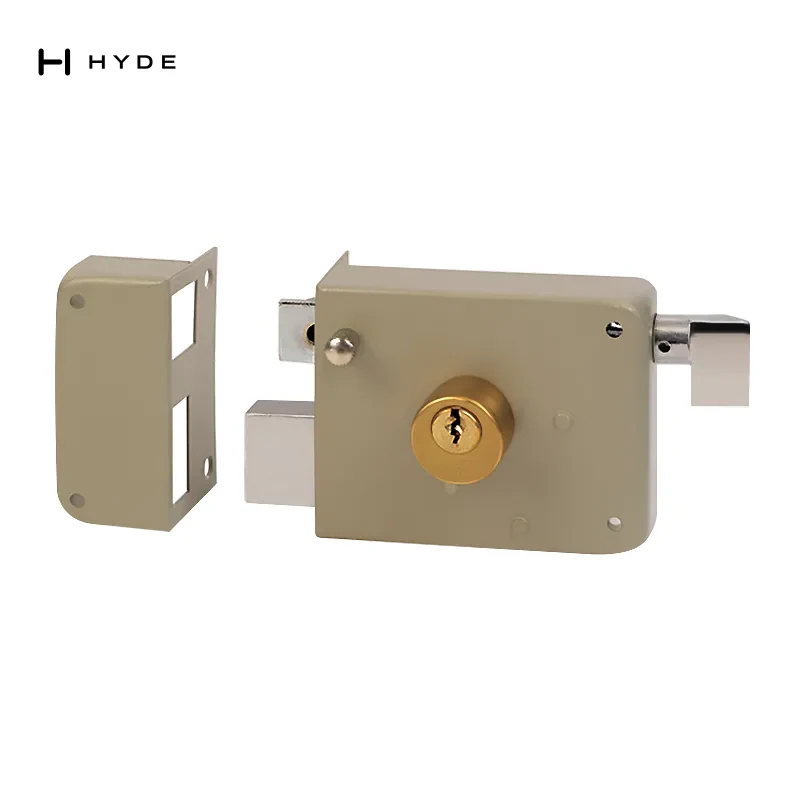
Backset 50mm
Night Latch And Rim Lock
Model 5833
Iron And Brass
About Canton Hyland — Canton Hyland manufactures panic exit devices, locks and architectural door hardware for commercial and institutional projects, supplying specifiers and distributors internationally.