
Key and Thumbturn Euro Cylinders: Which Side the Turn Goes, and How to Split the Length
On a key-and-thumbturn euro cylinder the turn always goes inside, on the secure side. The split is measured from the cam center like any euro cylinder, but it has a fixed direction, and the turn half is measured to the body, not to the knob. Here is how to order it, where a thumbturn should not be used, and how it compares with double-key and emergency-function cylinders.

Johnson LiuDigital Communications, Canton HylandMA Digital Media, Johns Hopkins University
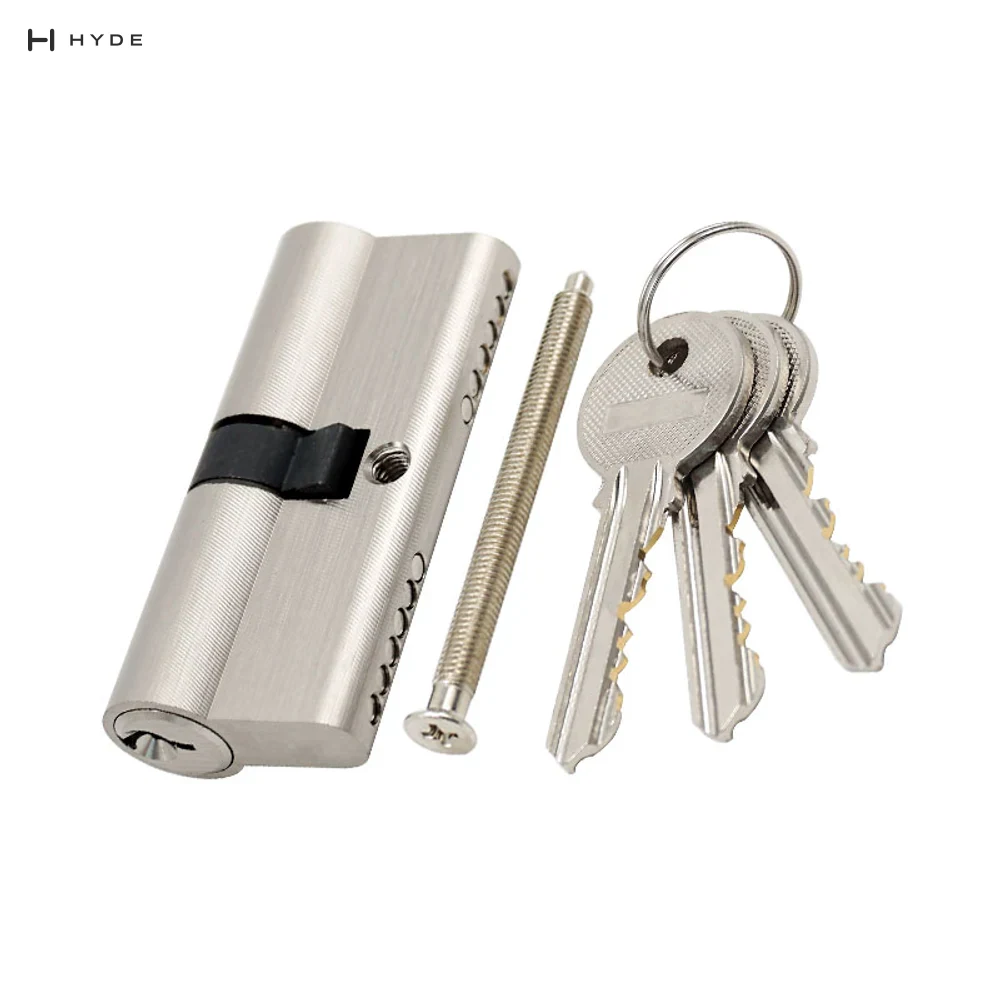
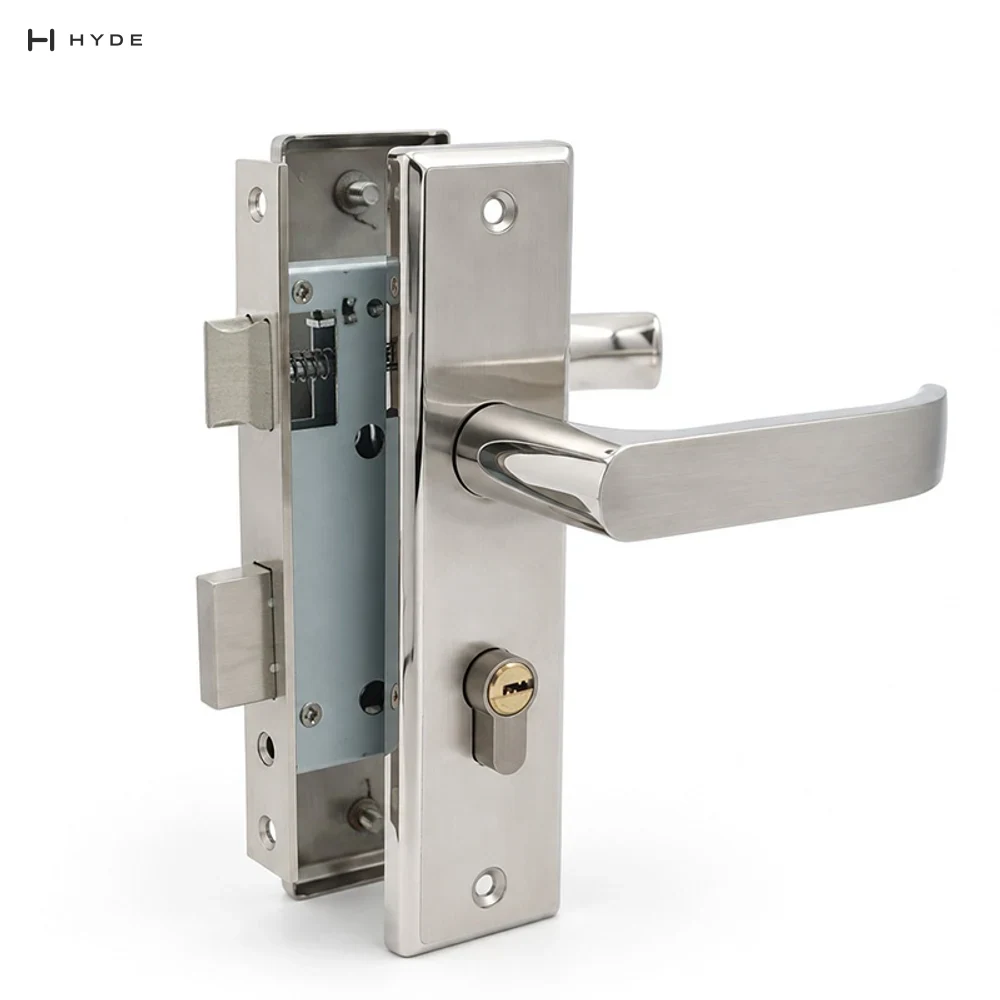
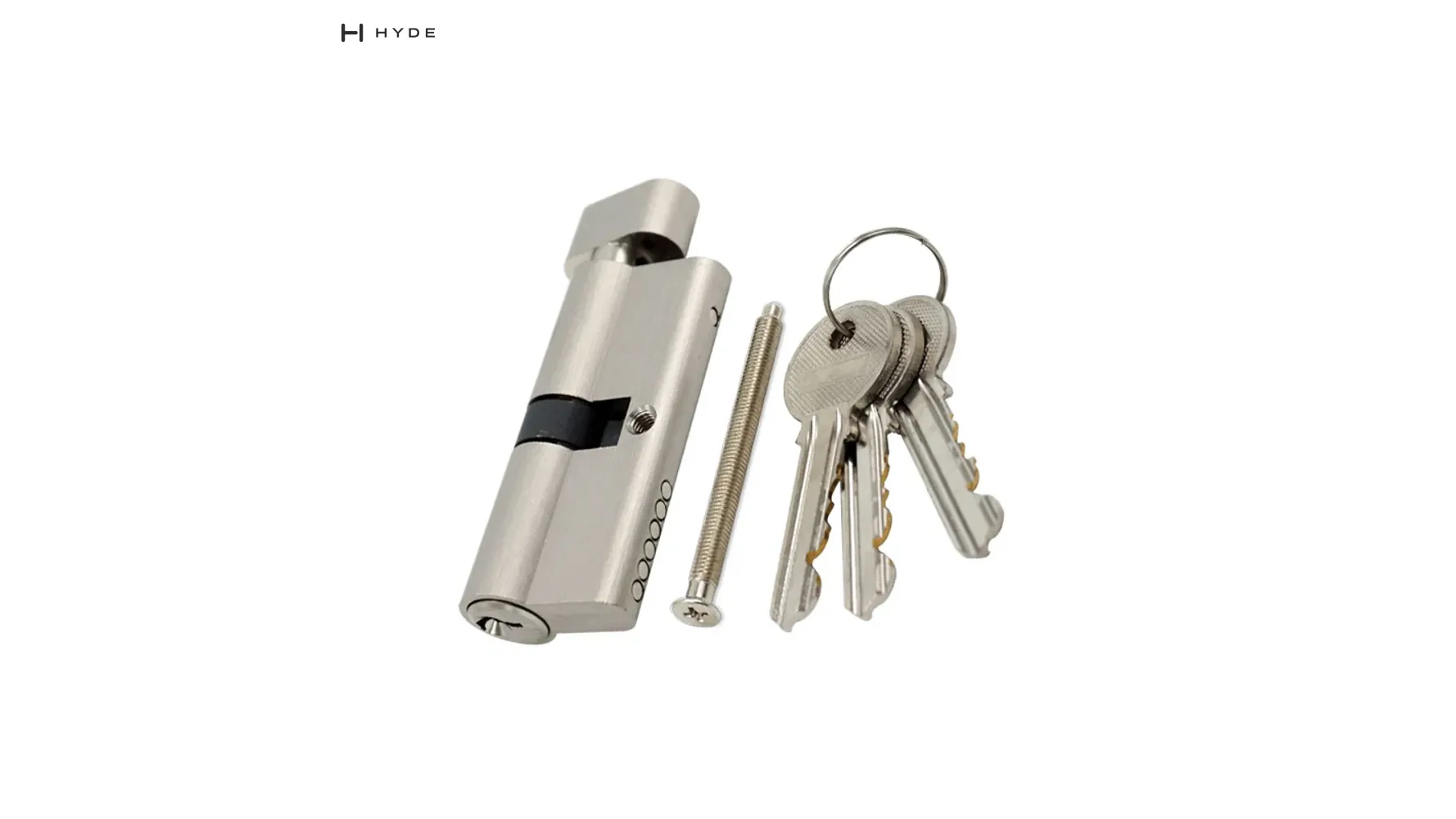
On a key-and-thumbturn euro cylinder, the thumbturn goes on the inside, the secure side, every time. The key half faces whoever should need a key: the street, the corridor, the common stair. The turn faces the room the occupant locks from and leaves from. A thumbturn is, in effect, a key that never leaves the door, so it can only sit on the side where anyone who touches it is already entitled to be there.
The length is split the way any euro cylinder is split: two halves, each measured from the cam center line (where the fixing screw passes through) to the end of the body. The difference with a thumbturn is that the split has a fixed direction. A double-key cylinder ordered 30/40 can be turned round and fitted as 40/30. A key-and-turn cylinder ordered 30/40 cannot, because turning it round puts the turn on the outside. So the order has to say which half carries the key and which carries the turn, and the turn half is measured to the end of the body, never to the tip of the turn.
Why the turn always goes inside
A thumbturn operates the cam with no key and no skill. On the outside face it would make the lock decorative. On the inside face it does the job it was chosen for: the occupant can lock behind them at night and get out in a hurry without looking for a key, which is the main reason to choose a key-and-turn cylinder over a double-key one in the first place. The inside face is also the one nobody attacks from, so it is the face where a little extra projection costs nothing.
Door handing does not change the rule. A euro cylinder is not left- or right-handed; it is outside or inside. The decision that does need making first, on doors between two rooms or doors that open outward, is which side is the secure one. Between two offices it is the room whose occupant locks the door. On an apartment or house entrance it is the dwelling. Write that down before anyone measures, because the measurement depends on it.
How the split is measured, and why the turn half is different
The key half is measured from the cam center line to the outer end of the body, the face with the keyway. Its target is set by security: it should finish flush with the escutcheon or security rose, or only just proud, because a key half that stands out gives a tool something to grip. That rule, and the arithmetic from door thickness, are covered in our notes on cylinder length and are not repeated here.
The turn half is measured from the same cam center line to the end of the body where the turn's stem comes out. The knob and its stem are not part of the length: do not add them, and do not measure an old cylinder to the tip of its turn. If the old cylinder is out of the door, lay a rule from the fixing screw hole to the body face on each side, and stop at the metal of the body, not at the part you hold.
What makes the turn half different is its tolerance. It does not need to be flush for security, so it is the half that can absorb surplus. When the door does not land exactly on an available split, put the extra millimeters on the turn side and keep the key side tight. The limits on the inside are practical: the turn must clear the handle or the plate so it can be gripped, and a turn half that stands far out looks unfinished and can be knocked.
Scroll sideways to compare columns. Select a column heading to sort; select it three times to restore source order.
| Measured from | Cam center line | Cam center line |
|---|---|---|
| Measured to | Outer end of the body, the keyway face | End of the body where the turn stem starts |
| Includes the knob | Not applicable | No |
| Target position | Flush with the escutcheon, or only just proud | Clear of the handle or plate so it can be gripped |
| Surplus length | Never here | Here |
5 rows · Source order
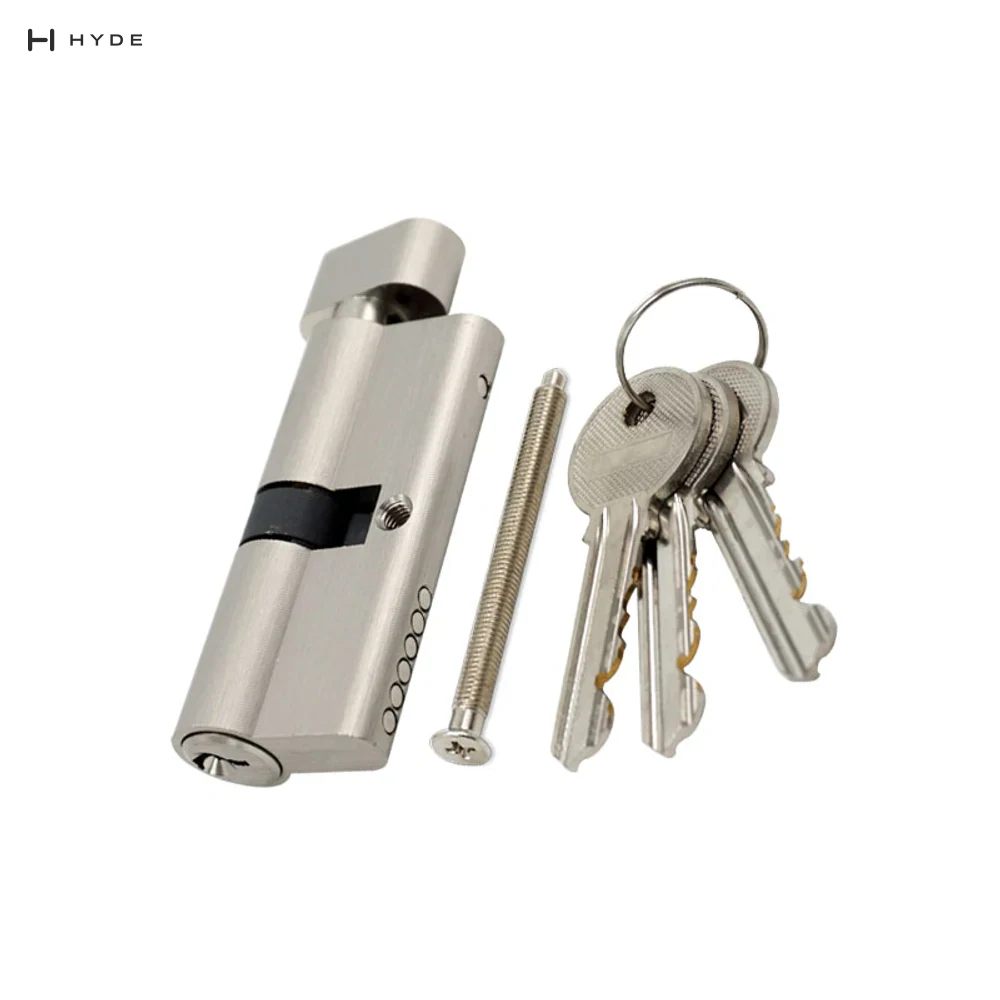
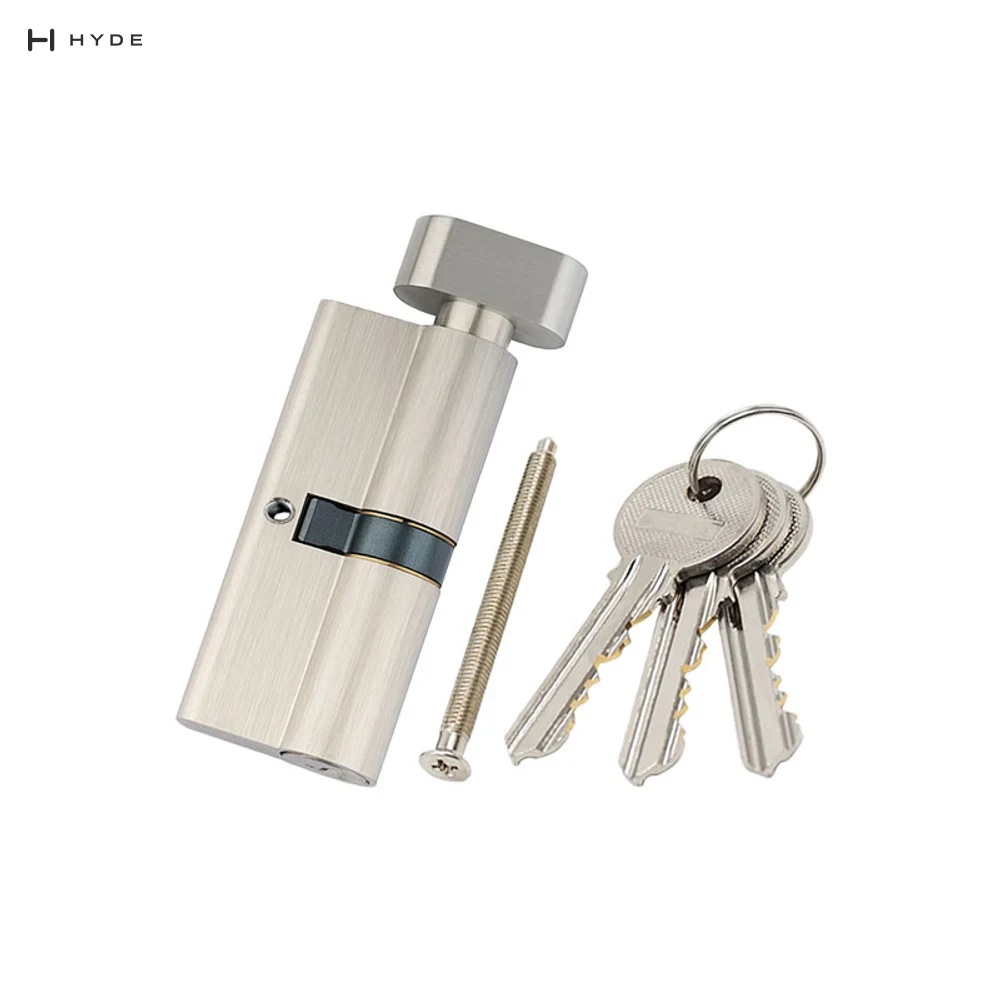
Our 70 SNKT-2 shows how a published split can read two ways. Its record gives 30/10/30mm: two 30mm body sections either side of a 10mm cam section, 70mm overall. Measured the usual way, to the cam center, the same cylinder is 35/35. Because it is symmetric, it has no wrong way round for length; only the turn's side matters, and that side is inside. Our other key-and-turn cylinders are listed at 60, 65, 70, 80 and 90mm overall, and their records do not publish a split, so we do not fill one in. One caution about our own codes: the photographs of models such as 70 SNKT-1, 70 SNKT-2 and 80 SNKT show a key at one end and a thumbturn at the other, but we have not published KT as a formal code definition, and suppliers do not all use those letters the same way. Write the function in words.
How to order the split
One line on the order removes almost every error: the function in words, the overall length, the key half labeled, the turn half labeled, and the convention. For example: euro profile, key and thumbturn, 70mm overall, key side 30 / turn side 40, both measured to cam center, satin nickel, turn inside. Some suppliers mark the turn half with a T, as in 30/40T; the habit varies, so let the words carry the meaning and treat the letter as a check.
Scroll sideways to compare columns. Select a column heading to sort; select it three times to restore source order.
| Function | Key and thumbturn, in words | Letter codes are not used the same way by every supplier |
|---|---|---|
| Overall length | For example 70mm | Half the answer, never the whole of it |
| Key half | Key side 30 | Sets the outside projection |
| Turn half | Turn side 40 | Fixes the direction; this cylinder cannot be reversed |
| Convention | To cam center, or body sections such as 30/10/30 | The same cylinder can be written both ways |
| Door build-up | Door thickness plus the escutcheon or rose on each face | Lets the supplier check the arithmetic |
6 rows · Source order
Where a thumbturn should not be used
Next to glass that can be reached through. A glazed panel in the door, a sidelight beside the lock, or a vision panel within arm's reach of the cylinder lets somebody break the glass and turn the lock from inside. A letter plate close to the lock is a smaller version of the same problem, because tools pushed through it can work a turn. The options are laminated glazing, moving the lock away from the glass, a thumbturn that can itself be locked with a key, or a double-key cylinder, and the last one only where the next point allows it.
On escape routes where a key-free exit is required. Building rules in many countries require a door on a means of escape to open from the inside without a key, tool or special knowledge. A double-key cylinder fails that; a thumbturn or a lever-operated latch is the usual answer. Some rules go further and ask for a single action to release the door, in which case a deadbolt turn in addition to a latch handle can count as a second action, and US accessibility rules ask that operating parts work without tight grasping, pinching or twisting of the wrist, which a small turn may not meet. These rules differ by country and building type, and we describe them as background rather than as a ruling: the authority having jurisdiction, or the fire engineer, decides for a given door.
Where a key-free exit is forbidden. A smaller group of doors is deliberately designed so that people cannot leave freely: secure areas in some healthcare settings, custodial buildings, and doors that are on no escape route and must stay locked in both directions. Those arrangements are set by the responsible authority, usually with a controlled release, and a thumbturn defeats them. If a door is neither an escape door nor a controlled one, the choice is a judgment between exit and security, and some insurers have a view on doors with glass near the lock; read the policy wording rather than assuming what it says.
Double key or key and thumbturn
Scroll sideways to compare columns. Select a column heading to sort; select it three times to restore source order.
| Inside operation | Needs a key | Turn, no key |
|---|---|---|
| Escape route that requires a key-free exit | Not suitable | The usual choice, subject to local rules |
| Glass within reach of the lock | Removes the reach-through risk | Exposed unless the glazing or the lock position deals with it |
| Key left in the inside face | Often stops the outside key working, unless the cylinder has an emergency function | No inside key to leave |
| Asymmetric split fitted the other way round | Works | Puts the turn outside |
| Surplus length | Neither half is a good place for it | Goes on the turn side |
6 rows · Source order
The usual argument for a double-key cylinder is glass. The usual argument against it is the key that is not in the lock when it is needed. On a dwelling entrance with no glass in reach, a key-and-turn cylinder answers both. On a door where glass is in reach and the door is also an exit, neither cylinder is the whole answer, and the glazing is the part to change. In our range the two sit side by side at the same length and finish: 70 SNDK is listed with double key function, and 70 SNKT-2 is photographed with a key and a turn.
Emergency-function and clutch cylinders
Inside a double-key euro cylinder, a clutch decides which plug drives the cam. In many designs a key left in one face holds the clutch, and a key from the other face then turns without effect. An emergency-function cylinder, also sold as a clutch or double-function cylinder, is built so that a key on one face still operates the cam with a key in the other. It matters where a double cylinder is chosen but someone may need to get in from outside while a key is left on the inside. Which face takes priority, and whether both do, varies between designs, so ask rather than assume.
A key-and-turn cylinder does not have the left-key problem in the same form, because there is no inside key; the turn stays on its own side of the clutch. The records for our cylinders do not publish whether an emergency function is fitted. If you need one, say so in words on the inquiry, and we will answer for the specific model rather than for the range.
With any inquiry, send the door thickness, the escutcheon or rose on each face, which face is inside, the cylinder function in words, and whether the door has glass near the lock or sits on an escape route. Those facts settle the split and the function. If the cylinder comes inside a handle set, such as our 9088 SS stainless lever set, whose record states a euro cylinder with key outside and thumbturn inside, ask for the cylinder length as well: that record does not publish it.
Questions this answers
Which side does the thumbturn go on a euro cylinder?
Always the inside, the secure side. The key half faces the street, corridor or common area, and the turn faces the room the occupant locks from and leaves from. A turn opens the lock without a key, so on the outside it would make the lock useless. Door handing does not change this: a euro cylinder is outside or inside, not left or right.
How do you measure a euro cylinder with a thumbturn?
Measure each half from the cam center line, where the fixing screw passes, to the end of the body. On the turn side, stop at the body face where the turn's stem comes out; the knob is not part of the length. Then write the split with a direction, key side first and turn side second, because a key-and-turn cylinder cannot be reversed the way a double-key cylinder can. If the door falls between sizes, put the surplus on the turn side.
Can I use a thumbturn cylinder on a door with glass?
Not where the glass is within arm's reach of the lock, unless the glass itself deals with the risk. Somebody can break the pane and turn the lock from inside. The options are laminated glazing, moving the lock, a turn that locks with a key, or a double-key cylinder. A double-key cylinder is only acceptable if the door is not an escape route that requires a key-free exit.
Is a thumbturn or a double-key cylinder better on an escape door?
Where building rules require exit without a key, tool or special knowledge, a double-key cylinder does not meet that and a thumbturn or lever-operated latch is the usual answer. Some rules also require a single action to open the door, or set limits on twisting and grasping, which can rule out an extra deadbolt turn. The rules differ by country and building type, so the local authority or fire engineer decides for each door.
What is an emergency-function euro cylinder?
A double-key cylinder whose clutch lets a key on one face operate the cam even when a key is left in the other face. In many standard double cylinders a key left inside stops the outside key from working. Which face has priority, and whether both do, varies by design. Our cylinder records do not publish whether an emergency function is fitted, so ask for it in words.
Related products
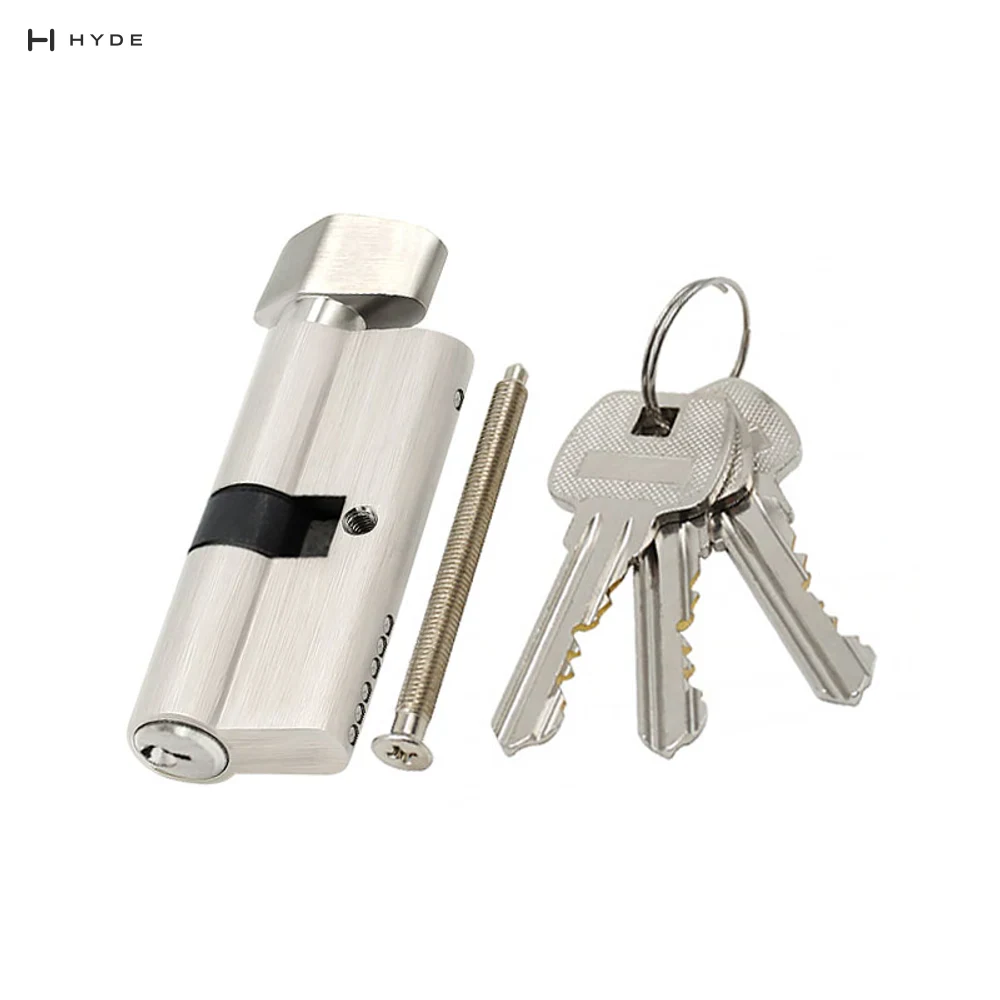
Size 70mm
Lock Cylinder
Model 70 SNKT-2
Solid Brass
Lock Cylinder
Model 70 SNKT-1
Solid Brass
Lock Cylinder
Model 80 SNKT
Solid Brass
About Canton Hyland — Canton Hyland manufactures panic exit devices, locks and architectural door hardware for commercial and institutional projects, supplying specifiers and distributors internationally.