
FB001 and FB005 Flush Bolts: Which Type, Which Length, Which Leaf
FB001 and FB005 are manual flush bolts for the inactive leaf of a pair of doors. This is how to choose between manual, automatic and self-latching bolts, why the top bolt is the long one, which edge the bolts go on, and how to write an order line that cannot be misread.

Johnson LiuDigital Communications, Canton HylandMA Digital Media, Johns Hopkins University
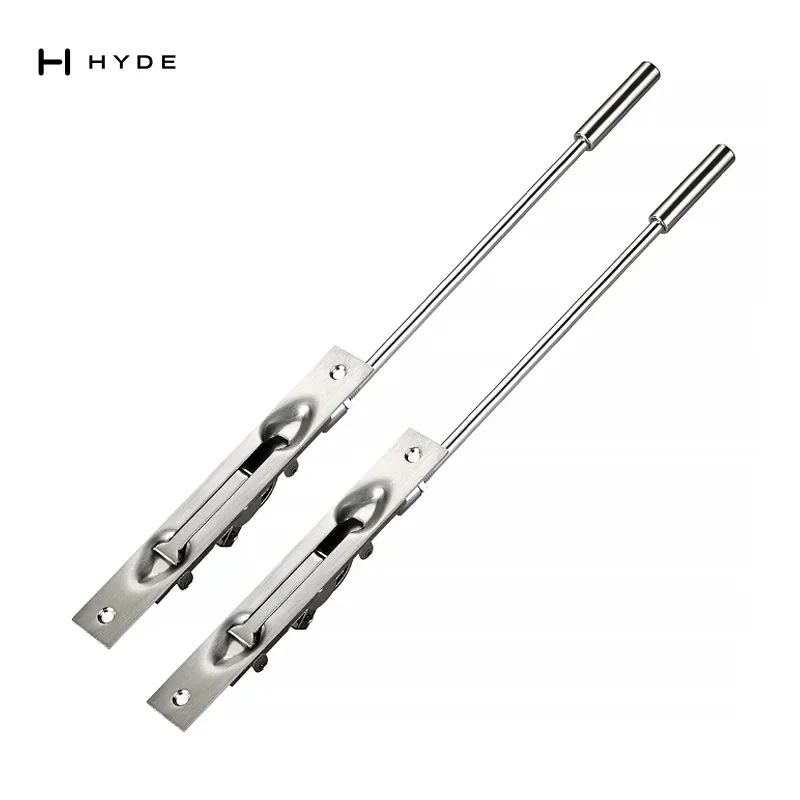
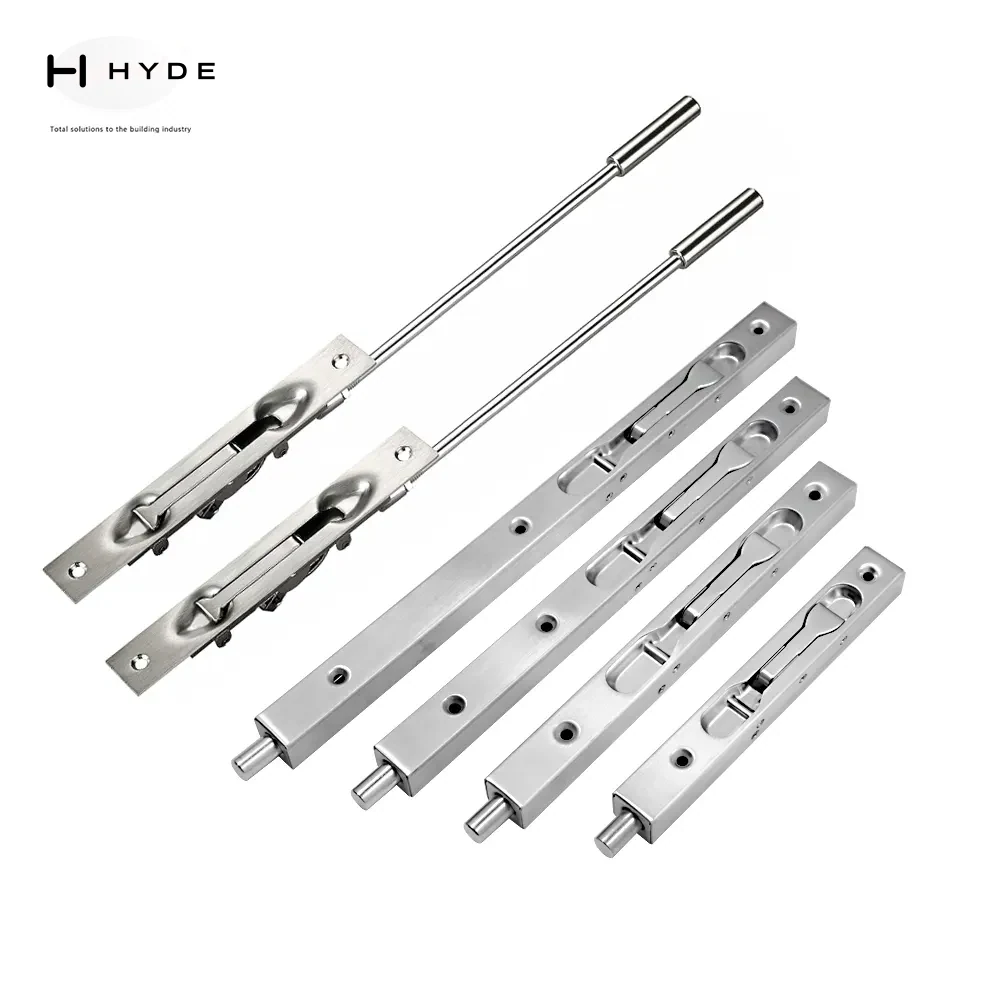
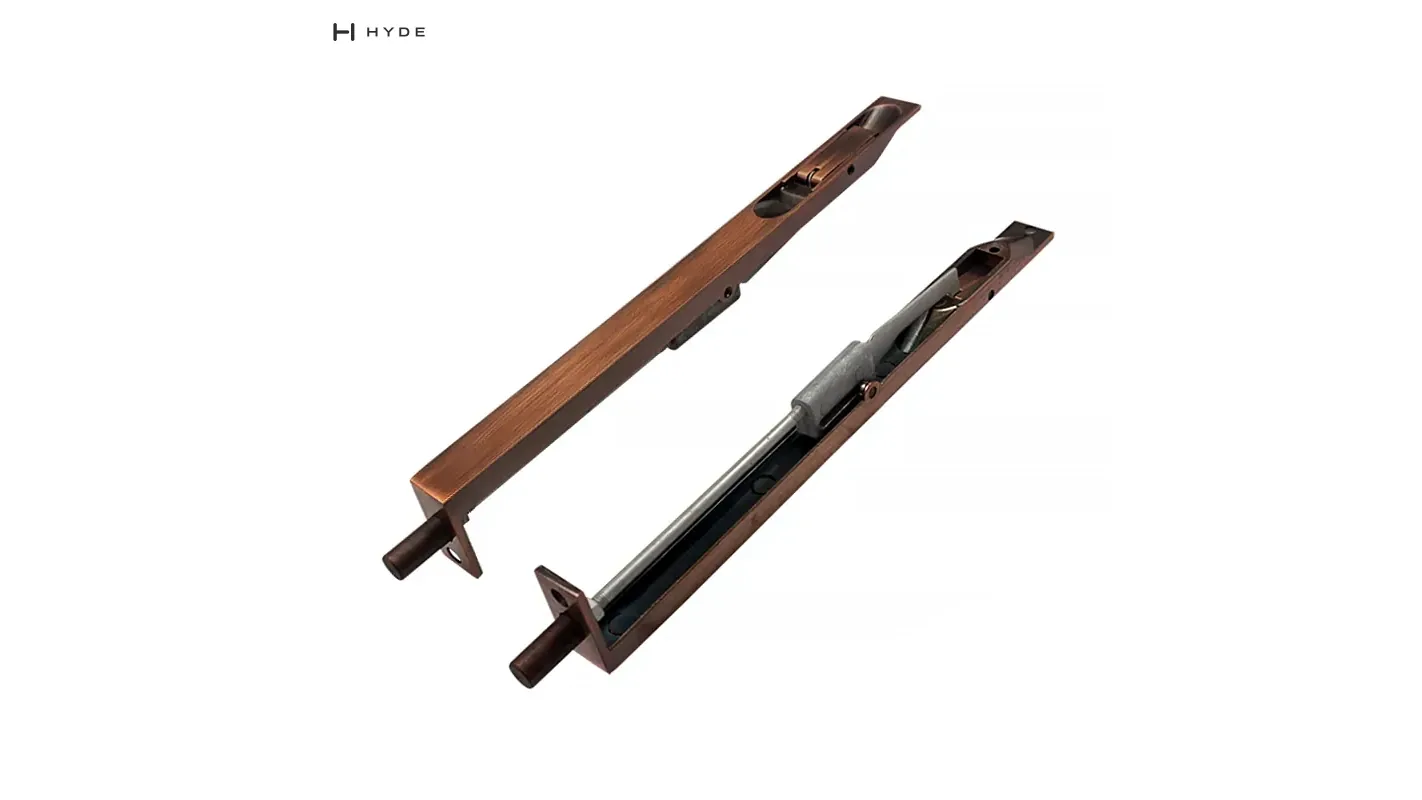
FB001 and FB005 are manual flush bolts. They are let into the meeting edge of the inactive leaf of a pair of doors, one at the top and one at the bottom, and they hold that leaf shut so the active leaf has something solid to lock against. Choosing one comes down to four decisions, in this order: how the bolt is thrown, by hand or automatically; how long the top and bottom bolts are; which leaf and which edge they go on; and what they engage in the head of the frame and in the floor.
The short answer: a manual bolt suits a pair whose inactive leaf stays shut most of the time and is not relied on in an emergency. The top bolt is long so its lever can be reached from the floor; the bottom bolt is short. Both go on the inactive leaf's meeting edge, never on the hinge edge and never on a single door. FB005 is published in brass in 6, 8, 10, 12 and 24 in lengths; FB001 is published under three records whose details differ, set out in the table below. Neither is published as automatic.
Manual, automatic, self-latching and constant-latching
A manual flush bolt is thrown and withdrawn by hand: slide the lever, the bolt runs into the head or the floor, and it stays there until somebody moves it back. Very little can go wrong. Its weakness is the person: if nobody throws the bolts, the inactive leaf is held only by the active leaf's latch, and the pair rattles, flexes, or can be pushed open together.
An automatic flush bolt has a trigger on the meeting edge of the inactive leaf. When the active leaf closes, it presses the trigger and the bolts throw on their own; when the active leaf opens, they withdraw. The price is that the inactive leaf must close before the active leaf, every time, or the active leaf fires bolts into a leaf still standing open. That is why automatic bolts are normally specified with a door coordinator, which holds the active leaf back until the inactive leaf is home.
Self-latching and constant-latching bolts sit between the two: the bolt throws itself when the inactive leaf closes, usually because a spring-loaded bolt or trigger meets the strike, but it is withdrawn by hand. Manufacturers draw the line between these two names differently, so specify the behavior instead, in two phrases: what throws the bolt, and what withdraws it.
Scroll sideways to compare columns. Select a column heading to sort; select it three times to restore source order.
| Manual | Hand, on the lever | Hand, on the lever | No |
|---|---|---|---|
| Automatic | The active leaf closing on the trigger | The active leaf opening | Yes, so a coordinator is normally fitted |
| Self-latching / constant-latching | The inactive leaf closing | Hand | Depends on the rest of the pair, for example an astragal |
3 rows · Source order
What we list: every flush bolt on our site is a manual bolt. None of our records is published as automatic, self-latching or constant-latching. If the opening needs one of those, say so in the inquiry, so the answer addresses that requirement rather than offering a manual bolt in its place.
Top and bottom: why the top bolt is the long one
A pair of flush bolts is rarely two of the same part. The bottom bolt is operated by somebody bending down, so it is short. The top bolt has to bring its lever down from the head of the leaf to a height a person standing on the floor can reach: a long body on a leaf of ordinary height, or a bolt with an extension rod on a tall leaf. To size it, take the leaf height, subtract the height at which a lever is comfortable to operate, and the difference is roughly the length of the top bolt, or bolt plus rod. Where the lever sits along the body is not published for our models, so check it against the drawing first.
Our flush bolts, as published
This is everything our records publish on material, length and width. A dash means not published, not that the part has no length. Lengths are in inches, as flush bolts are ordered, with millimeters in brackets. On a thin leaf, choose by faceplate width before length, because the plate has to sit in the edge with material to spare on both sides; where no width is shown, ask for it.
Scroll sideways to compare columns. Select a column heading to sort; select it three times to restore source order.
| FB001 | Zinc alloy | — | — | Lever-action, for the inactive leaf; length confirmed before the order |
|---|---|---|---|---|
| FB001 AC | Stainless steel / brass | 8, 10, 12, 24 in (203, 254, 305, 610 mm) | — | Nine finishes; application given as wooden gates and windows |
| FB001 SS | Stainless steel / brass | 8 in (203 mm) | — | Thickness 30–45 mm; satin stainless (US32D) |
| FB005 | Brass | 6, 8, 10, 12, 24 in (152, 203, 254, 305, 610 mm) | — | Nine finishes |
| FB005 AC | Zinc alloy | — | — | Lever-action, antique copper |
| FB012 | Stainless steel | 3, 4, 5, 6, 8, 10 in (76 to 254 mm) | 30 mm | Catalog photograph shows a surface-mounted bolt |
| FB013, FB014, FB015 | Stainless steel | — | — | Nine finishes |
| FB016 | Stainless steel | 7 in (178 mm) | 24 mm | Catalog photograph shows an extension rod |
| FB017 | Zinc alloy | Several, not listed | — | Lever-action |
| Stainless Steel Flush Bolt | Stainless steel | 4, 6, 8, 10, 12 in (102 to 305 mm) | 22 mm | Double timber and double metal doors; satin or polished; surface or mortise |
10 rows · Source order
Two things in that table are worth acting on. Material differs between the variants of FB001 and FB005, so put the material on the order line as well as the model number. And the Stainless Steel Flush Bolt is published for both surface and mortise installation, so state which one you want. Wherever the table shows a dash, ask for that figure before the order rather than after delivery.
Which leaf, and which edge
On a pair, one leaf is active: it carries the lock or latch and the handle, and it is the one people open. The other is inactive. The flush bolts go on the inactive leaf, one at the top and one at the bottom, set into its meeting edge, the vertical edge that meets the active leaf; the active leaf's latch engages a strike on that same edge. With both leaves closed the bolts cannot be seen from either face, and the levers can only be reached with the active leaf open, from the side its lock already controls. That is the whole security argument for a flush bolt.
Two mistakes come up often enough to name. A flush bolt on the hinge edge does nothing useful: that edge is already held by the hinges, and the meeting edge, the one that moves, is left free. A flush bolt on a single door is the wrong product: a single leaf is held by its lock against the frame, and a second point of security there is a surface bolt or a second lock. A drawing or photograph showing a flush bolt on the hinge edge or on a single door is showing a mistake, whoever published it.
The keep in the head, the strike in the floor
The top bolt engages a keep let into the head of the frame. The bottom bolt engages a socket in the floor finish or, where there is a threshold, a hole in the threshold. The floor end is the one that fails: an open socket collects grit, the bolt stops going fully home, and the leaf starts to move again. A dust-proof strike prevents that with a spring-loaded plunger that sits flush with the floor while the bolt is withdrawn. Our records do not publish which keep or floor strike comes with each bolt, so ask, and put the answer on the order, with the depth available in the floor build-up for the strike.
Pairs of fire doors
On a pair of fire doors, the inactive leaf has to be held shut whenever the pair is closed, without depending on somebody remembering a lever. That is why automatic or self-latching flush bolts, with a door coordinator that makes the inactive leaf close first, are the common pattern on fire pairs. Whether manual bolts are accepted on a particular fire door is decided by the rules that govern it, such as NFPA 80 in the United States, and by the door assembly's own test evidence, for example to EN 1634-1 in Europe, as read by the project's fire engineer or the authority having jurisdiction. None of our flush bolts is published for fire-door use, and nothing in this section is a statement about them; start from the door assembly's documentation and ask for the bolts it was tested with. Sizing the coordinator is covered in our article on coordinators for double fire doors.
Flush bolt or surface bolt
A flush bolt is mortised into the leaf edge: it needs a routed pocket, it is invisible when the pair is closed, and it can only be reached from between the leaves. A surface bolt, barrel bolt or tower bolt, is screwed to the face of the leaf, with its keeper on the frame or the other leaf. It needs no routing, suits a leaf too thin or too finished to take a pocket, and can be fitted after the door is hung. It is also visible and reachable by anybody on the side it is fitted to, so it belongs on the secure side. Choose flush where the edge can take it and appearance or security matters; choose surface for a thin leaf or a retrofit.
Writing the order line
A flush bolt order line that cannot be misread has eight parts: model and material; finish code; top and bottom bolt lengths, each in inches and millimeters; leaf height and thickness; leaf material, and whether the meeting edge is square or rebated (none of our records publishes a rebated faceplate); the keep for the head; the floor strike or threshold; and the quantity, counted in pairs of doors rather than in bolts.
For example: FB005 flush bolts, brass, satin nickel (SN); top 24 in (610 mm), bottom 6 in (152 mm); timber inactive leaf 2400 × 45 mm, square meeting edge; head keep and dust-proof floor strike; 40 pairs of doors, so 40 top and 40 bottom bolts. FB005 does not publish a door thickness, so this line also asks us to confirm the fit on a 45 mm leaf. The usual error is not the wrong model; it is one quantity for two different bolts, or a length written as a bare number.
Questions this answers
What is an FB001 flush bolt?
FB001 is a manual, lever-action flush bolt for the inactive leaf of a pair of doors. It is published under three records: FB001 in zinc alloy with its length confirmed before the order, FB001 AC in stainless steel or brass in 8, 10, 12 and 24 in, and FB001 SS in 8 in with a thickness of 30–45 mm. Because the materials differ between the records, put the material on the order line as well as the model.
What is the FB005 flush bolt and what lengths does it come in?
FB005 is a brass flush bolt published in 6, 8, 10, 12 and 24 in lengths (152, 203, 254, 305 and 610 mm) and nine finishes. A pair of doors normally takes a long one at the top of the inactive leaf and a short one at the bottom. Its door thickness and faceplate width are not published, so ask for them before you order.
Which leaf does a flush bolt go on?
On the inactive leaf of a pair, set into its meeting edge, the vertical edge that meets the active leaf, with one bolt at the top and one at the bottom. Never on the hinge edge, and never on a single door. With both leaves closed the bolts cannot be seen, and the levers can only be reached when the active leaf is open.
What is the difference between automatic and manual flush bolts?
A manual bolt is thrown and withdrawn by hand on its lever. An automatic bolt is thrown when the active leaf closes on a trigger in the inactive leaf's edge and withdrawn when the active leaf opens, so the inactive leaf must close first and a door coordinator is normally fitted. Self-latching and constant-latching bolts throw themselves when the inactive leaf closes but are withdrawn by hand. Every flush bolt we list is manual.
Do double fire doors need automatic flush bolts?
Automatic or self-latching flush bolts with a door coordinator are the common pattern on pairs of fire doors, because the inactive leaf must be held shut without anybody remembering a lever. Whether manual bolts are accepted is decided by the rules for that door, such as NFPA 80 in the United States, and by the door assembly's test evidence, read by the fire engineer or the authority having jurisdiction. None of our flush bolts is published for fire-door use.
Related products
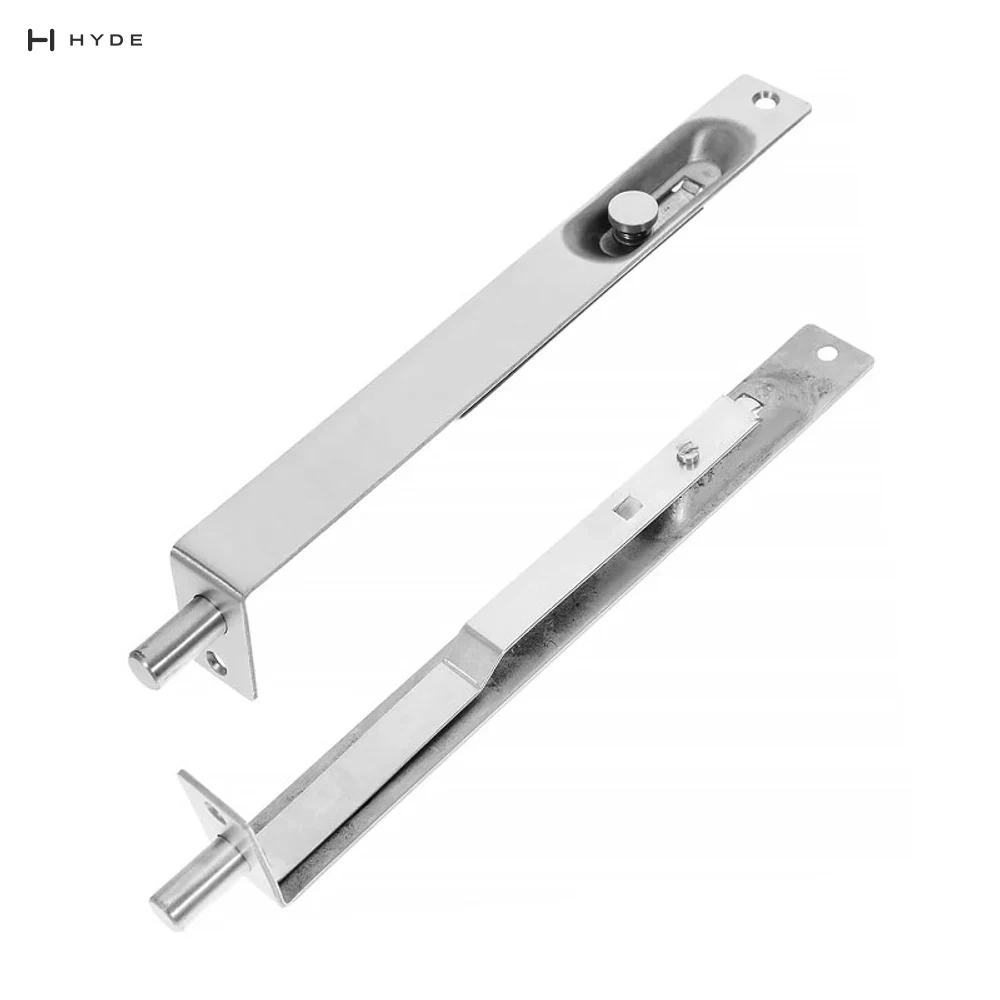
Door Flush Bolt
Model FB001
Zinc Alloy
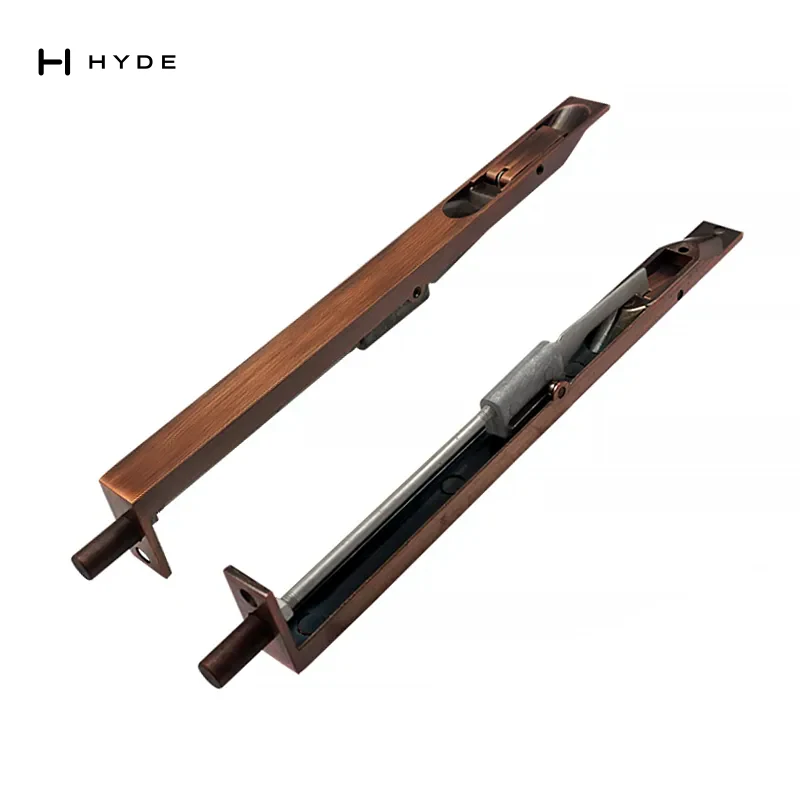
Length 6in/8in/10in/12in/24in
Door Flush Bolt
Model FB005
Brass
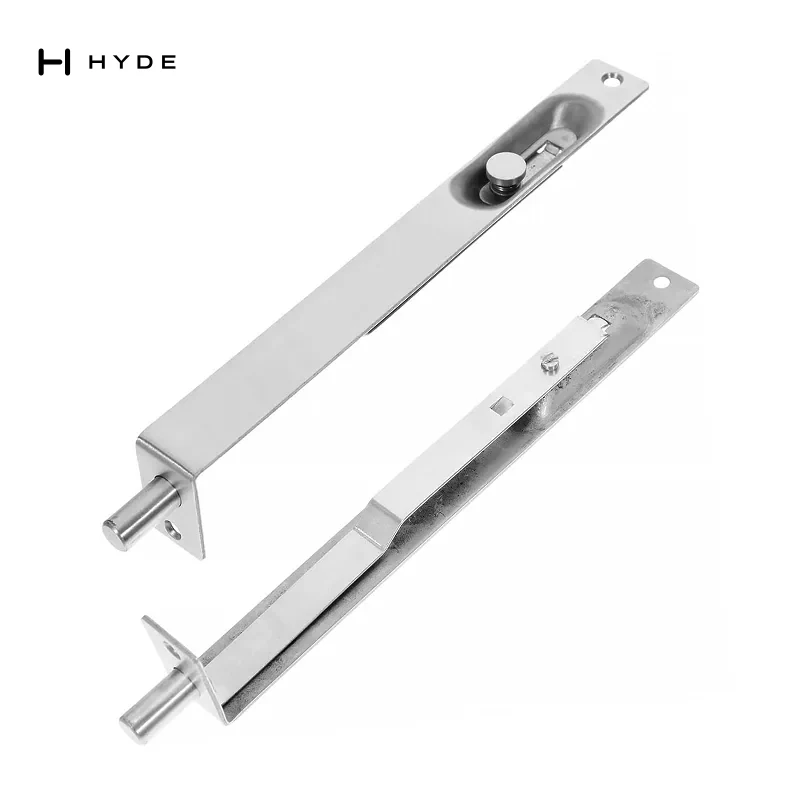
Length 8 in
Door Flush Bolt
Model FB001 SS
Stainless Steel /Brass
- FB012 — Door Flush Bolt
- FB016 — Door Flush Bolt
- Stainless Steel Flush Bolt — Stainless Steel Flush Bolt
About Canton Hyland — Canton Hyland manufactures panic exit devices, locks and architectural door hardware for commercial and institutional projects, supplying specifiers and distributors internationally.