
Latch Guards, Cylinder Protectors and Security Hinges: Three Anti-Pry Parts
A latch guard, a cylinder protector and a security hinge each cover one route around the lock that an outward-opening door leaves exposed. Here is what each part does, what our HY-0SS, XF-1 and 6*3*3mm records publish, and what they do not yet say.

Johnson LiuDigital Communications, Canton HylandMA Digital Media, Johns Hopkins University
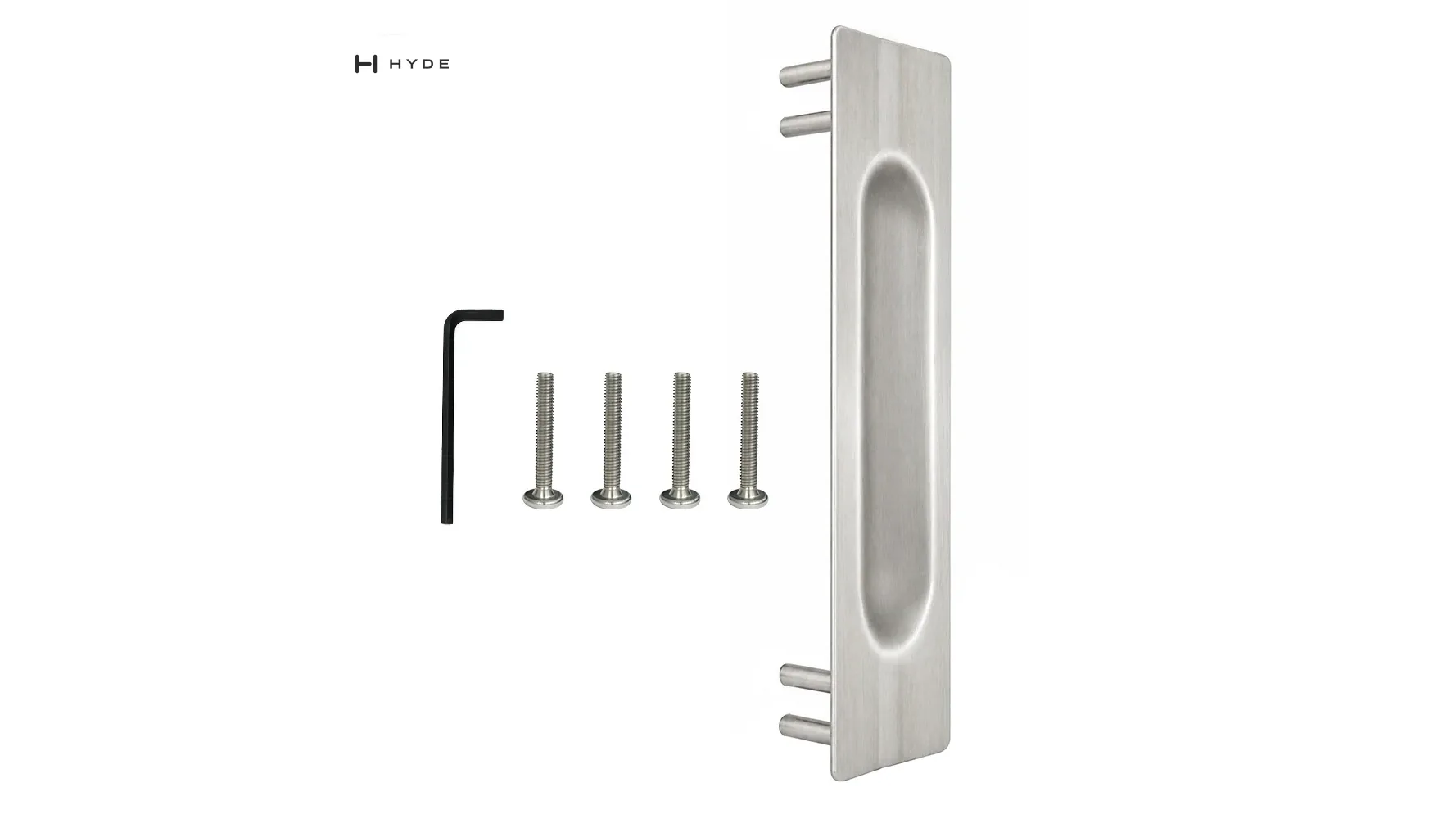
A latch guard, a cylinder protector and a security hinge each cover one part of a door that the lock itself leaves exposed. The latch guard covers the gap at the lock edge, where a blade or a pry bar can reach the latch bolt. The cylinder protector covers the outside end of the cylinder, the one part of the lock that has to be reachable from outside. The security hinge deals with the hinge side, where an outward-opening door shows its knuckles and pins. In our range the three parts are the HY-0SS latch guard, the XF-1 cylinder protector and the 6*3*3mm security butt hinge.
None of them replaces a sound lock, and none of them turns a door into a rated security door. What each one does is close off an easy route around the lock. Which of them a door needs depends first on which way it swings, so that is where to start.
Which way the door opens decides most of this
On an inward-opening door, the leaf closes against a stop on the outer part of the frame. Seen from outside, the door face sits back behind that stop, and the stop covers most of the gap at the lock edge. The latch bolt is hard to reach without first getting past the frame, and the hinges are on the inside.
An outward-opening door is the other way round. Its face closes flush with the outside of the frame and the stop is behind it, so the gap between the door edge and the frame faces outside with the latch bolt in it. The hinges face outside too, with their knuckles and pins in plain view. That is why latch guards are made for outswing doors, and why hinge security matters most on the same doors. Outswing doors are common on commercial buildings, where exit doors often open in the direction of escape.
Part 1: the latch guard, HY-0SS
A latch guard is a plate fixed to the outside face of an outswing door at the lock edge, wide enough to overlap the frame when the door is shut. It covers the gap, so a blade, a card or a pry bar cannot reach the latch bolt or get a purchase between the door edge and the frame at the lock.
HY-0SS is published as a 304 stainless steel plate in a satin stainless finish, for outswing doors, with anti-pry protection as its function and full latch coverage as its design. It is fixed with screws, and 304 stainless steel screws are included. Our record states that it was designed for the Australian market and lists residential and commercial use.
The catalog photographs show how it is fixed. Four studs project from the back of the plate, two near each end, and four hex-socket screws and an Allen key come with it. The studs go through the door and the screws are driven into them from the inside, so the outside face carries no screw heads to work at. That is the point of the design: a guard held on by face screws from the outside can simply be unscrewed.
The plate dimensions are shown on the dimension drawing on the product page, but the range of door thicknesses the fixings suit is not in our record. Send the door thickness with the inquiry so the fixing length can be confirmed for your doors rather than assumed.
Three checks before a guard goes on. It must clear the lever rose and the cylinder, so check its position against the lock's backset and the furniture you are using. It must lie flat on both the door face and the frame face when the door is shut; a guard that rides on a raised frame molding will bind. And on a fire-rated door, drilling through the leaf is a change to a tested assembly, so ask whoever is responsible for the door's fire rating before anyone drills it.
Part 2: the cylinder protector, XF-1
A cylinder is the one part of a lock that must be reachable from outside, because the key goes into it. That makes its exposed end the place an attacker grips, drills or levers. A cylinder protector is a hardened guard fitted on the outside face around the cylinder, so that a tool meets the guard before it meets the cylinder.
XF-1 is published as hardened steel at HRC58, for anti-drill and anti-pry cylinder protection, with concealed internal fixing by a through-bolt, for armored, security and entrance doors. The finishes listed are PVD, satin, polished and antique, in gold, chrome, black and bronze. Our article on the euro cylinder range already explains why the hardness and the through-bolt matter and how a protector's depth affects the cylinder length, so here are two points it does not make.
First, XF-1 is a protector, not a cylinder, and the cylinder is ordered separately. The product page sits among lock cylinders and its main image is labeled as one, which is an easy way to order the wrong thing. Its catalog photographs show the parts laid out: a round body with a euro-profile opening, a separate steel insert and a small cap.
Second, XF-1 protects the cylinder and nothing else. It does nothing for the latch gap, and it does not change the cylinder behind it: the hardened face is new, but the key security of the cylinder is whatever it was before. On an outswing door with a cylinder lock, the latch guard and the cylinder protector close two different routes, and one does not replace the other. The overall dimensions of XF-1 and the door thicknesses its through-bolt suits are not published; send the door thickness and the cylinder profile with an inquiry.
Part 3: the security hinge, 6*3*3mm
On an outswing door the hinge knuckles face outside. If the pins can be driven out, or the knuckles cut, the leaf can be lifted out on the hinge side while the lock stays locked. There are two common answers. A non-removable pin is retained so that it cannot be knocked out while the door is closed. Security studs are fixed studs on one leaf that enter a matching hole in the other leaf as the door closes, so the door edge stays engaged with the frame even if the knuckle is gone; separate hinge bolts fitted in the door edge do the same job.
Our 6*3*3mm hinge is published as a security butt hinge in 201 or 304 stainless steel, with a thickness of 3 mm, an opening angle of 180 degrees, and a feature line that reads anti-pry, anti-theft, reinforced, heavy duty. It is listed for wooden doors, with finishes AB, AC, PB, SB, SS, SP and SC, and others available. The model name is the size as published, 6*3*3mm, and both size and thickness are marked customizable.
What the record does not say is what the anti-pry feature consists of. Whether this hinge carries security studs is an open question with the factory and is being confirmed. Whether its pin is removable is not published either, and the size string does not state the unit of each figure, so confirm leaf length and width on a drawing. Until those answers are in writing, do not specify it as a stud hinge or a fixed-pin hinge on the strength of its name. If your door needs studs or fixed pins, put that requirement on the inquiry so the answer comes back in writing for your order.
The three parts side by side
Scroll sideways to compare columns. Select a column heading to sort; select it three times to restore source order.
| HY-0SS latch guard | The gap at the lock edge and the latch bolt | Outswing doors | 304 stainless steel, satin finish, screw fixing, 304 stainless screws included, full latch coverage | Door thickness range for the fixings |
|---|---|---|---|---|
| XF-1 cylinder protector | The outside end of the cylinder | Armored, security and entrance doors | Hardened steel HRC58, concealed through-bolt fixing, PVD, satin, polished or antique finish | Overall dimensions, door thickness range |
| 6*3*3mm security hinge | The hinge side of the leaf | Wooden doors | 201 / 304 stainless steel, 3 mm thick, 180° opening, anti-pry feature | Whether it has security studs (being confirmed), pin type |
3 rows · Source order
Read the table across rather than down. On an outswing door with a cylinder lock, the three parts cover three different routes, and a door is only as hard to open as its easiest route. On an inswing door the frame stop already covers most of the latch gap and the hinges are inside, so the cylinder end is usually the exposed part, and the protector is the one that earns its place.
What to send with an inquiry
For all three parts, the same handful of facts decides the fit: which way the door swings and which hand it is; the door material and thickness; the lock type, its backset and the cylinder profile; the finish wanted, so that all three parts match; the number of hinges per leaf; and whether the door is fire-rated. A photograph of the lock edge, taken from outside with the door shut, answers several of these at once.
What these parts do not claim
Burglar resistance is tested on a complete doorset, with frame, leaf, lock and hardware together; in Europe that is the subject of EN 1627. A single accessory does not carry such a class on its own, and none of these three parts is published with a rating or with a time it will hold out against attack. What each one does is remove an easy route around the lock, and how much that is worth depends on the rest of the door.
The strike side of the frame, where the latch and bolt enter, is a separate subject and is covered elsewhere. This article stops at the door leaf, the cylinder and the hinge.
Questions this answers
What is a latch guard used for?
A latch guard is a plate fixed to the outside of an outward-opening door at the lock edge. It overlaps the frame and covers the gap, so a blade or a pry bar cannot reach the latch bolt. Our HY-0SS is a 304 stainless steel guard for outswing doors; its catalog photographs show studs that go through the door and are fastened from the inside with the screws supplied, so no screw heads are left on the outside face.
Do you need a latch guard on an inward-opening door?
Usually not. On an inswing door the leaf closes behind a stop on the outer part of the frame, and that stop already covers most of the gap at the latch. Latch guards are made for outswing doors, where the gap and the latch bolt face outside. HY-0SS is published for outswing doors.
Is a cylinder protector the same as an anti-snap cylinder?
No. An anti-snap cylinder is built so that if its outer end is broken off, the rest still keeps the door locked; that is a feature of the cylinder itself. A cylinder protector is a separate hardened guard fitted on the outside around the cylinder. XF-1 is a protector, hardened steel at HRC58 with concealed through-bolt fixing, and the cylinder is ordered separately.
What are security studs on a door hinge?
Fixed studs on one hinge leaf that enter a hole in the other leaf when the door closes. If the hinge pin is removed or the knuckle cut, the studs keep the door edge engaged with the frame. Whether our 6*3*3mm security hinge has studs is being confirmed with the factory; its record states 201 / 304 stainless steel, 3 mm thickness, a 180° opening and an anti-pry feature, but does not say what that feature consists of.
Related products
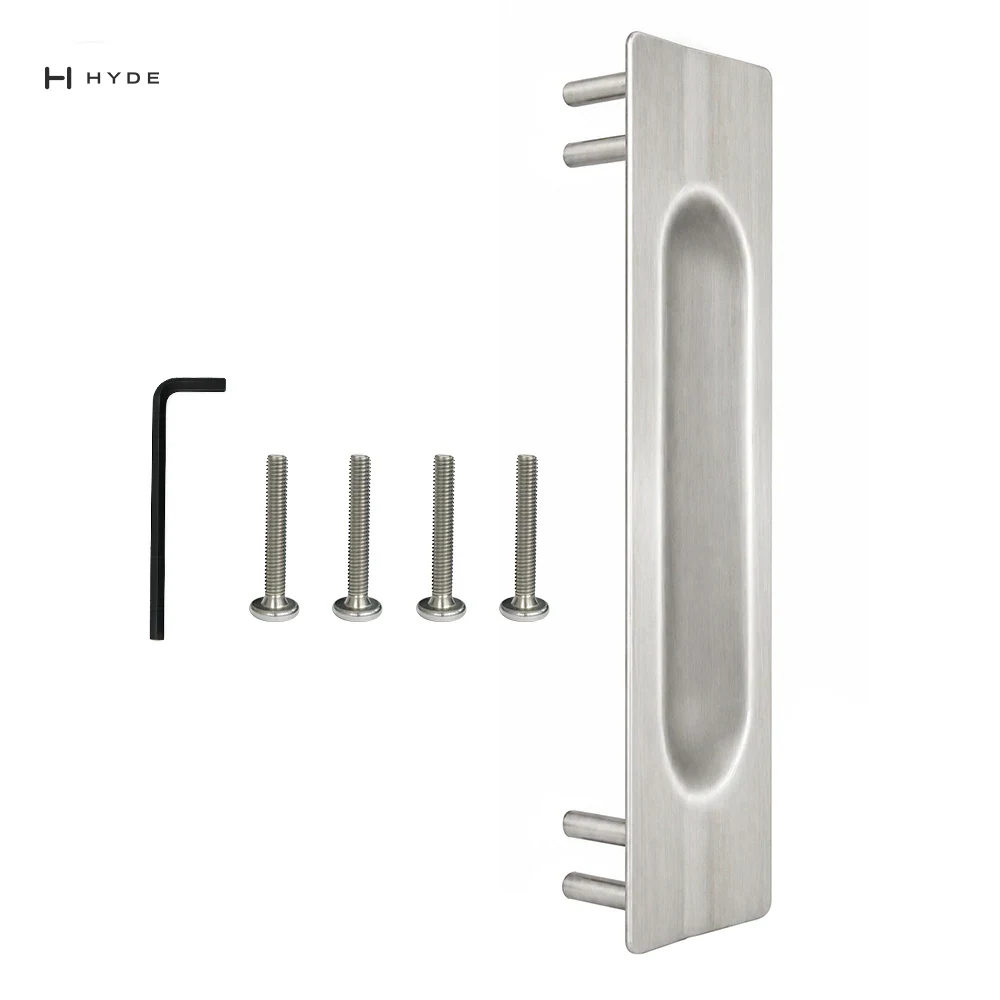
Latch Guard
Model HY-0SS · Video
304 Stainless Steel
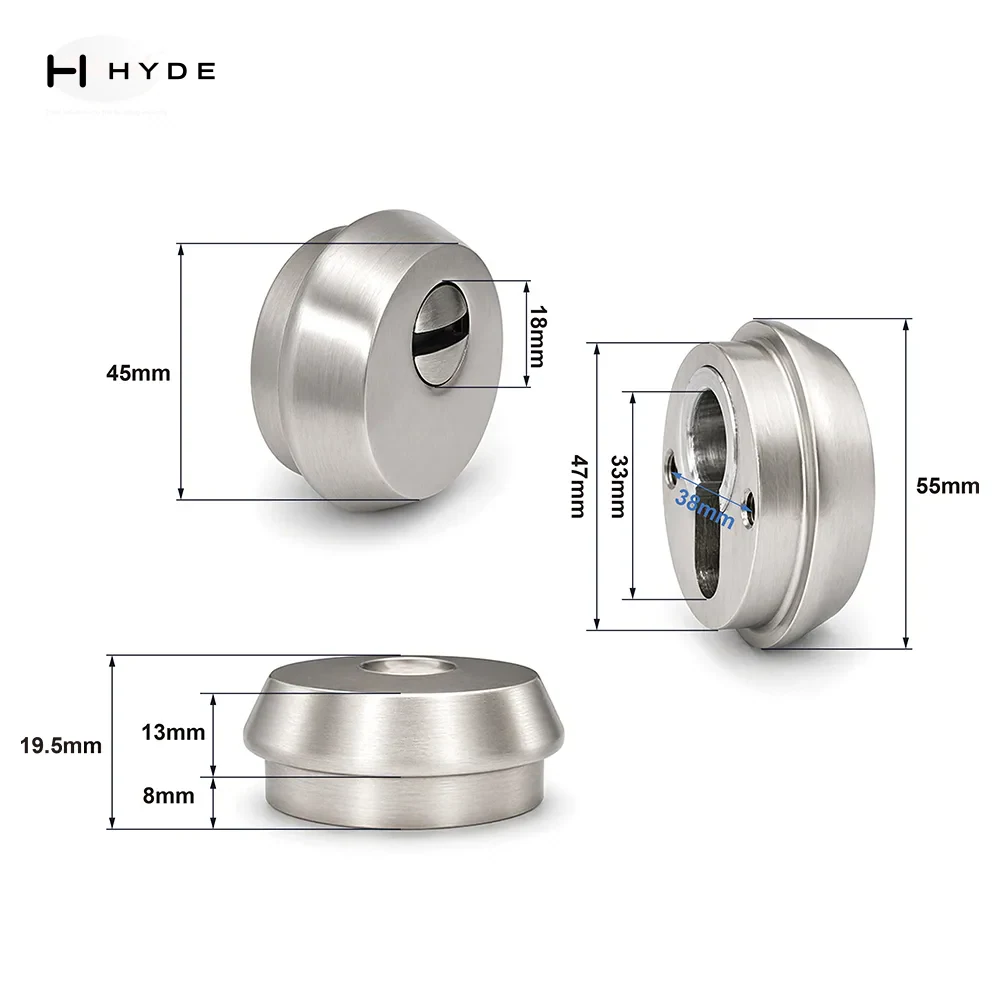
Cylinder Protector
Model XF-1
Hardened Steel (HRC58)
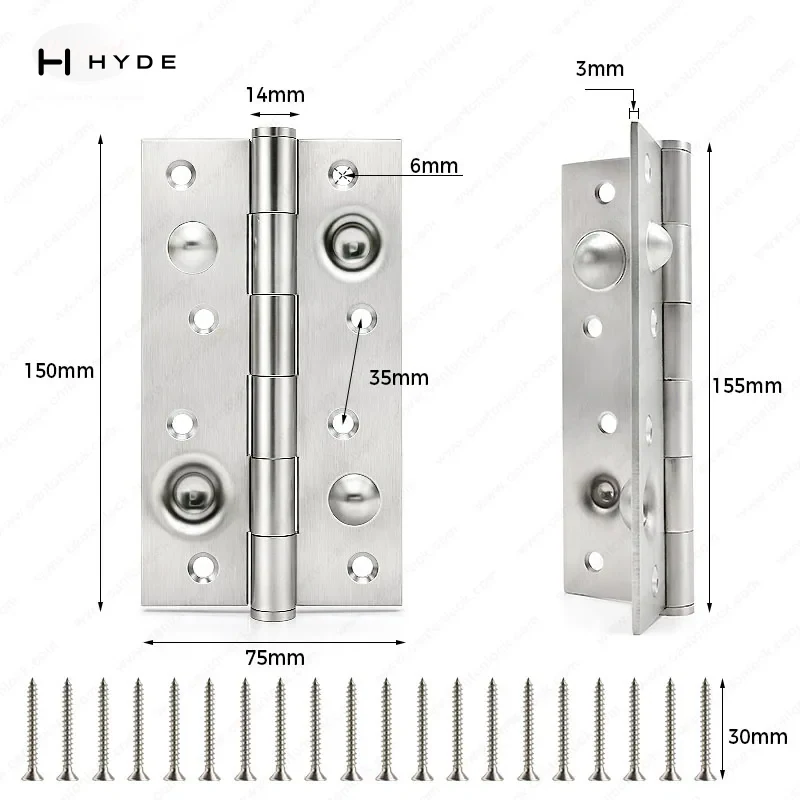
Size 6*3*3mm(Customizable)
Brass and Steel Hinges
Model 6*3*3mm
201 / 304 Stainless steel
About Canton Hyland — Canton Hyland manufactures panic exit devices, locks and architectural door hardware for commercial and institutional projects, supplying specifiers and distributors internationally.