
Barrel Bolts, Slide Bolts and Spring Latches: Which Surface Bolt for Which Door
Barrel bolts, flat slide bolts and spring latches all screw to the face of a door, but they do different jobs: a bolt is thrown on purpose, a latch catches by itself. This guide covers which one suits gates, steel doors, bathrooms and pairs of doors, what FB012, BH15, BH16 and BH17 publish, and how to fix and order them.

Johnson LiuDigital Communications, Canton HylandMA Digital Media, Johns Hopkins University
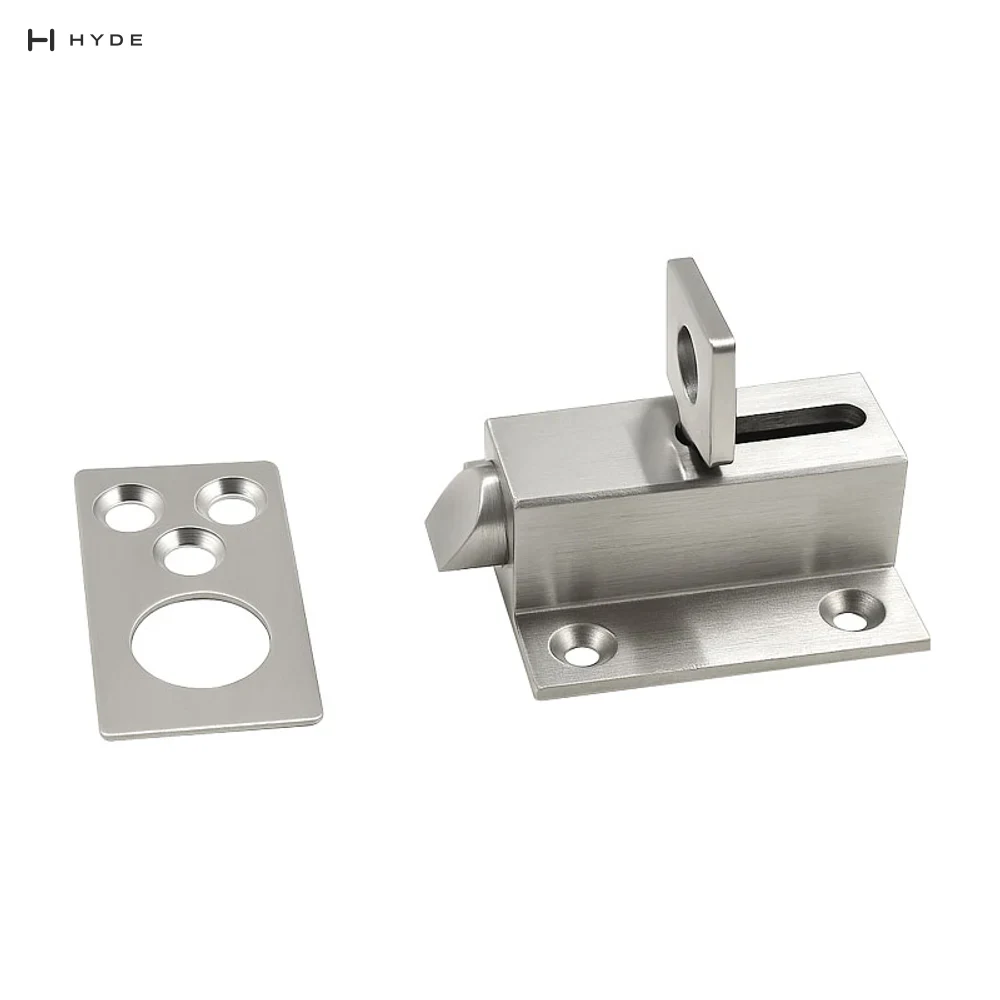
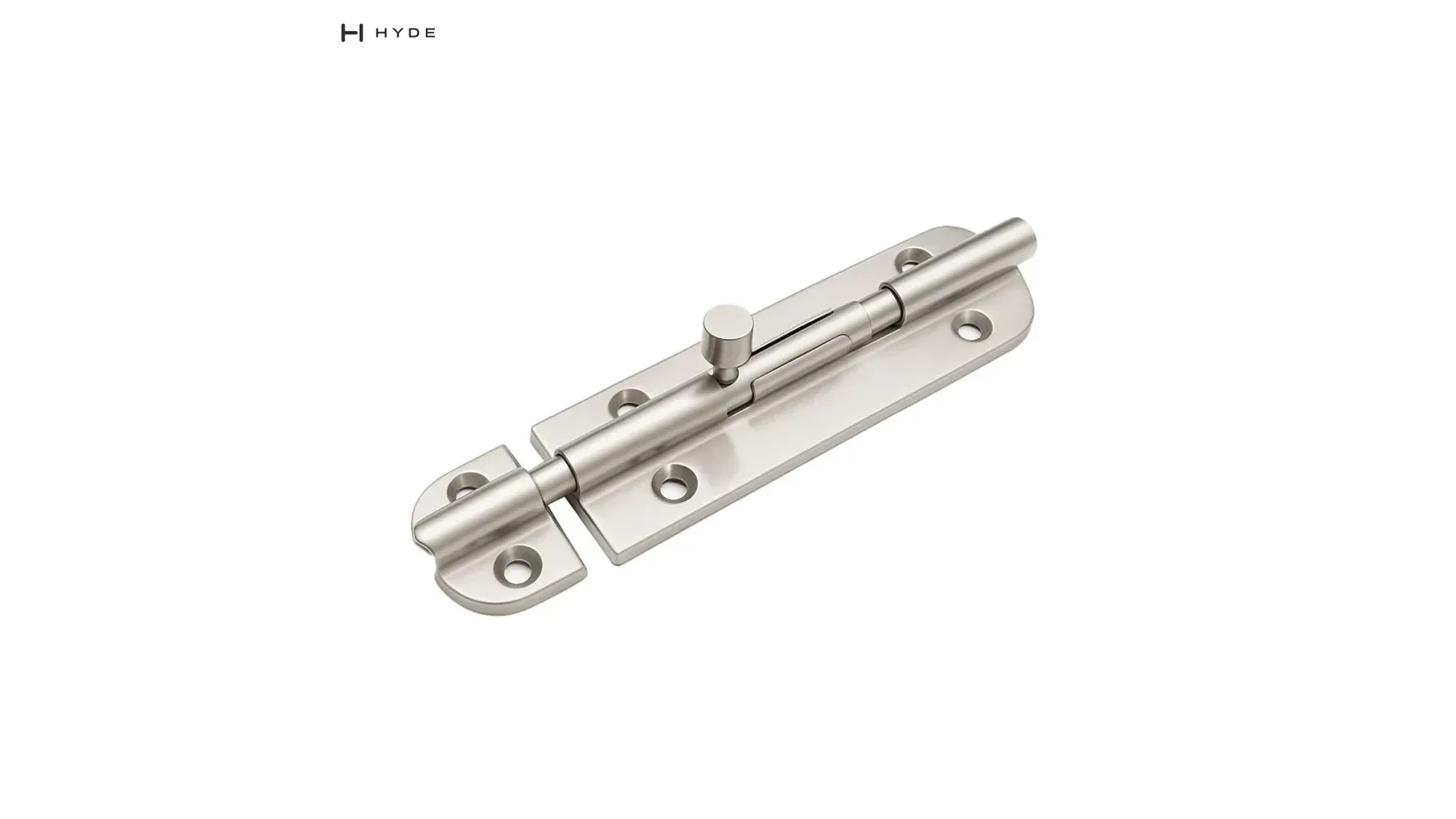
A surface bolt is screwed to the face of a door instead of being let into its edge. It comes in three working forms. The barrel bolt is a round bolt that slides in a guide and is thrown by a knob. The flat slide bolt does the same job with a flat bolt and a lower profile. The spring latch has a bevelled tongue that springs out and catches by itself when the door closes. Arabic-speaking buyers usually search for all three as سقاطة باب. In German the self-catching kind is a Federfalle.
The short answer: choose a barrel bolt where somebody will lock a door on purpose from one side and the bolt has to be long and strong. That means a gate, a utility door, an iron door, or the inactive leaf of a pair that cannot take a flush bolt. Choose a flat slide bolt where the job is lighter and the bolt should sit low, as on a bathroom or cupboard door. Choose a spring latch where the door must catch every time it closes without anybody thinking about it. A bolt is thrown on purpose. A latch catches on its own.
What each one does
Scroll sideways to compare columns. Select a column heading to sort; select it three times to restore source order.
| Barrel bolt | The knob slides the round bolt into the keeper; on most designs the knob then drops into a notch so the bolt cannot creep back | Lift the knob out of the notch and slide it back | Gates, utility and back doors, steel doors, and the inactive leaf of a pair when fitted vertically | FB012, BH15, BH15-80mm |
|---|---|---|---|---|
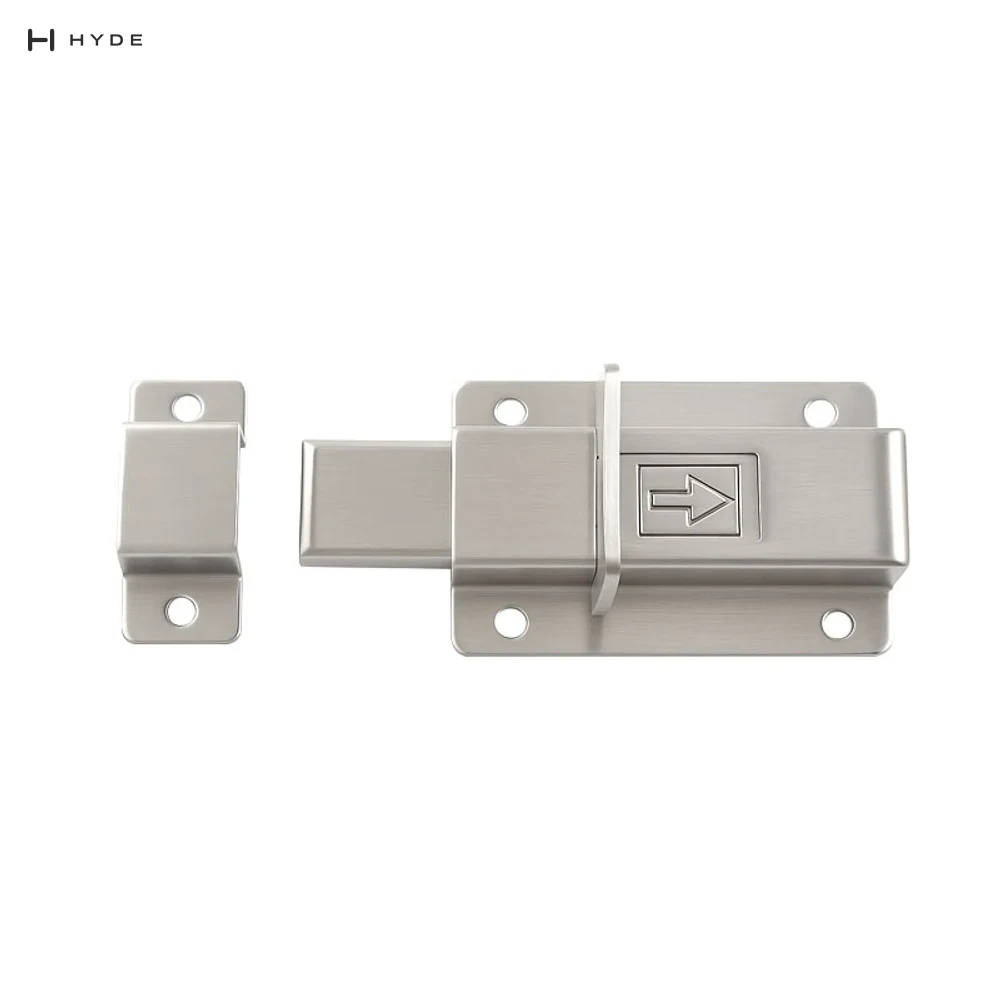
| Flat slide bolt | The flat bolt is slid into the keeper by its lever catch | Slide it back by hand | Bathroom, toilet and cupboard doors, light interior doors | BH16 |
| Spring latch | A spring pushes the bevelled tongue into the strike as the door closes | Pull the tab to withdraw the tongue | Doors, hatches and cabinet doors that must stay shut without being locked | BH17 |
3 rows · Source order
The difference that matters on site is in the last two columns. A bolt holds for as long as nobody moves it, and it does nothing if nobody throws it. A latch catches every time, but anyone who can reach the tab can release it, and the BH17 record publishes no locking or hold-back position. Treat a latch as something that keeps a door closed, not something that locks it. If a door must both catch by itself and be secured, fit both: a spring latch to hold it shut and a bolt for when it has to be locked.
FB012: a barrel bolt, despite the FB
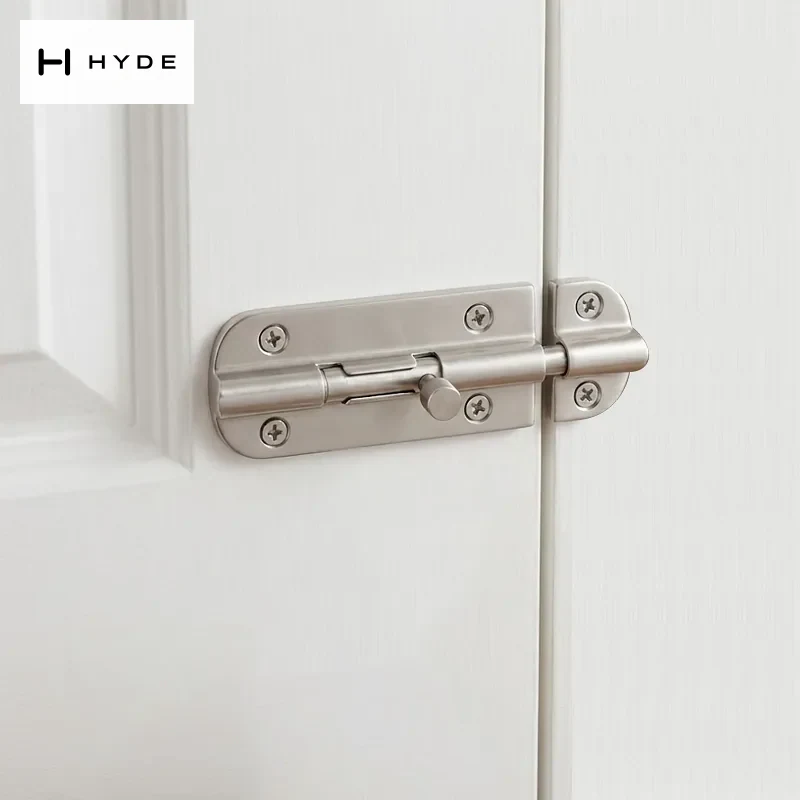
Buyers often search for FB012 by its model number, so the plain answer comes first: FB012 is a surface-mounted stainless steel barrel bolt. Our flush bolts also carry the FB prefix, but the prefix is a catalog number, not a description. The photograph shows a round bolt running in a guide on a plate screwed to the face of the leaf, thrown by a knob, with a separate keeper. A flush bolt is let into the edge of a leaf, and FB012 is not. It is published in 3, 4, 5, 6, 8 and 10 in lengths (76, 102, 127, 152, 203 and 254 mm), 30 mm wide, in stainless steel with an SS finish.
Its range of lengths makes FB012 the model to look at for vertical use. Fitted upright at the top or bottom of a leaf, a barrel bolt works as a tower bolt and shoots into the head of the frame or into the floor. A longer body usually takes its fixings over more of the leaf and guides more of the bolt. The short lengths suit a horizontal bolt across the joint between leaf and frame. Our record does not publish the bolt diameter or the throw, so if the keeper or floor socket is being made locally, ask for those two figures before anything is drilled.
BH15 and BH15-80mm: the stainless barrel bolt in two lengths
BH15 is a surface-mounted barrel bolt, supplied with its keeper, in satin (SSS) or polished (PSS) stainless steel. Its record publishes it as 80 or 100 mm long (about 3-1/8 or 4 in), 38 mm (1-1/2 in) wide and 1.2 mm thick. BH15-80mm is the 80 mm version, listed on its own. Its record does not yet publish measured dimensions and says they are being confirmed with the factory. Order against the BH15 figures, and ask for the confirmed drawing before you fix the hole positions.
Choose between BH15 and FB012 by width and length, not by appearance. BH15 has the wider plate, 38 mm against FB012's 30 mm, and comes in two metric lengths with a choice of satin or polished finish. FB012 is narrower, comes in six lengths in inches and has one finish. On a narrow stile or a framed glass door, check plate width first: the plate has to sit on solid material with room for its screws.
BH16: the flat slide bolt for light doors
BH16 is a flat slide bolt with a lever catch, supplied with its keeper. It measures 70 × 48 mm (2-3/4 × 1-7/8 in), is 1.0 mm thick and comes in satin or polished stainless steel. The photograph of its back shows a four-hole base and a two-hole keeper. It is the compact choice for bathroom, toilet and cupboard doors, where the bolt gives privacy from the inside rather than security, and where a low, flat profile suits the door better than a round barrel.
A slide bolt on a bathroom door gives privacy, but it has no emergency release. A washroom indicator bolt can be opened from outside; a plain slide bolt cannot. Where the person inside might need help, as in an accessible toilet or a care setting, specify a bolt with an outside emergency release instead.
BH17: the spring latch (Federfalle)
BH17 is a surface-mounted spring latch with a bevelled tongue, supplied with its strike plate. It measures 44 × 42 mm (about 1-3/4 × 1-5/8 in), is 2.5 mm thick and comes in satin or polished stainless steel. As the door closes, the bevel rides over the strike and the spring pushes the tongue home, so the door is caught. To open it, you draw the tab back against the spring. That makes it the right part for a door that must not be left swinging, such as a service hatch, a cupboard, or a gate that the wind would otherwise blow open. It is the wrong part for anything that needs to be locked.
Two points decide whether a spring latch works. First, the bevel must face the closing direction so the tongue is pushed in as the door shuts. Fitted the other way round, the tongue meets the strike with its flat face, and the door can only be closed by pulling the tab first. Second, the strike must line up with the tongue when the door is closed, allowing for the door's gap. A latch that catches only when the door is pushed hard will soon not catch at all.
Which side, which face, and the keeper
Every one of these is operated from one side only, so it goes on the side being protected: the inside of a room, or the yard side of a gate. Screw the body to the face of the leaf, close to the edge that opens, and fix the keeper or strike to the frame or to the other leaf, in line with the bolt. The screws must go into solid timber or the frame itself, not into an architrave or a trim strip, which will pull away the first time somebody leans on the door.
Check where the keeper will sit before you order. When a door closes into a rebate or against a stop, the face of the leaf and the face of the frame are often not level, and a flat keeper then sits too high or too low for the bolt. The fix is a cranked keeper or a packing piece under it. Our records do not publish keeper offsets for these models, so state the step between leaf face and frame face in your inquiry. The answer can then say whether the supplied keeper fits.
Surface bolts on steel doors (سقاطة باب حديد)
On a steel door the fixing changes, not the choice of bolt. A hollow steel leaf has a thin skin, and a screw in sheet steel holds far less than one in timber. Fix the bolt through an internal reinforcing plate where the door has one. Otherwise use rivet nuts with machine screws, or through-bolts where both faces can be reached. Drill the keeper fixings into the solid section of the frame. Stainless steel is the sensible metal on an exterior iron door, because the bolt is the most exposed part. If you intend to weld the bolt or keeper rather than screw it, say so in the inquiry, because all of these models are made with screw holes.
Escape routes
A surface bolt is a hand-operated bolt worked from one side. Standards such as EN 12051 treat door bolts as their own category, separate from emergency exit devices, which are covered by EN 179 and EN 1125. A bolt that has to be found and drawn back is no substitute for exit hardware. Do not put one on a door people must use to escape in an emergency without checking the local code. The same applies to bolting the inactive leaf of a pair on an exit route.
Writing the order line
A surface bolt order line needs: the model; the length in millimeters and inches; the finish code; the door material and leaf thickness, so the screws suit; the face it goes on, and whether the door opens towards or away from that face; the step between leaf face and frame face at the keeper; whether it is fitted horizontally or vertically, and, if vertically, whether it shoots into the head or the floor; and the number of doors. For example: FB012, 8 in (203 mm), SS; hollow steel gate leaf; bolt on the yard face, fitted vertically into a floor socket made on site; 20 gates.
Questions this answers
What is a barrel bolt on a door?
A barrel bolt is a surface bolt. A round bolt slides in a guide on a plate screwed to the face of the door, and a knob throws it into a keeper on the frame or on the other leaf. Unlike a flush bolt, it needs no recess in the door edge. Arabic-speaking buyers often search for it as سقاطة باب. Our stainless barrel bolts are FB012, in 3 to 10 in lengths, and BH15, at 80 or 100 mm.
What is the FB012?
FB012 is a surface-mounted stainless steel barrel bolt. It is published in 3, 4, 5, 6, 8 and 10 in lengths (76 to 254 mm), 30 mm wide, in an SS finish. It shares the FB prefix with our flush bolts, but it is screwed to the face of the leaf, not let into its edge.
What is the difference between a spring latch and a slide bolt?
A slide bolt is thrown by hand and holds until somebody draws it back. A spring latch (Federfalle in German) has a bevelled tongue that a spring pushes into the strike every time the door closes, and you open it by pulling its tab. Use a latch to keep a door closed and a bolt to lock it. Our spring latch is BH17 and our flat slide bolt is BH16.
Can a barrel bolt be fitted to a steel door?
Yes. The bolt stays the same; only the fixing changes. Screw into an internal reinforcing plate where the door has one. Otherwise use rivet nuts with machine screws, or through-bolts. A screw in thin sheet steel alone will pull out. Fix the keeper into the solid section of the frame. If you plan to weld instead, say so in the inquiry.
Does a door bolt go on the inside or the outside?
On the side being protected, which is normally the inside, because anybody who can reach a surface bolt can work it. The keeper goes on the frame or on the other leaf, in line with the bolt. Do not fit one on an emergency escape door without checking the local code.
Related products
Length 3in/4in/5in/6in/8in/10in
Barrel Bolt
Model FB012
Stainless Steel
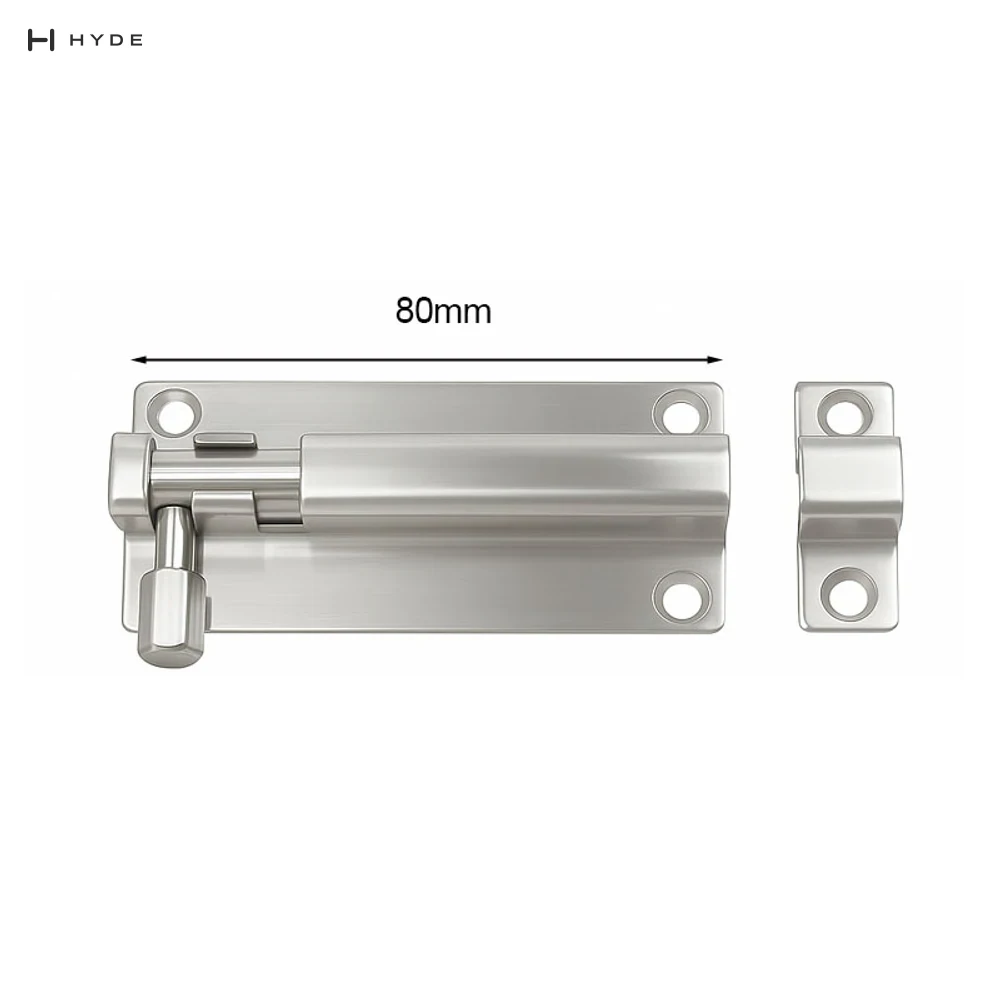
Barrel Bolt
Model BH15-80mm
Stainless Steel
Length 70mm
Flat Slide Bolt
Model BH16
Stainless Steel
About Canton Hyland — Canton Hyland manufactures panic exit devices, locks and architectural door hardware for commercial and institutional projects, supplying specifiers and distributors internationally.