
Left or Right Opening Door in Brazil: Reading Abertura Direita and Esquerda
In Brazil a door is most often called abertura direita or esquerda by standing on the side you pull and naming the hinge side, the same rule as DIN. Not every supplier reads it that way, so this article maps the Brazilian terms to ANSI and DIN, shows where the hand changes the part, and gives a three-fact way to write it on an order.

Johnson LiuDigital Communications, Canton HylandMA Digital Media, Johns Hopkins University
In Brazil, the rule most often given for telling a left-opening door from a right-opening one is this: stand on the side the door opens towards, the side you pull, face the door and look at the hinges. Hinges on your right: abertura direita. Hinges on your left: abertura esquerda. That is the same rule as the European DIN convention.
The rule is not universal. Some door, door-kit and lock suppliers read the hand from the side you push, or from the outside, and then the same door gets the opposite name. We could not find an ABNT definition that settles this for door hardware, so we treat any “direita” or “esquerda” on an order as unconfirmed until the viewpoint is written next to it.
How to read it at the door, in three steps
First, find the pull side. On the side the door opens towards, the hinge knuckles (the barrel that holds the pin) stand proud of the gap. On the other side, the push side, they are hidden and the leaf sits back behind the stop, the strip on the frame that the closed door rests against. Second, stand facing the door on the pull side. Third, look at the hinges: the side they are on is the door's name under the most common Brazilian rule.
If all you have is a photograph, other clues help. A panic bar is always on the push side, because it is pushed in the direction of escape. A closer whose arm projects square from the door to the frame (a regular arm) is normally on the pull side; one whose arm lies parallel to the leaf, or whose body is fixed to the head of the frame, is on the push side. And the sloped face of the latch bolt always points in the direction the door closes.
The same door in four systems
Scroll sideways to compare columns. Select a column heading to sort; select it three times to restore source order.
| Hinges left, opens inward (push) | LH | DIN right | Abertura direita | Abertura esquerda |
|---|---|---|---|---|
| Hinges right, opens inward (push) | RH | DIN left | Abertura esquerda | Abertura direita |
| Hinges left, opens outward (pull) | LHR | DIN left | Abertura esquerda | Abertura direita |
| Hinges right, opens outward (pull) | RHR | DIN right | Abertura direita | Abertura esquerda |
4 rows · Source order
The table hides one trap worth memorising. On a door that opens outward, the American letter and the Brazilian word agree: LHR is esquerda, RHR is direita. On a door that opens inward, they are opposite: an LH door is, under the pull-side rule, abertura direita. Anyone converting a Brazilian order to an American catalog without knowing this gets every inward-opening door wrong and every outward-opening door right, and the error only shows on site.
The table is derived from the definition of each convention, not copied from a standard. Use it to check an order, not to replace the description of the door on it.
Why the hand matters, part by part
Mortise lock (fechadura de embutir). The latch bolt has a sloped face that must meet the strike first, so that the closing door pushes it in. That gives it a hand. On most mortise locks the latch can be turned through 180 degrees to suit the other hand; on some that is done with the lock in the door, on others the lock has to come out or the case has to be opened. A deadbolt, where there is one, is symmetrical and does not change.
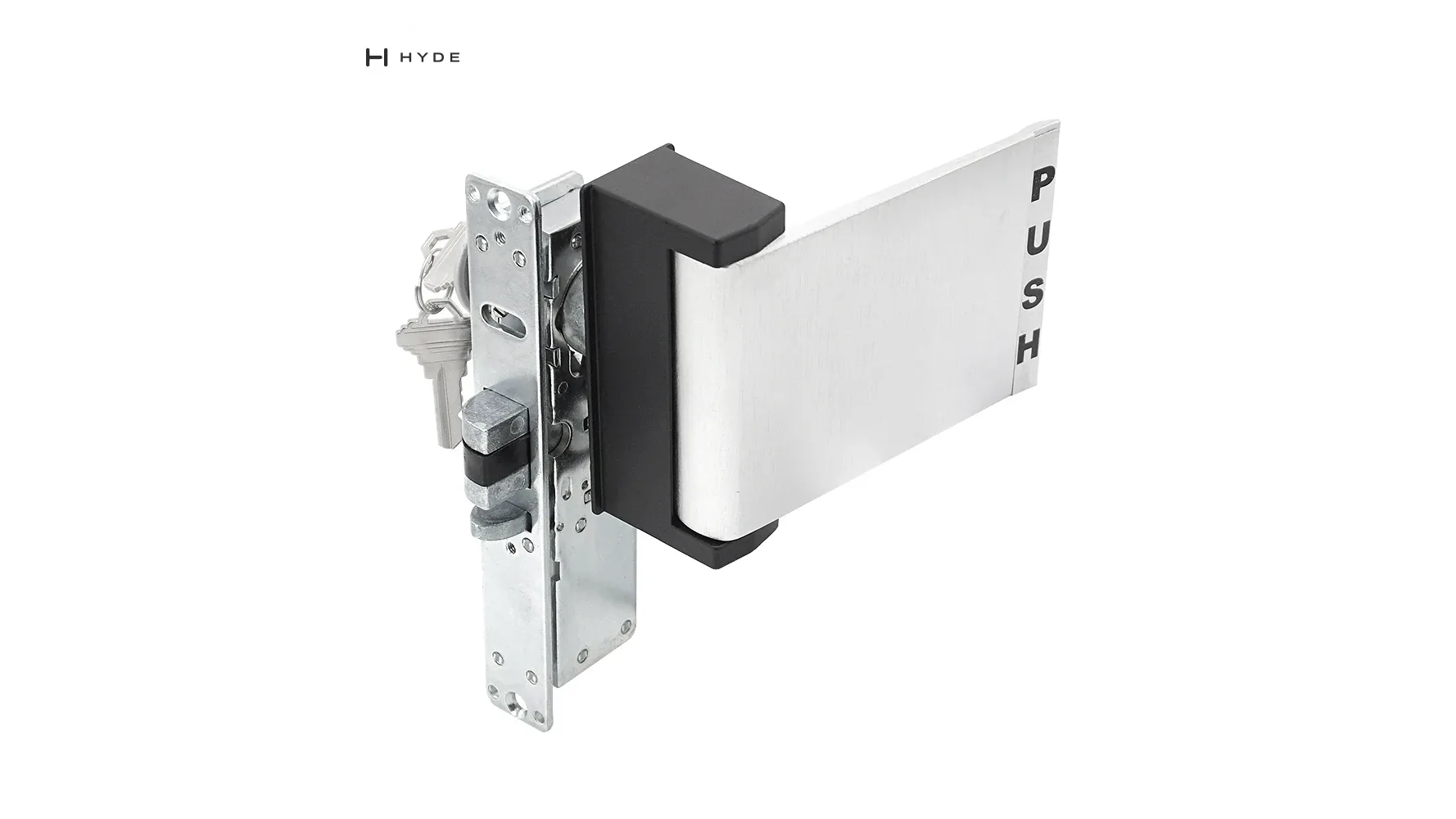
Two of our models show both situations. The HY007 lock case, a deadlatch with a hold-back function for aluminum storefront and glass doors, has the row “Reversible (Left / Right)” in its record: one part serves both hands. The HY007-S set has the same deadlatch-with-hold-back function, an iron case and an aluminum alloy push/pull paddle, and its record says “Left Hand or Right Hand Available”. The hand is chosen on the order. The HY007-S paddle projects to one side of the case and carries the word PUSH on its face, which is why it has a hand.
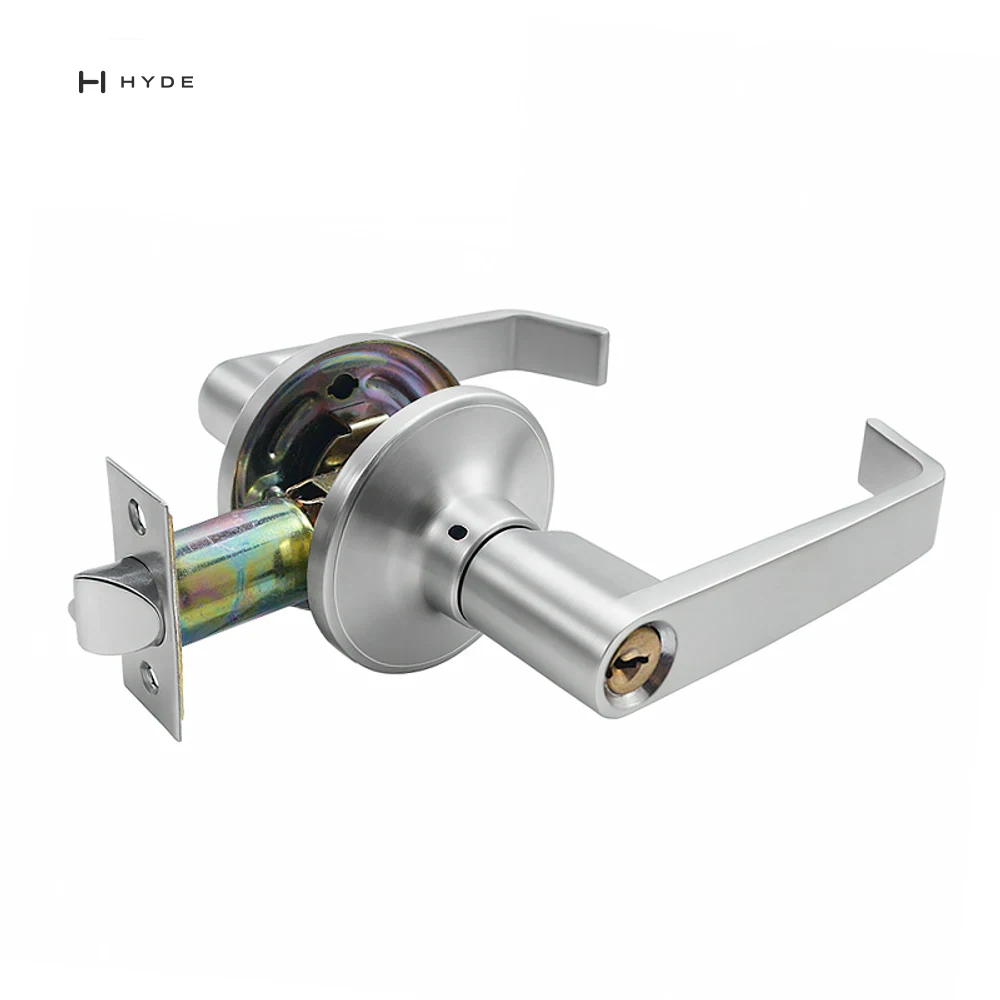
Lever handle (maçaneta de alavanca). At rest, the end of the lever points towards the hinge side; that is a manufacturers' installation rule. If it points towards the lock edge, either it has been fitted the wrong way round or the model is a handed design. A straight lever on a sprung mechanism serves both hands by turning the lever over; a curved or asymmetric lever may be handed. The 3431 SSET, a zinc alloy lever set with an entrance function keyed outside, a 60/70 mm backset and a door thickness range of 35 to 45 mm, has “Fully reversible, left or right hand” in its record.
Reversing the hand does not swap inside and outside. On the 3431 SSET the key is on the outside, and that is decided by the function, not by the hand. An order has to state both: which face is outside, and where the hinges are.
Panic bar (barra antipânico). A door with a panic bar opens in the direction of escape, and the bar is on the push side, so in the American convention it is always LHR or RHR. Most bars are reversible, but check each model's record: the 316-S, surface mounted for a single door, gives “Opening Direction: Left & Right Reversible”. What does not reverse with the bar is the rest of the opening: the strike on the frame and, if there is one, the outside lever, which is a separate part and can be handed. On the 316-S the outside lever is optional.
Door closer (mola aérea). A closer goes on one face of the door and on one hinge side, and both come from the opening. With a regular arm it sits on the pull side; with a parallel arm, on the push side. Many closer bodies can be fitted to either hand by changing how they are mounted, but the arm and bracket position follow the door. On a closer order, write the mounting face and the hinge side as well as the hand.
Hinges (dobradiças). An ordinary pin hinge is symmetrical and has no hand; the hand is decided by which side it is fixed to. Lift-off hinges, where the leaf comes off the pin by lifting, and rising hinges are handed and should be ordered like locks.
How to write the hand on an order
Write three facts and the abbreviation becomes optional: which side you are looking from, which side the hinges are on, and whether the door opens by pushing or pulling from there. Those three facts do not depend on any convention and survive any translation.
Scroll sideways to compare columns. Select a column heading to sort; select it three times to restore source order.
| Seen from the corridor (outside), hinges on the left, opens by pushing, inward | Abertura esquerda |
|---|---|
| Seen from the pull side, hinges on the right (abertura direita, pull-side rule) | Direita |
| Seen from outside, hinges on the right, opens by pulling, outward (ANSI RHR) | RH |
3 rows · Source order
If you use an abbreviation, name its convention: “ANSI LHR”, “DIN left”, “abertura direita, seen from the pull side”. On a pair of doors, also say which is the active leaf, the one that takes the lock, and describe both leaves.
On a re-order, when the old order says only “direita”, do not assume. Ask for a photograph of the installed door taken from the pull side with the hinges in view. One photograph settles what two letters cannot.
What our records say
Where a model's record says reversible, as on the HY007, the 316-S and the 3431 SSET, the hand of the door does not change the part we ship, but it still decides the strike, the closer and the active leaf. Where the record says the model comes in left or right hand, as on the HY007-S, the hand is part of the order. Where a record does not publish a hand, we do not infer one: we ask.
Questions this answers
How do I tell if a door is abertura direita or abertura esquerda?
Under the rule most often used in Brazil, stand on the side the door opens towards (the side you pull), face it and look at the hinges. Hinges on your right means abertura direita; on your left, abertura esquerda. Some suppliers read it from the push side instead, which gives the opposite name, so always write the viewpoint next to the word.
Is a Brazilian right-opening door ANSI LH or RH?
It depends on the swing. Under the pull-side rule, an outward-opening abertura direita door is ANSI RHR, and an inward-opening abertura direita door is ANSI LH. For outward-opening doors the left and right words agree; for inward-opening doors they are opposite.
Does a mortise lock work on both left and right doors?
Usually, because on most mortise locks the latch bolt can be turned through 180 degrees. Check the record: our HY007 lock case is listed as reversible left or right, while the HY007-S push/pull paddle set is listed as available in left hand or right hand, so its hand has to be stated on the order.
Do panic bars have a hand?
Most are reversible, and our 316-S record states left and right reversible. The bar is always on the push side of an outward-opening door. What does not reverse with it is the strike on the frame and any outside lever, which is a separate part and can be handed.
How should I write the door hand on an order?
Write three facts: the side you are looking from, the side the hinges are on, and whether the door opens by pushing or pulling from there. For example: seen from the corridor, hinges on the left, opens by pushing. If you add an abbreviation, name its convention, such as ANSI LHR or DIN left.
Related products
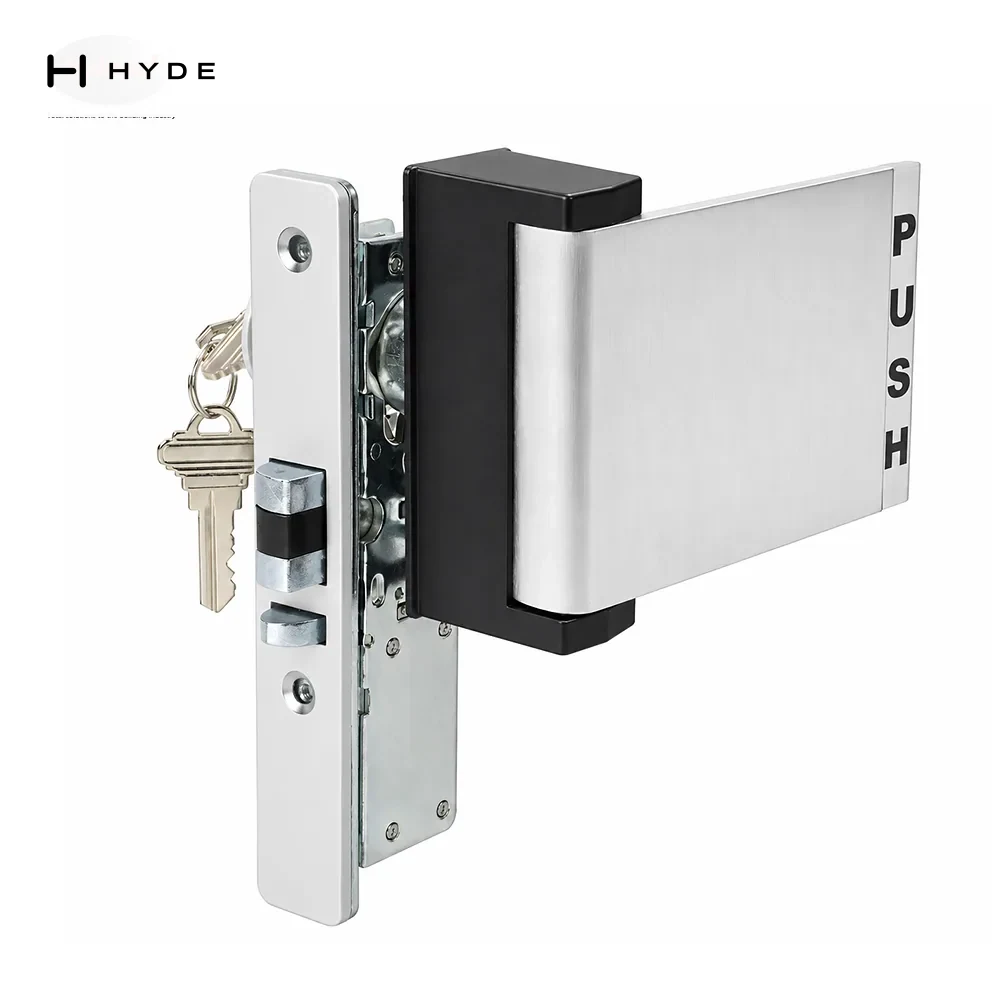
Lock Case
Model HY007-S · Video
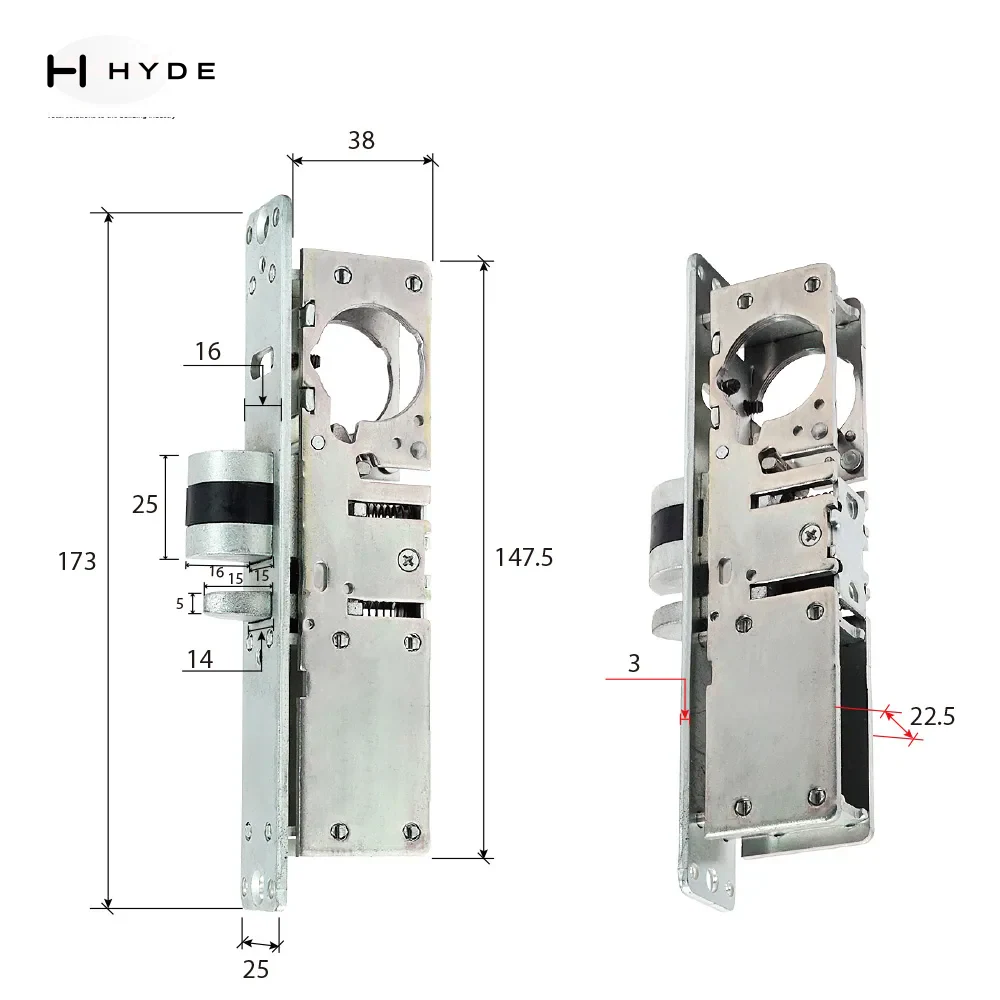
Lock Case
Model HY007 · Video
Iron Body, Zinc Alloy Latch, ABS Components
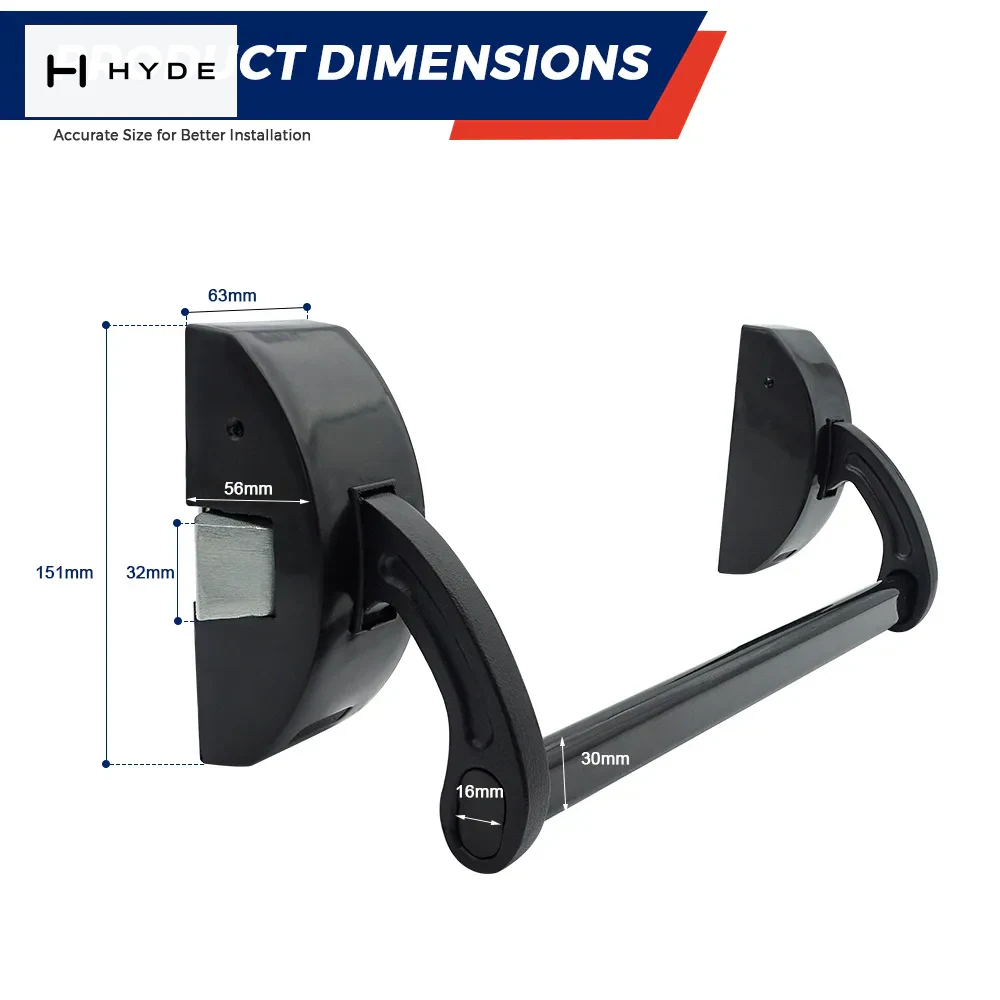
Panic Exit Device
Model 316-S · Video
Aluminum alloy body, iron bar
About Canton Hyland — Canton Hyland manufactures panic exit devices, locks and architectural door hardware for commercial and institutional projects, supplying specifiers and distributors internationally.