
Double-Bit (Doble Paleta) Lock or Euro Cylinder: Which for an Entrance Door
A doble paleta (double-bit) lock keeps its key mechanism inside the lock case; a euro cylinder lock puts it in a separate part held by one screw. This compares how each key works, what changing the key involves and what a buyer specifies, shows which HYDE AR4 locks are photographed with a double-bit key, and sizes a euro cylinder from our published lengths. We publish no security grade for either.

Johnson LiuDigital Communications, Canton HylandMA Digital Media, Johns Hopkins University
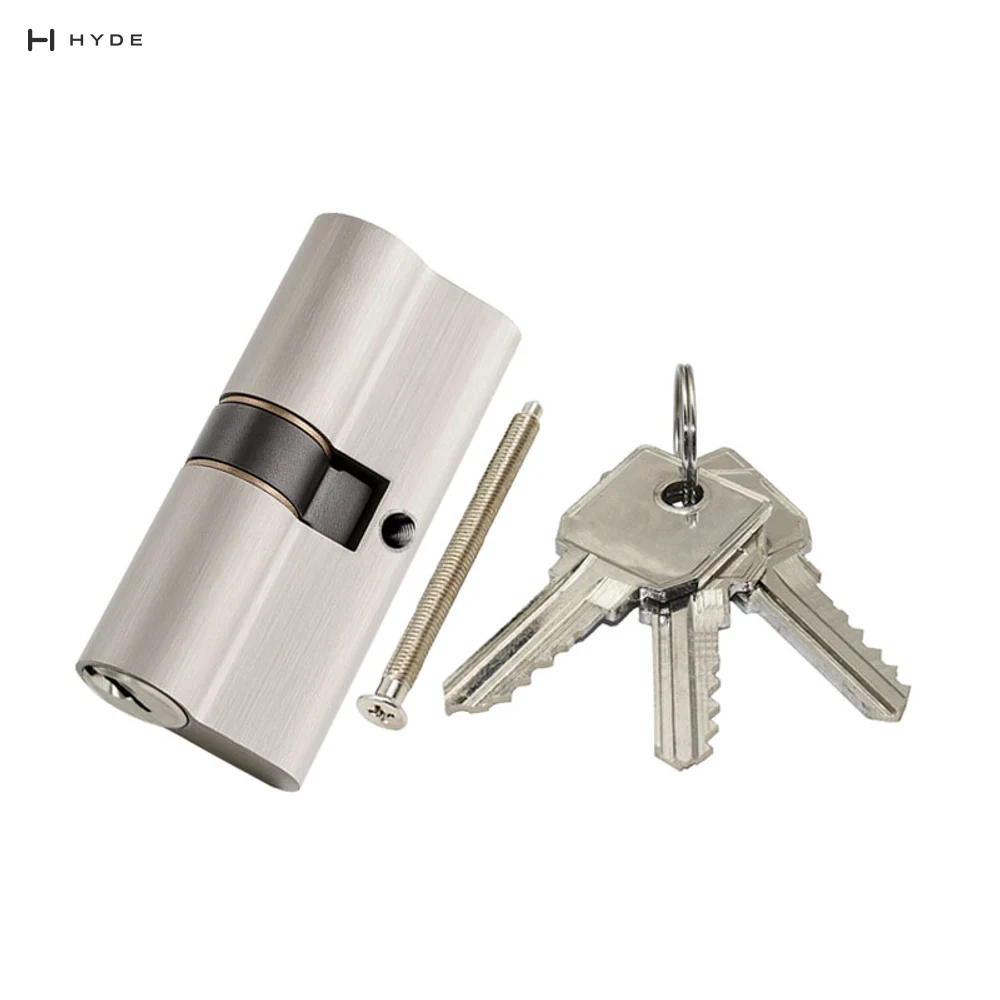
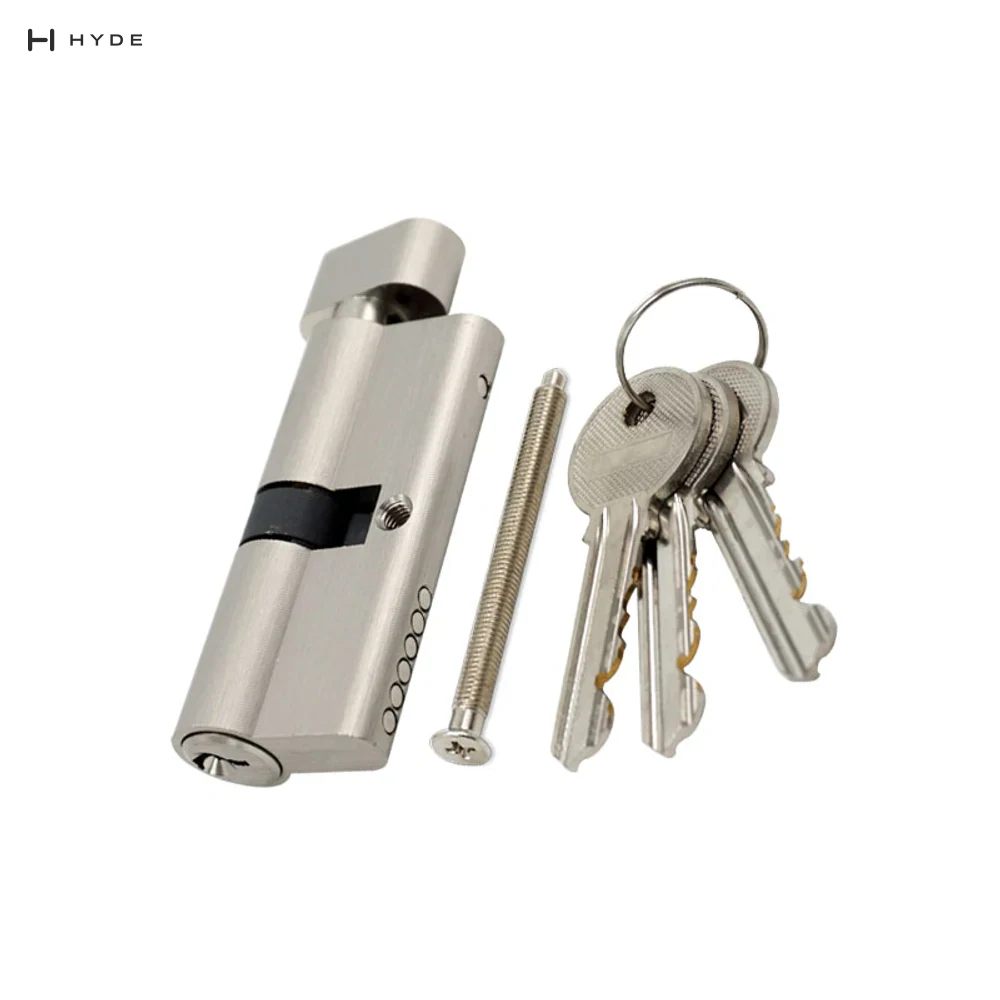
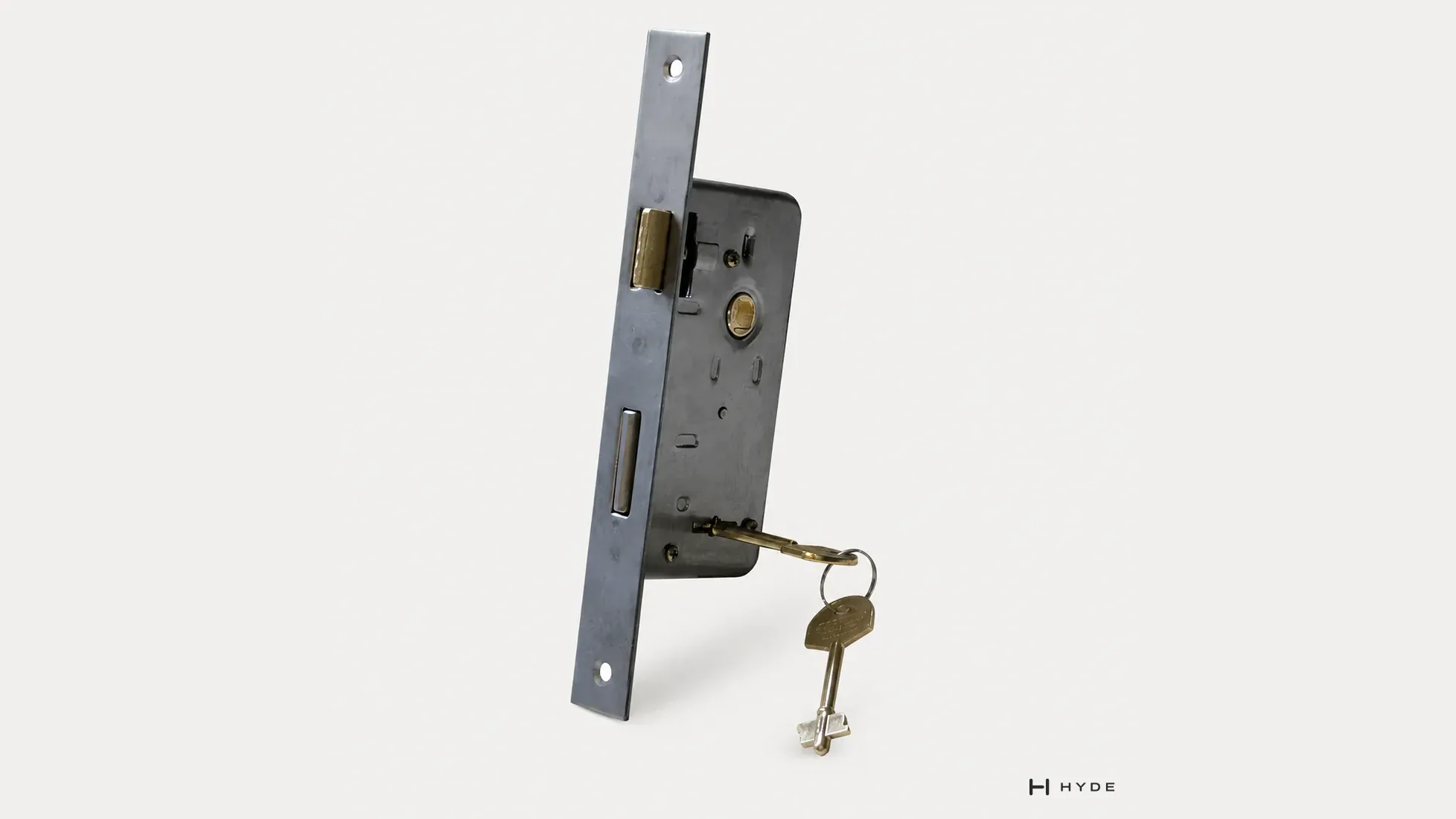
A doble paleta (double-bit) lock and a euro cylinder lock differ in one place that decides most of the purchase: where the key mechanism lives. In a doble paleta lock it is inside the lock case, so the lock and its key are one item, as with our AR4-110 (68mm center distance, two keys); in a euro cylinder lock it is a separate brass part held by a single screw, ordered by overall length such as 60mm or 70mm, and changed without taking the lock out of the door.
Neither is “more secure” by definition, and this article does not say one is. What each offers is different: the doble paleta is one sealed unit with no part standing proud of the door face; the euro cylinder offers a choice of key-and-thumbturn or key on both sides, a change of key by changing one part, and a length that has to be matched to the door. We publish no security grade for the locks or the cylinders named here.
How each one works
The doble paleta key has a bit on each side of its tip: a flat blade cut in steps. The keyhole runs through the door and through the lock case. As the key turns, the steps on the bits lift a set of internal levers to set heights, and only when every lever is at its height can the bolt travel. Because the key is symmetrical, it goes in either way up and works from either face of the door. In Italy the same family is called doppia mappa.
A euro cylinder is a pin-tumbler lock in a standard keyhole-shaped section. The cuts on the key raise spring-loaded pins until each one splits exactly at the line between the plug, which turns, and the body; then the plug turns, and a cam at the middle of the cylinder throws the bolt in the case. The cylinder slides into a hole of the same profile in the case and is held by one screw through the faceplate. The profile and its dimensions come from DIN 18252.
The comparison
Scroll sideways to compare columns. Select a column heading to sort; select it three times to restore source order.
| Where the mechanism is | Inside the lock case | In a separate cylinder, held by one screw through the faceplate |
|---|---|---|
| Hole in the door face | A keyhole through the leaf | A euro profile hole for the cylinder |
| How the key works | Two bits lift a set of levers to their height | Cuts raise spring-loaded pins to the shear line; a cam throws the bolt |
| On the inside | Key on both faces | Key on both faces (DK) or key outside and thumbturn inside (KT) |
| Changing the key | Replace the case, or have a locksmith rework the levers with the case out of the door | Remove one screw and fit another cylinder; the case stays in the door |
| Part standing proud | None, apart from the escutcheon | The cylinder ends, which have to be sized to sit close to flush |
| What sizes the order | Backset, center distance and faceplate | The case dimensions, plus the cylinder's overall length and its split |
| Our examples | AR4-110, AR4-140 | 60 SNDK, 70 SNKT-1 |
8 rows · Source order
Which of our locks is which
The records of our HYDE Argentina AR-4 collection do not name the key mechanism in words. They publish the dimensions and that each lock comes with two keys in zinc alloy or brass. The mechanism is read from the catalog photographs, and we say so rather than present it as a published specification.
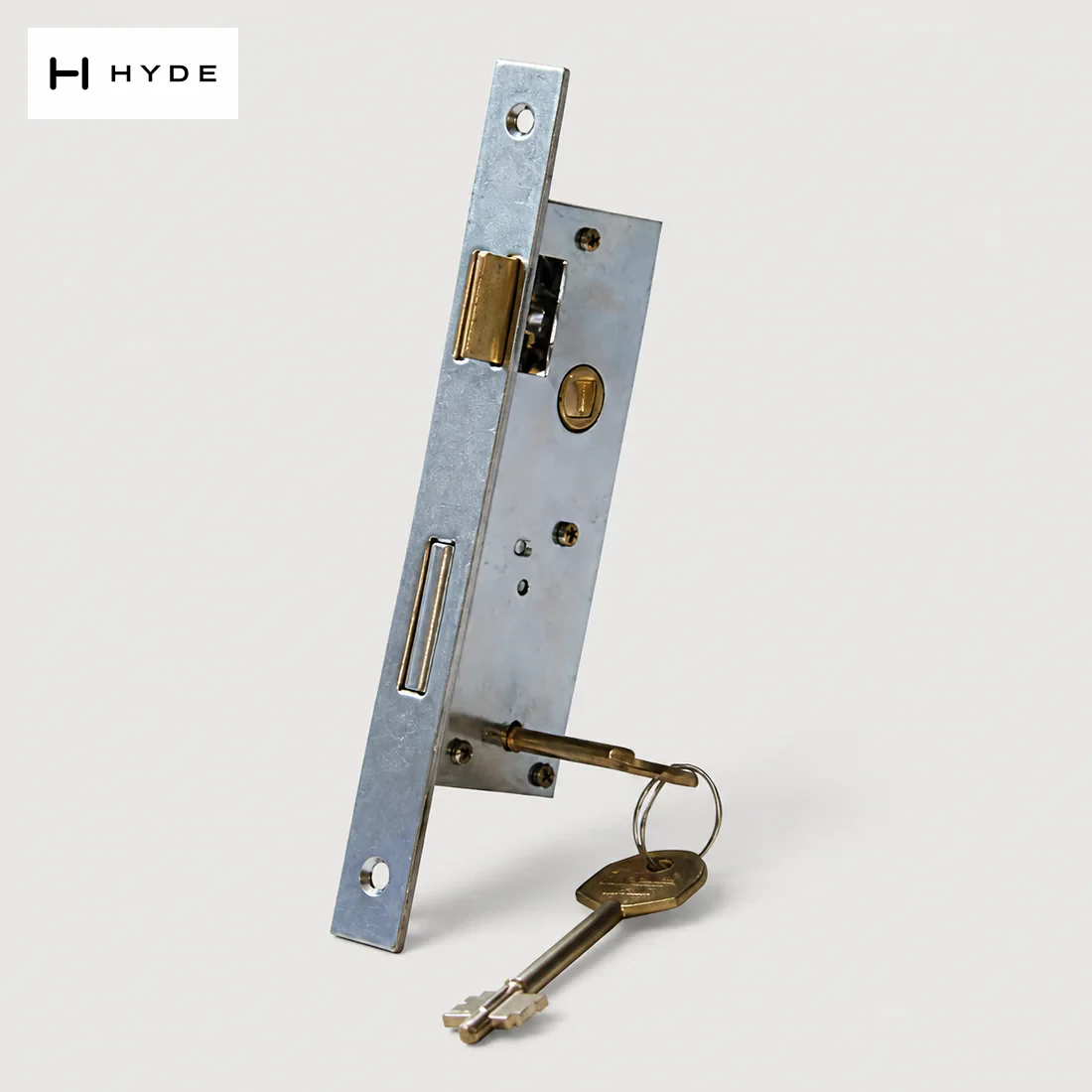
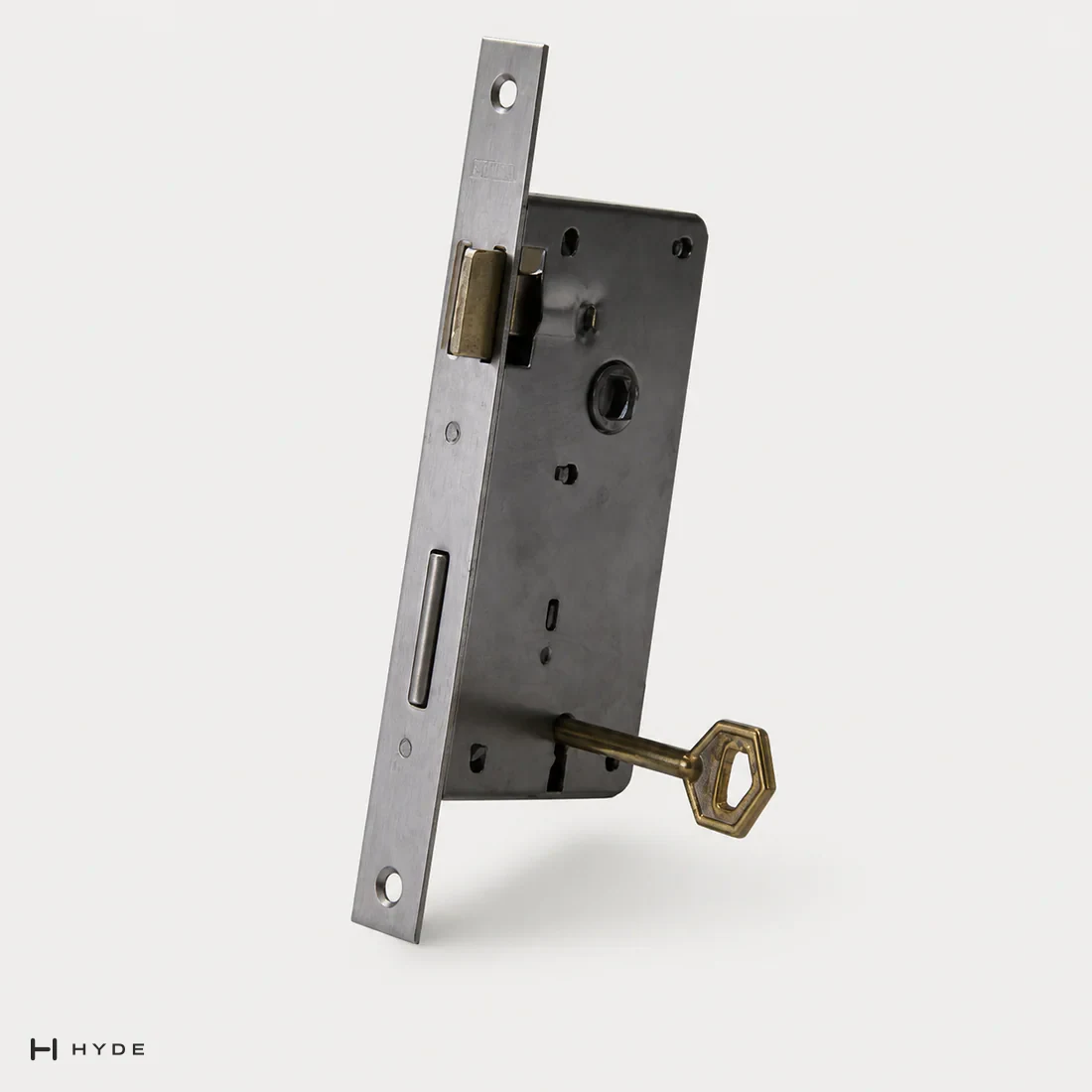
AR4-110 and AR4-140 are photographed with doble paleta keys: a bit on each side of the tip, entering a keyhole in the case. Neither case shows a euro profile hole. AR4-110 is the security mortise lock body with a 40mm backset, a 68mm center distance and a 212 × 25mm faceplate. AR4-140 is the body for aluminum narrow-stile doors, with a 25mm backset, a 72mm center distance and a 183.5 × 20mm faceplate. AR4-111, with a 40mm backset, a 72mm center distance and a 220 × 25mm faceplate, is photographed with a bit key in the keyhole and no euro profile hole; the photograph does not show the bits clearly enough to say double or single.
One trap is worth naming. AR4-111 and AR4-140 share a 72mm center distance, which is also a common figure on cases made for a euro cylinder. The number says where the key hole sits below the handle spindle, not what shape it is. A 72mm case with a keyhole will not take a euro cylinder, and escutcheons or plates drilled at 72mm still have to carry the right cutout: a key slot for a doble paleta lock, a euro profile for a cylinder.
Our euro cylinders are solid brass, and the number at the front of each model is the overall length in millimeters. 60 SNDK is a 60mm cylinder in satin nickel with a key on both sides (DK). 70 SNKT-1 is a 70mm cylinder in satin nickel, photographed with a thumbturn; KT is the key-and-thumbturn form, with the turn on the inside. Neither record publishes how the length divides between the two halves.
Changing the key, and what a buyer can specify
With a doble paleta lock, the key and the lock are one item. If a key is lost or a tenant leaves, the usual answer is a new case, or a locksmith who takes the case out and reworks the levers. Our AR4 records publish two keys per lock; they do not publish keyed-alike sets, extra keys or the number of levers.
With a euro cylinder the case stays in the door. Change the cylinder and the key changes with it. That is also where the function is chosen: a DK cylinder needs a key on both faces; a KT cylinder has a thumbturn inside, which lets the door be opened from inside without looking for a key. Our cylinder records do not publish keyed-alike or master-key options, so if the project needs them, say so in the inquiry and we will confirm what can be supplied before anything ships.
Scroll sideways to compare columns. Select a column heading to sort; select it three times to restore source order.
| Model | AR4-110, AR4-111 or AR4-140 | The case model plus the cylinder model, for example 60 SNDK or 70 SNKT-1 |
|---|---|---|
| Backset | 40mm (AR4-110, AR4-111) or 25mm (AR4-140) | From the case record |
| Center distance | 68mm (AR4-110) or 72mm (AR4-111, AR4-140) | From the case record |
| Key material | Zinc alloy or brass | Not published per cylinder model |
| Keys per lock | Two | Not published for 60 SNDK or 70 SNKT-1 |
| On the inside | Key | DK (key) or KT (thumbturn) |
| Length | Not applicable | Overall length, and the outside/inside split |
7 rows · Source order
Sizing a euro cylinder for the door
A doble paleta lock has no part whose length is chosen for the door; a euro cylinder does, and that is where most wrong orders come from. The method is the one in our euro cylinder size chart. Each half is measured from the center of the fixing screw hole, which is also the center of the cam, to the outside face of the escutcheon or rose on that side. With the case centered in the leaf, each half is half the door thickness plus the escutcheon depth and a small allowance, rounded up to the next half-length. Half-lengths run in 5mm steps from 27.5mm, and the two halves added together give the overall length.
With a 4mm escutcheon on each face, a 50mm door gives about 29mm a side, which rounds up to 30/30 and an overall length of 60mm, the length of 60 SNDK. A 60mm door gives about 34mm a side, which rounds up to 35/35 and 70mm, the length of 70 SNKT-1. Change the escutcheon or move the case off center and the halves change; the method does not. Our guide to door thickness and cylinder length carries the full table.
Two cautions. Our cylinder records publish the overall length, not the split, except 70 SNKT-2, whose split is listed as 30 / 10 / 30mm (which, measured to the cam center, is 35/35). And the cylinder has to sit close to flush: an end standing well proud of the escutcheon gives a grip for snapping, the attack euro profiles are known for.
What each design does not offer
A doble paleta lock has no thumbturn. Locking from inside takes the key, and on many bit-key locks a key left in one side stops another going in from the other side. Its combination cannot be changed by changing one part, and its keyhole runs through the door into the case: the path the key uses, and also the path of any attempt at manipulation.
A euro cylinder adds a part that projects from the door face and a length that can be ordered wrong. Its resistance to picking, drilling, snapping and extraction depends on the design of the individual cylinder, not on the profile. Words such as anti-snap or anti-theft describe an intention; a model name is not a test result.
In Europe, cylinders are classified under EN 1303 and mechanically operated locks under EN 12209; both grade a specific tested product, not a type of mechanism. We publish no security grade for the AR4 locks or for our cylinders, and nothing in this article should be read as one. If the project specification calls for a grade, ask for the evidence for that exact model.
Which to choose for an entrance door
Choose by what the door has to do, not by which word sounds stronger. If the door must open from inside without a key, if keys will change hands (rentals, staff turnover), or if several doors should share a key, a case for a euro cylinder gives those choices in one replaceable part. If the buyer's market already runs on doble paleta locks, with spare keys and cases on hand locally, and the door should have no part standing proud, a case such as AR4-110 is the like-for-like replacement; moving to a cylinder means changing the case, not just the key. Either way, the order that arrives right names the case by its backset and center distance, the form of the key and, for a cylinder, the overall length and the split, outside half first.
Questions this answers
Is a doble paleta lock safer than a euro cylinder?
Neither is safer by definition. A doble paleta lock has no part standing proud of the door face but cannot be rekeyed by changing one part; a euro cylinder is changed by removing one screw but has to be sized to sit close to flush. Security depends on the specific tested product, and we publish no security grade for either.
Can I fit a euro cylinder in a doble paleta lock case?
No. A doble paleta case has a keyhole, not a euro profile hole, so moving to a cylinder means changing the lock case. That holds even when the center distance is the same 72mm.
What length euro cylinder do I need for my door?
Measure each half from the center of the fixing screw hole to the outside face of the escutcheon and round up to the next half-length, in 5mm steps. With a 4mm escutcheon on each face and a centered case, a 50mm door works out at 60mm overall and a 60mm door at 70mm.
Which HYDE Argentina locks use a doble paleta key?
AR4-110 and AR4-140 are photographed with doble paleta keys entering a keyhole in the case. Their records publish two keys per lock in zinc alloy or brass and do not name the mechanism in words.
Related products
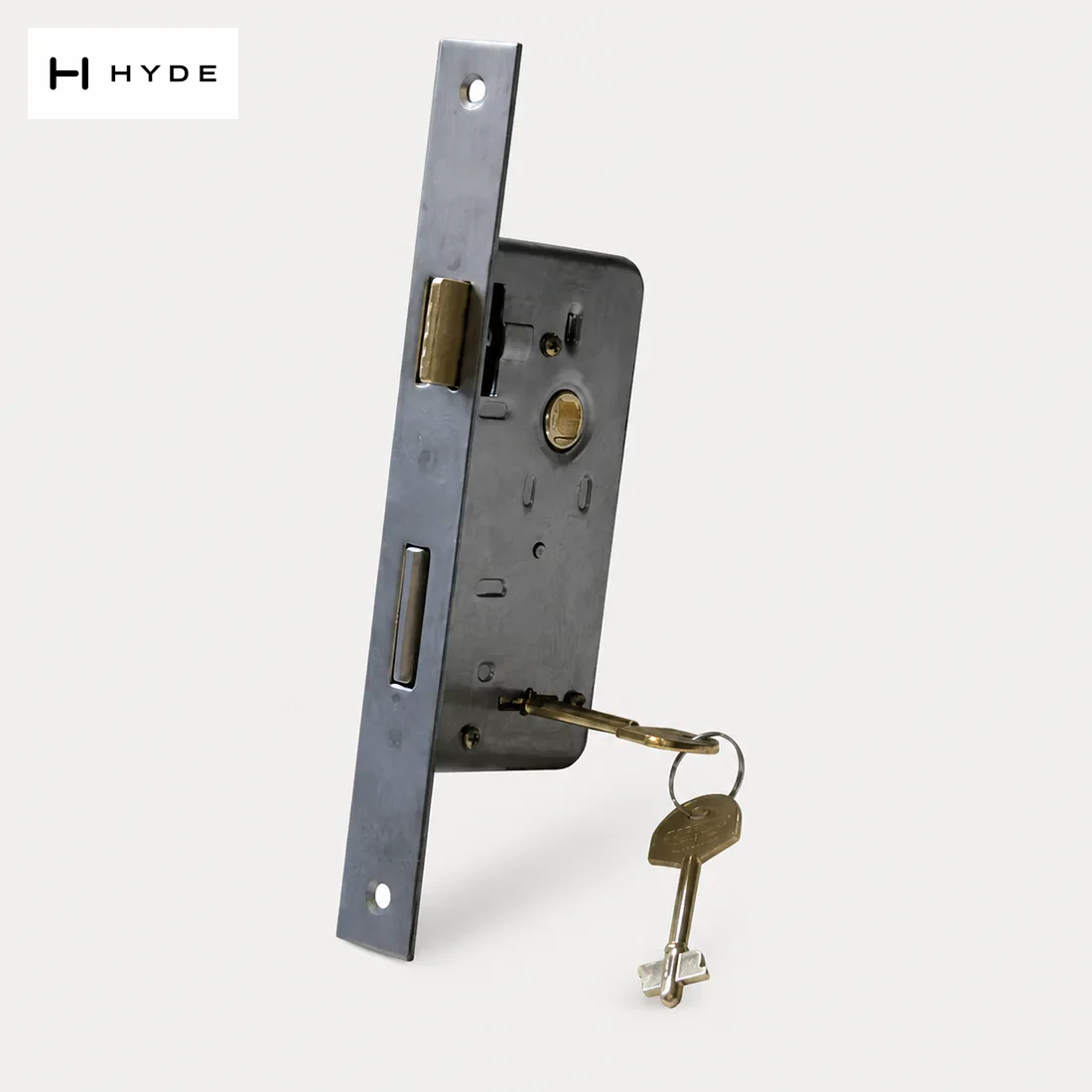
Backset 40mm
Security Mortise Lock Body
Model AR4-110 · Video
Nickel-plated iron lock case
Backset 25mm
Aluminum-Door Mortise Lock Body
Model AR4-140 · Video
Nickel-plated iron lock case
Backset 40mm
Security Mortise Lock Body
Model AR4-111
Nickel-plated iron lock case
About Canton Hyland — Canton Hyland manufactures panic exit devices, locks and architectural door hardware for commercial and institutional projects, supplying specifiers and distributors internationally.