
304, 201 or 316: Which Stainless Steel You Are Actually Buying
Three grades look identical in a photograph, cost differently, and behave nothing alike within sight of the sea. 201 substitutes manganese for nickel and rusts where 304 does not; 316 adds molybdenum and survives where 304 pits. Here is how to tell which one you have been quoted.

Johnson LiuDigital Communications, Canton HylandMA Digital Media, Johns Hopkins University
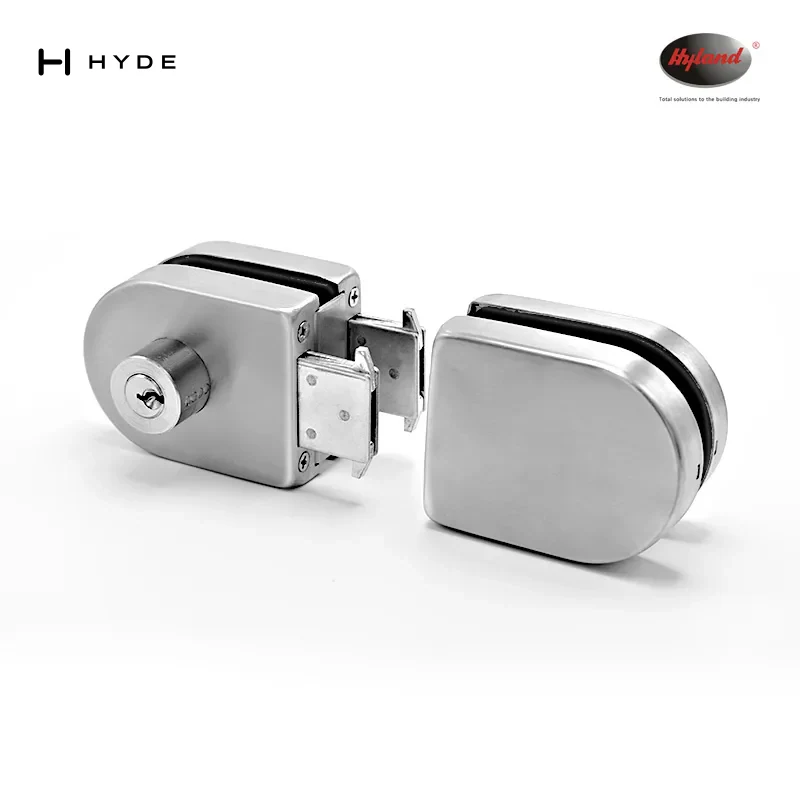

Stainless handles from many factories are photographed in the same shape against the same white background. The photographs are not lying. The metal is different, and the difference does not appear until the hardware has been on a building for a year, which is long after the container cleared, the retention was released and the buyer moved on.
There are three grades in ordinary circulation. 304 is the default architectural stainless: roughly 18% chromium, 8% nickel, no deliberate molybdenum. It is what most people mean when they say stainless steel, it is what most specifications intend, and in a normal inland building it does not corrode. 201 is a substitution alloy invented when nickel got expensive, it drops the nickel to around 4% and makes up the austenite with manganese and nitrogen. It is cheaper by a fifth to a third, it polishes to a finish indistinguishable from 304 across a showroom, and it carries noticeably less corrosion resistance. 316 goes the other way, adding 2 to 3% molybdenum specifically to resist chloride attack, which is the failure mode that pits 304 near salt water and in swimming pools.
Why one rusts and the other does not
Stainless steel is not a metal that cannot rust. It is a metal that repairs itself. Chromium above roughly 10.5% reacts with oxygen in the air to form a passive layer a few atoms thick, and when that layer is scratched it re-forms within seconds, provided there is oxygen available and nothing is attacking it chemically. Everything in this article is a question about how well that film holds and how quickly it comes back.
Chloride is what breaks it. A chloride ion attacks the passive film at a single point, the film cannot re-form fast enough at that point, and corrosion goes downwards into a pit rather than spreading across the surface. This is why marine failure looks like freckles rather than a rusty sheet, and it is why a handle can be perfect over 99% of its area and still be rejected on site.
Molybdenum is a direct answer to that mechanism: the 2 to 3% in 316 stabilises the passive film specifically against chloride attack, which is the whole reason 316 exists and the reason it costs more. It is not a general upgrade, it is a targeted one.
The nickel story about 201 is only half the story: substituting manganese and nitrogen for nickel keeps the alloy austenitic, which is what allows it to be formed and polished like 304. But 201 also sits lower on chromium: ASTM A240 lists 201 at 16.0 to 18.0% chromium and 304 at 18.0 to 20.0%. Chromium is the element that makes the passive film in the first place, so the grade with less of it has a thinner margin before the film stops re-forming. The manganese does not compensate for that, because manganese was never doing that job.
Anyone comparing grades on paper will eventually meet the pitting resistance number, PREN, calculated as the chromium percentage plus 3.3 times the molybdenum plus 16 times the nitrogen. It ranks the molybdenum grades sensibly and it is worth knowing. It also flatters the nitrogen-bearing 200 series, because that nitrogen term was derived for a different family of alloys, so a PREN that puts 201 alongside 304 is arithmetic, not service experience. Use it to compare 304 with 316. Do not use it to argue that 201 is coastal.
The practical consequence is narrow and sharp. Inland, in a dry or temperate climate, 201 is usually fine for the life of the fit-out, which is why it exists and why it is not a scam. Within a few kilometers of the sea, in a coastal hotel, on a pool enclosure, or anywhere the air carries chloride, 201 develops rust freckles in a single season and 304 develops them eventually. That is the specific case where 316 stops being an upgrade and starts being the only correct answer. It is also the case that produces the most warranty arguments in this industry, because the hardware did not fail, it was the wrong grade for the exposure, and nobody wrote the exposure down.
The rust that is not the metal's fault
Before anyone argues about grade, it is worth separating three things that all look like the same complaint in a photograph sent from site.
Tea staining is a brown discolouration over a wide area, most of it shallow. It is a cosmetic failure and the part underneath is usually sound. It is also the one that gets hardware rejected, because a client does not accept a discoloured handle on the grounds that it is structurally fine.
Pitting is small, dark, localised and goes downwards. This is the chloride mechanism described above, and it is the one that eventually becomes a real failure.
Free-iron contamination is neither, and it is the one worth knowing because it gets blamed on the supplier when it was caused on site. Stainless steel picks up particles of ordinary carbon steel very easily: from steel wool, from a wire brush that has been used on mild steel, from grinding dust drifting across a building, from a blade that cut something else first. Those particles rust, and they rust sitting on a perfectly good stainless surface, so the part appears to be rusting when in fact something on it is. Grade makes no difference whatsoever to this. It looks identical on 316.
The distinction has a commercial consequence. Rust freckles appearing within days of installation, in a pattern that follows where somebody worked, are almost never the alloy. Rust appearing over a season, concentrated on the seaward face, usually is.
Three habits prevent most of it and none of them cost anything. Never clean stainless with steel wool, use a nylon pad or a cloth. Do not use chloride-based cleaners on it, which quietly rules out a large share of bathroom and kitchen products, and rinse anything that has been on it. Rinse coastal hardware with fresh water periodically; the salt film is what sustains the attack, and rain does not reach a sheltered face. A building that does these three things will get more out of 304 than a building that does none of them will get out of 316.
You can narrow it down on a sample without a laboratory, provided you know what the test does and does not prove. Take a magnet to it. Properly annealed 304 is essentially non-magnetic, and a fridge magnet slides off; 201 is usually weakly magnetic and the magnet drags or tugs. This is a useful screen and it is not proof: cold working (the stamping and forming that makes a rose or a plate) induces magnetism in 304 too, so a magnetic edge on a pressed part means nothing on its own. Test the flat, unformed area, compare against a sample you trust, and treat a strong pull as a reason to ask rather than a verdict. If the answer matters commercially, the only thing that settles it is a material certificate or a positive material identification test on the delivered goods, and both are things you are entitled to ask for before you place the order rather than after.
Two more things travel under the same word and are not grades at all. The first is finish: SSS is satin stainless, PSS is polished stainless, and both codes describe the surface treatment, not the alloy underneath. A polished 201 handle and a polished 304 handle carry the same finish code. The second is construction. A great deal of hardware sold as stainless is stainless-clad or stainless-plated over zinc alloy or steel, which behaves like the substrate as soon as the skin is scratched. If a lever is priced far below the others in a comparison, the interesting question is usually not the grade but whether it is solid at all.
We will be direct about our own catalog, because the audit that prompted this article was of our own data. Of the 165 Canton Hyland records whose material field mentions stainless steel, 21 state a grade explicitly, some as 304, some as 201, several as "304/201" where the model is genuinely offered in both. The remaining records say "stainless steel" and stop. That is a gap in our published data, not a gap in the factory: the grade is known at production and is confirmed on request against a specific model and order quantity. We are filling it in as the records are revised, and in the meantime the honest instruction is to ask, and to get the answer in writing on the proforma rather than in a chat message.
What a material certificate is, and what it is not
If the grade matters commercially, the document that settles it has a standard behind it. EN 10204 defines four types of inspection document, and the difference between them is the whole point.
Type 2.1 is a declaration that the material complies with the order. No test results. Type 2.2 is a test report with results, but from non-specific inspection, results from the mill's routine production, not from your material. Type 3.1 is an inspection certificate with results from specific inspection on the material actually supplied, validated by the manufacturer's authorized inspection representative, independent of the manufacturing department. Type 3.2 is the same, countersigned by an inspector acting for the purchaser or named in regulations.
In practice a specifier who writes "stainless" gets nothing, one who writes "304" gets an assertion, and one who writes "304 with EN 10204 3.1" gets a document naming a heat number that can be checked against a mill.
Now the limits, because this is where the paperwork stops being magic. A mill certificate covers a heat of raw material, not a finished handle. It says what came out of the furnace; it does not by itself prove that the bar in your lever came from that heat. What connects the two is traceability through the factory, and traceability is a process, not a piece of paper. Ask for both or accept that you have one.
And a certificate for the shell says nothing about the parts inside it. A lever can be 304 and run on a mild steel spindle in a zinc rose. If the exposure is coastal, the fixing screws and the spindle are as much of the specification as the alloy of the visible part, and they are the components most often left out of the conversation.
For our own goods, the honest statement is the one in the section above: the grade is known at production and we confirm it against a specific model and order quantity, in writing on the proforma. Where a project needs mill documentation for the material used, that is a question to raise before the order rather than after, because whether it can be passed through depends on the mill and on the quantity, and a supplier who promises a certificate without asking either of those questions has not checked.
The question to send a supplier is not "is this stainless steel?", because the answer is always yes and it settles nothing. Ask three things in one line: which grade, solid or plated, and will you state it on the invoice. A supplier who answers all three specifically is quoting you a real product. A supplier who answers "high quality stainless" is quoting you a photograph.
One last note on where grade genuinely does not matter. Interior door furniture in a dry building (a bathroom hook in a private house, an indicator on an office door, a hinge in a corridor) is not an environment that distinguishes these alloys within any reasonable service life. Specifying 316 there is money spent on a certificate. The grade conversation is worth having on external doors, coastal and marine projects, pool and spa areas, commercial kitchens and anywhere cleaning is done with chloride-based products. Everywhere else, buy 304 and spend the difference on the lock.
Questions this answers
What is the difference between 304, 201 and 316 stainless steel?
304 is the default architectural stainless (roughly 18% chromium, 8% nickel, no deliberate molybdenum) and in a normal inland building it does not corrode. 201 is a substitution alloy that drops the nickel to around 4% and makes up the austenite with manganese and nitrogen: cheaper by a fifth to a third, polished to a finish indistinguishable from 304 across a showroom, and noticeably less corrosion resistant. 316 adds 2 to 3% molybdenum specifically to resist chloride attack.
When does the stainless grade actually matter?
Within a few kilometers of the sea, in a coastal hotel, on a pool enclosure, or anywhere the air carries chloride, there 201 develops rust freckles in a single season and 304 develops them eventually, and 316 stops being an upgrade and becomes the only correct answer. Interior door furniture in a dry building does not distinguish these alloys within any reasonable service life; specifying 316 there is money spent on a certificate.
Can you tell 304 from 201 with a magnet?
It is a useful screen and it is not proof. Properly annealed 304 is essentially non-magnetic and a fridge magnet slides off; 201 is usually weakly magnetic and the magnet drags. But cold working (the stamping and forming that makes a rose or a plate) induces magnetism in 304 too, so a magnetic edge on a pressed part means nothing on its own. Test the flat, unformed area, and treat a strong pull as a reason to ask rather than a verdict. Only a material certificate or a positive material identification test settles it.
Does our catalog state the stainless grade?
Not on every record, and the audit that prompted this article was of our own data. Of the 165 Canton Hyland records whose material field mentions stainless steel, 21 state a grade explicitly, some 304, some 201, several as "304/201" where the model is genuinely offered in both. The rest say "stainless steel" and stop. The grade is known at production and confirmed on request against a specific model and quantity; ask for it in writing on the proforma rather than in a chat message.
Related products
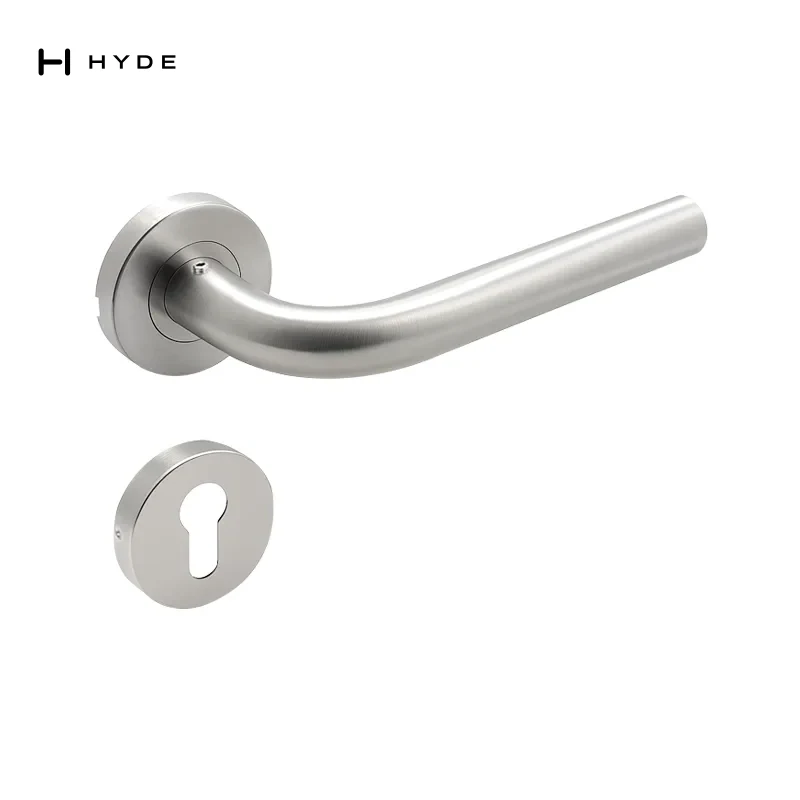
Door thickness 35–50mm
Stainless Steel Handle
Model LH1033 SS
Stainless Steel
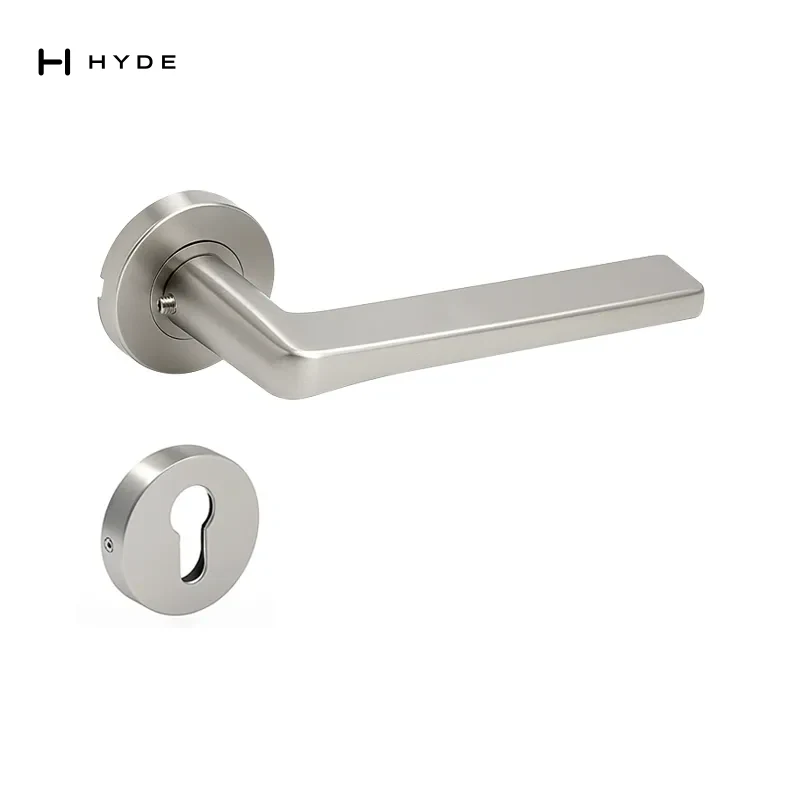
Door thickness 35–50mm
Stainless Steel Handle
Model LH1016 · Video
Stainless Steel
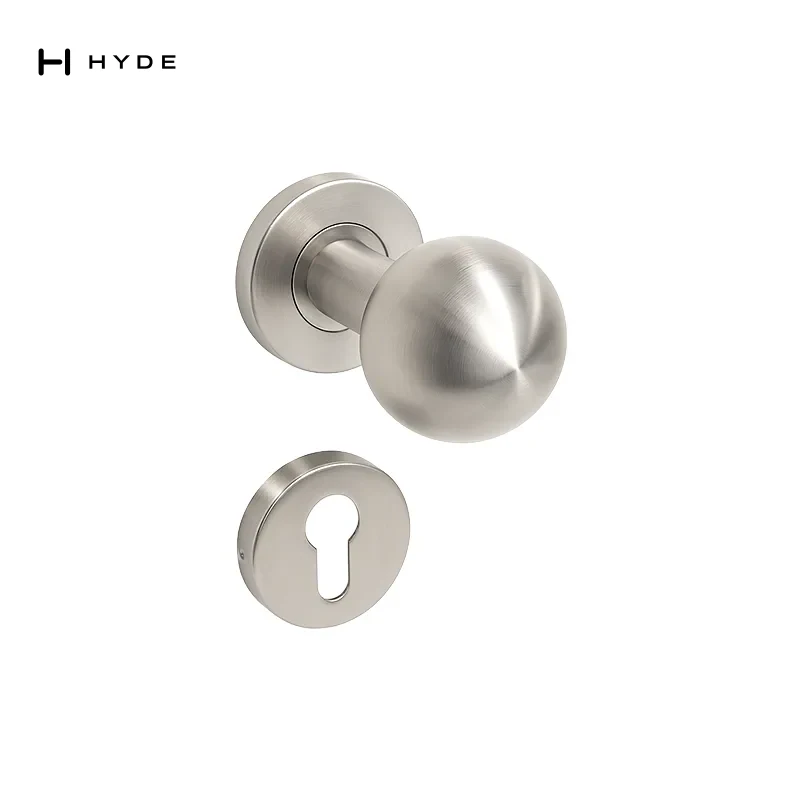
Door thickness 35–50mm
Stainless Steel Handle
Model NCB · Video
Stainless Steel
About Canton Hyland — Canton Hyland manufactures panic exit devices, locks and architectural door hardware for commercial and institutional projects, supplying specifiers and distributors internationally.