
Exit Device Locking Method 2026: Rim, Surface Vertical Rod, Concealed Vertical Rod or Mortise, and Where Each One Fits
An exit device is chosen twice: once for the people who will use it, and once for how it latches the door. Rim devices latch at one point into the frame and suit single doors and pairs with a mullion. Surface and concealed vertical rods latch at the head and the floor and suit pairs without a mullion, at the cost of a floor strike to keep clear. Mortise devices latch through a lock case in the door edge. This guide sets out where each fits, what EN 1125 and UL 305 say about the configuration, and which of our devices is which.

Johnson LiuDigital Communications, Canton HylandMA Digital Media, Johns Hopkins University
An exit device is chosen twice. The first choice is about people: whether the exit needs a panic bar to EN 1125 or an emergency handle to EN 179, which our guide EN 1125 or EN 179 in 2026 covers. The second is about the door: how the device latches it.
That second choice has four answers: rim, surface vertical rod, concealed vertical rod and mortise. It decides where the latch points are, what the frame and the floor have to provide, and what maintenance the opening will need for as long as it is in service. This guide sets out the four, where each one fits, and which of our own devices is which.
The four methods side by side
Scroll sideways to compare columns. Select a column heading to sort; select it three times to restore source order.
| Rim | one, at the lock edge | single doors; pairs with a mullion | a strike on the frame or mullion | a pair needs a mullion |
|---|---|---|---|---|
| Surface vertical rod | two, at the head and the floor | pairs without a mullion | a head strike and a floor strike | exposed rods; the floor strike |
| Concealed vertical rod | two, at the head and the floor | pairs where the rods must be hidden | a leaf prepared for rods; head and floor strikes | harder to adjust and repair |
| Mortise | one, through a lock case in the door edge | single doors; the active leaf of a pair | a door edge prepared for the lock case | the case preparation is fixed before ordering |
4 rows · Source order
Rim devices
A rim device carries its latch in the end housing on the face of the door and latches into a strike on the frame at the lock edge. It is the simplest of the four to fit and to maintain, nothing is cut into the door edge, and it is the ordinary choice for a single escape door.
On a pair, a rim device works only where there is something for each leaf to latch into: a mullion between the leaves. A fixed mullion narrows the clear opening permanently; a removable mullion, taken out with a key, gives the full width back when equipment has to pass. On a fire-rated pair the mullion is part of the assembly, so it has to be one the door's certification covers.
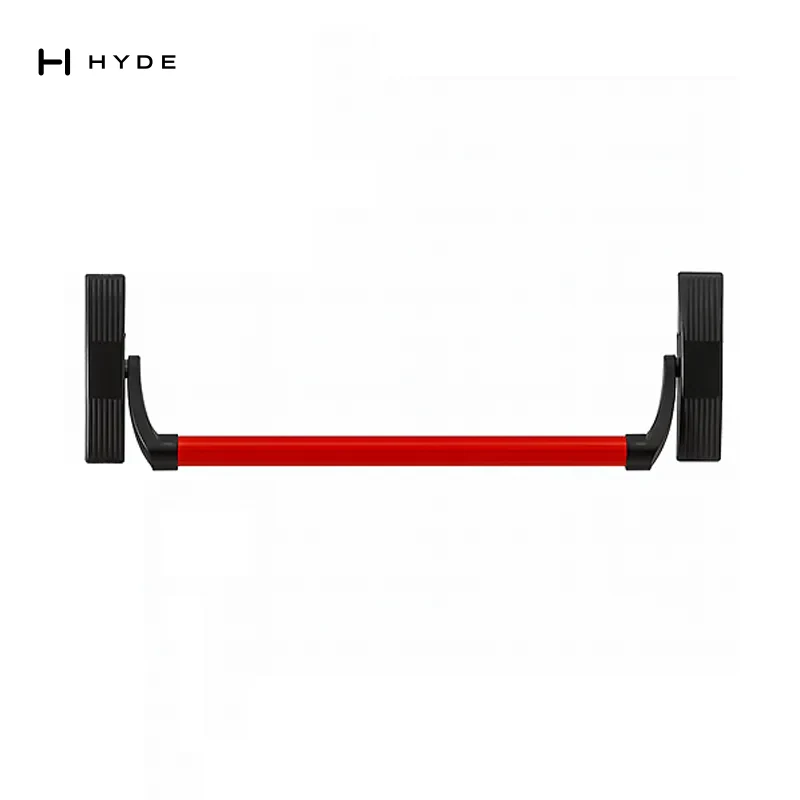
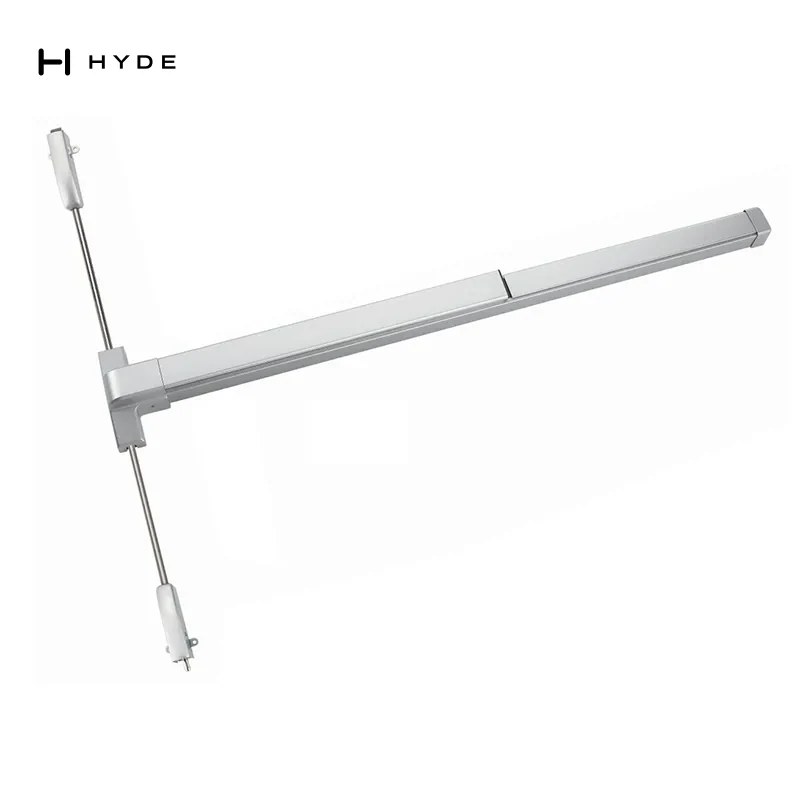
Our 300 and 302 are rim-type push bars for a single leaf with adjustable lengths, 900mm and 1040mm. Our guide Exit Device Comparison 2026 lists every rim device in the range by length.
Surface vertical rod devices
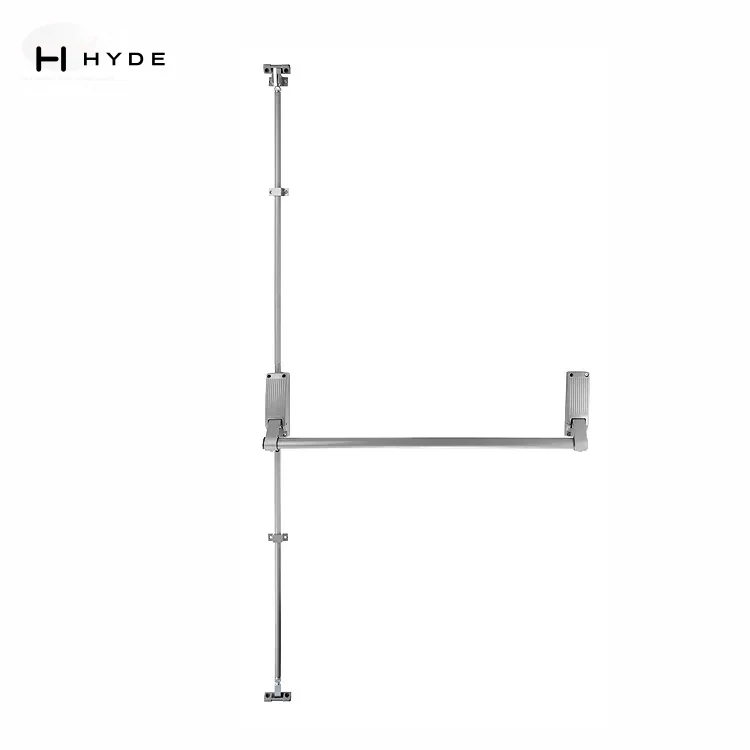
A surface vertical rod device drives two rods on the face of the leaf, one up to a latch at the head of the frame and one down to a latch at the floor. Each leaf of a pair then latches into the frame and the floor rather than into its neighbor, so a pair needs no mullion and both leaves can open for escape.
The price of that is the bottom latch. It engages a strike in or on the floor, and the floor is where a building is hardest on hardware: dirt and grit fill the strike, carts and cleaning machines strike the rod, a new floor finish changes the height, and a leaf that drops on its hinges stops reaching the strike at all. A bottom latch that no longer engages leaves a leaf held only at the top.
That is why many devices are offered less bottom rod: the bottom rod and floor strike are left out, and the leaf latches at the head only. On an ordinary door that is a maintenance decision. On a fire-rated pair it is a certification question, because the tested configuration had a bottom latch; manufacturers in the United States generally allow less bottom rod on fire doors only where the listing permits it, often with an auxiliary fire bolt. Check the door's certification and the device's before leaving the rod out.
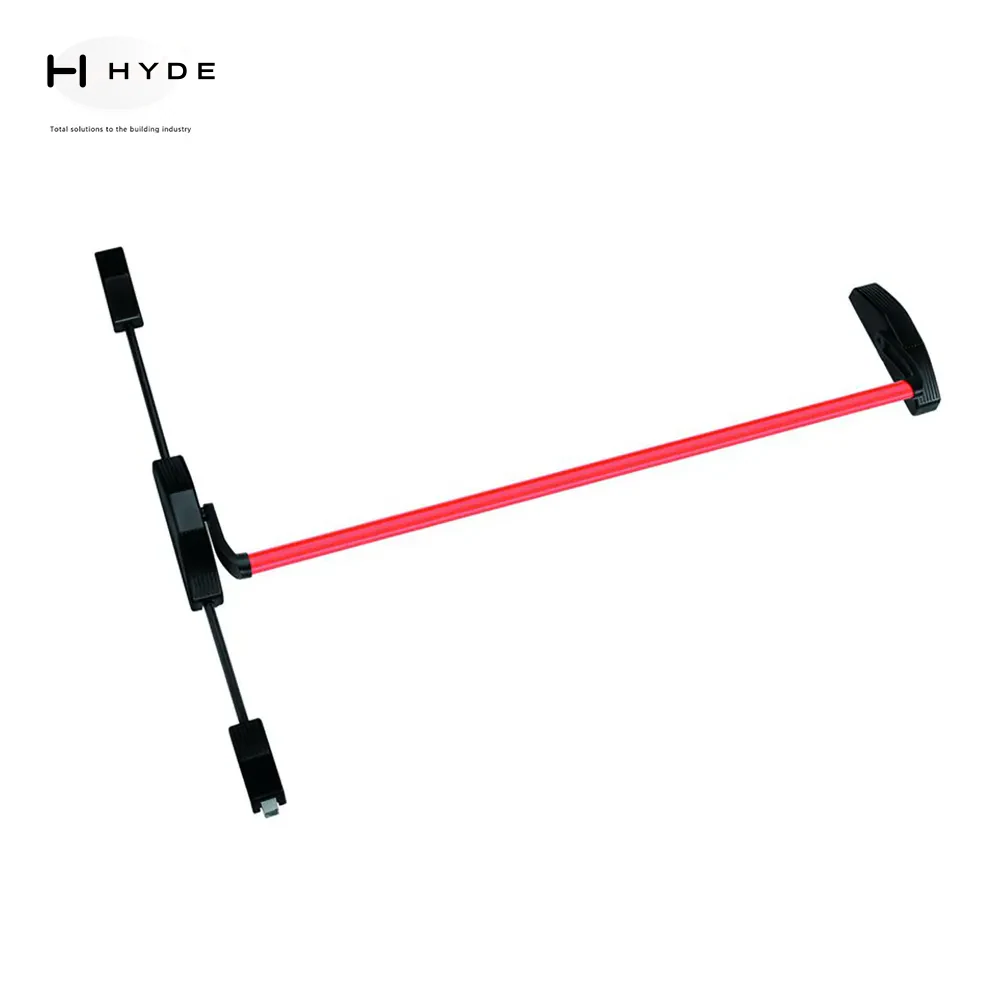
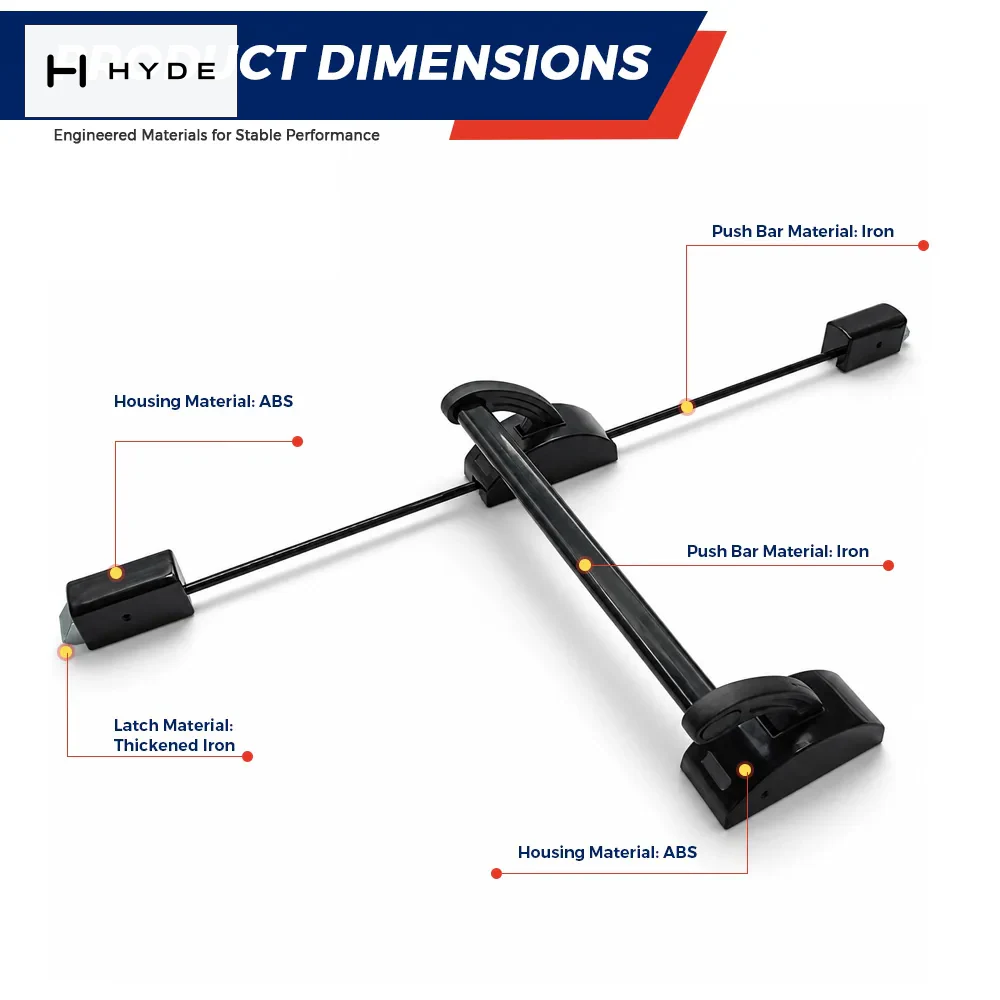
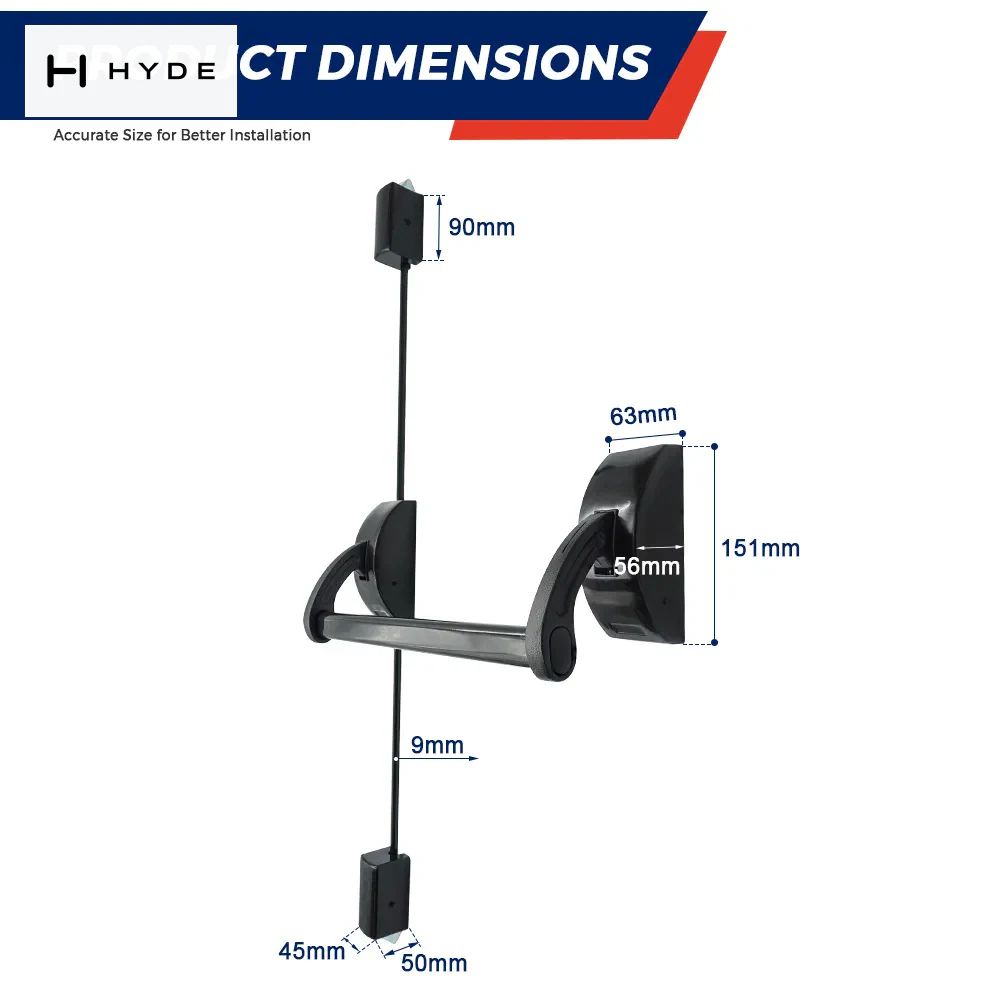
Our 316-D is a surface-mounted device for pairs whose record states top and bottom latching; the photograph above shows its parts. The 308-D is supplied with vertical rods that lock top and bottom, and the 320 is a two-point push bar that engages the head and the threshold.
Concealed vertical rod devices
A concealed vertical rod device does the same job with the rods inside the leaf. The face of the door stays clean, and the rods are out of reach of vandalism and trolleys, which is why it is chosen for public buildings and for doors where appearance matters.
The leaf has to be built or prepared for the rods, which makes it a decision for the door manufacturer rather than something added later. Adjustment and repair mean opening the door up, and the bottom latch and floor strike have the same problems as on a surface rod. We do not list a concealed vertical rod device in our catalog, and where a project needs one we will say so rather than offer a surface device in its place.
Mortise exit devices
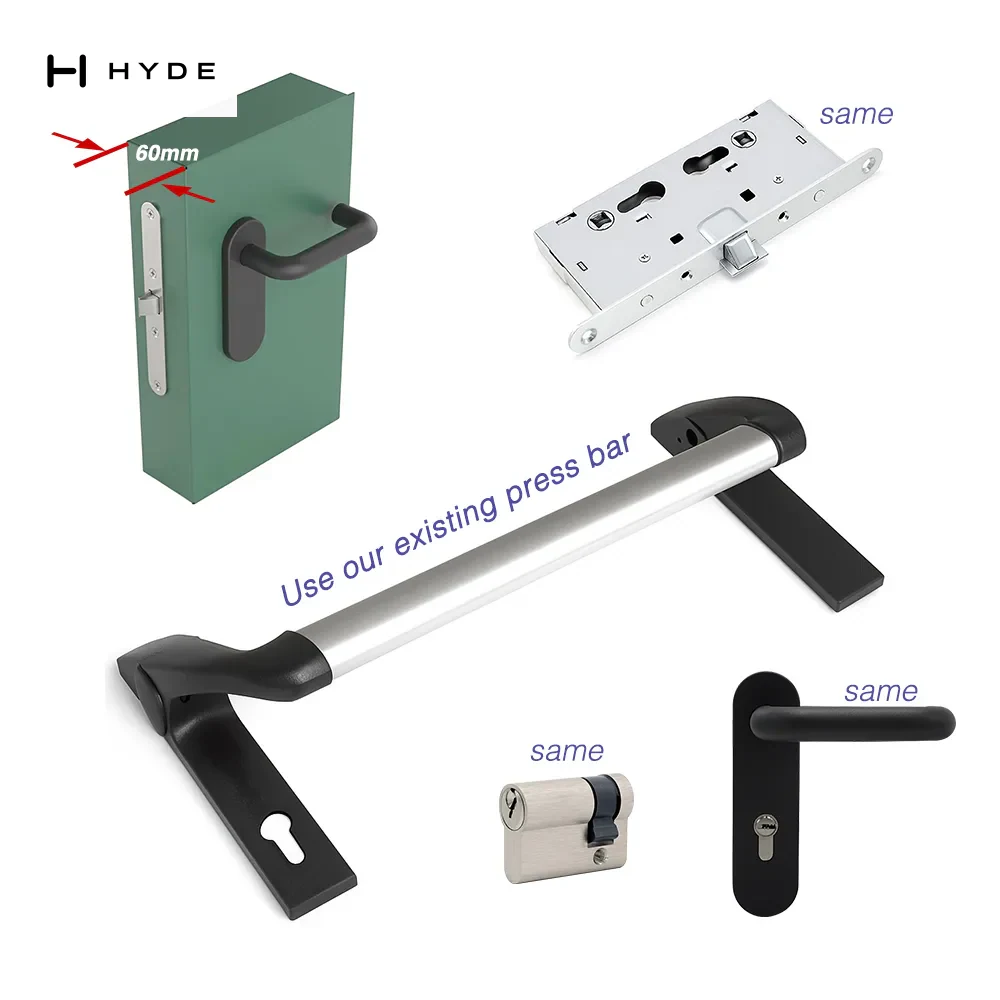
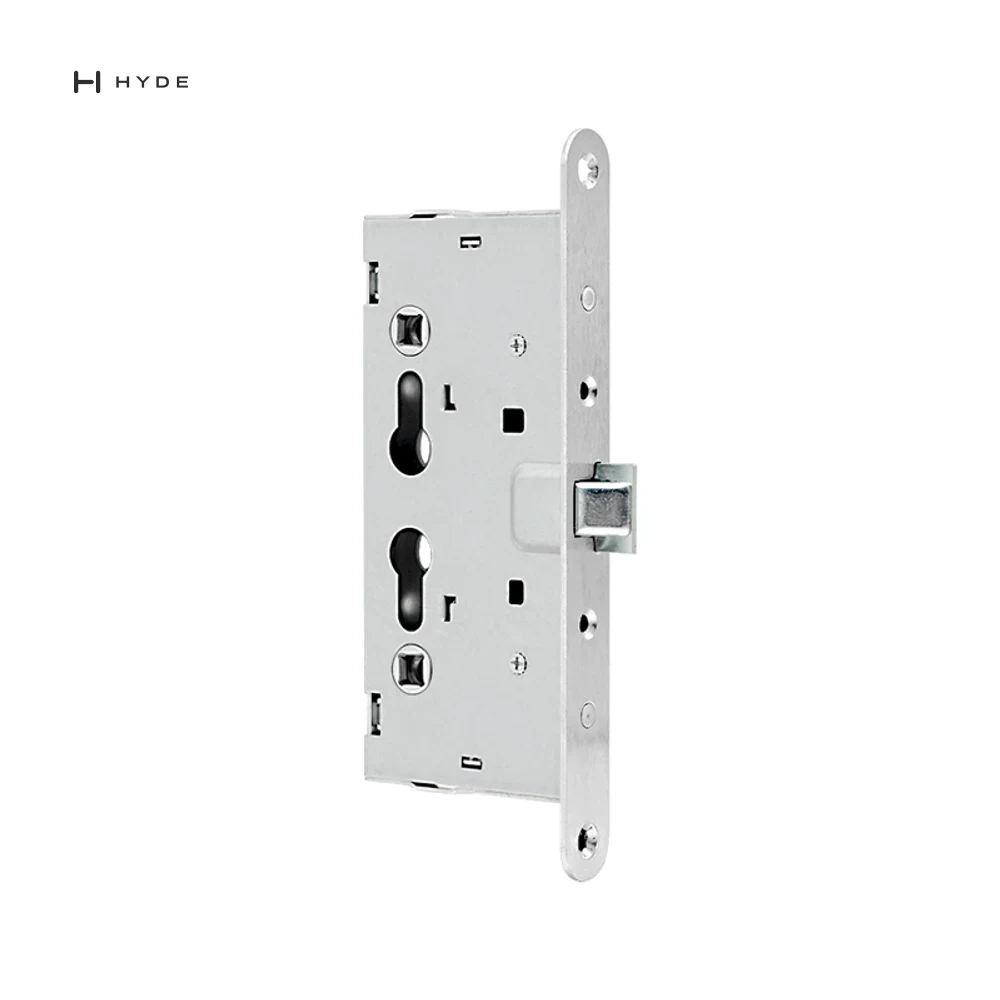
A mortise exit device works a lock case set into the door edge. The latch is a single point at the lock edge, as on a rim device, but it sits inside the door, and the outside trim and cylinder work through the case. It is the usual answer where the door already has, or needs, a mortise lock and a keyed outside function.
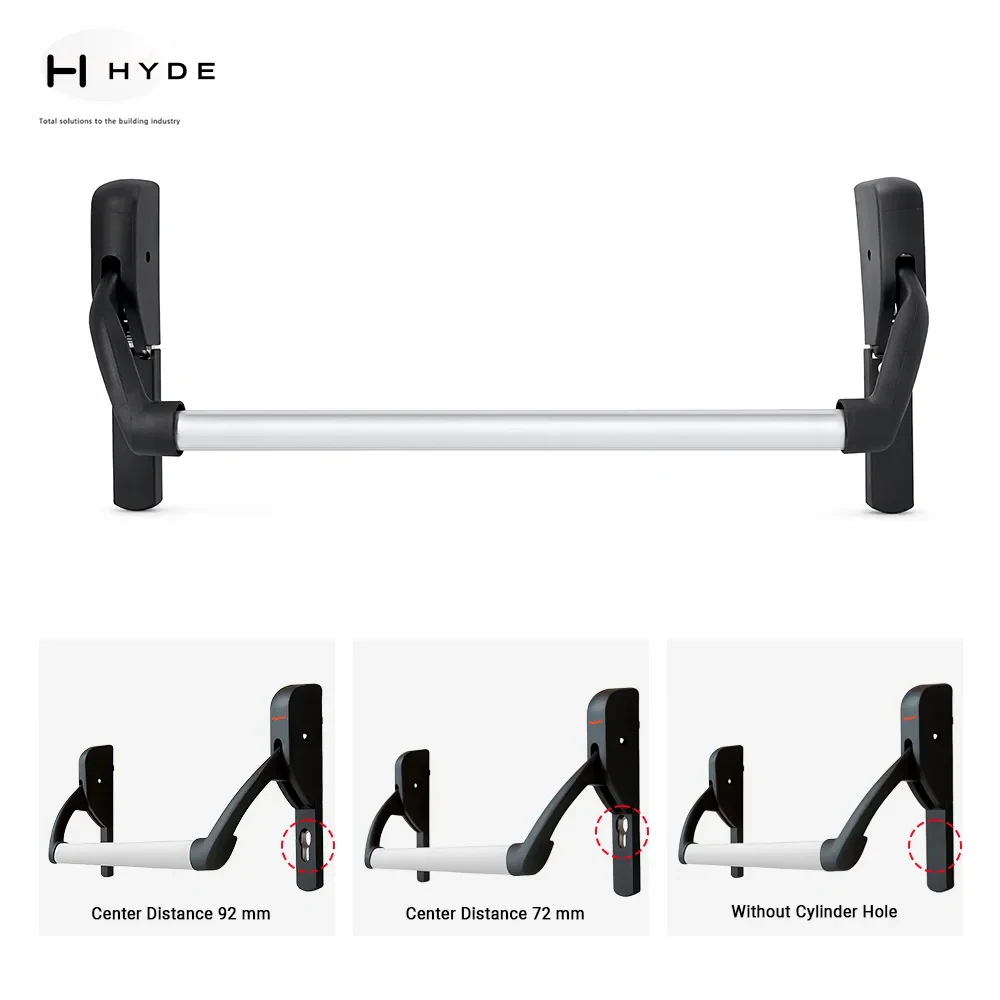
The lock case preparation is fixed before ordering: backset, center distance and cylinder apertures have to match the door, or the device does not fit. Our 307 works with the 072 lock case, which publishes a 65mm backset, a 72mm center distance and two euro cylinder apertures. The 311 is sold as a set with its lock body, brass cylinder and stainless steel handle, with cylinder center distances of 72mm and 92mm.
Pairs: three ways to latch them
Rim on both leaves, with a mullion: simple to fit and maintain, at the cost of the mullion in the opening.
Vertical rods on both leaves, no mullion: the full width is available, and both leaves open for escape, at the cost of two floor strikes to keep clear.
A vertical rod device on the inactive leaf and a rim or mortise device on the active leaf latching into a strike on the inactive leaf: the usual arrangement where one leaf is used every day and the other only for escape or for moving equipment.
In every overlapping pair the leaves also have to close in the right order, which is the coordinator's job; our guide Fire Door Annual Inspection 2026 covers what happens when they do not. Flush bolts are not a substitute for a device on an inactive leaf that has to open for escape, because a bolt adds a second action.
What EN 1125 and UL 305 say about the method
In Europe, panic exit devices are tested and classified to EN 1125 and carry CE marking. The classification includes the field of door application, whether the device suits a single door, an active leaf or an inactive leaf, and its suitability for fire and smoke doors. A device is certified in the configuration that was tested: top and bottom latches, a particular strike, a stated door size. Leaving out the bottom rod or changing the strike is a change to that configuration.
In the United States, UL 305 is the standard for panic hardware. On a fire door the device has to be fire exit hardware, listed to UL 305 and to the fire test UL 10C, and the listing states the door sizes, configurations and limitations it covers. Fire exit hardware has no mechanical dogging, because a fire door has to stay latched.
None of our exit devices holds an EN 1125 certificate or a UL 305 listing today, and none of our product pages implies otherwise. Where a project requires either, ask us, and we will tell you plainly which devices can and cannot meet it.
Choosing in five questions
One leaf or two? A single door usually takes a rim or mortise device.
On a pair, is a mullion acceptable in the opening? If yes, rim devices; if no, vertical rods.
Is the opening fire rated? Then the method, the strikes and any less-bottom-rod option have to be covered by the door's and the device's certification.
What will the floor be like in five years? Outdoor thresholds, heavy trolley traffic and frequent floor cleaning favor less bottom rod, where the certification allows it, or a mullion.
Who will maintain it? A surface device can be adjusted with a screwdriver; a concealed one means opening the door. Send the answers with the leaf size and the door thickness, and the first reply can name a device.
Questions this answers
What is the difference between a rim and a vertical rod exit device?
A rim device latches at one point, at the lock edge, into a strike on the frame or a mullion. A vertical rod device latches at two points, at the head of the frame and at the floor, so a pair of doors needs no mullion.
When should I use a surface vertical rod instead of a concealed vertical rod?
A surface vertical rod is fitted to the face of the leaf and is easier to adjust and repair. A concealed vertical rod runs inside a leaf built or prepared for it, keeps the face clean and protects the rods from damage, but adjustment and repair mean opening the door.
What does less bottom rod mean on an exit device?
The bottom rod and floor strike are left out and the leaf latches at the head only. It avoids the floor strike, but on a fire-rated pair it is allowed only where the door's and the device's certification permit it, often with an auxiliary fire bolt.
Does a pair of doors with rim exit devices need a mullion?
Yes. Each rim device needs a strike to latch into, and on a pair that is a mullion between the leaves. A removable mullion can be taken out with a key when the full width is needed.
What is a mortise exit device?
A device that works a mortise lock case set into the door edge. Our 307 works with the 072 case, which publishes a 65mm backset and a 72mm center distance; the 311 is sold as a set with its lock body, brass cylinder and handle.
Are your exit devices certified to EN 1125 or listed to UL 305?
Not today. None of our exit devices holds an EN 1125 certificate or a UL 305 listing, and none of our pages implies otherwise. Where a project requires either, ask us and we will say plainly which devices can and cannot meet it.
Related products
Bar Length 900mm (adjustable)
Panic Exit Device
Model 300
Aluminum alloy body, iron bar
Length 1040mm(length can be adjusted)
Panic Exit Device
Model 302 · Video
Aluminum alloy body, iron bar
Panic Exit Device
Model 316-D · Video
Aluminum alloy body, iron bar
- 308-D — D-Panic Exit Device
- 320 — Two Point Locking Exit Device
- 307 — Panic Exit Device
- 072 — Panic Exit Device Lock Case
- 311 — Panic Exit Device
■ End of guide. Updated .