
Satin Chrome vs Satin Nickel: US26D/626 or US15/619, and How to Choose
Satin chrome (US26D, BHMA 626) is cooler and slightly blue and sits naturally beside satin stainless; satin nickel (US15, BHMA 619) is warmer and slightly yellow and suits warm residential interiors. This page sets the two head to head on color, wear, matching 630 stainless and setting, names the HYDE models that publish each finish, and gives the order line that gets one finish delivered per opening.

Johnson LiuDigital Communications, Canton HylandMA Digital Media, Johns Hopkins University
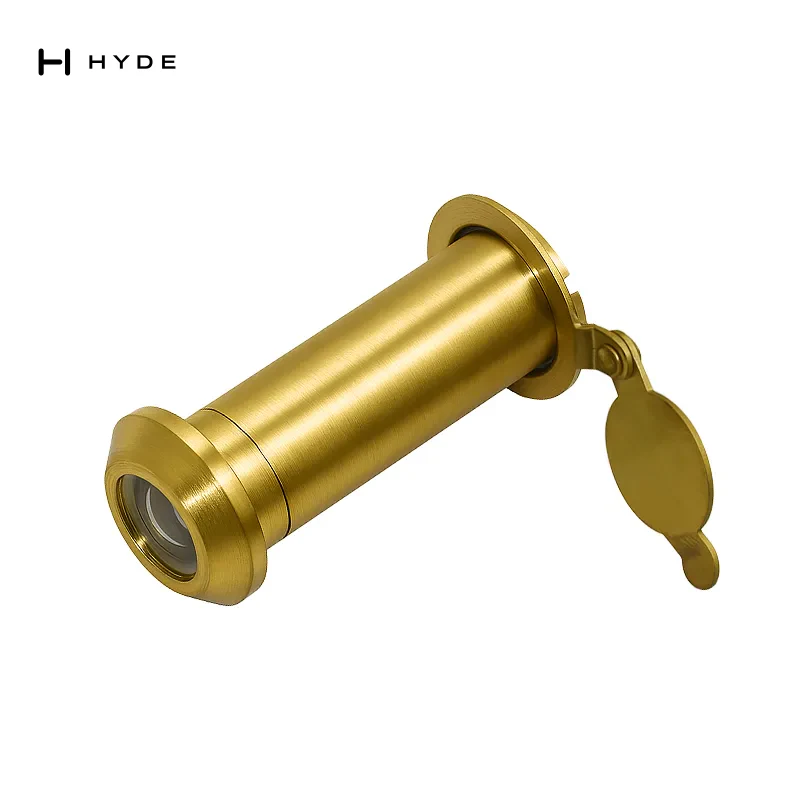
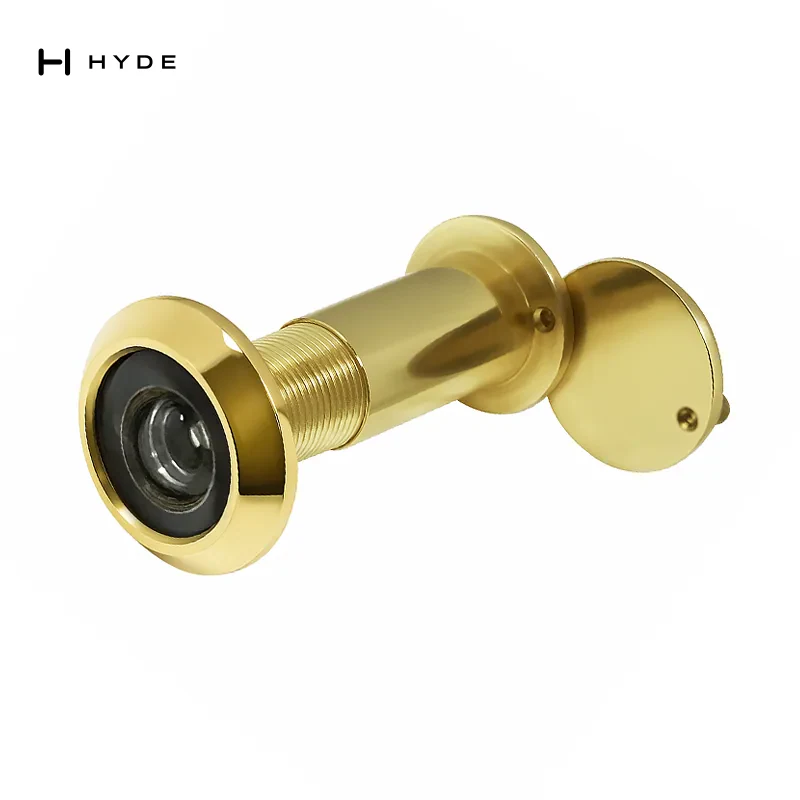
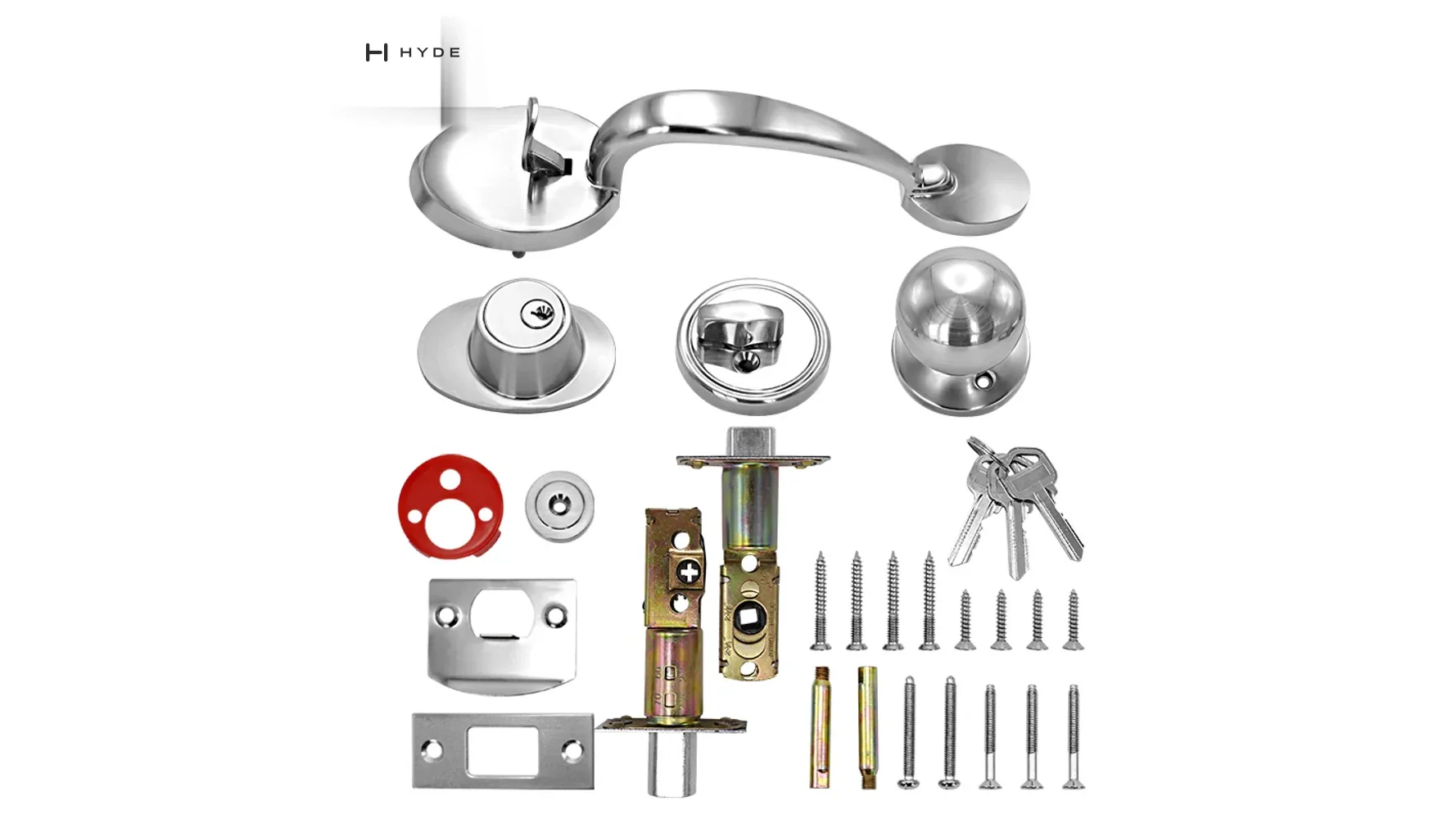
Choose satin chrome (US26D, BHMA 626) when the hardware has to sit beside satin stainless steel, take commercial traffic and read as a cool gray. Choose satin nickel (US15, BHMA 619) when the room is warm and residential and nothing on the door is stainless. In a catalog the two look alike; on a door they do not. Satin nickel is warmer and slightly yellow, satin chrome is cooler and slightly blue.
Whichever you choose, choose one per opening. A satin chrome lever above a satin nickel strike, or beside satin nickel hinges, is the mismatch a client notices first, and neither finish can be corrected on site. The rest of this page is the reasoning behind those two paragraphs, the HYDE models that publish each finish, and the order line that gets the right one delivered.
What each code describes
Both are a satin-textured nickel plate: satin chrome adds a very thin chromium layer on top, and satin nickel leaves the nickel as the visible surface. How that stack is built, and why the nickel underneath decides the service life of both, is covered in our guide to the differences between chrome finishes.
Scroll sideways to compare columns. Select a column heading to sort; select it three times to restore source order.
| US code | US26D | US15 |
|---|---|---|
| BHMA A156.18 number | 626 on brass or bronze; 652 for the same look on steel | 619 on brass or bronze |
| Common letter code | SC | SN |
| Visible top layer | Chromium | Nickel |
| Color cast | Cool, slightly blue | Warm, slightly yellow |
| Beside 630 satin stainless | Close | Visibly warmer |
6 rows · Source order
Color: what the eye actually sees
In daylight, satin chrome reads as a cool, slightly blue gray, close to brushed stainless steel. Satin nickel reads warmer, with a faint yellow cast that sits somewhere between chrome and a pale brass. On its own, either one passes for brushed silver. Side by side, anyone can see the difference, and that is the whole risk. Lighting moves the comparison. Warm-white lamps, the 2700 K kind used in homes and hotel rooms, flatter satin nickel and make satin chrome look slightly flat and gray. Cool office lighting does the reverse. Judge a sample under the light the building will actually have, not only under the showroom lamp.
Durability, wear and fingerprints
Chromium is a harder metal than nickel, so a satin chrome surface resists light scratching and tarnish better. Satin nickel's visible surface is the nickel itself, which can dull or warm further over time if left unprotected, and for that reason satin nickel hardware is commonly given a clear protective coat. When you order satin nickel, ask whether the quoted part has one: our product records for the models below do not publish it. The two age differently. Constant handling slowly burnishes a satin grain, so a heavily used satin chrome lever turns slightly brighter where hands land. On satin nickel, wear through a clear coat can leave a patch in a slightly different tone from the rest of the part. Neither change is sudden, and on a lightly used interior door both age slowly.
Neither finish is fingerprint-proof. Both satin textures hide prints far better than polished chrome, because the grain scatters the light that a mirror surface would reflect. Between the two the difference is small; the depth of the satin grain, which varies from one supplier's line to another, matters more than the metal. Clean both the same way: water, a mild neutral detergent, a soft cloth, then dry. Neither belongs on an exposed exterior door near the sea or a pool, or in a corridor wiped with disinfectant all day. Both are a coating over another metal, and once the coating is scratched through, it is the metal underneath that corrodes. In those places specify solid stainless steel, 630.
Why one opening gets one finish
On one door, and on both leaves of a pair, every exposed part should carry the same finish: lever or knob, rose, cylinder collar, strike, hinges, door viewer and door stop. A strike is small, but whenever the door stands open it sits at eye level beside the handle. Mixing also happens over time rather than on one order, when a refurbishment replaces half the levers on a corridor with brushed silver from a different line. If the original is satin chrome, write satin chrome. If nobody knows what the original is, send a part, or a photograph of it beside a known reference, before ordering.
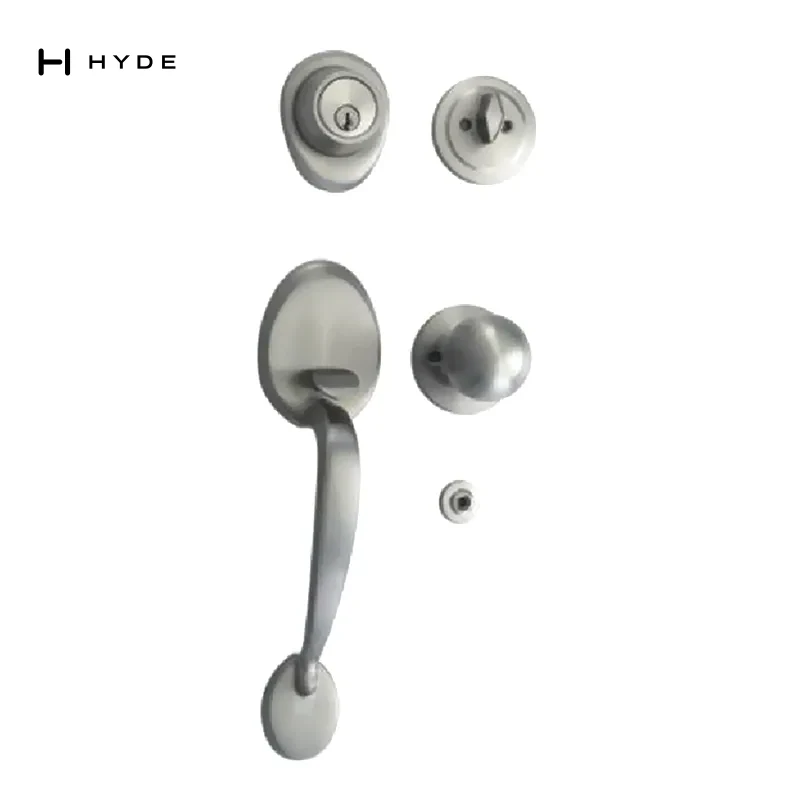
The rule covers visible parts only. The latch bodies inside a cylindrical lock or a grip handle set usually keep their own yellow zinc-plated color whatever the trim finish, and that is correct. The photograph at the top of this page shows it on the 70610 SC set: the trim, strikes and faceplates are satin, the latch bodies are not. A shipment should not be rejected because its internal parts do not match the trim.
How each one matches satin stainless (US32D / 630)
Commercial doors rarely carry only one material. Exit devices, hinges, push plates and kick plates are often solid stainless finished 630. Satin chrome sits beside 630 comfortably: both are cool gray with a directional grain, and a North American commercial schedule that pairs 626 locksets with 630 hinges and exit devices is an ordinary one. Satin nickel beside 630 is the pairing that looks wrong. The stainless reads cool and the nickel reads warm, and that gap is wider than the gap between two satin chromes from two different suppliers. If an opening carries stainless anywhere, specify satin chrome or stainless for everything on it.
Choosing by setting
Scroll sideways to compare columns. Select a column heading to sort; select it three times to restore source order.
| Office and school corridors, hotel back-of-house, other commercial interiors | Satin chrome, US26D / 626 | Matches stainless exit devices and hinges; the harder surface suits heavy traffic |
|---|---|---|
| Homes, apartments, hotel guest rooms with warm wood and warm lighting | Satin nickel, US15 / 619 | The warmer tone sits with wood, beige walls and brass accents |
| Interior doors that also carry stainless fittings | Satin chrome | Nickel reads yellow against 630 |
| Exterior, coastal, pool, wet rooms, disinfected areas | Neither: solid stainless, 630 | A plated coating fails once it is scratched through |
| Matching hardware already installed | Whatever is already there | Identify it from a part, not from a description |
5 rows · Source order
These are habits, not rules. North American residential locksets have long used satin nickel as an everyday interior finish, and commercial specifications default to satin chrome for interior hardware. Both habits follow from the color of the rooms and from what else is on the door, and a project with a reason to break them can.
HYDE models that publish each finish
Scroll sideways to compare columns. Select a column heading to sort; select it three times to restore source order.
| 70610 SC grip handle set | SC, satin chrome | Zinc alloy | Backset 60 / 70 mm adjustable; door 35–45 mm |
|---|---|---|---|
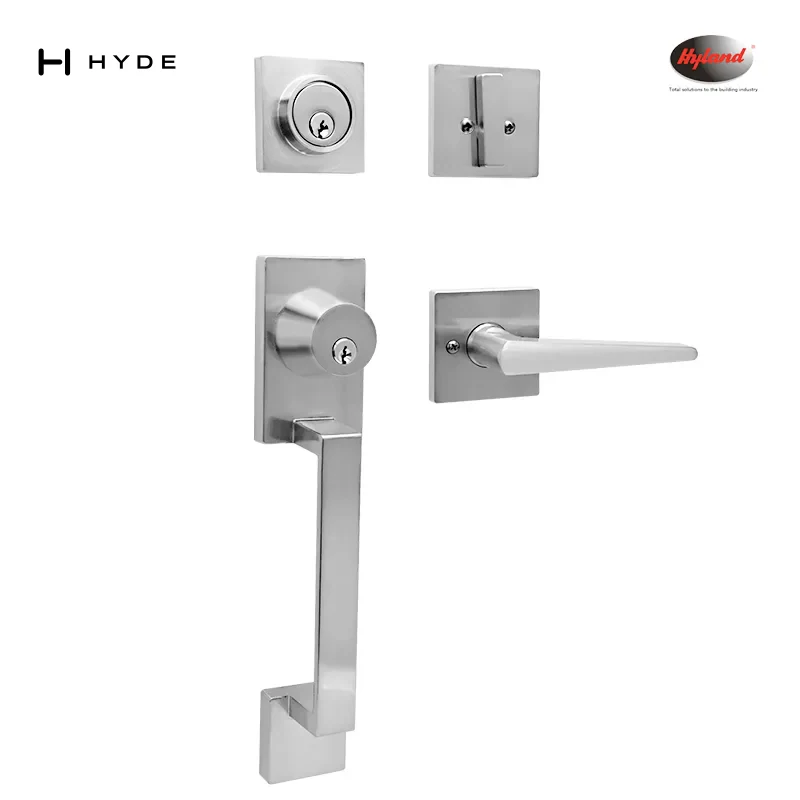
| 70710 SN grip handle set | SN, satin nickel | Zinc alloy | Backset 60 / 70 mm adjustable; door 35–45 mm |
| 70722 DC grip handle set | Satin nickel (US15) | Zinc alloy | Backset 60 / 70 mm adjustable; door 35–45 mm |
| DV06 door viewer | SC and SN both listed | Brass | Diameter 12, 14 or 16 mm; viewing angle 160°, 180° or 200° |
| DV05 door viewer | SC and SN both listed | Brass | Diameter 12, 14 or 16 mm; viewing angle 180° or 200° |
5 rows · Source order
The two grip handle sets are the cleanest head-to-head we publish. 70610 SC and 70710 SN are different models with the same published backset, door thickness range, 51 mm cross bore and 25 mm deadbolt throw, and each is published in one finish, so choosing the set also chooses the finish. The door viewers work the other way: DV05 and DV06 list both SC and SN, so the viewer can follow whichever finish the lockset on that door uses.
Only what the product records state is quoted here. One habit saves most finish mistakes: order by the finish code, not by letters that happen to sit in a model number, and write the code on every line of the order. When a model name and its finish code seem to point different ways, ask before you order.
How to write it on an order
Put four things on every line, not once in a header at the top of the schedule: the model, the finish name, its letter code and the base material. Add a US or BHMA number only where the base material is the one that number defines.
Scroll sideways to compare columns. Select a column heading to sort; select it three times to restore source order.
| Grip handle set | 70610 SC, satin chrome (SC), zinc alloy body, backset 60 or 70 mm (state which), door thickness |
|---|---|
| Door viewer on the same door | DV06, satin chrome (SC), brass, diameter, viewing angle |
| Hinges, strike, door stop on the same door | Satin chrome (SC), to match 70610 SC |
| Specification written in BHMA numbers | 626 with the base metal stated; ask whether the supplier will deliver 626 or 652 |
4 rows · Source order
Two short sentences close most of the remaining gaps. “All exposed hardware on this opening in one finish” covers the items a schedule forgets. “Approve a physical sample” covers the fact that two correct satin chromes from different lines can still differ in grain. If one building uses both finishes, satin chrome in the corridors and satin nickel in the residential units, split the schedule by area and state the finish on every line. The expensive mistake is rarely choosing the wrong finish for a room. It is one carton of the other finish arriving in the right room.
Questions this answers
Is satin nickel the same as satin chrome?
No. Both are satin-textured plated finishes on a nickel layer, but satin chrome (US26D, BHMA 626) adds a thin chromium layer on top and reads cool and slightly blue, while satin nickel (US15, BHMA 619) leaves the nickel visible and reads warm and slightly yellow. Apart they pass for each other; side by side on one door they do not.
Which is more durable, satin chrome or satin nickel?
Satin chrome, by a modest margin. Chromium is harder than nickel, so the surface resists light scratching and tarnish better. Satin nickel is commonly given a clear protective coat, so ask whether a quoted part has one. Neither belongs on an exposed coastal or pool-side door; specify solid stainless, 630, there.
Does satin chrome match brushed stainless steel?
Closely. Satin chrome (626) and satin stainless (630) are both cool gray with a directional grain, and commercial schedules routinely pair 626 locksets with 630 hinges and exit devices. Satin nickel next to 630 looks visibly warmer, so if an opening carries stainless anywhere, use satin chrome or stainless throughout.
Can you mix satin nickel and satin chrome?
Not on one opening. Every exposed part on a door, and on both leaves of a pair, should carry the same finish, including hinges, strike and door viewer. Different areas of one building can use different finishes, provided the schedule states the finish on every line so the two never cross.
What is the BHMA code for satin nickel?
619, which is US15 in the older US numbering, defined on a brass or bronze base. Satin chrome is 626 (US26D) on brass or bronze and 652 on steel. On a part with a different base, such as zinc alloy, treat US15 as a color description and also write the base material on the order.
Related products
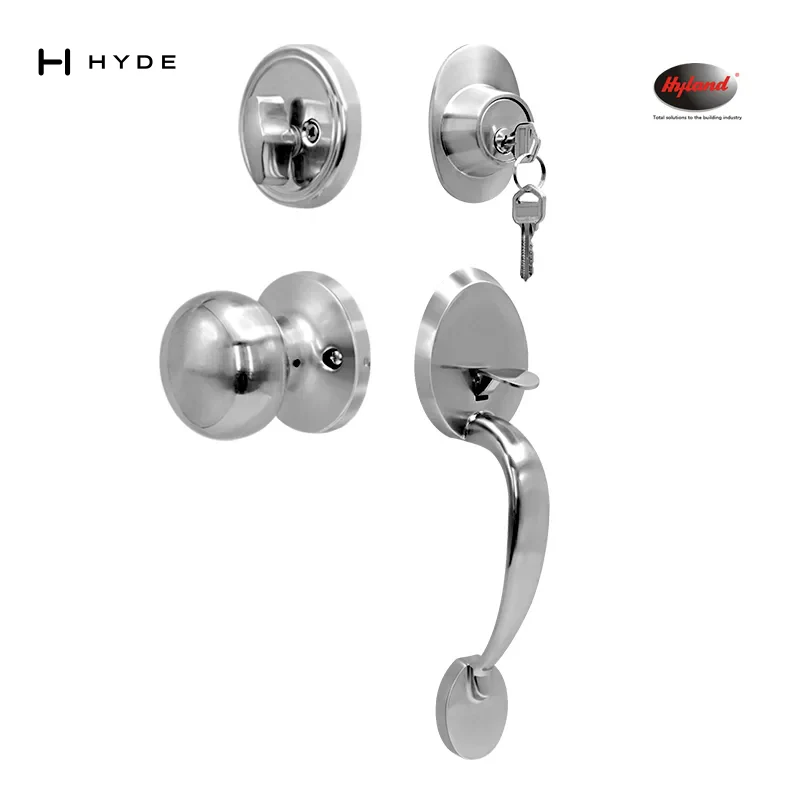
Backset 60mm / 70mm adjustable, latch and deadbolt both
Grip Handle Set
Model 70610 SC · Video
Zinc Alloy
Backset 60mm / 70mm adjustable, latch and deadbolt both
Grip Handle Set
Model 70710 SN
Zinc Alloy
Backset 60mm / 70mm adjustable, latch and deadbolt both
Grip Handle Set
Model 70722 DC · Video
Zinc Alloy
About Canton Hyland — Canton Hyland manufactures panic exit devices, locks and architectural door hardware for commercial and institutional projects, supplying specifiers and distributors internationally.