
Grip Handle Sets: What the Thumb Latch, the Deadbolt and the 60/70 Backset Have to Agree On
A grip handle set is a thumb latch and a deadbolt sharing one outside grip, and it fits only when the backset of both holes, the door thickness and the hole pattern agree with the set. Here is what our 70610, 70710, 70720 and 70900 sets publish, what they do not, and why DH02 AB and a separate deadbolt are different orders.

Johnson LiuDigital Communications, Canton HylandMA Digital Media, Johns Hopkins University
A grip handle set is two locks sold as one: a thumb latch at the bottom that holds the door closed, and a deadbolt at the top that locks it, joined on the outside face by one cast grip. To specify one, three things on the door have to agree with three rows on the set: the backset of both holes (60mm or 70mm, and the same for both), the door thickness, and the hole pattern the door was or will be drilled to. Function and finish come after those, and that is where most of the remaining mistakes are made.
Our 70610 AB, 70710 SN, 70720 PB and 70900 BK publish the same door-preparation rows, so choosing between them is a matter of finish, material and function rather than fit. DH02 AB is listed beside them but is a different system, and the Keyed Deadbolt Lock Set is a separate deadbolt, not a grip set. Both are covered further down, because both are easy to order by mistake.
How a grip handle set works
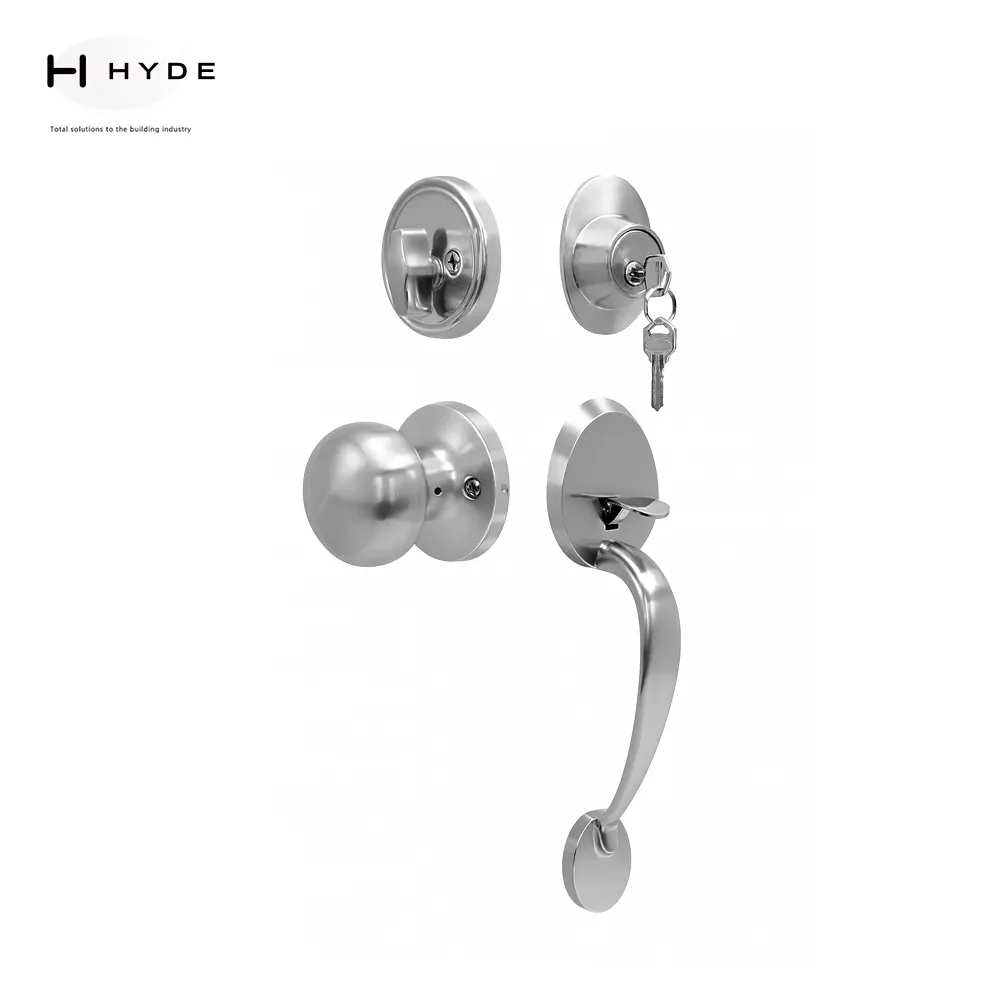
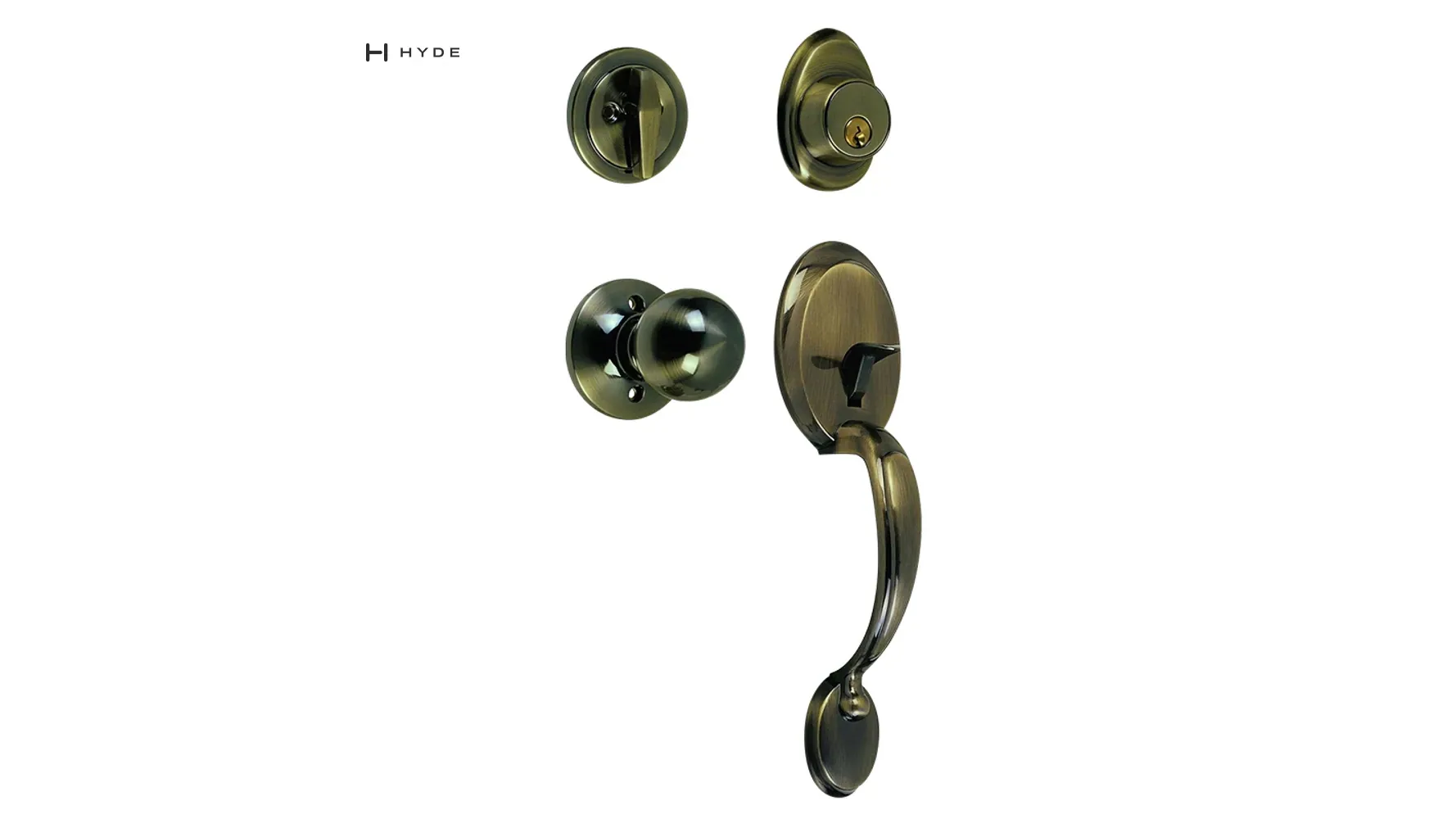
On the outside, the hand closes on a fixed grip and the thumb presses a small lever at the top of it, the thumbpiece. The tail of the thumbpiece passes through the door and trips the latch, which withdraws. Inside, a knob or lever turns the same latch directly. Above it sits the deadbolt: a key cylinder on the outside, a thumbturn on the inside. The photograph at the top of this page shows a complete 70610 AB: the grip with its thumbpiece, the outside cylinder in its escutcheon, the inside thumbturn rose and the inside knob.
The point that matters for specification is that the thumb latch does not lock. It holds the door closed against wind and pressure, and anyone outside can press it. The inside knob of the 70610 AB carries no push button, which is consistent with that. The security on the door is the deadbolt, which is why a grip set is always specified as two mechanisms, and why the deadbolt rows deserve as much attention as the shape of the grip.
The rows our grip handle sets publish
Scroll sideways to compare columns. Select a column heading to sort; select it three times to restore source order.
| Material | Zinc alloy | Zinc alloy | Zinc alloy | Aluminum |
|---|---|---|---|---|
| Finish | Antique brass (US5) | Satin nickel (SN) | Polished brass (US3) | Not published |
| Backset | 60 / 70mm, latch and deadbolt | 60 / 70mm, latch and deadbolt | 60 / 70mm, latch and deadbolt | 60 / 70mm, latch and deadbolt |
| Door thickness | 35–45mm | 35–45mm | 35–45mm | 35–45mm |
| Deadbolt throw | 25mm, hardened steel insert | 25mm, hardened steel insert | 25mm, hardened steel insert | 25mm, hardened steel insert |
| Latch extension | 13mm | 13mm | 13mm | 13mm |
| Cross bore | 51mm | 51mm | 51mm | 51mm |
| Handing | Non-handed | Non-handed | Non-handed | Non-handed |
| Function | Not published | Not published | Not published | Privacy, turn button inside |
9 rows · Source order
Read across any row and the four agree on everything that touches the door. That is useful: one project can put 70610 AB on one house type and 70720 PB on another without changing the door preparation. It also means that a search for 70710 is a search for a shape and a finish, not a different fit. 70710 SN is the satin nickel version; the same model number is also published as 70710 PB in polished brass.
Backset and door thickness
Backset is the distance from the door edge to the center of the hole in the door face. The common North American values are 2-3/8 in (60mm) and 2-3/4 in (70mm), and our sets publish both, adjustable on the latch and on the deadbolt. Adjustable does not mean any combination works. The outside grip is one casting that spans both holes, so both holes must sit at the same backset, or the grip will not line up with them.
So the order states one backset for the door, not one for each bolt. On new doors that is whatever the door maker bores. On replacement work, measure both holes on site: a door that had a knob set and a deadbolt fitted at different times does not always have them at the same distance from the edge, and that door has to be corrected before a grip set will fit it.
All four sets publish a door thickness of 35mm to 45mm (1-3/8 in to 1-3/4 in), which covers the usual residential leaf. A heavier entrance door beyond 45mm needs longer through-bolts, a longer deadbolt tail piece and a longer thumbpiece tail, and none of those can be improvised on site. State the measured door thickness on the inquiry even when it is inside the range; it is the first row any supplier checks.
The hole pattern: what is published and what is not
Three dimensions make up the hole pattern of a grip set door: the diameter of the two face holes, the vertical distance between them, and the small hole for the bottom of the grip, which is fixed with a screw from the inside. Our records publish one of the three: a cross bore of 51mm, with the note that it replaces most existing locksets.
Check that against the doors before ordering for an existing building. The common North American bore for cylindrical and tubular locks is 2-1/8 in, about 54mm, and the common spacing between the two bores on a handleset preparation is 5-1/2 in. If your doors were bored to that pattern, ask us to confirm that the roses and escutcheons cover a 54mm hole and that the grip matches the spacing, before the order rather than after the delivery. If the doors are new and not yet bored, drill them to the set you are buying, not to another brand's template. The bore-to-bore spacing and the position of the bottom grip fixing are not published on our records, and we will not fill them in from another manufacturer's template. Ask for the dimension drawing of the exact model and send it to whoever bores the doors.
Function: the thumb latch never locks, so the deadbolt decides
Because the latch is free from both sides, the function of a grip set is set by its deadbolt. On an entrance set the deadbolt has a key outside and a thumbturn inside. The 70900 BK is different: its record publishes the function as privacy, with a turn button inside, and the photographs of its matt black sibling, 70900 MBBK, show a plain round cap on the outside where a cylinder would sit. That is a set that can be locked from inside and not from outside. It suits a door that only ever needs locking from inside. It is the wrong set for the main entrance, which has to be locked behind the last person out. The published alternative is 70900 ET, whose function row reads entrance, keyed outside. The BK record also carries the same deadbolt throw and free-turning cylinder ring rows as the keyed sets, and a cylinder ring on a set with no outside cylinder is a row worth confirming. Write the function in words on the order, entrance or privacy, rather than relying on the suffix.
Keying, and when a separate deadbolt is wrong
A grip handle set already contains its deadbolt. Ordering a Keyed Deadbolt Lock Set for the same door gives it a second deadbolt and one hole too many. The separate deadbolt is for a door whose latch is worked by a knob or lever set. It publishes a 25mm throw, a five-pin cylinder with a solid brass plug, a cylinder that can be removed for rekeying, and a keying row saying it can be keyed to pair with an entrance bored lock. Its record does not publish a backset or a door thickness, so ask for both before it goes onto a door schedule.
DH02 AB is a different kind of set
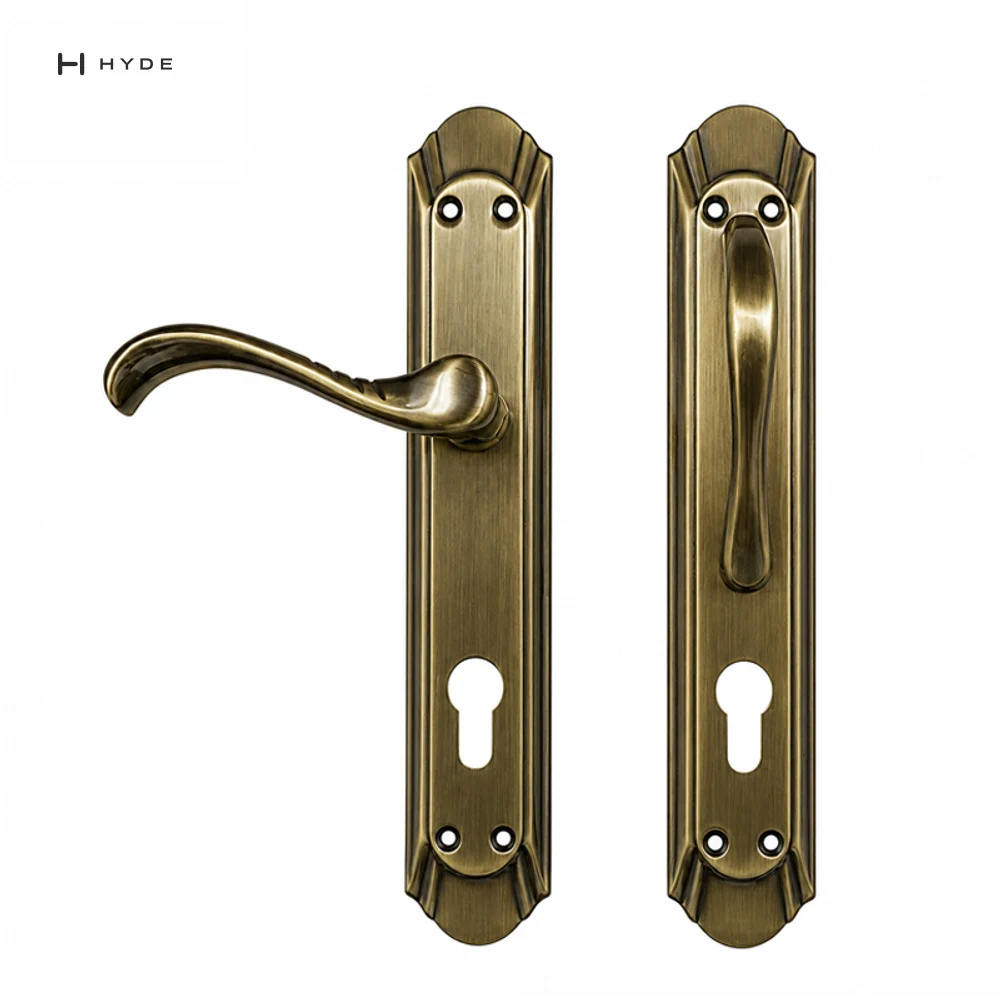
DH02 AB sits in the same category on our site, but it is built for another system. Its photographs show two long backplates in antique brass: one carries a fixed pull, the other a scrolled lever, and each has a euro-profile cylinder hole below the handle and four fixing holes. There is no thumbpiece and no separate deadbolt. A set like this goes with a mortise lock: the door edge is pocketed for a lock case, and the plates cover a spindle hole and a cylinder hole rather than two round bores.
So DH02 AB is not a substitute for a 70-series set on a door bored for one, or the other way round. Its record publishes no specification rows yet: no backset, no distance from lever to cylinder, no door thickness, no handing. The lever has a directional, scrolled form, so state the door hand with the order, and ask which lock case the plates are meant to pair with before the doors are prepared.
Finish and material: say which one
Each of the zinc alloy sets is published in one finish, so choosing the model chooses the finish: 70610 AB in antique brass (US5), 70710 SN in satin nickel, 70720 PB in polished brass (US3). One row needs pinning down on all of them: the trim is published as forged solid brass or electroplated zinc die-casting. Those are different products, so state which one on the order. The 70900 records publish aluminum as the material and carry the same brass-or-zinc trim row; ask which applies. The internal latch and bolt bodies keep their own plated color whatever the trim finish, and that is normal.
What to put on the order
Scroll sideways to compare columns. Select a column heading to sort; select it three times to restore source order.
| Model and finish | 70610 AB, antique brass (US5), one finish for every visible part on the door |
|---|---|
| Function | Entrance (key outside, thumbturn inside) or privacy (no key outside) |
| Backset | 60mm or 70mm, one value for both holes |
| Door thickness | As measured; the published range is 35–45mm |
| Existing bores | Diameter and spacing as measured, or new door bored to the supplied drawing |
| Trim material | Solid brass or zinc die-cast |
| Keying | Keyed different, or keyed alike with the doors named |
7 rows · Source order
Questions this answers
What is a grip handle set?
A grip handle set is an entrance set with two mechanisms joined by one outside grip. The thumbpiece at the top of the grip works a latch that holds the door closed, and a deadbolt above it, with a key outside and a thumbturn inside, locks the door. Inside, a knob or lever works the same latch. The thumb latch does not lock; the deadbolt does.
What backset does a grip handle set need?
Our 70610 AB, 70710 SN, 70720 PB and 70900 BK publish a backset of 60mm or 70mm, adjustable on both the latch and the deadbolt. Both holes must be at the same backset, because the outside grip is one casting that spans them, so the order states one backset for the door.
Do I need a separate deadbolt with a grip handle set?
No. A grip handle set already contains its deadbolt, and adding a separate one gives the door a second deadbolt and an extra hole. A separate deadbolt such as our Keyed Deadbolt Lock Set is for a door whose latch is worked by a knob or lever set.
What size hole does a grip handle set need?
Our grip handle sets publish a 51mm cross bore and a door thickness of 35mm to 45mm. The common North American bore is 2-1/8 in, about 54mm, with the two bores often 5-1/2 in apart, so on existing doors measure the holes and ask for the model's dimension drawing. The bore spacing and the bottom grip fixing position are not published on our records.
What is the 70710 grip handle set?
70710 is a zinc alloy grip handle set published as 70710 SN in satin nickel and as 70710 PB in polished brass. It publishes the same door rows as our 70610 and 70720 sets: 60 or 70mm backset for latch and deadbolt, 35–45mm door thickness, a 25mm deadbolt throw with a hardened steel insert and a 13mm latch extension.
Related products
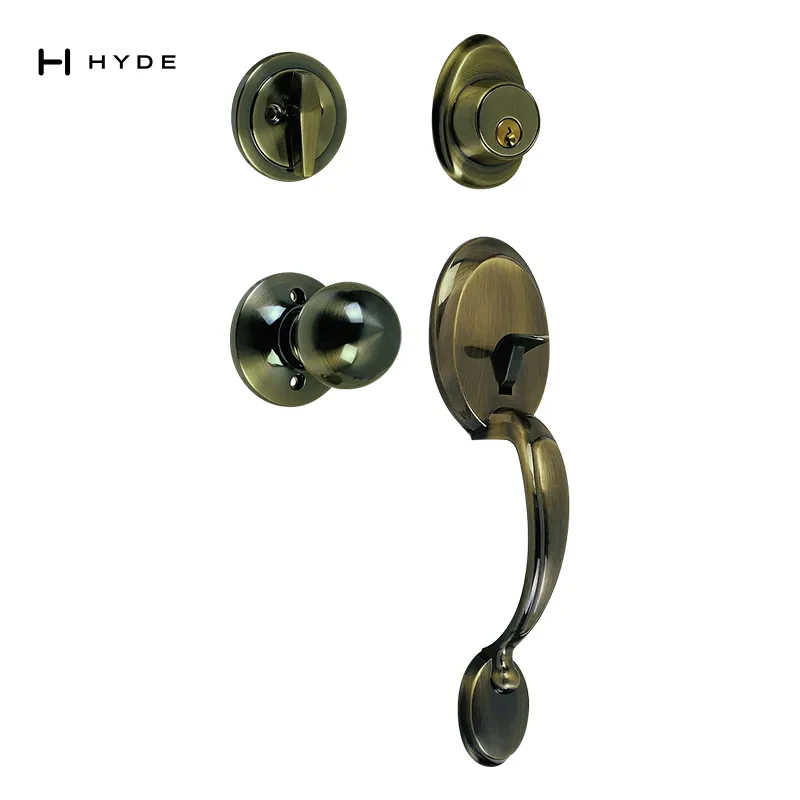
Backset 60mm / 70mm adjustable, latch and deadbolt both
Grip Handle Set
Model 70610 AB
Zinc Alloy
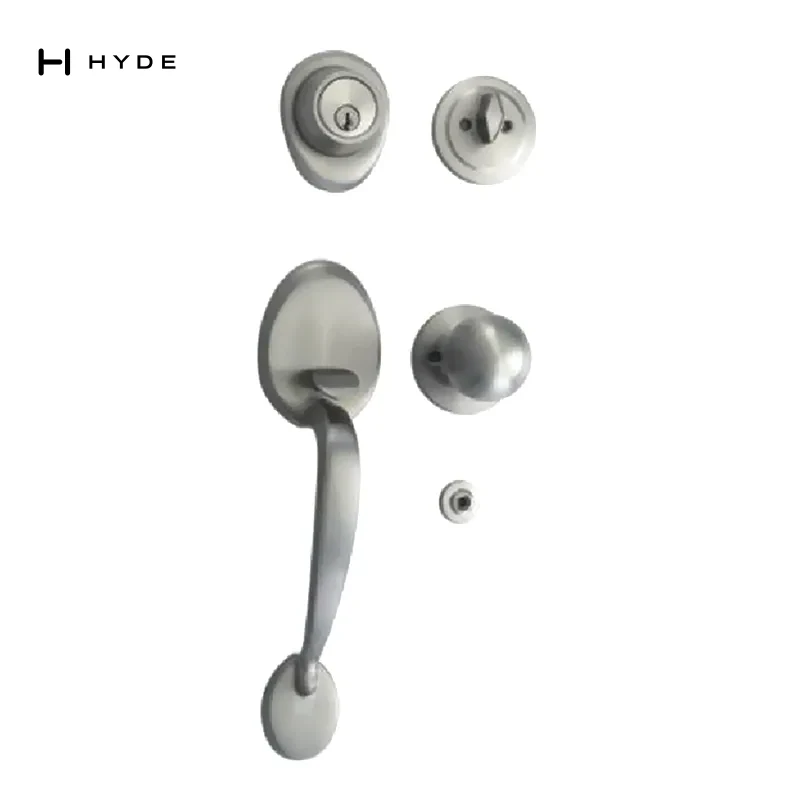
Backset 60mm / 70mm adjustable, latch and deadbolt both
Grip Handle Set
Model 70710 SN
Zinc Alloy
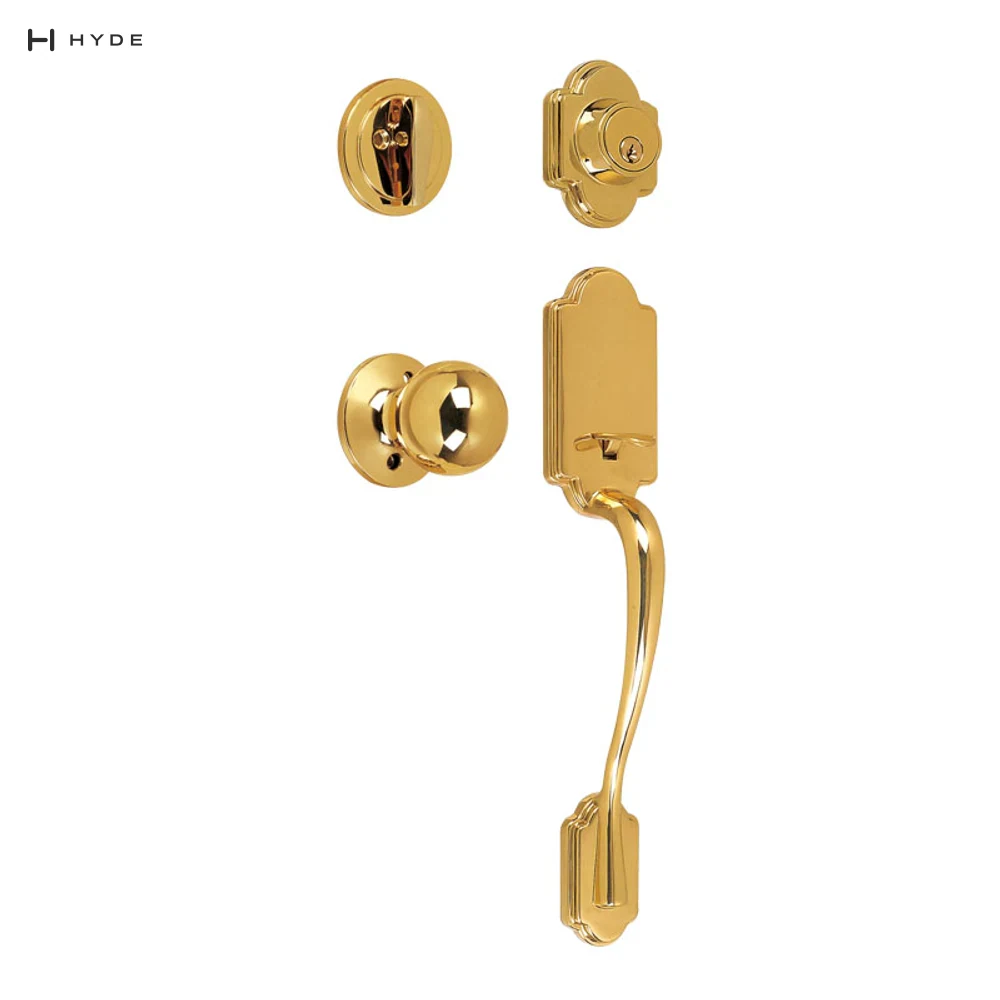
Backset 60mm / 70mm adjustable, latch and deadbolt both
Grip Handle Set
Model 70720 PB
Zinc Alloy
About Canton Hyland — Canton Hyland manufactures panic exit devices, locks and architectural door hardware for commercial and institutional projects, supplying specifiers and distributors internationally.