
Floor Springs for Glass Doors: Door Weight, Door Width and EN 1154 Size
A glass door's floor spring is chosen on the leaf's weight and its spindle-to-edge width together, then on glass thickness. This guide sets our glass-door floor springs against both figures, works three leaf sizes through, and explains the EN 1154 size field, the 90° hold-open and the floor cut-out data still to request.

Johnson LiuDigital Communications, Canton HylandMA Digital Media, Johns Hopkins University
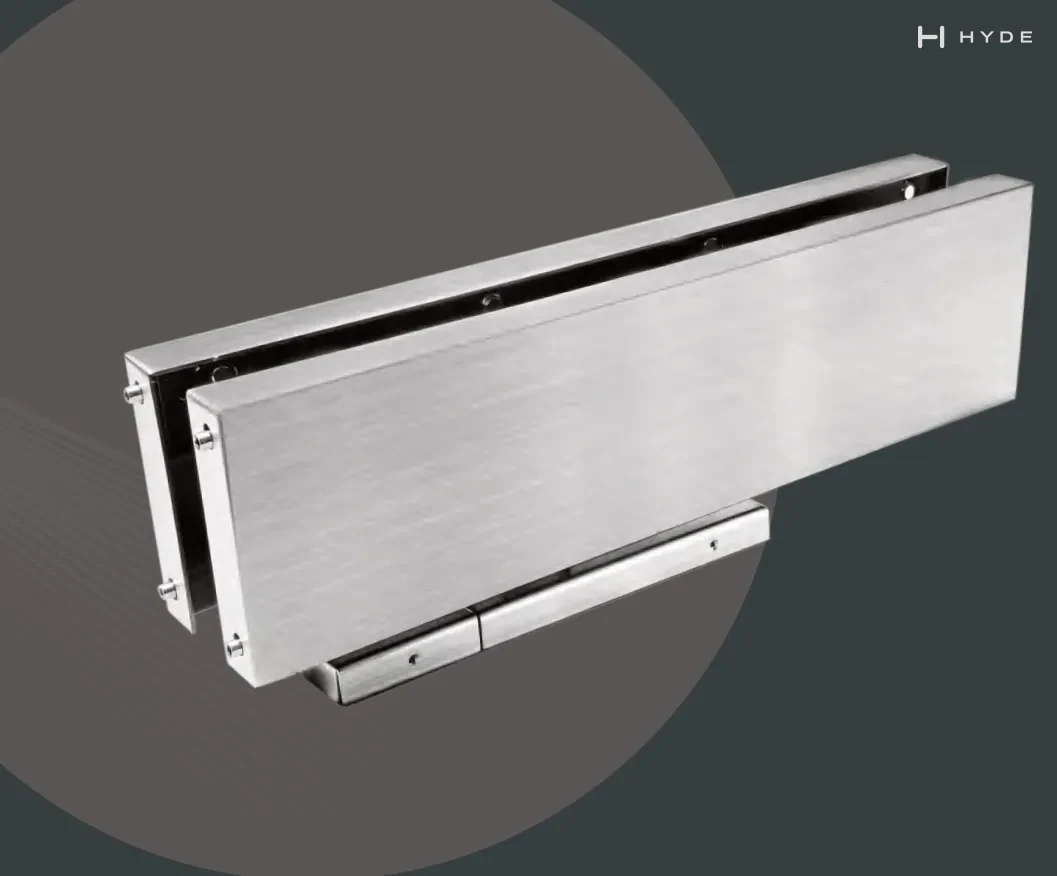
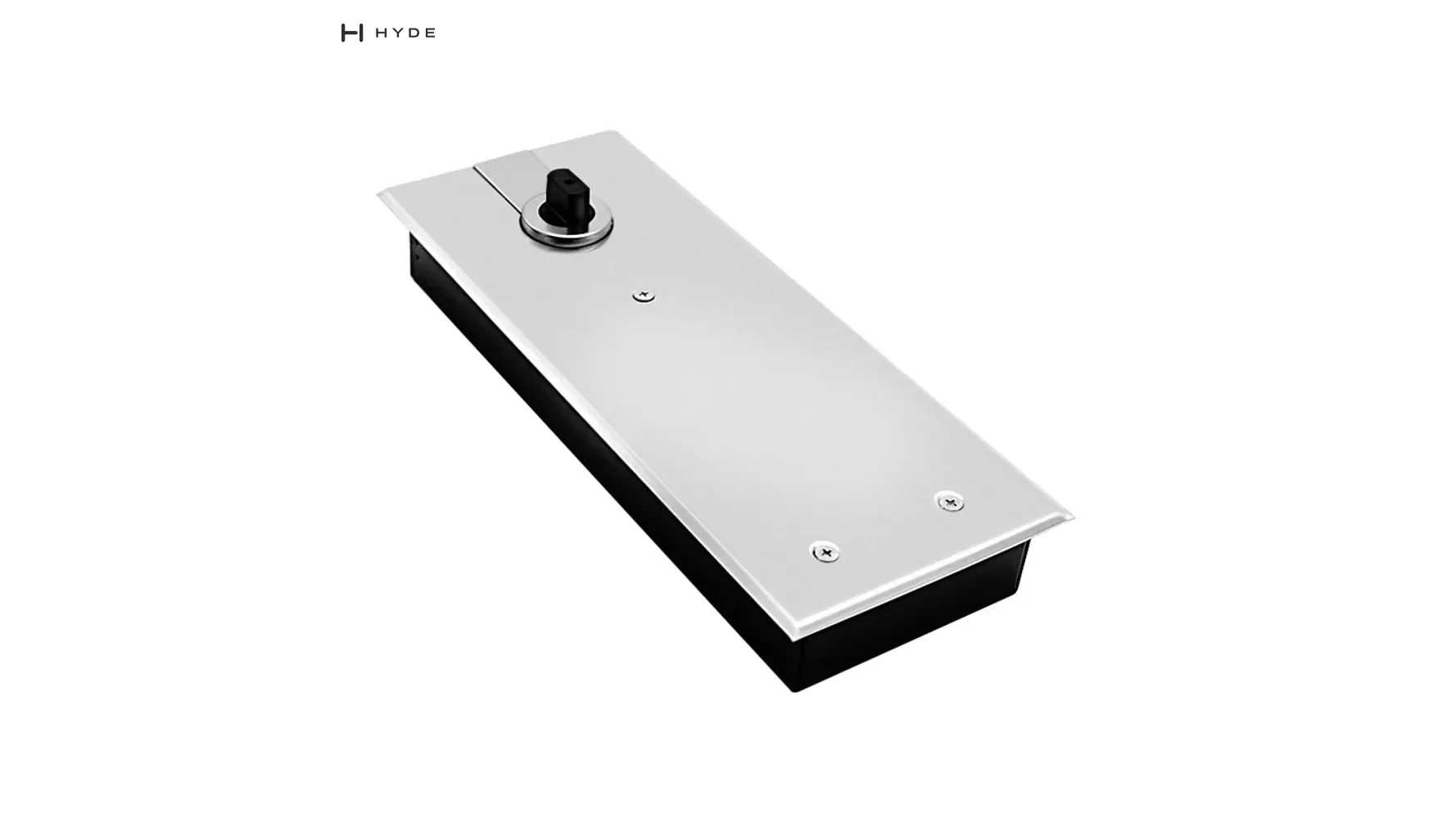
Choose a floor spring for a glass door on two published figures at once: the finished weight of the leaf and its width from the spindle to the closing edge. Across our glass-door floor springs those ceilings run from 60 kg at 750 mm (D-1031.60) to 150 kg at 1200 mm (D-1051.150) and 200 kg at 900 mm (DZ-2031.200), and the variant you order has to clear both figures with room to spare.
The glass thickness then has to fall inside the unit's range: 10–14 mm for D-1031, D-1051 and DZ-2031, 8–12 mm for D-3015 and D-3016. On a frameless leaf it is usually the width, not the weight, that pushes the order up a variant, and the worked examples below show why.
Glass-door floor springs by published weight and width
The table lists each variant of the floor springs whose records name the glass door as their application, sorted by maximum door weight. Every figure comes from the product record. A dash means the record does not publish that figure; it does not mean zero, and it does not mean unlimited.
Scroll sideways to compare columns. Select a column heading to sort; select it three times to restore source order.
| D-1031.60 | 60 kg | ≤750 mm | 10–14 mm | EN3 | 125° | 45# steel |
|---|---|---|---|---|---|---|
| D-3016.80 | 80 kg | ≤800 mm | 8–12 mm | – | 125° | 304 stainless steel |
| D-1031.100 | 100 kg | ≤1000 mm | 10–14 mm | EN4 | 125° | 45# steel |
| D-3015.100 | 100 kg | ≤600 mm | 8–12 mm | – | 360° | 304 stainless steel |
| D-1051.120 | 120 kg | ≤1100 mm | 10–14 mm | EN4 | 125° | 45# steel |
| D-3016.120 | 120 kg | ≤1000 mm | 8–12 mm | – | 125° | 304 stainless steel |
| D-1051.150 | 150 kg | ≤1200 mm | 10–14 mm | EN5 | 125° | 45# steel |
| D-3015.150 | 150 kg | ≤800 mm | 8–12 mm | – | 360° | 304 stainless steel |
| DZ-2031.150 | 150 kg | ≤800 mm | 10–14 mm | EN3 | 360° | 45# steel |
| DZ-2031.200 | 200 kg | ≤900 mm | 10–14 mm | EN4 | 360° | 45# steel |
10 rows · Source order
All of them are listed as double action, with a 90° hold-open, in satin stainless or matt black. D-1031, D-1051 and DZ-2031 also list a two-stage closing valve. The D-3015 and D-3016 records do not mention one, so ask before choosing them if the specification calls for separate closing and latching speeds.
Three readings of the table prevent most selection errors. Equal weight is not equal capability: D-3015.100 and D-1031.100 both carry 100 kg, but one stops at 600 mm and the other at 1000 mm, so D-3015 belongs on a narrow leaf and is the wrong unit for an ordinary shop door at any weight. Glass thickness splits the range: 8 mm glass points to D-3015 or D-3016, 14 mm glass to D-1031, D-1051 or DZ-2031, and only 10 mm and 12 mm glass fit all of them. And the body material differs: 45# steel, a medium-carbon grade, on D-1031, D-1051 and DZ-2031, and 304 stainless steel on D-3015 and D-3016, which is the material to prefer where rain or cleaning water reaches the floor.
One shortcut to avoid. The floor springs listed for timber and metal doors go above 200 kg, but their records also list a minimum door thickness of 40 to 60 mm. No glass leaf meets that, so they are not a heavier option for glass. A glass leaf beyond the figures in the table is outside our published range, and we will say so rather than stretch a number.
Working out the leaf weight
Toughened soda-lime glass weighs about 2.5 kg per square meter for each millimeter of thickness, so 10 mm glass is about 25 kg per square meter and 12 mm glass about 30 kg. Multiply by the area of the sheet, then add what is clamped to it: the bottom and top patch fittings, any lock body and the pull handle. Our records do not publish the weight of those parts, so weigh a sample or ask us. Near a variant's limit, they are what decides it.
Scroll sideways to compare columns. Select a column heading to sort; select it three times to restore source order.
| 700 × 2100 mm, 10 mm | about 37 kg | D-3015.100 (≤600 mm) | D-1031.60, D-3016.80 |
|---|---|---|---|
| 900 × 2200 mm, 12 mm | about 59 kg | D-1031.60, D-3016.80, D-3015, DZ-2031.150 | D-1031.100, D-3016.120 (both ≤1000 mm) |
| 1100 × 2700 mm, 12 mm | about 89 kg | every variant below 1100 mm | D-1051.150 (≤1200 mm) |
3 rows · Source order
The middle row is the one that goes wrong. About 59 kg of glass reads as a 60 kg door, but the 60 kg and 80 kg variants stop at 750 mm and 800 mm, and the patches and handle take the total over 60 kg in any case. The width, not the weight, moves the order to a 1000 mm variant. A leaf that lands exactly on a published limit, as a 900 mm leaf does on DZ-2031.200 or an 1100 mm leaf on D-1051.120, should be treated as over it: the figure is a ceiling, and a draught, a heavier handle or a later change of glass all add to what the unit carries.
What spindle to edge means on a glass leaf
The width in these records is measured from the spindle axis to the closing edge of the leaf, not across the whole leaf. On a patch-fitted door the spindle sits a short distance in from the pivot-side edge of the glass, at a point set by the bottom patch, so the spindle-to-edge figure is the leaf width minus that offset. Our records do not publish the offset for these models. Until the installation drawing gives it, check the full leaf width against the limit, as the examples above do. That errs on the safe side, and it is the only check the published data supports.
The EN size column, and how to read it
Closing force on D-1031, D-1051 and DZ-2031 is listed in the power-size notation of EN 1154, the European standard for controlled door closing devices, which runs from EN1 to EN7; a higher size means a stronger closing force for a wider door. The standard relates each size to a recommended maximum leaf width: up to 950 mm for EN3, 1100 mm for EN4 and 1250 mm for EN5. The field states a size. It is not a test certificate, and our records claim nothing beyond the size.
The weight column and the size column answer different questions. Weight is what the unit carries on its spindle; size is how firmly it brings the leaf back. An entrance door that faces the wind, or one that the building's air pressure pushes against, needs more closing force than its width alone suggests, which is a reason to take the variant whose size sits a step above the minimum. D-3015 and D-3016 publish no closing force size, so if a specification calls for one, ask before choosing them.
90° hold-open on a glass entrance
Every glass-door model in the table lists a 90° hold-open. D-1031, D-1051 and D-3016 list a 125° maximum opening angle; D-3015 and DZ-2031 list 360°, which means the floor spring itself does not stop the leaf. On a frameless door that matters more than on timber, because a glass leaf that swings into a wall, a fixed side panel or a second leaf is a breakage. Whichever model is chosen, a wall or floor stop has to sit where the opening should end.
A held-open glass leaf in an entrance also behaves like a sail. A gust loads the spindle and the bottom patch while the leaf is parked at 90°, which is a reason to hold open only doors that are sheltered or attended. Where a door must not stay open, ask before ordering whether the hold-open can be left out of the unit: the records list it, and they do not say whether a version without it is supplied.
The floor cut-out: what is and is not published
None of the glass-door models publishes its body dimensions, recess size or recess depth, and the records do not say whether the body is set in a cement box in the floor. Those are the figures the floor contractor needs before the screed goes down, and a floor spring cannot be moved once it is set, so ask for the installation drawing of the exact model and variant with the order, not on delivery.
From that drawing take four figures: the length, width and depth of the recess; where the spindle sits along the body; the distance from the spindle to the pivot-side glass edge; and how the cover plate sits against the finished floor. For comparison, F101, a floor spring with an iron body and 304 stainless steel outer plates, publishes an overall size of 129 × 321.5 mm, a 308 × 108 mm footprint and a 40.5 mm case depth. F101 publishes no door weight, width or glass thickness, so it cannot be sized against a leaf from its record; it shows the kind of figures a drawing has to give you.
Before ordering
To have a model named against the door, send the leaf width and height, the glass thickness, the fittings that will be clamped to it, whether it is a single leaf or a pair, whether the entrance is sheltered or exposed, whether the door should hold open, and the finished floor build-up. With those we can confirm the variant by name and send the drawing that the floor contractor and the glass processor both work from.
Questions this answers
How do I choose a floor spring for a glass door?
Check two published figures together, the leaf's finished weight and its width from the spindle to the closing edge, then confirm the glass thickness is in range. Among our glass-door models, D-1031.60 takes 60 kg at up to 750 mm, D-1051.150 takes 150 kg at up to 1200 mm, and DZ-2031.200 takes 200 kg at up to 900 mm. Choose the variant that clears both figures with room to spare.
How much does a frameless glass door weigh?
Toughened glass weighs about 2.5 kg per square meter for each millimeter of thickness. A 12 mm leaf 900 mm wide and 2200 mm tall is about 59 kg of glass, before the patch fittings, lock and handle are added.
What does EN3 or EN4 mean on a floor spring?
It is the power size from EN 1154, which runs from EN1 to EN7; a higher size means a stronger closing force for a wider door. The standard relates EN3 to leaves up to 950 mm wide and EN4 to leaves up to 1100 mm. It describes closing force, not a certification.
Do glass door floor springs hold the door open at 90 degrees?
D-1031, D-1051, D-3015, D-3016 and DZ-2031 all list a 90° hold-open. D-3015 and DZ-2031 list a 360° maximum opening angle, so a wall or floor stop, not the floor spring, has to limit the leaf.
What size is the floor cut-out for a floor spring?
Our glass-door models do not publish their recess dimensions, so ask for the installation drawing of the exact variant before the floor is laid. F101 publishes a 308 × 108 mm footprint and a 40.5 mm case depth, but no door weight.
Related products
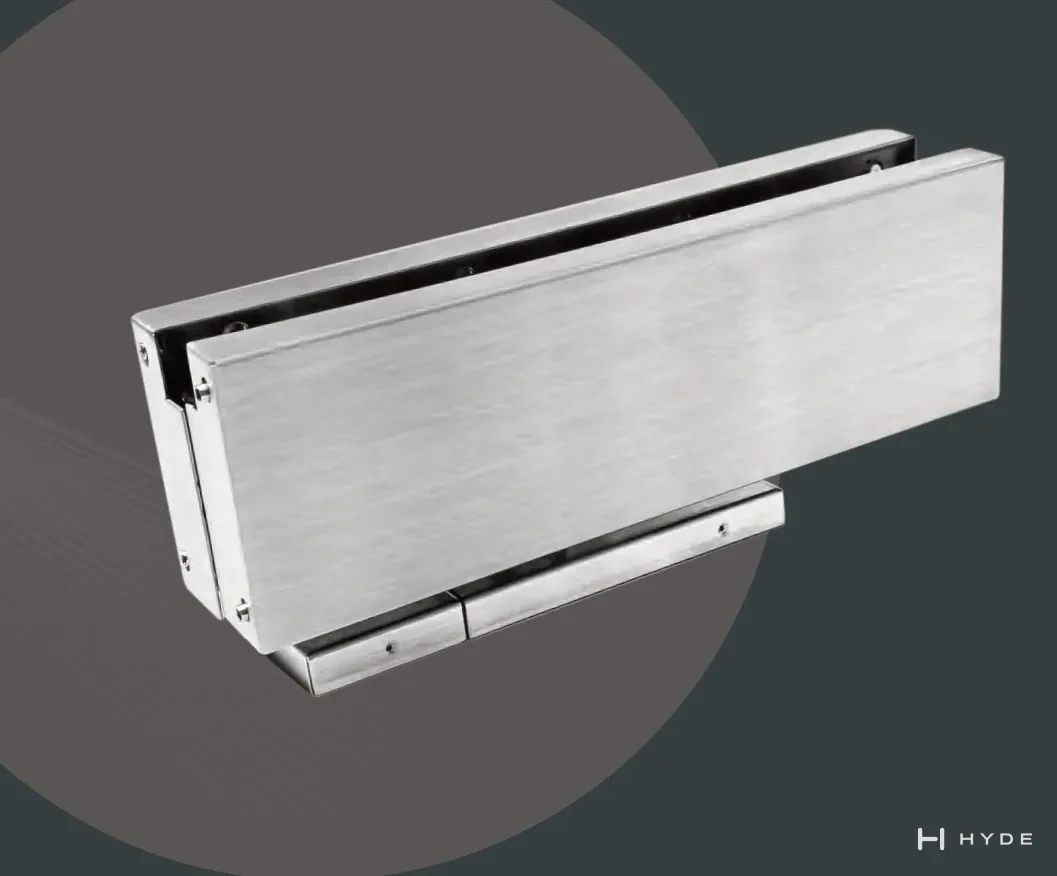
Floor Spring
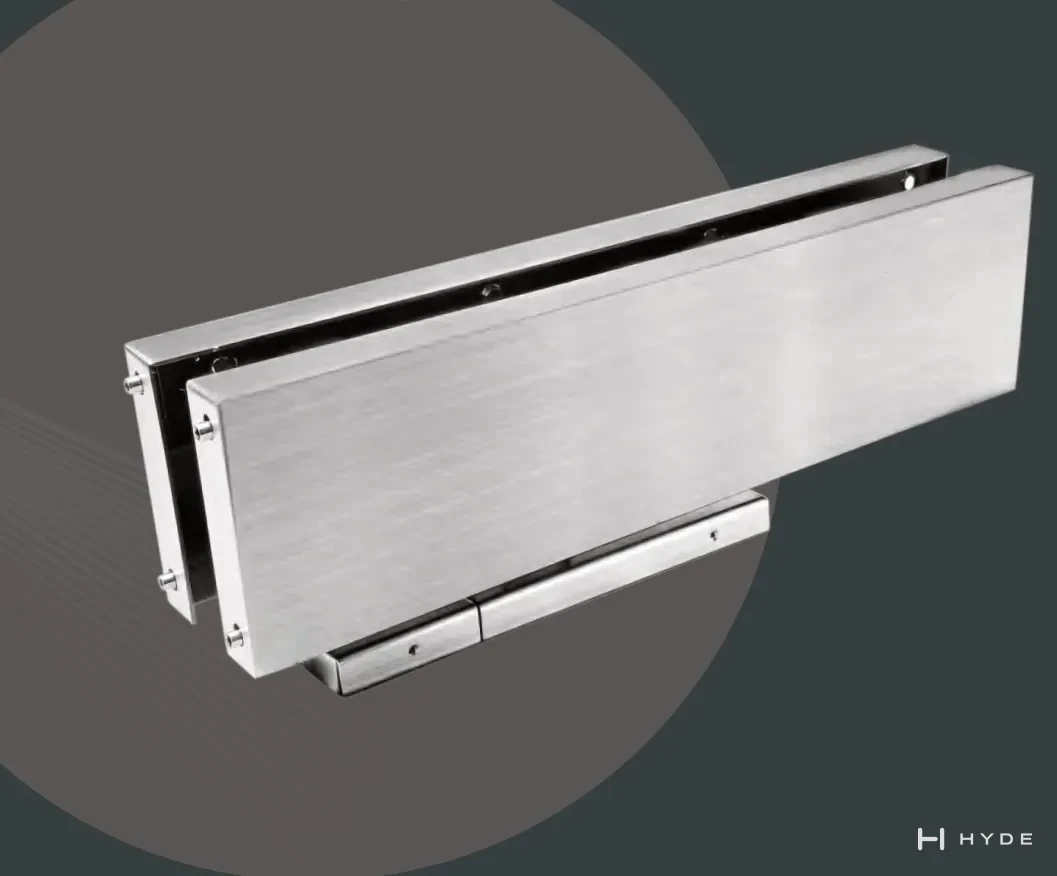
Model D-1031
45# steel
Floor Spring
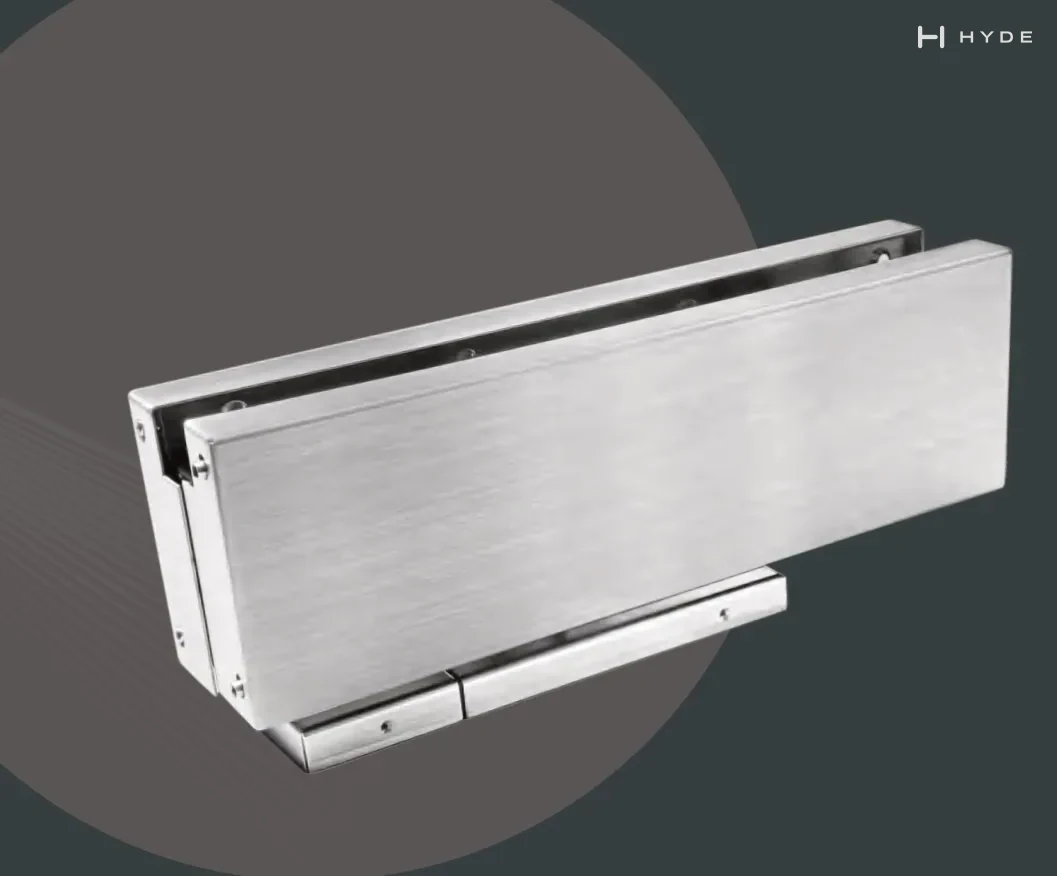
Model D-1051
45# steel
Floor Spring
Model D-3016
304 Stainless Steel
About Canton Hyland — Canton Hyland manufactures panic exit devices, locks and architectural door hardware for commercial and institutional projects, supplying specifiers and distributors internationally.