
Reading a Butt Hinge Size: 4 × 3 × 2.5mm, and How to Measure the One You Are Replacing
A butt hinge size is three numbers: height along the knuckle, open width across both leaves, and leaf thickness, so 4" × 3" × 2.5mm is 4 inches tall, 3 inches across open and 2.5mm thick. Here is how to read the notation, how to measure a hinge still on the door, and what our stainless hinges publish.

Johnson LiuDigital Communications, Canton HylandMA Digital Media, Johns Hopkins University
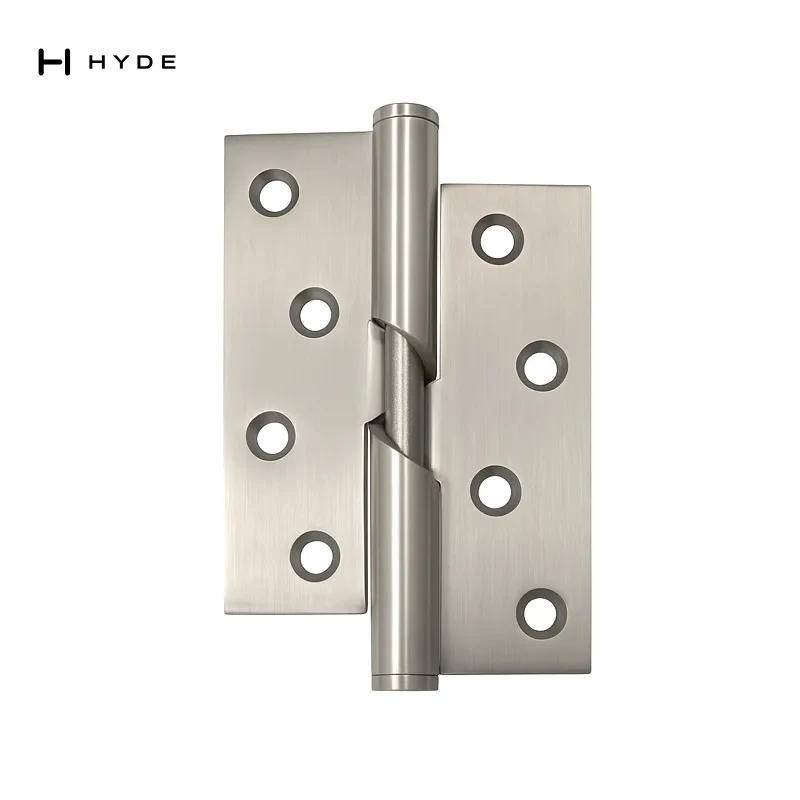
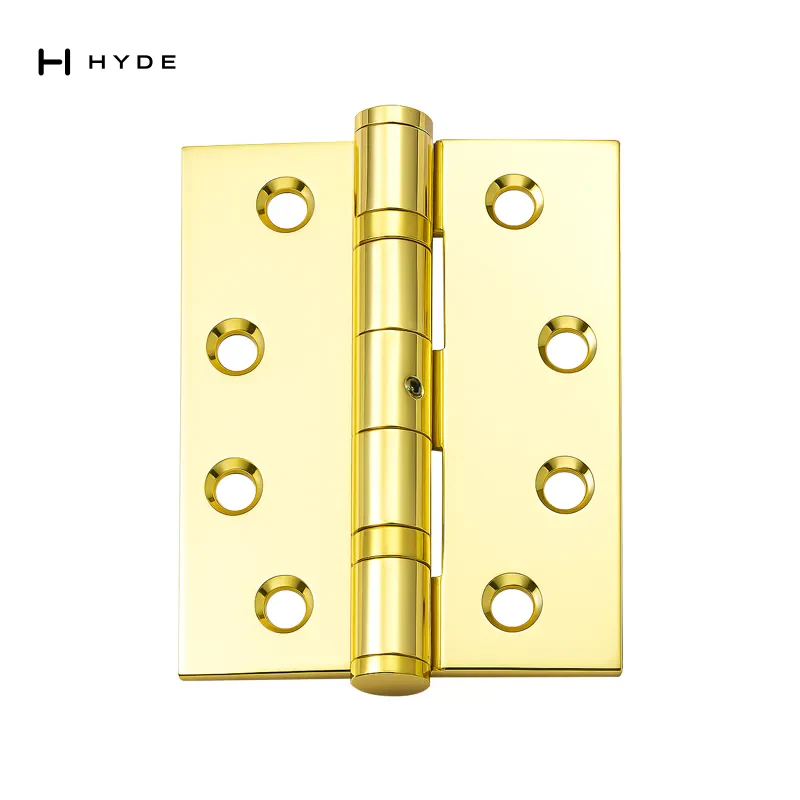
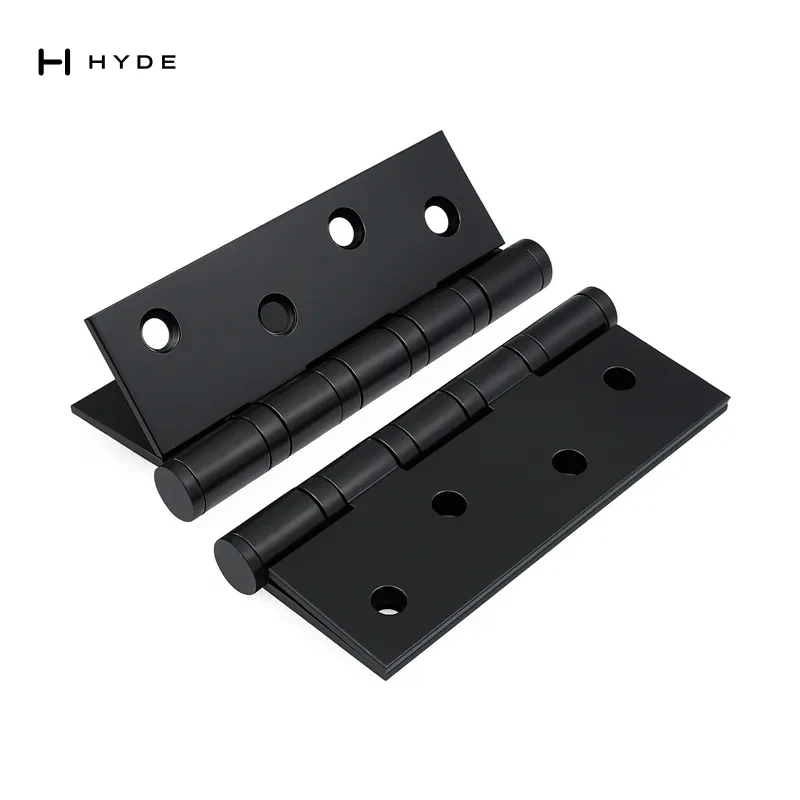
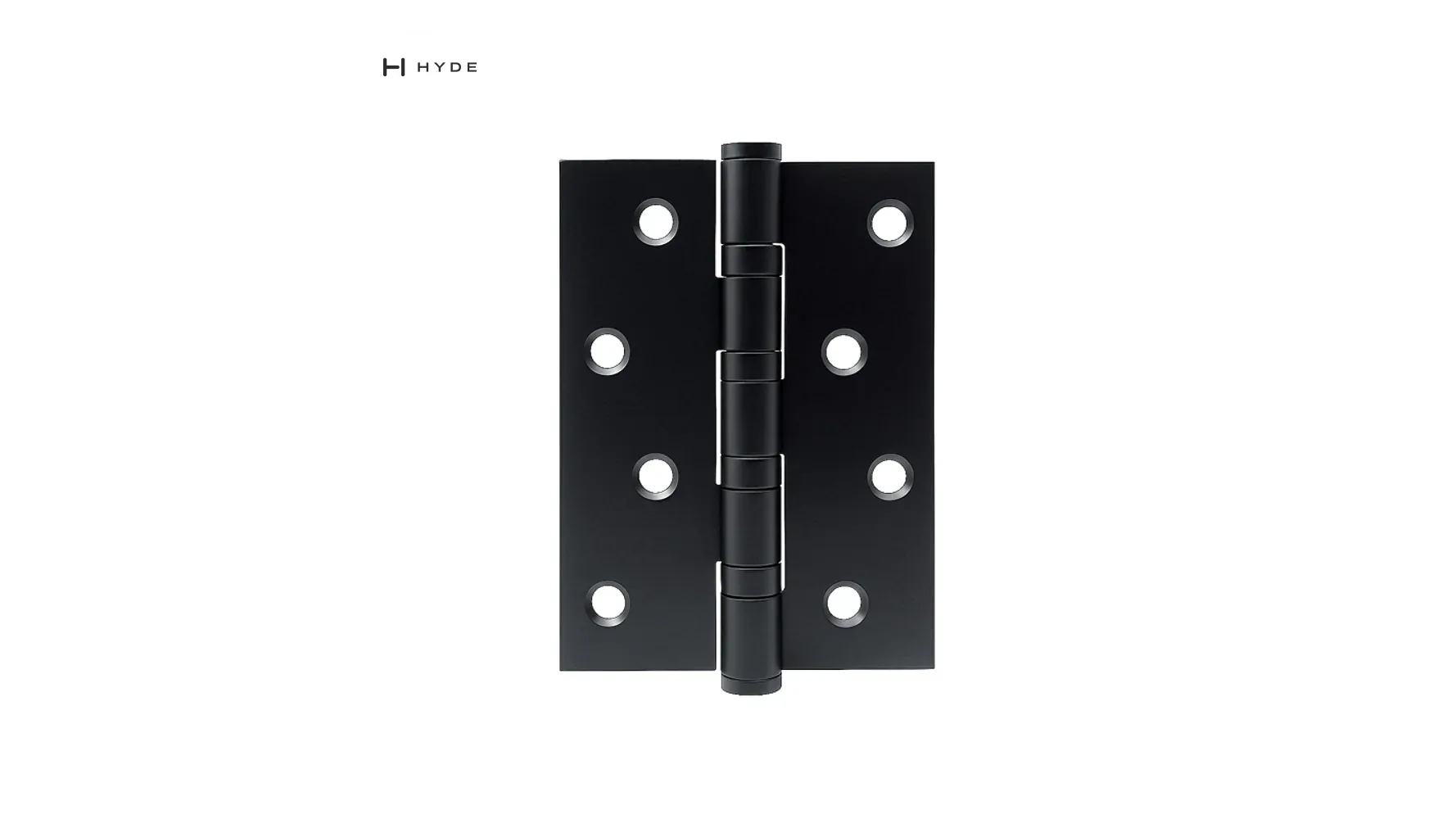
A butt hinge size is written as height × open width × leaf thickness. "4" × 3" × 2.5mm" means a hinge 4 inches (101.6mm) long along the knuckle, 3 inches (76.2mm) across when both leaves are opened flat, with leaves 2.5mm thick. The first two figures are almost always given in inches and the third usually in millimeters, and the order does not change: height first, width second, thickness last.
To size the hinge you are replacing, take the same three figures off the old one: the length of the leaf parallel to the pin, the width across both leaves laid flat including the knuckle, and the thickness of one leaf, measured clear of the knuckle and the screw holes. Then write down four things the size line does not carry: corner shape, knuckle count, pin type and screw-hole positions. A hinge that matches all three numbers and misses one of those four can still refuse to sit in the old mortise.
The three numbers, in order
Height is measured along the knuckle, which is to say along the edge of the door. It is what people mean by "a four-inch hinge", and it sets the length of the recess cut into the door edge and the frame. Decorative tips on the ends of the pin are not part of it; the height is the leaf.
Width is the open width: both leaves laid flat, measured from the outer edge of one leaf, across the knuckle, to the outer edge of the other. It is not the width of one leaf. On a 4" × 3" hinge each leaf measures 1-1/2" (38.1mm) from its outer edge to the center of the pin, and the 3" is the whole span.
Thickness is the thickness of the leaf, the sheet the hinge is made from. Our records give it in millimeters, 2.0mm or 2.5mm for the models below; some catalogs use inches or a gauge number instead. Whatever the unit, it is measured on the flat of the leaf, not at the knuckle, where the metal is rolled round the pin, and not at a countersink.
The same size, written several ways
Notation varies more than the hinges do, and our own records show it. SSH011 is listed as 4.0''x3.0''x2.0mm, with two single quote marks standing in for the inch sign; SSH022 is listed as 4"x3"x2.5mm. Height and width are the same, only the thickness differs. Read every variant the same way: inches, inches, millimeters.
Scroll sideways to compare columns. Select a column heading to sort; select it three times to restore source order.
| 4.0''x3.0''x2.0mm | 4 in high, 3 in open width, 2.0mm leaf | 101.6 × 76.2 × 2.0 |
|---|---|---|
| 4"x3"x2.5mm | 4 in high, 3 in open width, 2.5mm leaf | 101.6 × 76.2 × 2.5 |
| 4"x4"x2.0mm | 4 in high, 4 in open width, 2.0mm leaf | 101.6 × 101.6 × 2.0 |
| 3.5"x3.5"x2.5mm | 3-1/2 in high, 3-1/2 in open width, 2.5mm leaf | 88.9 × 88.9 × 2.5 |
| 5"x3"x2.5mm | 5 in high, 3 in open width, 2.5mm leaf | 127.0 × 76.2 × 2.5 |
5 rows · Source order
The trap is the metric near-equivalent. Metric markets commonly sell a 100 × 75mm hinge as the counterpart of a 4" × 3". It is close, not identical: 100mm against 101.6mm in height, 75mm against 76.2mm in width. On a new door that makes no difference, because the recess is cut to whatever arrives. On a replacement it does. A 101.6mm leaf will not drop into a 100mm recess without paring the ends, and a 100mm leaf in a 101.6mm recess leaves a visible gap. When the old hinge is in your hand, measure it in millimeters and say which system it came from.
What the width does
The open width decides how far the knuckle stands off the door face, and so how far the door can swing before the leaf meets the architrave, a wall or the next leaf. A common rule is: open width = 2 × (door thickness − backset) + clearance. Here the backset is the distance from the edge of the leaf to the face of the door, usually about 1/4" (6.4mm) on ordinary doors, and the clearance is whatever extra is needed to swing past trim.
On a 1-3/4" (44mm) door with a 1/4" backset and nothing to clear, that arithmetic gives exactly 3", which is one reason 4" × 3" is so common. A 4" × 4" keeps the same height and moves the knuckle further out, for a thicker door or for trim that would otherwise stop the door short of fully open.
Thickness is also the recess depth
On a mortised butt hinge each leaf sits in a recess as deep as the leaf is thick. That makes thickness more than a strength figure: it decides where the door hangs. Fit a 2.0mm hinge into recesses cut for 2.5mm and each leaf sits 0.5mm deeper than it should, so the hinge-side gap opens by about 1mm and the door moves about 1mm toward the lock side. On a door that already latches tightly, that is enough to drag the latch against the strike. Going the other way, from 2.0mm to 2.5mm, the recesses must be deepened or the door binds on the hinge side.
A thicker leaf is also a stiffer leaf, but leaf thickness is not a load rating. How heavy a door a hinge may carry, and how many hinges it needs, is a matter of grade and count, which our guide to hinge grades covers; this article is only about getting the size right.
How to measure a hinge that is still on the door
Scroll sideways to compare columns. Select a column heading to sort; select it three times to restore source order.
| Height | Open the door; measure the frame leaf top to bottom, parallel to the pin, ignoring the tips | Sets the length of the recess |
|---|---|---|
| Open width | Measure one leaf from its outer edge to the center of the pin and double it | Sets how far the knuckle stands off the door |
| Thickness | Calipers on the flat of the leaf near its outer edge; a steel rule cannot tell 2.0mm from 2.5mm | Sets the recess depth and the gaps |
| Corners | Square, or rounded; in North America rounded corners are commonly 1/4" or 5/8" radius | A square leaf will not sit in a rounded recess without chiseling |
| Knuckles | Count them, usually 3 or 5 | Every hinge on one door should match |
| Pin | Loose (can be driven out to lift the door off) or fixed | Matters on a door whose knuckles face the outside |
| Screw holes | Count per leaf; measure each center from the top of the leaf | On a frame with tapped holes the new holes must line up |
7 rows · Source order
Screw holes deserve a second sentence. On a timber frame a new hinge can take fresh pilot holes. On a metal frame prepared with tapped holes for template hardware, the hole positions must match, and that is what ANSI/BHMA A156.7 standardizes for template hinges. A hinge that is not made to that template will not line up with those holes, however close its three numbers are.
What our stainless hinges publish
Scroll sideways to compare columns. Select a column heading to sort; select it three times to restore source order.
| SSH011 | 304 stainless steel | 4" × 3" × 2.0mm | Finish not published |
|---|---|---|---|
| SS027 | Stainless steel, grade not stated | 4" × 3" × 2.0mm | Finish not published |
| SSH022 | Stainless steel, grade not stated | 4" × 3" × 2.5mm | Opening angle 90–180°; finishes PB, SB, AB, AC, CP |
| BL028 | Stainless steel 304/201 | 4" × 3" × 2.5mm | Loose pin; opening angle 90–180° |
| SSH012 | Stainless steel 304 | 4" × 3" × 2.0mm, 4" × 4" × 2.0mm, 3.5" × 3.5" × 2.5mm, 4" × 3" × 2.5mm, 5" × 3" × 2.5mm | Finishes PB, SB, AB, AC, CP |
| SSH013 | Stainless steel, grade not stated | The same five sizes as SSH012 | Finishes PB, AB, AC, CP, SN |
6 rows · Source order
Four of the six share the 4" × 3" footprint and differ only in thickness: SSH011 and SS027 at 2.0mm, SSH022 and BL028 at 2.5mm. That is the real decision when replacing a 4" × 3": match the old thickness. SSH012 and SSH013 each list five sizes, including both 4" × 3" thicknesses, so with those two models the size has to be on the order next to the model number.
What we do not publish is as important. None of these records gives corner shape, knuckle count, screw-hole positions or screw size, and only BL028 states its pin type. BL028's photographs show square corners; for the others, check the photographs against the hinge you have. BL028 is listed as 304/201, which are two different stainless grades, so an order for it must name one; a magnet will not settle which grade a hinge is. SSH020, a model people search for by name, publishes its material, five finishes and a 90–180° opening angle, but no size at all. Anyone ordering it should state the size measured off the hinge they have.
A size line that cannot be misread
Write all of it, in this order: hinge type, height × open width × thickness with the metric figures in brackets, corner shape, knuckle count, pin type, material grade and finish. For example: butt hinge, 4" × 3" × 2.5mm (101.6 × 76.2 × 2.5mm), square corners, five knuckles, loose pin, stainless steel 304, satin finish. Then attach a photograph of the old hinge with a rule beside it. A line written like that gets the same hinge back from any supplier, and it leaves nothing for anyone to guess.
Questions this answers
What does 4 x 3 mean on a door hinge?
It is the height and the open width in inches: 4" (101.6mm) along the knuckle and 3" (76.2mm) across both leaves laid flat, knuckle included. A third figure, such as 2.5mm, is the leaf thickness. The order is always height, then width, then thickness.
How do I measure a door hinge for replacement?
Measure the leaf height parallel to the pin, the open width (one leaf from its outer edge to the pin center, doubled), and the leaf thickness with calipers on the flat of the leaf. Then note the corner shape, the number of knuckles, the pin type and the screw-hole positions, because those decide whether the new hinge sits in the old recess.
Is a 100 x 75mm hinge the same as a 4 x 3 inch hinge?
Close, not identical. A 4" × 3" hinge is 101.6 × 76.2mm. On a new door the difference does not matter; in an existing recess a 101.6mm leaf will not fit a 100mm cut without paring, and a 100mm leaf leaves a gap in a 101.6mm cut. Measure the old hinge in millimeters.
Does hinge thickness matter if the height and width match?
Yes. Each leaf sits in a recess as deep as the leaf is thick, so swapping 2.5mm leaves for 2.0mm ones opens the hinge-side gap by about 1mm and moves the door toward the lock side; going thicker means deepening the recesses. Match the old thickness. Our 4" × 3" stainless hinges are published at 2.0mm (SSH011, SS027) and 2.5mm (SSH022, BL028).
What size is the SSH020 hinge?
Our SSH020 record publishes stainless steel, five finishes (PB, SB, AB, AC, CP) and a 90–180° opening angle, but no size. If you are replacing one, measure the height, open width and leaf thickness of the hinge you have and state them with the model number.
Related products
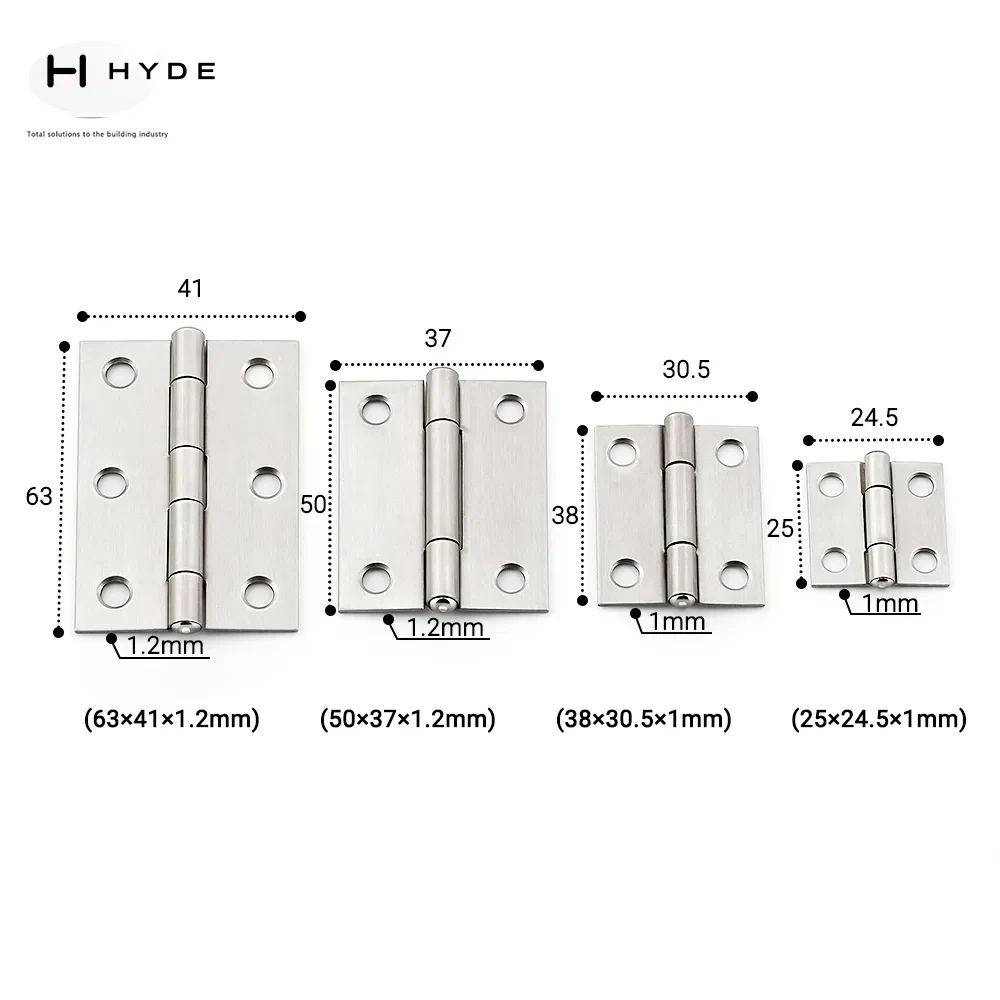
Size 4.0''x3.0''x2.0mm
Brass and Steel Hinges
Model SSH011
304 Stainless Steel
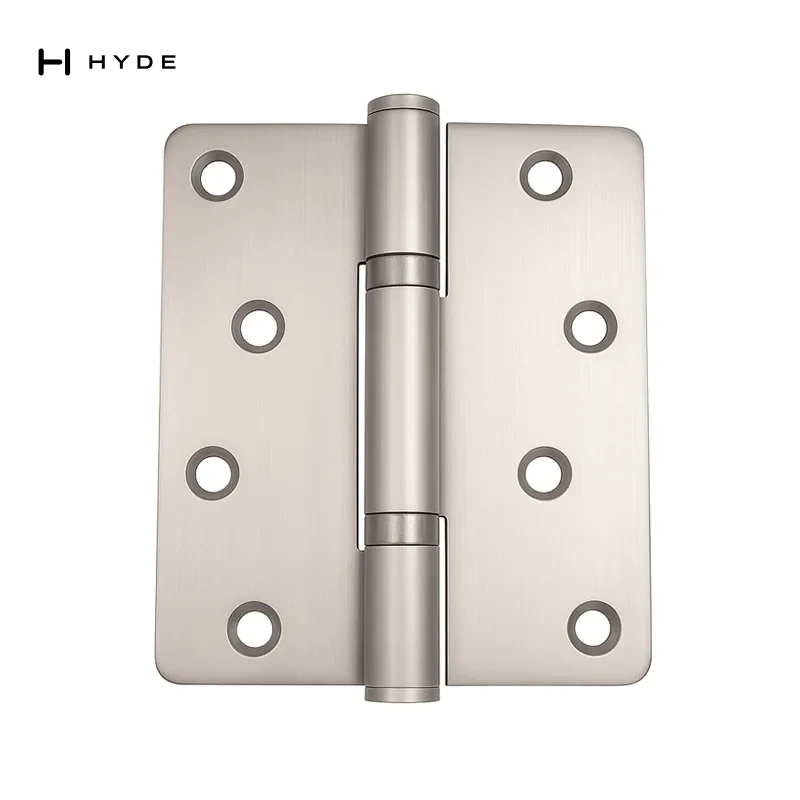
Brass and Steel Hinges
Model SSH012
Stainless Steel 304
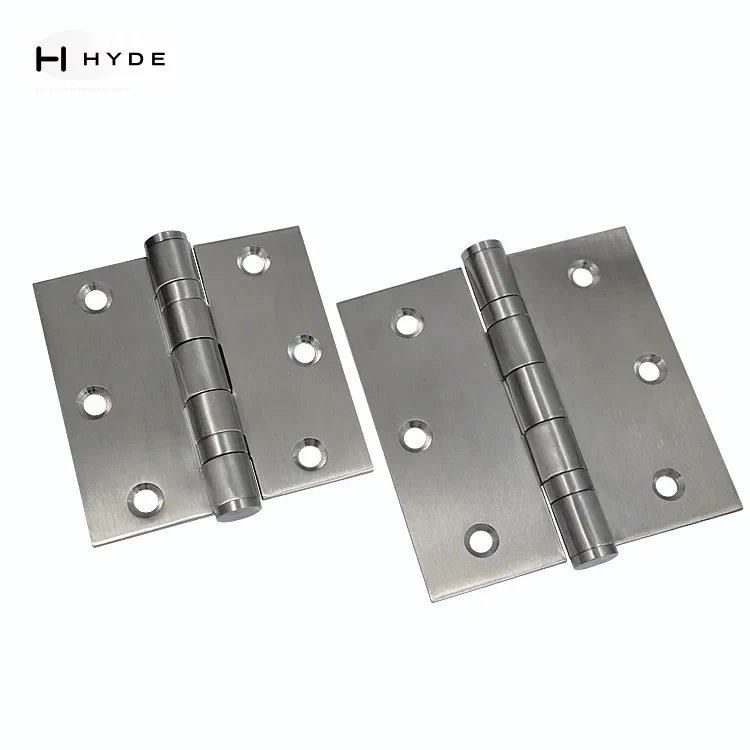
Brass and Steel Hinges
Model SSH013 · Video
Stainless Steel
About Canton Hyland — Canton Hyland manufactures panic exit devices, locks and architectural door hardware for commercial and institutional projects, supplying specifiers and distributors internationally.