
Spring Hinges: Self-Closing Without an Overhead Closer, Tension Adjustment, and Where It Is Not Enough
A spring hinge closes a door with a torsion spring inside its barrel. Its tension can be adjusted on site, but it has no control of closing speed or latching. Here is how it works, how to set it, where an overhead closer is still needed, and what SSH023, BL030, BL031 and SH02 publish.

Johnson LiuDigital Communications, Canton HylandMA Digital Media, Johns Hopkins University
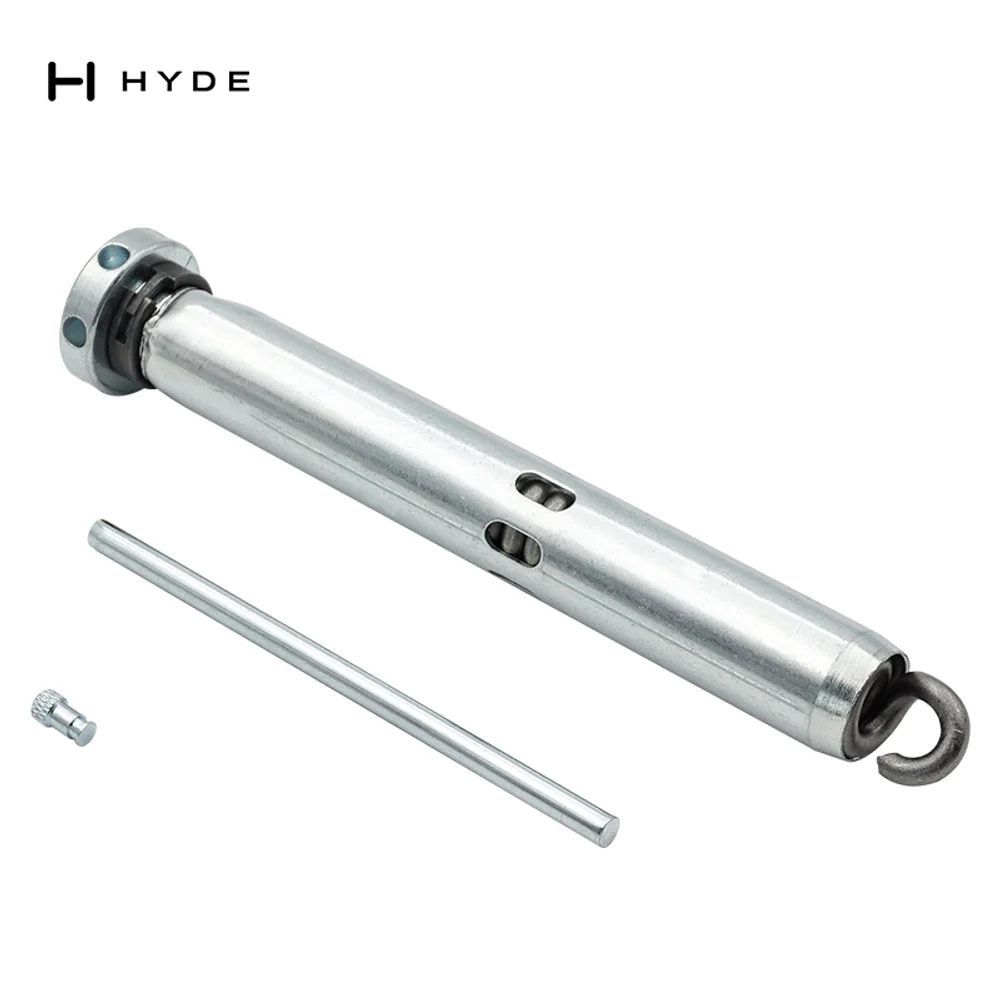
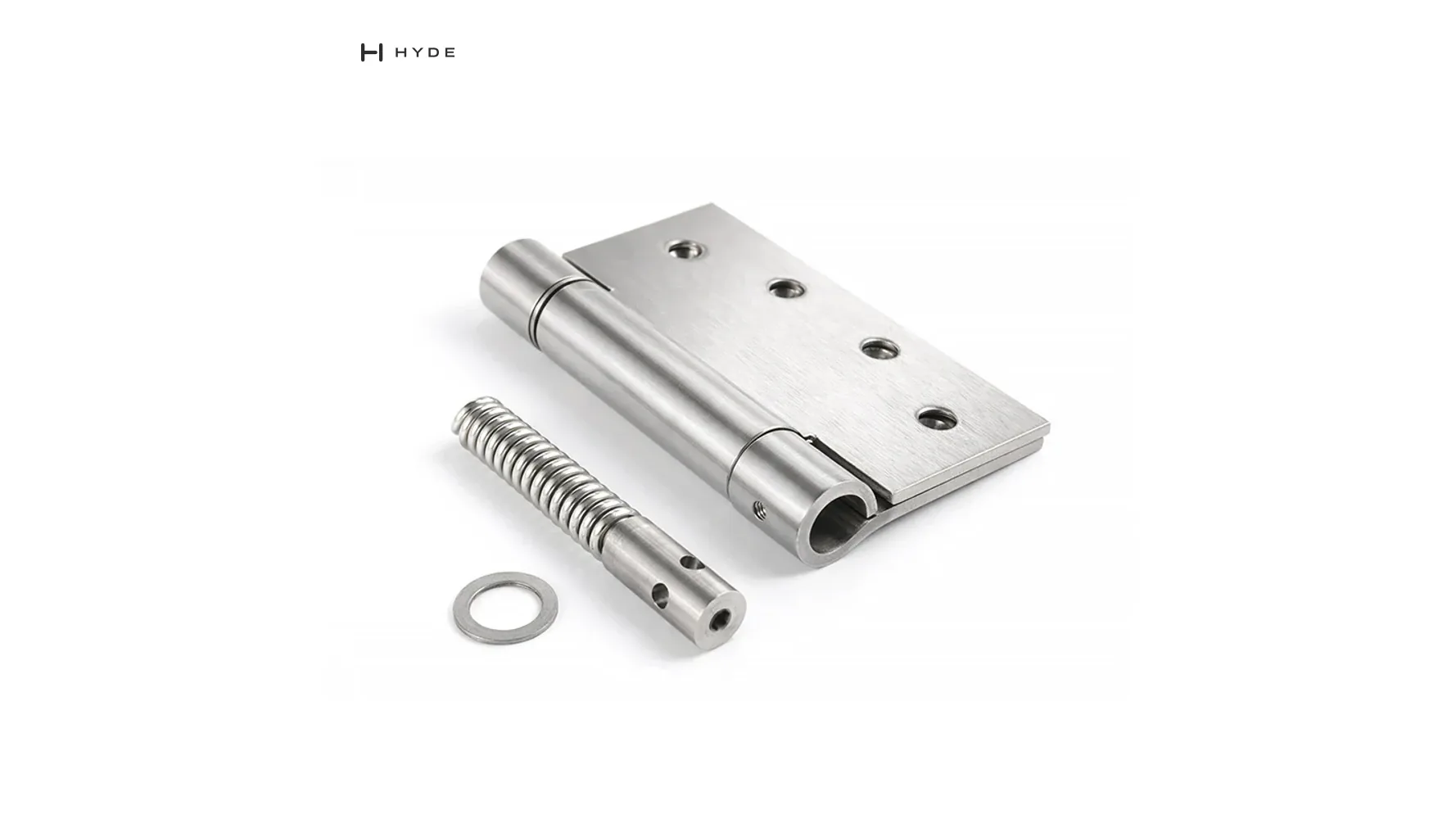
A spring hinge closes a door without an overhead closer. It looks like an ordinary hinge, but it carries a coiled spring inside its barrel: opening the door winds the spring, and letting go allows the spring to swing the leaf back to the frame. The tension is set at the barrel with a rod and held with a pin, so the closing force can be raised or lowered on site. That is the only adjustment it has.
That single adjustment is where a spring hinge stops being enough. It has no hydraulic control, so it cannot set the closing speed, slow the last few degrees so the latch engages, or cushion a door that is thrown open. It suits light interior doors that only need to come back to the frame. A heavy door, a door that must latch every time against a lock or seals, an exterior door in wind, or a fire door whose test evidence calls for a closer needs an overhead closer or a floor spring instead.
How a spring hinge closes a door
Inside the barrel is a torsion spring. One end is anchored to one leaf. The other is held by an adjusting cap at the top of the barrel, which is locked in position by a pin through one of a ring of holes. Turning the cap before pinning it winds the spring while the door is closed. That stored wind, the preload, is what holds the door shut, and every degree of opening adds to it.
The consequence is the part most specifications miss. A torsion spring pushes hardest when it is wound furthest, which is with the door wide open, and least in the last few degrees before the door meets the frame. Those last degrees are exactly where the latch bolt has to ride over the strike and any seal has to compress. A spring hinge that slams a door from 90° can still leave it resting against the latch, because the force available at the frame is only the preload.
Spring hinge or overhead closer
Scroll sideways to compare columns. Select a column heading to sort; select it three times to restore source order.
| Source of closing force | Torsion spring in the hinge barrel | Spring in the closer body, acting through an arm |
|---|---|---|
| Closing speed | Not controlled; set only by spring force | Controlled by hydraulic valves |
| Latching action | None; relies on the preload | Separate latch-speed adjustment on most models |
| Opening cushion (back check) | None | Available on many models |
| Hardware on the door face | Nothing beyond the hinges | Closer body and arm |
| On-site adjustment | Tension only | Power, speed, latch, often back check and delay |
| Typical door | Light interior doors that only need to return | Commercial, entrance and heavier doors |
7 rows · Source order
Sizing an overhead closer to a door's width and mass is its own subject, covered in our guide to closer power sizes. The point here is narrower: a spring hinge is a closer with one setting, and everything the other settings of a closer do is missing.
Setting the tension
Tension is set with the door closed. The adjusting rod goes into a hole in the cap at the top of the barrel. The rod turns the cap in the closing direction, which is usually marked on the hinge, one hole at a time. The locking pin goes into the next free hole, and then the rod comes out. To reduce tension, the same steps run in reverse, with the rod held firmly while the pin is withdrawn, because the spring is loaded and will spin the cap back.
Every spring hinge on a leaf should carry the same preload. Unequal settings make one hinge do most of the work, which twists the leaf and wears that hinge first. The method is to move each hinge by the same number of steps and then test, rather than to tune one hinge until the door behaves.
The test is simple. Open the door to 90° and release it. It should close fully and latch without slamming. If it stops short of latching, add one step to each hinge. If it slams, take one step off each. If no setting both latches the door and keeps it from slamming, the door needs a device with speed control, and more tension will only make it harder to open.
None of our four models publishes how many adjustment steps its cap has or a maximum number of turns, so we do not state either; ask with the inquiry. What is shown: the SSH023 photographs show the spring withdrawn from the barrel with its adjusting head and a washer, and SH02 is supplied with a Ø5 × 100mm tensioning pin and a locking pin.
Hinge makers generally advise at least two spring hinges on a leaf, so that the closing force is not carried through a single barrel. Where a leaf hangs on three hinges and only two are sprung, the third should match them in size and leaf thickness so the door hangs true. How many hinges a door of a given height and mass needs in the first place is covered in our guide to hinge grades and hinge count, and reading the size line on a hinge in our note on butt hinge sizes.
Where a spring hinge is not enough
A spring hinge runs out of capability in four predictable places. The first is a heavy or wide leaf. Raising the tension to move the mass makes the door both harder to open and faster to close, and nothing in the hinge slows it down.
The second is a door that must latch against resistance: a lock latch bolt with a stiff spring, perimeter seals on an acoustic or weather door, or an exterior door with wind or air pressure behind it. These need force in the last few degrees, which is where a spring hinge has least of it. The latch-speed adjustment on an overhead closer exists for exactly this.
The third is opening force. Under the 2010 ADA Standards, interior hinged doors other than fire doors are limited to 5 lbf (22.2 N) of opening force. A spring hinge tensioned hard enough to latch a sealed door can exceed that, and the only way to lower the opening force is to lower the tension that was latching the door.
The fourth is a door used by children, older people or anyone carrying things. A spring hinge closes at whatever speed its spring dictates. Some spring hinges list a buffer or soft-close feature, BL031 among them; how much of the closing arc that covers is specific to the model, and it is worth checking on a sample before it is relied on in place of the speed control of a closer.
Fire doors: what the rules say in general
Whether a spring hinge may close a fire door is decided by the fire door, not by the hinge. In North America, NFPA 80 accepts spring hinges as the closing method on some swinging fire doors, subject to conditions on the hinge and the door and to the listing of the door. ANSI/BHMA A156.17 is the North American standard for self-closing hinges and pivots.
In Europe, the performance of a fire door is proven by testing the whole doorset, for example to EN 1634-1, and the self-closing device is normally an overhead closer or a floor spring tested to EN 1154. A spring hinge belongs on such a door only where the door's own test evidence or field-of-application report includes it. Substituting one for the tested closer changes the assembly that was tested. We do not state that any spring hinge in this article is suitable for a fire door. If the door is a fire door, send its listing or test evidence with the inquiry, and the hinge choice follows from what that document allows.
What our four models publish
Scroll sideways to compare columns. Select a column heading to sort; select it three times to restore source order.
| SSH023 | Spring hinge | 201/304 stainless steel | 3.0mm in each listed size; the thickness field also lists 2.0mm | 3.5" × 3.5", 4" × 3", 4" × 4" | Adjustable tension, 180° opening angle |
|---|---|---|---|---|---|
| BL030 | Spring hinge | 304 stainless steel | Not stated here; being confirmed | Made to order | Adjustable tension, 90° positioning, 180° opening angle |
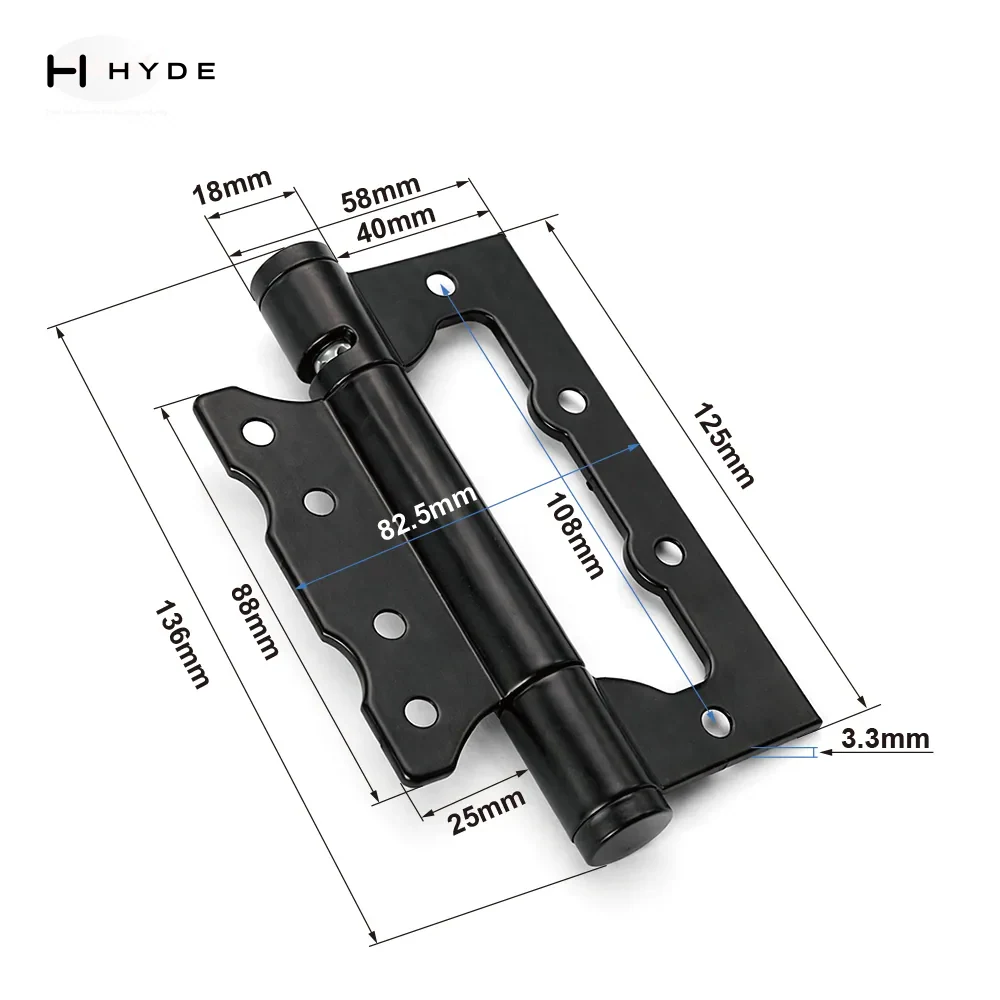
| BL031 | Spring butterfly (non-mortise) hinge | 304 stainless steel | 3.3mm | Not published | Adjustable tension, soft-close buffer, multi-angle positioning, screw-mounted |
| SH02 | Spring hinge pin | Zinc plated | Not applicable | Ø19mm, 160mm overall | Adjustable tension; Ø5 × 100mm tensioning pin and locking pin included |
4 rows · Source order
BL031 is a butterfly hinge, the trade name for a non-mortise hinge: the outline of one leaf is cut from the other, so the two nest into a single thickness when the door closes, and neither leaf has to be let into the door edge or the frame. That makes it an option for retrofit work where cutting a mortise is not wanted.
SH02 is not a hinge. It is a spring core for the barrel of a hinge on a metal door, 19mm in diameter and 160mm overall, which makes that door self-closing without changing the hinge leaves. The bore and length of the barrel have to be checked against those two figures before ordering; the record does not list which hinges it fits.
What to send with an inquiry
A spring hinge quotation is only as good as the door description behind it. Send the leaf material, width, height and mass; the hinges on the door now, with their size line; whether the door must latch against a lock or seals; whether it is a fire door, with its listing or test evidence; and the finish. If the answer is that the door needs a closer instead, it is better to hear it before the hinges are fitted.
Questions this answers
How does a spring hinge work?
A spring hinge has a torsion spring inside its barrel. One end is anchored to one leaf and the other to an adjusting cap locked by a pin. Opening the door winds the spring further, and releasing it lets the spring swing the door back to the frame. The force is greatest with the door wide open and least just before it closes.
How do you adjust the tension on a spring hinge?
With the door closed, put the adjusting rod into a hole in the cap at the top of the barrel, turn it in the closing direction one hole at a time, insert the locking pin in the next hole and remove the rod. Set every spring hinge on the leaf to the same number of steps, then test by releasing the door from 90°: it should close and latch without slamming.
Can a spring hinge replace a door closer?
On a light interior door that only needs to return to the frame, often yes. A spring hinge has no hydraulic control, so it cannot set closing speed, drive the latch home or cushion opening. Heavy doors, doors with seals or stiff latches, exterior doors in wind and fire doors whose test evidence calls for a closer need an overhead closer or a floor spring.
Are spring hinges allowed on fire doors?
It depends on the fire door, not the hinge. In North America, NFPA 80 accepts spring hinges as the closing method on some swinging fire doors, subject to conditions and the door's listing. In Europe, a fire door is tested as a whole doorset, usually with a closer, and a spring hinge belongs on it only if the door's test evidence includes it. We do not state that our spring hinges are suitable for fire doors.
How many spring hinges does a door need?
Hinge makers generally advise at least two spring hinges per leaf, all set to the same preload. If a third hinge is not sprung, it should match the spring hinges in size and leaf thickness. The total number of hinges still follows from the height and mass of the door.
Related products
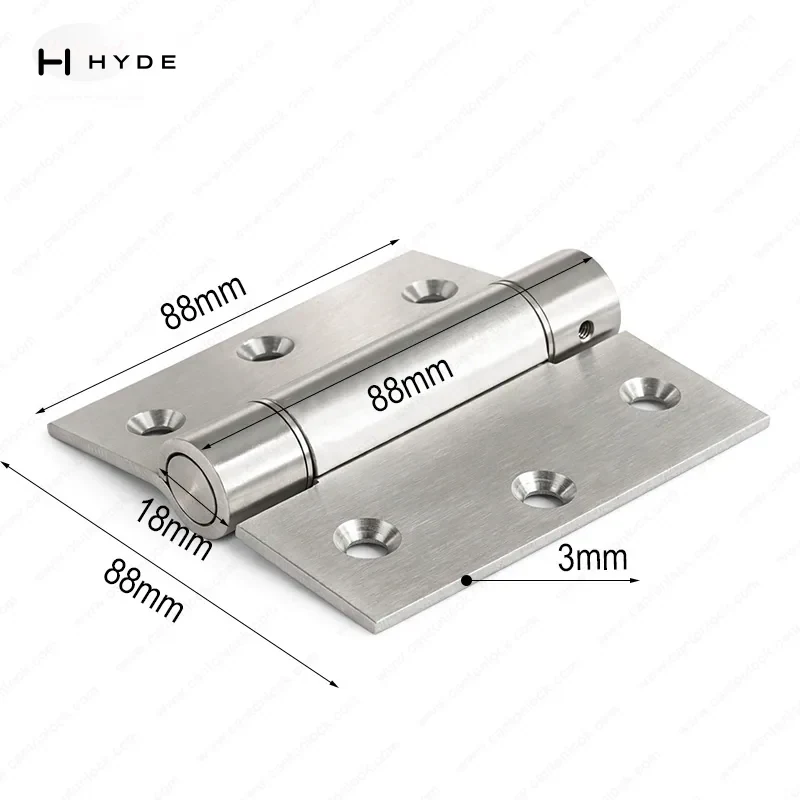
Size 3.5”×3.5”×3.0mm / 4”×3”×3.0mm / 4”×4”×3.0mm (Custom Available)
Brass and Steel Hinges
Model SSH023 · Video
201/304 Stainless Steel
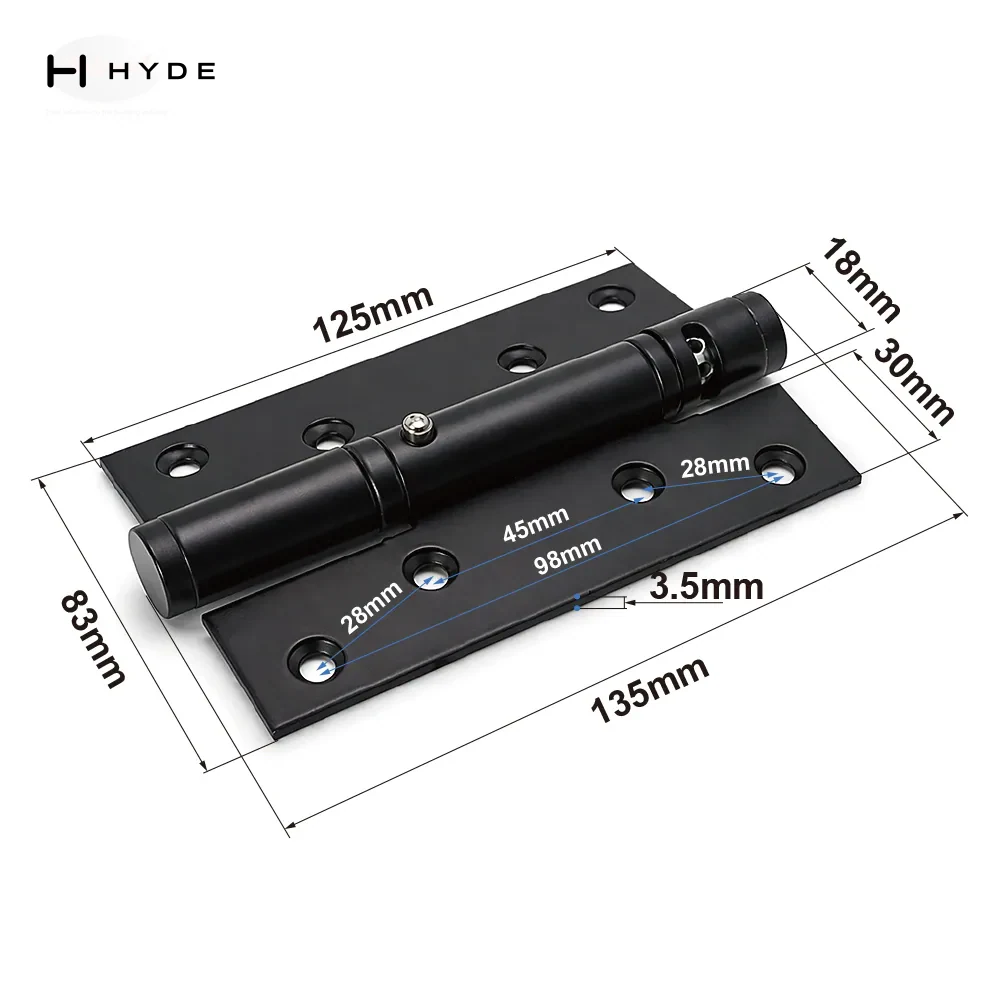
Brass and Steel Hinges
Model BL030 · Video
304 Stainless Steel
Brass and Steel Hinges
Model BL031 · Video
304 Stainless Steel
About Canton Hyland — Canton Hyland manufactures panic exit devices, locks and architectural door hardware for commercial and institutional projects, supplying specifiers and distributors internationally.