
Fire Door Annual Inspection 2026: The Hardware Items That Fail, from Closers and Latches to Labels, Under NFPA 80 and the EN Standards
Many annual fire door inspection findings are hardware rather than the door itself: a closer that no longer latches the leaf, a latch that misses its strike, a door wedged open, a label painted over, a replacement part that was never rated, a pair that closes in the wrong order. This guide takes each finding in turn, under NFPA 80 in the United States and the EN standards and national rules in Europe, and says what normally puts it right.

Johnson LiuDigital Communications, Canton HylandMA Digital Media, Johns Hopkins University
A fire door is inspected as an assembly, and it fails as one. The leaf can be sound and the frame can be sound, and the opening still fails because the closer no longer pulls the door into its latch.
This guide goes through the hardware findings that come up on annual fire door inspections, one at a time: what each one means, and what normally puts it right. Which components have to be rated in the first place is the subject of our guide Fire Door Hardware 2026: Which Components Must Be Rated; this one is about what happens to them in service.
What the codes require
In the United States, NFPA 80, the standard for fire doors and other opening protectives, requires fire door assemblies to be inspected and tested not less than annually, by a person with knowledge and understanding of the operating components of the type of door being tested, and a signed record to be kept for the authority having jurisdiction. The building and life safety codes call it up, and the authority having jurisdiction decides which edition applies.
The standard also lists what the inspection has to verify on a swinging door: labels present and legible; no open holes or breaks in the door or frame; glazing and glazing beads intact; the door, frame, hinges, hardware and threshold secured, aligned and in working order; no missing or broken parts; clearances within the permitted limits; the self-closing device operational; on a pair with a coordinator, the inactive leaf closing before the active leaf; latching hardware securing the door when it is closed; no auxiliary hardware that interferes with operation; no field modifications that void the label; and gasketing and edge seals present and intact.
Europe has no single equivalent rule. The doorset is tested to EN 1634-1, and a fire-resisting doorset placed on the market is declared to the product standard EN 16034, read together with EN 14351-1 for external pedestrian doorsets. The hardware on it has standards of its own: EN 1154 for closers, EN 1155 for electrically powered hold-open devices, EN 1158 for coordinators, and EN 1125 and EN 179 for exit devices. How often an installed door is checked, and by whom, is set by each country.
England is a clear example. The Fire Safety (England) Regulations 2022 require the responsible person in a block of flats whose top floor is more than 11 meters above ground to check communal fire doors at least every three months, and to use best endeavors to check flat entrance doors at least every twelve months.
In Brazil, NBR 11742 covers fire doors on emergency exit routes and NBR 11785 covers panic bars; our article NBR 11742 and NBR 11785: What a Brazilian Inspection Checks on Fire Door Hardware goes through both.
Whatever the code, the hardware findings are much the same, because hardware wears out in the same ways everywhere.
The closer that no longer closes the door
A frequent finding is a door that stops short of the frame. The closer is fitted and moving, but it no longer overcomes the latch, the smoke seals and the pressure difference across the opening. The test is simple: open the door fully, let it go, and it has to close and latch on its own, every time, from the fully open position.
The usual causes are adjustment, a closer of the wrong power size for the leaf, or a closer whose hydraulics have failed. Under EN 1154 the power size is matched to the leaf width and mass, and industry guidance treats power size 3 as the minimum for a fire door. Turning up the latching speed is an adjustment; replacing a leaking closer is a replacement, and on a certified door the new closer has to be one suitable for that door, not whatever fits the old holes. Our guide Door Closer Power Size 2026 covers the sizing.
The latch that does not engage
A fire door works by staying shut while the leaf and frame distort in the heat, and the latch is what holds it. A latch bolt that no longer projects into the strike, or a strike that a sagging leaf now misses, leaves a door held only by its closer, and a closer alone does not keep a door shut under fire pressure.
The cause is usually worn hinges or a frame that has moved. Restoring the alignment is the repair. Enlarging the strike opening until the latch drops in is not a repair but a change to the assembly. A lock left on a hold-back setting so that the latch stays retracted counts as not latching, whatever the reason it was set that way.
Wedged, hooked or held open
A fire door that is held open is not a fire door until somebody remembers to close it. Wedges, hooks, door stops on the floor, magnets that are not connected to the alarm, and furniture standing in the swing are exactly what an inspection looks for.
Where a door has to stand open in daily use, the compliant route is a device that releases it on a fire signal: in Europe an electrically powered hold-open device to EN 1155, or a closer with an integrated electric hold-open; in the United States a listed hold-open device or closer released by the fire alarm or a smoke detector. The wedge is cheaper and fails the inspection.
Labels missing or painted over
The labels on the door and on the frame are the evidence that the assembly was certified. A label painted over during redecoration, removed with an old hinge, or hidden behind a kick plate turns a certified door into an undocumented one, and at an inspection an undocumented fire door and a failed one are treated alike.
Where a label has gone, the route back is normally a field label or a recertification by the listing or certification body, which is a survey and a cost rather than a form. The prevention costs one line in the maintenance specification: labels are masked during painting, never painted.
Replacement parts that were never rated
This finding is invisible from the corridor. A failed lock replaced with whatever the maintenance store had, a hinge taken from another door, a closer swapped for a cheaper model, screws replaced with shorter ones. Each substitution can look identical and still take the door outside its certificate, because the certificate names the hardware set that was tested.
The rule is the same in every system: a replacement part on a fire door is a component suitable for that door, with the document that shows it, or it is a modification. Ask the supplier for the certificate or listing that covers the part on that type of door, and file it with the inspection record.
That applies to us as well. None of our product records carries a fire certificate today, including those whose application field names fire doors, so a buyer replacing hardware on a certified assembly should ask before assuming any of our parts is suitable for it.
Pairs: closing order, coordinators and gaps
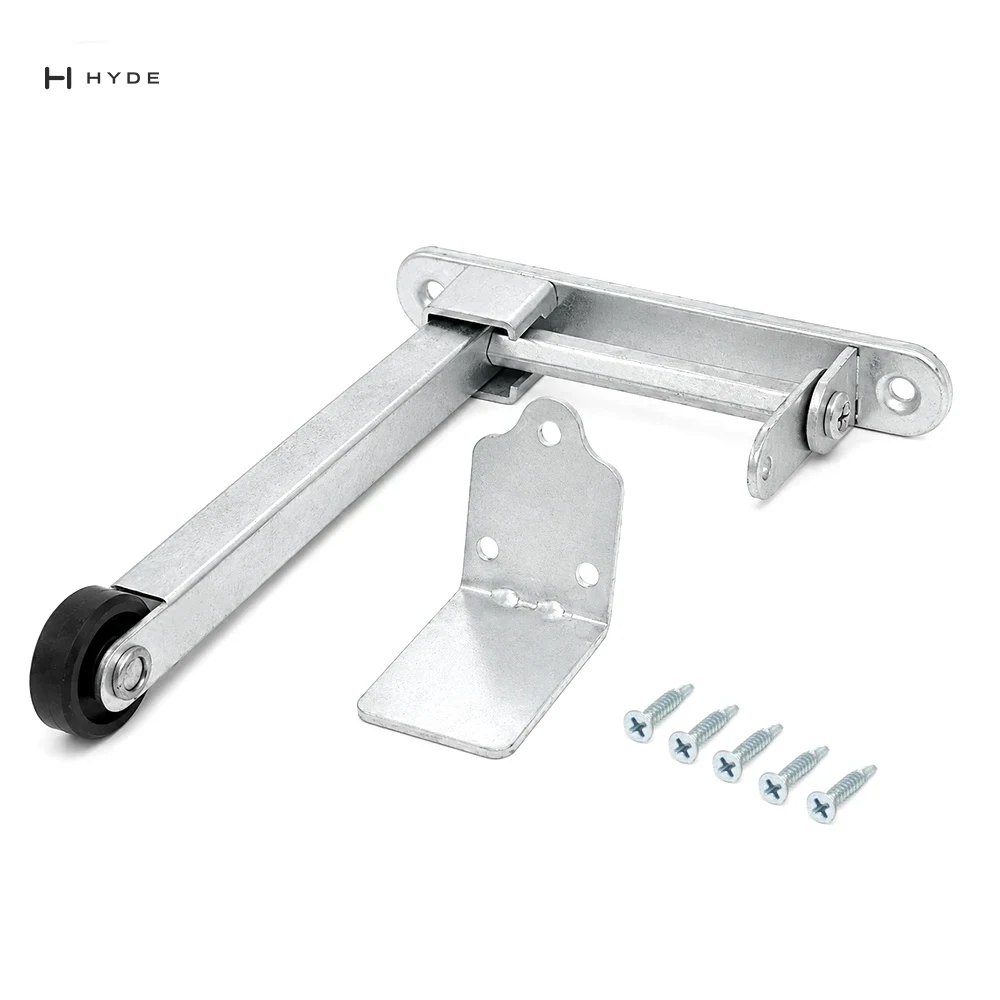
Pairs fail in ways single doors cannot. If the inactive leaf closes after the active one, the astragal or the latch stops the pair from closing, and the door stands ajar with both closers working perfectly. The coordinator is what enforces the order, and inspections find it disconnected, bent, or removed because somebody thought it was slowing the door down.
Gaps at the meeting edges and between leaf and frame have to stay within the clearances set by the standard and by the door's own certification. A pair that has dropped on its hinges usually shows it first as a widening gap at the top of the meeting edge.
Our DC01, DC02 and DSL02 are surface-mounted coordinators for pairs. None of them publishes a fire certificate, so on a certified pair the coordinator has to be one that the door's own certification covers. Our article Why a Double Fire Door Needs a Coordinator, and How to Size One explains how they work.
Exit devices that do not latch
On a fire-rated exit door the exit device is also the latch. A rim strike that has worked loose, a vertical rod whose bottom latch no longer reaches its floor strike, a top latch that misses because the leaf has dropped: each leaves a door that opens under a push and does not stay shut under pressure.
In the United States, an exit device on a fire door has to be fire exit hardware, listed for both panic and fire use, and it has no mechanical dogging; a dogging key found in a fire exit device is a finding in itself. Our guide EN 1125 or EN 179 in 2026 covers why a fire exit is never dogged.
Hinges and screws
Hinges carry a heavy leaf through daily use, and the first sign of wear is a door that rubs at the head or binds at the strike. Missing screws, screws replaced with shorter ones, and hinge pins working their way out are routine findings. The hinge type, count and fixings were part of the tested assembly: restoring them is maintenance, changing them is a modification.
Field modifications
Every hole cut in a fire door after it left the factory is a question for the inspection: a card reader, a door viewer, a new lock preparation, a kick plate fixed with through-bolts, a hold-open screwed to the leaf. NFPA 80 limits what may be done on site without the listing organization, and European certificates state the permitted variations in their scope of application. Outside those limits a modification needs approval before the work, not an explanation after it.
What to keep on file
An inspection is only as good as the record it leaves. For each door: its location and identification, the rating on its label, the date, the inspector, every item checked, what was found and what was done. For each replacement part: what it is, and the document that makes it suitable for that door. A building that can produce this file for every fire door gets through an audit quickly; one that cannot ends up surveying its doors again.
Five checks before the inspector arrives
Open each door fully and let it go: it must close and latch on its own. On every pair, watch the inactive leaf close first. Remove every wedge and hook. Find the label on the door and on the frame. List every part replaced since the last inspection, with the document that covers it. Those five checks cover every hardware item described above.
Questions this answers
How often does a fire door have to be inspected?
In the United States, NFPA 80 requires fire door assemblies to be inspected and tested not less than annually, with a signed record kept for the authority having jurisdiction. In Europe the frequency is set nationally: in England, for example, communal fire doors in blocks of flats whose top floor is more than 11 meters above ground are checked at least every three months, and flat entrance doors at least every twelve months on a best-endeavors basis.
Who can carry out an NFPA 80 annual fire door inspection?
NFPA 80 requires a person with knowledge and understanding of the operating components of the type of door being tested. The authority having jurisdiction decides which edition of the standard applies and may set further requirements.
Can a fire door be held open?
Only by a device that releases it on a fire signal: an electrically powered hold-open device to EN 1155 or a closer with an integrated electric hold-open in Europe, or a listed hold-open device released by the fire alarm or a smoke detector in the United States. Wedges, hooks and floor stops are inspection failures.
What happens if the label on a fire door has been painted over or removed?
The door becomes undocumented, which an inspection treats the same as a failed door. The usual route back is a field label or a recertification by the listing or certification body. The prevention is to mask labels during painting.
Can a lock, closer or hinge on a fire door be replaced with any similar product?
No. A replacement has to be a component suitable for that door, with the certificate or listing that shows it; otherwise it is a modification that takes the door outside its certificate. None of our product records carries a fire certificate today, so ask before assuming any of our parts is suitable for a certified door.
Why does a pair of fire doors stay ajar when both closers work?
Because the leaves closed in the wrong order. The inactive leaf has to close before the active leaf, and the coordinator enforces that; a coordinator that is disconnected, bent or removed leaves the pair standing open on its astragal or latch.
Related products
Door Coordinator
Model DC01 · Video
Iron With Zinc-Plated Finish
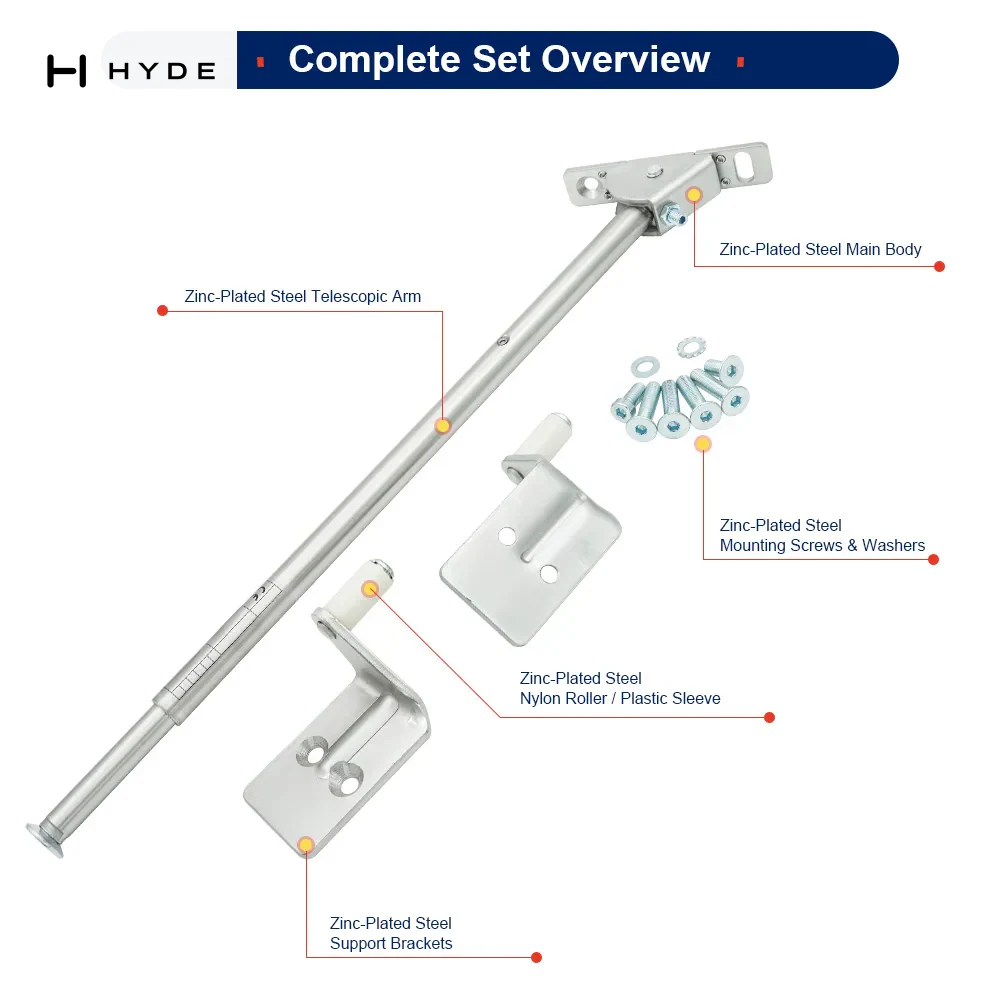
Size 397 × 120mm
Door Coordinator
Model DC02 · Video
Zinc-Plated Steel
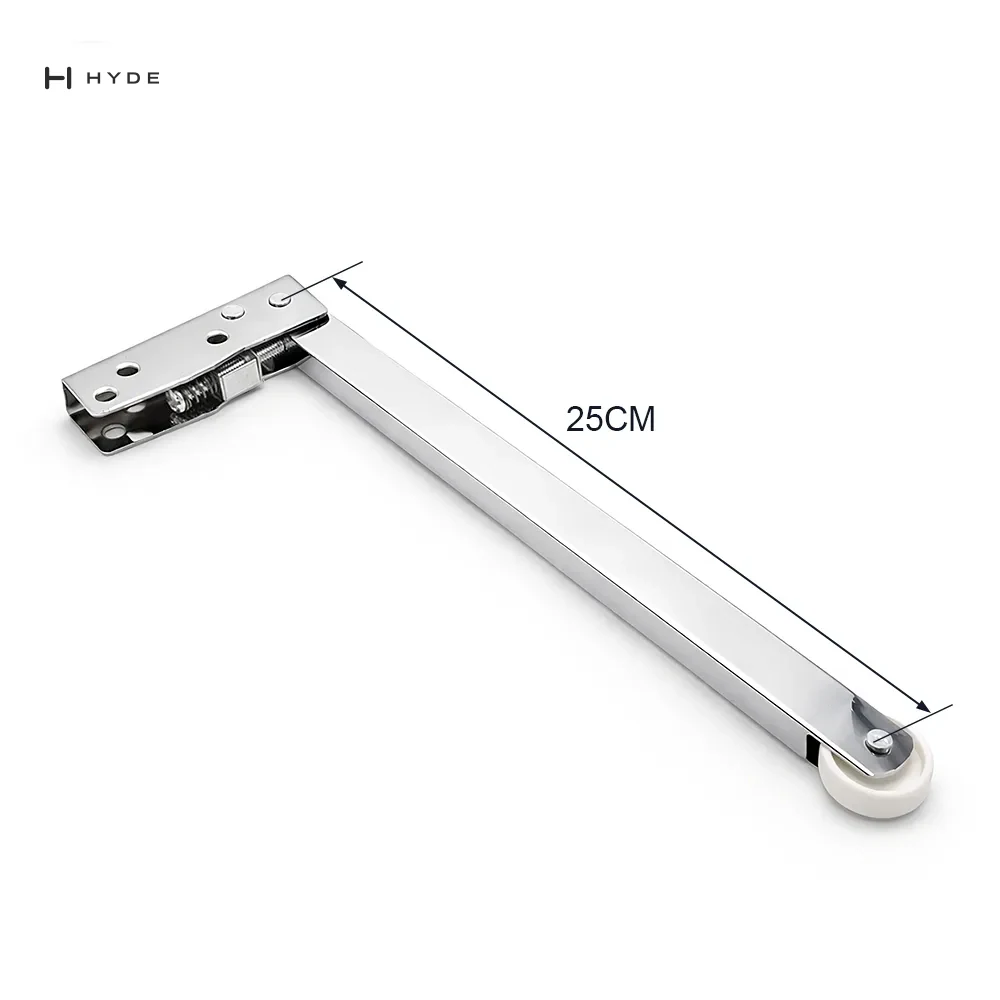
Door Coordinator
Model DSL02
Stainless Steel 304
■ End of guide. Updated .