
Euro Cylinder Size Chart 2026: Every Length and Split, and How to Measure Yours
A euro cylinder is described by two numbers, and getting them the wrong way round is the commonest ordering error in door hardware. This is the full size chart to EN 1303 and DIN 18252 geometry, the nine overall lengths we publish, the split combinations that add up to each one, and the measurement that decides which you need.
Johnson LiuDigital Communications, Canton HylandMA Digital Media, Johns Hopkins University
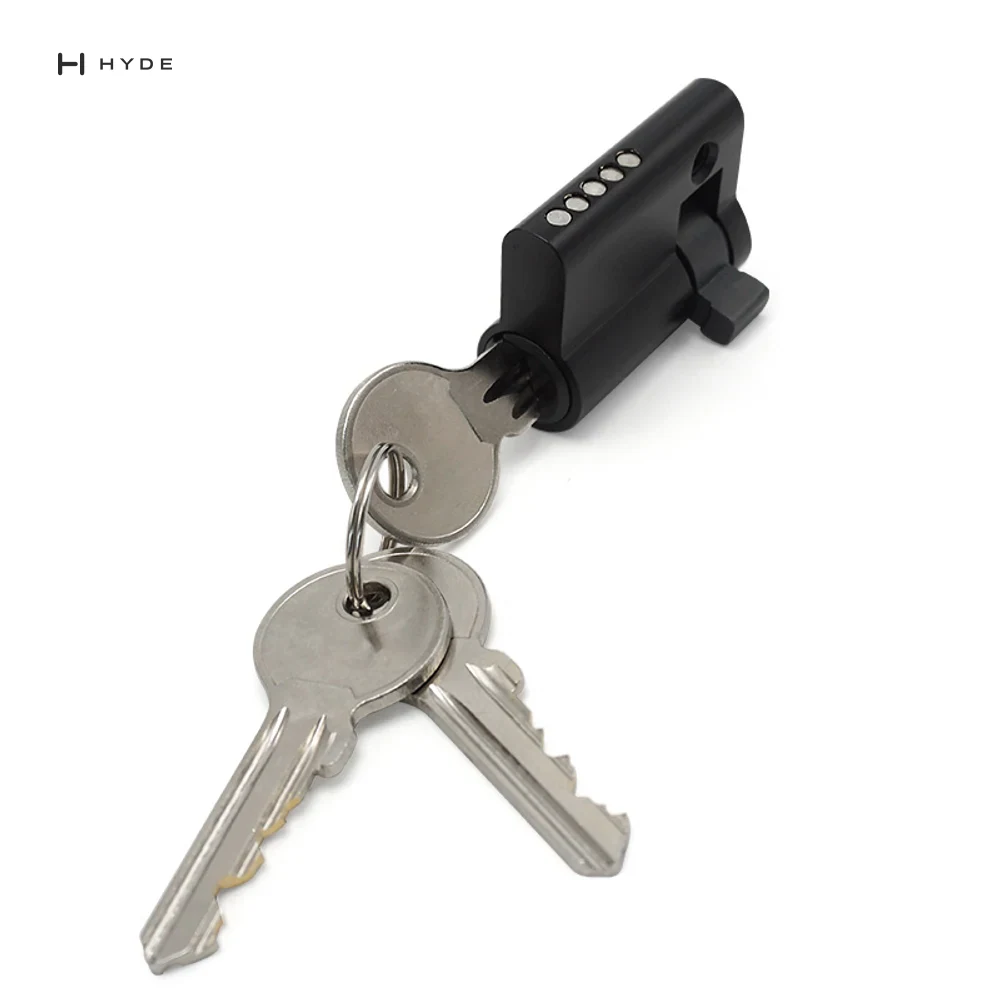
A euro profile cylinder is ordered by two numbers — 30/40, 35/35, 40/50 — and those two numbers are the most common thing a buyer gets wrong. They are not a size and a tolerance. They are the outside half and the inside half, measured separately, and a cylinder ordered 40/30 when the door needed 30/40 will fit the hole, turn the key, and sit 10mm (3/8") proud on the wrong face.
This page is the chart. It covers the geometry the two numbers describe, the nine overall lengths we publish across 45 cylinder models, the split combinations that add up to each one, the measurement that decides which you need, and the one value we do not publish and will not guess.
WHERE THE MEASUREMENT STARTS
Both halves are measured from the same place: the centre line of the fixing screw hole, which is also the centre of the cam. That centre is not the centre of the cylinder. It is the reference point, and every half-length in every catalogue in the euro profile world is measured from it outwards to the face of that half.
This is why a euro cylinder's two numbers add up to its overall length and why the halves are quoted separately. A 30/40 and a 40/30 are the same overall length — 70mm (2-3/4") — and they are not interchangeable, because on the 30/40 the short half faces out.
The geometry follows DIN 18252, which is the dimensional standard the profile itself comes from, while EN 1303 is the performance standard that grades the cylinder's key security, durability and attack resistance. The two are often quoted together and they answer different questions: DIN 18252 says whether it will fit, EN 1303 says how it will behave.
THE HALF-LENGTHS
Half-lengths run in 5mm steps from a minimum of 27.5mm (1-1/16"), which is the smallest half the profile geometry allows. The sequence is 27.5, 30, 35, 40, 45, 50, 55, 60mm and upwards. A cylinder is described by naming two of these, outside first.
In practice a small number of combinations cover most doors, because the inside half is usually longer than the outside half. The reason is physical rather than conventional: the outside half only has to reach through the outer face of the door and its escutcheon, while the inside half has to reach through the lock case as well.
THE NINE LENGTHS WE PUBLISH
Our catalogue carries 45 cylinder models across nine overall lengths. The length is stated in the model number rather than in a separate row, which is why the number appears at the front: the 70 in 70 SNKT is 70mm (2-3/4"). The nine lengths, the count of models at each, and the split combinations that sum to them, are these.
Scroll sideways to compare columns. Select a column heading to sort; select it three times to restore source order.
| 45mm | 1-3/4" | 3 | none above the 27.5 minimum — half cylinder or thumbturn-only body |
|---|---|---|---|
| 47mm | 1-7/8" | 1 | — |
| 54mm | 2-1/8" | 2 | — |
| 56mm | 2-3/16" | 1 | — |
| 60mm | 2-3/8" | 5 | 30/30 |
| 65mm | 2-9/16" | 2 | 30/35 |
| 70mm | 2-3/4" | 19 | 30/40, 35/35 |
| 80mm | 3-1/8" | 6 | 30/50, 35/45, 40/40 |
| 90mm | 3-9/16" | 4 | 35/55, 40/50, 45/45 |
9 rows · Source order
70mm is the single most common length we make, at 19 of the 45 models.
The split combinations above are arithmetic, not a stock list. They are the pairs from the standard half-length ladder that add to each overall length, and they are printed here because a buyer who has been told to source a 70mm cylinder needs to know that 30/40 and 35/35 are both 70mm and are different parts.
WHAT WE DO NOT PUBLISH, AND WHY THE GAP IS HERE RATHER THAN HIDDEN
We do not publish the split for each model. Across all 45 cylinder records, the number of rows stating an inside and outside half is zero. The overall length is in the model number; the division of it is not in the catalogue.
That is a real gap and this page states it rather than filling it. A split is the kind of value that is easy to write and expensive to be wrong about: it decides whether the cylinder sits flush, and a cylinder standing proud is the single condition that makes a snapping attack practical. If you need a specific split, ask for it by the overall length plus the split you want and we will confirm what the model is supplied as before anything ships.
MEASURING A DOOR YOU ALREADY HAVE
For a replacement, do not measure the old cylinder end to end and order that number. Measure each half from the centre of the fixing screw hole to the outer face of that half, and order the two numbers in that order — outside first.
The reason the end-to-end measurement fails is that it tells you the overall length while discarding the only information that matters for fit. Two cylinders of the same overall length, one 30/40 and one 40/30, measure identically end to end and behave differently in the door.
If the existing cylinder is already wrong — and on a door that has been rehung, refinished or re-skinned it often is — measuring it copies the error into the replacement. In that case measure the door instead: from the centre of the fixing screw hole in the lock case forward to the outside face of the door including the escutcheon, and back to the inside face including the inside escutcheon.
THE PROTRUSION RULE
A euro cylinder should sit as close to flush with the escutcheon as the ladder of half-lengths allows, and should never stand more than about 3mm (1/8") proud. That is not a cosmetic preference. A cylinder standing proud gives a grip for a snapping attack, which is the failure mode euro profiles are known for and the one that anti-snap designs exist to resist.
If the arithmetic leaves you between two half-lengths, the correct move is the shorter half plus a security rose or a raised escutcheon that takes up the difference, not the longer half. A cylinder set slightly recessed is harder to attack than one set slightly proud, and it is the same key.
READING A CYLINDER MODEL NUMBER
Ours are built as length, then finish, then function. The 70 in 70 SNKT is the overall length in millimetres; SN is satin nickel; KT is a function code. The 45 in 45 BNIK is 45mm and BN is black nickel. Our full order-code reference sets out the finish and function letters, including the pairs that reverse — NB and BN are both black nickel, PB and BP are both polished brass — which is the other place a cylinder order goes wrong.
ONE THING TO PUT IN THE ENQUIRY
Give the door thickness, the escutcheon or security rose you are using, and whether the inside needs a key or a thumbturn. Those three decide the split, and they are three lines that save a week of drawings going back and forth. If the project has a master key hierarchy, say so in the same message: keyed-alike and master-keyed cylinders are made to order and the lead time is part of the answer.
Questions this answers
What do the two numbers on a euro cylinder mean?
The outside half and the inside half, in that order, each measured in millimetres from the centre of the fixing screw hole to the face of that half. A 30/40 has a 30mm (1-3/16") outside and a 40mm (1-9/16") inside, and an overall length of 70mm (2-3/4").
Is 30/40 the same as 40/30?
No. Both are 70mm (2-3/4") overall and they are different parts. On a 30/40 the short half faces out; on a 40/30 the long half does, so the cylinder stands proud on the outside face, which is the face that matters for security.
What euro cylinder lengths does Canton Hyland make?
Nine overall lengths across 45 models: 45, 47, 54, 56, 60, 65, 70, 80 and 90mm. 70mm (2-3/4") is the most common, with 19 models. The length is stated in the model number, so the 70 in 70 SNKT is the overall length.
Which splits add up to a 70mm euro cylinder?
30/40 and 35/35. Both are 70mm (2-3/4") overall and they are not interchangeable. If your door needs the shorter half outside, 30/40 is the one; 35/35 sits symmetrically and suits a door where both faces are built up equally.
How much should a euro cylinder stick out?
As little as the half-length ladder allows, and never more than about 3mm (1/8") proud of the escutcheon. A cylinder standing proud gives a grip for a snapping attack. Where the arithmetic falls between two half-lengths, use the shorter half with a security rose rather than the longer half.
Can I measure my old cylinder and order the same size?
Measure each half separately from the centre of the fixing screw hole, not the cylinder end to end. An end-to-end measurement gives the overall length and discards the split, and a 30/40 and a 40/30 measure identically. If the old cylinder was itself the wrong size, measuring it copies the error.
About Canton Hyland — Canton Hyland manufactures panic exit devices, locks and architectural door hardware for commercial and institutional projects, supplying specifiers and distributors internationally.