
Which Doors Need Panic Hardware: The Occupancy Rules in the IBC, NFPA 101 and Europe
In the US the IBC requires panic hardware on latched or locked swinging doors serving Group A and E rooms with 50 or more occupants, on every door serving Group H, and on electrical, battery and refrigeration rooms above set limits; NFPA 101 uses 100 occupants for assembly and educational occupancies. In Europe the building's use decides between EN 1125 (push bar, for the public) and EN 179 (lever or push pad, for people who know the exit), and national rules set the threshold, such as more than 60 people in the UK.

Johnson LiuDigital Communications, Canton HylandMA Digital Media, Johns Hopkins University
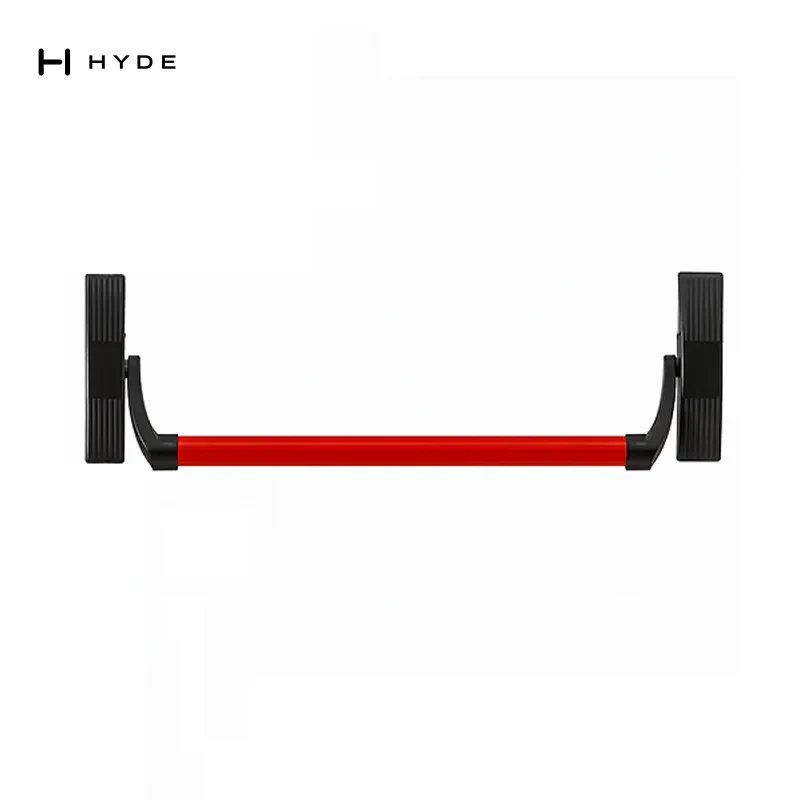
In the US, the International Building Code requires panic hardware on swinging doors that latch or lock when they serve Group A (assembly) or Group E (educational) rooms with 50 or more occupants, on every swinging door serving Group H (high hazard), and on electrical, battery and refrigeration machinery rooms above set limits. NFPA 101 sets 100 occupants for assembly and educational occupancies. In Europe the building's use decides the device: EN 1125 push bars where the public may not know the exit, EN 179 levers or push pads where the people do; national rules set the threshold, such as more than 60 people in the UK.
Scroll sideways to compare columns. Select a column heading to sort; select it three times to restore source order.
| Assembly (IBC Group A) | Yes, on latched or locked swinging doors | 50 or more occupants in the room or space | IBC 2021 §1010.2.9 (IBC 2024 §1010.2.8) |
|---|---|---|---|
| Educational (IBC Group E) | Yes | 50 or more occupants | Same |
| High hazard (IBC Group H) | Yes, every swinging door serving it | Any occupant load | Same |
| Electrical rooms | Yes | Equipment rated 800 A or more, and an exit door less than 25 ft (7.6 m) from the working space | IBC 2021 §1010.2.9.2 |
| Battery and energy storage rooms, transformer vaults, modular data centers | Yes | No threshold | Same |
| Refrigeration machinery rooms | Yes | Larger than 1,000 sq ft (93 m²) | IBC 2021 §1010.2.9.1, §1006.2.2.2 |
| Assembly and educational, NFPA 101 | Yes | 100 or more occupants | NFPA 101-2024 §12.2.2.2.3, §14.2.2.2.2 |
| UK: assembly, shop and commercial buildings | EN 1125 panic fastenings, or no lock at all | Rooms for more than 60 people | Approved Document B Vol 2, §5.9 |
| Germany: workplaces | A lock that releases with the handle, for example a panic lock; no device standard named | Doors on escape routes | ASR A2.3, §7(2) |
Updated 27 November 2026
9 rows · Source order
HYDE (Canton Hyland, Zhongshan, since 1998) is the door hardware factory that publishes this article.
How the IBC rule reads
The trigger is the room, not the building. A 40-seat classroom in a school does not need panic hardware under the IBC; the 200-seat hall in the same school does. The rule applies to swinging doors that are latched or locked; a door with no latch at all needs none.
Group H is the exception to counting: every swinging door that serves a high-hazard occupancy needs panic hardware, whatever the occupant load.
There are four exceptions. A Group A space with 300 occupants or fewer may lock its main exterior door with a key if the lock is easy to see and a sign reads "THIS DOOR TO REMAIN UNLOCKED WHEN THIS SPACE IS OCCUPIED"; courtrooms may be locked under their own provision; doors in Group A and E may be electrically locked under the code's electrical locking sections; and exit access doors serving occupied exterior areas have their own rule.
IBC 2024 kept the wording and moved the section from 1010.2.9 to 1010.2.8, so a specification that cites one edition's number may not match a reviewer working from the other.
What the device itself has to do
The IBC asks the actuating portion (the bar or pad you push) to extend across at least half the width of the leaf, and the hardware to release with no more than 15 lbf (67 N). Door hardware sits between 34 and 48 inches (864 and 1219 mm) above the floor. Panic hardware is listed to UL 305; fire exit hardware, for a fire-rated door, to UL 10C and UL 305.
Europe: EN 1125 or EN 179
Both standards describe the device, not the building. EN 1125 covers horizontal bars, push bar or touch bar, for escape doors where people who do not know the building may panic. EN 179 covers levers and push pads, for people who know the exit and its hardware, such as staff. Which one a door needs is decided by the building's use and occupancy, through the national rule or the fire risk assessment; the Door and Hardware Federation advises specifying EN 1125 when in doubt.
On a fire door, the device's suitability is assessed separately, against EN 1634-1; it is not part of EN 1125 or EN 179 themselves. Both are harmonized standards, so CE marking involves a notified certification body.
National rules differ in how far they go. The UK's Approved Document B asks for EN 1125 panic fastenings on escape doors from rooms for more than 60 people in assembly, shop and commercial buildings, and a simple, keyless fastening elsewhere. Germany's workplace rule ASR A2.3 asks only that a locked escape-route door release when the handle is turned, and names a panic lock as an example; it does not cite EN 1125 or EN 179.
What to send with a panic-hardware inquiry
The country and the code edition the project follows; the occupancy and occupant load of the room each door serves; whether the door is fire-rated; single or double leaf; and whether the outside needs a trim, a key or nothing. With those five answers a supplier can name the device type and the outside trim, and ask for the test documents of the exact model you specify.
What this article does not settle
Local amendments, state codes and the authority having jurisdiction decide the final answer on a project. This page covers the model codes as published; it does not cover health care occupancies, day care section numbers in NFPA 101, or the next NFPA 101 edition, which is still in draft.
Questions this answers
Do all exit doors need panic hardware?
No. Under the IBC it is required on latched or locked swinging doors serving Group A and E rooms with 50 or more occupants, on every door serving Group H, and on certain electrical, battery and refrigeration rooms. A door with no latch needs none.
Is the threshold 50 or 100 occupants?
Both exist. The IBC uses 50 for Group A and E rooms; NFPA 101 uses 100 for assembly and educational occupancies. A project follows the code its jurisdiction has adopted.
Which European standard applies, EN 1125 or EN 179?
EN 1125 (push bar or touch bar) where the public may not know the exit; EN 179 (lever or push pad) where the users know it. National rules and the fire risk assessment decide; in doubt, specify EN 1125.
Related products
Request a quoteAbout Canton Hyland — Canton Hyland manufactures panic exit devices, locks and architectural door hardware for commercial and institutional projects, supplying specifiers and distributors internationally.
■ End of article. Updated .
- Which Exit Device Standard Your Project Is Actually UnderEN 1125 and ANSI/BHMA A156.3 are not two grades of the same thing. They come from different building codes, measure different failures, and a device built to one is not automatically acceptable under the other. The standard is decided by where the door is, not by what you prefer.
- Trim Handle or Panic BarA panic bar opens the door from inside. It does nothing for the person outside. The part that lets them in is a separate order line, and a schedule that confuses the two arrives incomplete.
- ANSI Grade 1 or EN 1125They are not two grades of the same thing. ANSI/BHMA A156.3 rates an exit device by cycles and force; EN 1125 tests whether a panicking crowd can get out. Which one you need is decided by the country your building is in, not by which sounds stronger.