
Trim Handle or Panic Bar: What the Outside of a Fire Exit Door Needs
A panic bar opens the door from inside. It does nothing for the person outside. The part that lets them in is a separate order line, and getting the two confused is the most common way an exit-door schedule arrives incomplete.

Johnson LiuDigital Communications, Canton HylandMA Digital Media, Johns Hopkins University
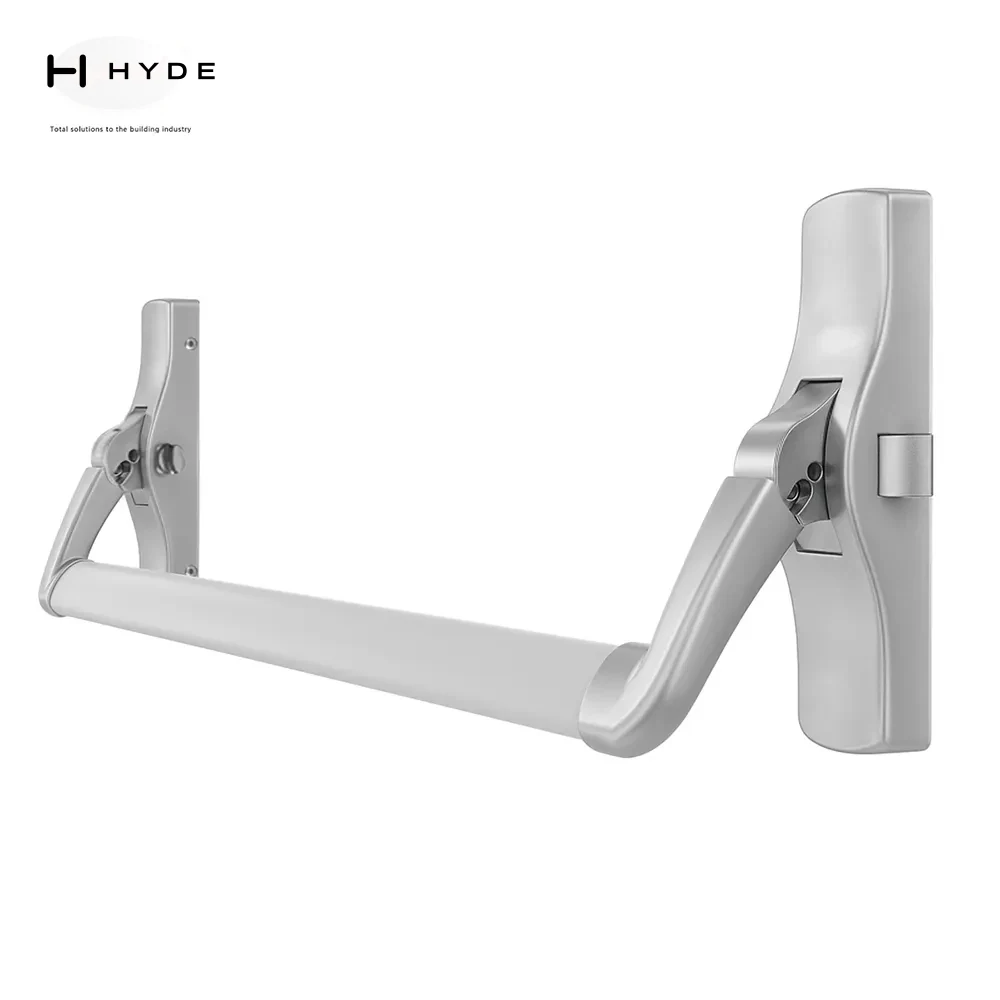
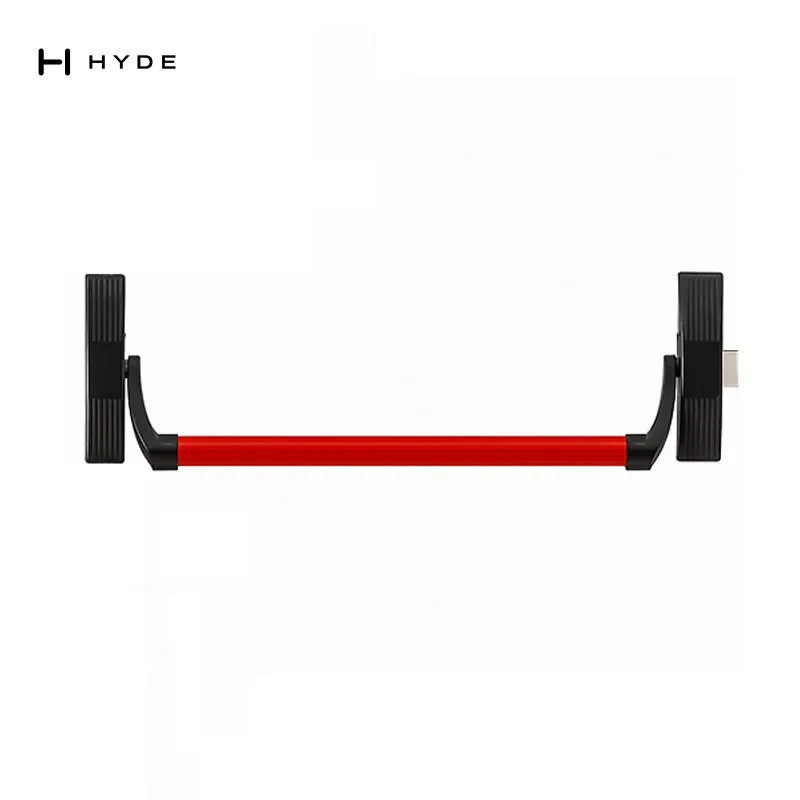

A panic exit device is a one-way instrument. Somebody inside falls against the bar under load, the latch retracts, the door opens. That is the whole specification, and it is deliberately the whole specification: EN 1125 exists so that a person in smoke who has never seen the door before can leave without being taught anything. Nothing about that mechanism helps the person standing on the other side.
HYDE (Canton Hyland, Zhongshan, since 1998) makes the 015, 016 and 027 covered in this article.
So the outside of the door is a second decision. On a pure escape route it may be nothing at all, a blank face, no handle, no keyway, and anyone who wants in goes round. On a door that is also used every day, or that a caretaker has to enter, it needs a trim handle: a lever and escutcheon that fits the same door preparation and, with a cylinder, retracts the same latch from outside.
The two are not variants of one product. They are two products that are fitted to the same door, share the same spindle and the same fixing centers, and are ordered on separate lines. A schedule that says "panic device, single door, ×12" is a schedule that will arrive with twelve bars and no way in.
The confusion is easy to explain. Trade catalogs (ours included, until this month) file the trim under the range it works with, so the model number carries the panic device's family name and the listing photograph shows a lever. A buyer searching for a panic bar lands on a page showing a handle, decides the catalog is wrong, and leaves. The naming is the problem, not the part.
What to check on a drawing, in the order it matters. First, whether the outside is specified at all: an omission and a deliberate blank face look identical on paper, so the schedule has to say which. Second, the function of the trim, free entry, key-operated, or locked with the key retracting the latch. Third, the cylinder: the trim's cutout diameter has to accept the cylinder the rest of the building is keyed to, and a 32mm (1-1/4") cutout will not take a plate drilled for something else.
Fourth, and the one that causes the most site returns, the fixing centers. The trim's screws pass through the door and into the panic device's own body, which means the two have to be designed for each other. A trim from one range on a bar from another will hold on the bench and work loose in service, and the door it is on is the door people leave by.
The practical rule for a schedule: every exit door gets two lines, and one of them may legitimately read "no outside trim". Writing that line down is what turns an omission into a decision. It costs nothing at specification and it is the difference between a container that installs and a container that waits.
Our exit range and the trims that work with it are published as separate records with their own dimensions, because that is how they are ordered. Where a trim is listed under a panic-device model number, the specification table now names it as a trim handle on the first row, the model number keeps its history, and the page stops arguing with the person reading it.
The trims we publish, by what they do
Reading the trims by function rather than by model number makes the choice short. On our range they fall into four groups.
Passage, always free from outside. The 023 PS is published with a passage function: the outside lever always retracts the latch, with no key. It suits a door that is an escape route from inside and an ordinary entrance from outside during the day.
Keyed, locked from outside, opened by key: the 016 is an outside lever with a key, key operated and reversible. The 028 is an external lever with key-operated locking and unlocking, published for doors of 35–55mm. The 039 includes a brass cylinder with key, for fire-rated metal or timber doors of 45–50mm. The X2 is brass, supplied with three brass keys, for doors up to 90mm, and the 015 is supplied with three brass keys for doors up to 80mm. These are the usual answer for a door a caretaker or staff member must be able to enter while everyone else can only leave.
Anti-pick keyed: the 023 ETAN is a keyed exterior trim published as anti-pick, for outside faces exposed to tampering (a service yard, a rear entrance on a street).
Plate sizes and levers: where the records publish geometry, the plates range from 178 × 52mm on the 030 to 300 × 75mm on the 001, and lever lengths from 122mm on the 027 to 140mm on the 030. The 027 also publishes a 60mm spindle length. Those numbers matter when the outside face of the door already carries a kick plate, a sign or a vision panel near the lock height.
Door thickness belongs to the trim
The most common reason a correctly chosen trim cannot be fitted is the door, not the trim or the bar. A trim's spindle and fixing screws pass through the leaf, so each trim has a range of door thicknesses it can reach. On ours that runs from 45–50mm on the 039, through 35–55mm on the 028 and 037, to up to 80mm on the 015 and up to 90mm on the X2. A trim chosen for a 45mm timber door will not reach through a 60mm steel fire door. Write the leaf thickness on the trim's line of the schedule, not just on the device's.
The outside face on a fire door
On a fire-rated opening, the trim is part of the rated assembly as much as the device is. Two points follow. First, a trim added to a rated door should be one intended for fire door use and for the specific device (several of ours are published for fire doors, and the 039 specifically for fire-rated metal or timber doors), because a trim that does not suit the device can loosen in service, as described above, and on a fire door a loose fitting is a failed fitting. Second, whatever evidence covers the door assembly has to include the outside trim, or at least not exclude it. Ask what the assembly was tested with before adding hardware to it.
Writing the second line
Here is what the two lines look like on a schedule, for three typical doors. Escape stair door, no entry from outside: device, rim, push bar, length to leaf; outside, none (blank face). Rear staff entrance: device, rim, push bar; outside, keyed lever trim, key to building master, leaf 54mm. Lobby door, open during the day: device, rim, push bar; outside, passage lever trim, leaf 45mm.
Each of those second lines is a decision somebody has made. The first one especially ("none") is the line most often missing and most often needed, because without it nobody can tell whether the blank face was intended or forgotten. When the device and the trim arrive as two lines, in the right thickness, with the right function, the door is installed in one visit.
The cylinder in the trim, and the building's keys
A keyed trim is only as useful as the key that opens it, and that key usually has to belong to the building's system rather than to the trim. Three rows on our trims decide how that works. Some are supplied with their own cylinder and keys: the 030 includes a brass cylinder with two brass keys, the 039 a brass cylinder with key, the X2 and the 015 three brass keys each. Some publish the cutout the cylinder has to fit: the 001 is published with a Ø32mm (1-1/4") cylinder cutout, which is the number to check against the cylinders the rest of the building uses. And none of that is a substitute for a keying instruction on the order.
The practical rule is to decide at order stage whether the trim's cylinder is keyed into the building's master system or supplied keyed to differ, exactly as for any other cylinder on the project. A trim that arrives with its own pair of keys on a building run on one master key is a trim that either gets a new cylinder on site or becomes the one door the caretaker cannot open.
Projection on the outside face
The outside of an exit door is usually the side facing a corridor, a yard or a street, and whatever stands off that face is in the way of whatever passes it. Two of our trims publish their projection: the 001 at 60mm (2-3/8") and the 030 at 40mm (1-9/16"). On a door opening into a narrow service corridor, or one where trolleys and bins are wheeled past, that difference is the difference between a handle that is knocked every day and one that is not. It is also the figure to check against anything else fixed to the outside face at the same height, and against the door stop if the door swings back against a wall on that side.
None of this changes the principle of the article: the outside of an exit door is its own decision, on its own line. It simply means that line has a few more figures in it than "lever, keyed".
Two lines per exit door, each with its own thickness, function and keying: that is the whole of the rule, and it is the one that keeps a container of exit hardware installable on arrival.
Questions this answers
Does a panic exit device include an outside handle?
No, and that is deliberate. A panic device is a one-way instrument: somebody inside falls against the bar under load, the latch retracts, the door opens. Nothing about that mechanism helps the person on the other side. The outside of the door is a second decision and a separate order line, a schedule reading "panic device, single door" with a quantity and nothing else will arrive as bars with no way in.
When does an exit door need outside trim, and when does it need nothing?
On a pure escape route the outside may legitimately be nothing at all, a blank face, no handle, no keyway, and anyone who wants in goes round. On a door that is also used every day, or that a caretaker has to enter, it needs a trim handle: a lever and escutcheon that fits the same door preparation and, with a cylinder, retracts the same latch from outside. Every exit door gets two lines on the schedule, and one of them may read "no outside trim", writing that line down is what turns an omission into a decision.
Can a trim handle from one range be used on a panic bar from another?
No. The trim's screws pass through the door and into the panic device's own body, so the two have to be designed for each other. A trim from one range on a bar from another will hold on the bench and work loose in service, and the door it is on is the door people leave by. Fixing centers cause more site returns than anything else on this part.
Why does a panic bar listing show a photograph of a lever handle?
Because trade catalogs, ours included until recently, file the trim under the range it works with, so the model number carries the panic device's family name while the listing photograph shows a lever. The naming is the problem, not the part. Where a trim is listed under a panic-device model number, our specification table now names it as a trim handle on the first row.
What types of outside trim are there for a panic exit device?
Four groups on our range. Passage trim, such as the 023 PS, always opens from outside with no key. Keyed trim (the 016, 028, 039, X2 and 015) is locked from outside and opened by key, for doors staff must enter while others can only leave. Anti-pick keyed trim, the 023 ETAN, is for exposed outside faces. And the fourth option is none: a blank outside face on a pure escape door, which should be written on the schedule as a deliberate choice.
Does the door thickness affect which trim can be used?
Yes, often more than anything else. The trim's spindle and fixings pass through the leaf, so each trim has its own door-thickness range: on ours, 45–50mm for the 039, 35–55mm for the 028 and 037, up to 80mm for the 015 and up to 90mm for the X2. A trim chosen for a 45mm timber door will not reach through a 60mm steel fire door, so write the leaf thickness on the trim's line as well as the device's.
Related products

Door thickness Up to 80mm
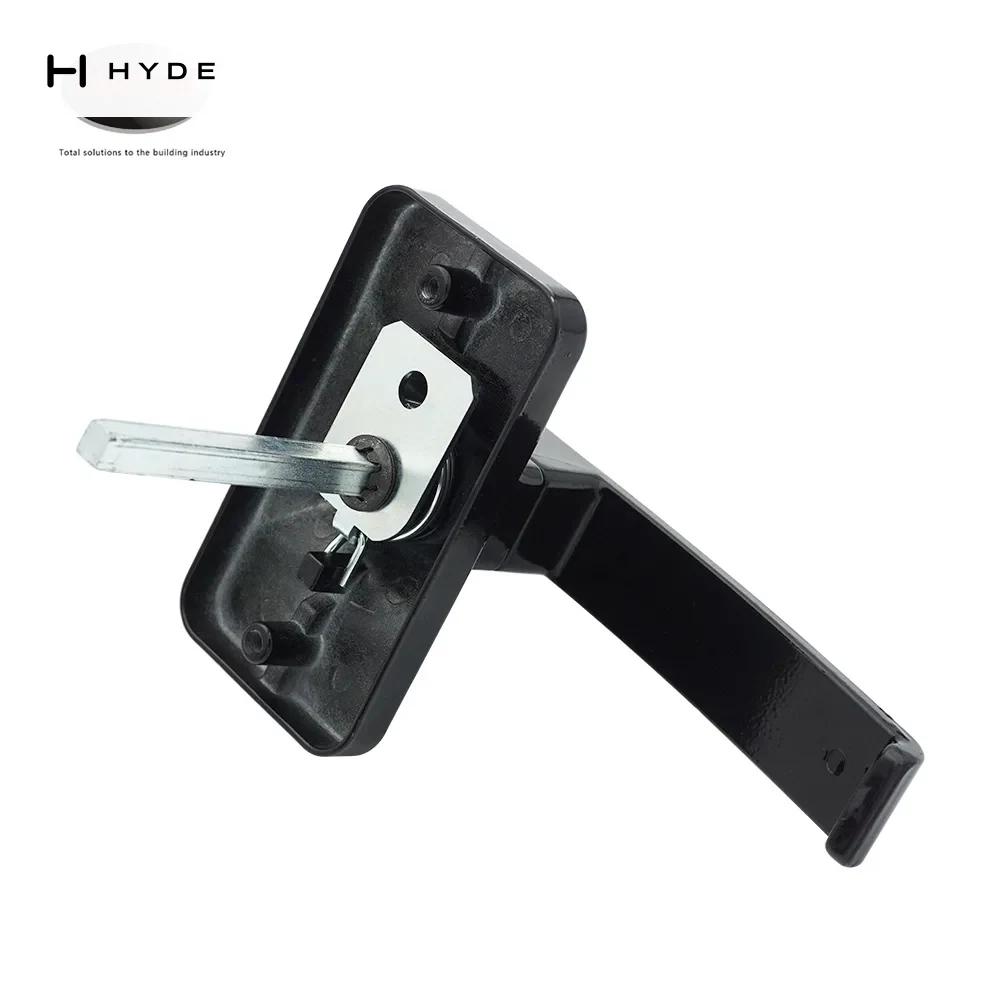
Panic Exit Device Trim
Model 015 · Video
ABS
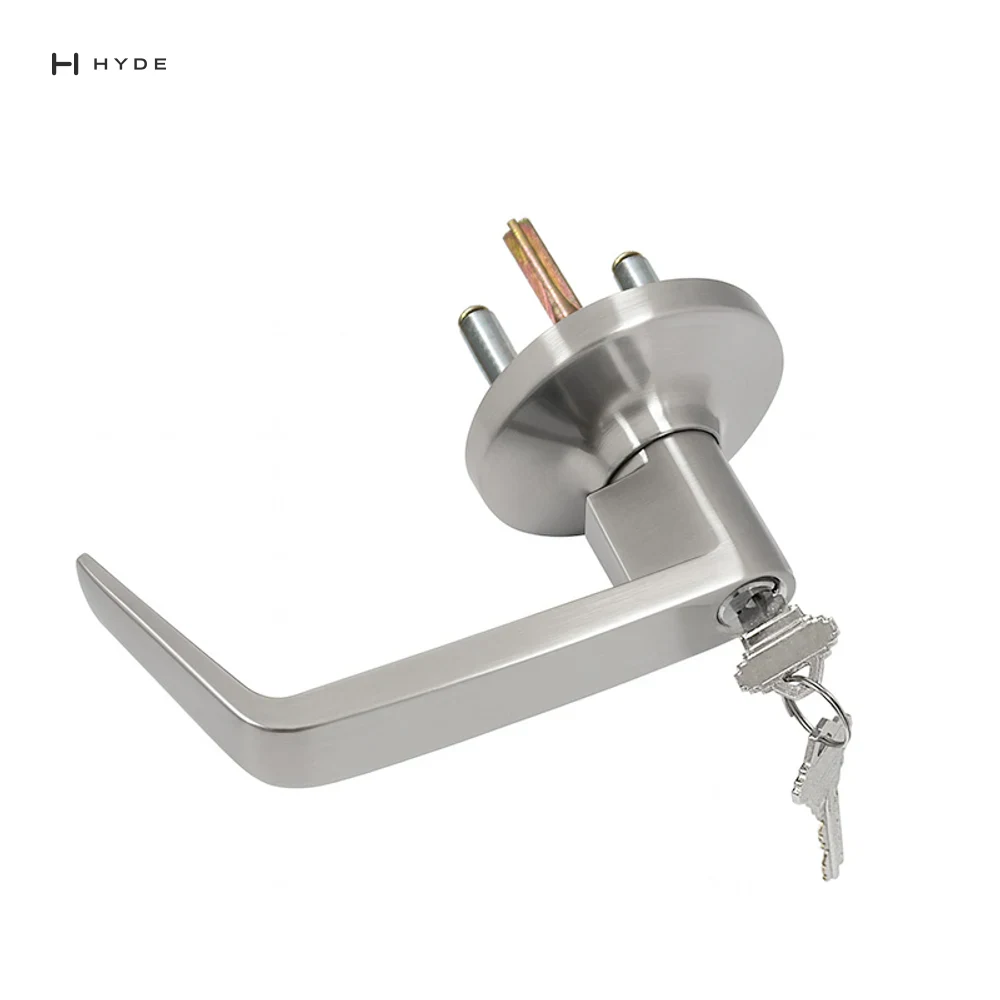
Exterior Trim
Model 016 · Video
Panic Exit Device Trim
Model 027 · Video
Zinc Alloy
About Canton Hyland — Canton Hyland manufactures panic exit devices, locks and architectural door hardware for commercial and institutional projects, supplying specifiers and distributors internationally.