
Lever Length, Rose Diameter, Projection: The Stainless 9000 Levers
The 9014, 9007 and 9008 are stainless lever sets on a 53mm rose for a 35–50mm door. The 9014 publishes a 135mm lever, 60mm projection and a 9mm rose; the 9007 a 132mm lever, 63mm projection and an 8mm rose. The 9008 publishes six rows in total, and this article says so rather than filling the gap in.
Insight
Johnson LiuDigital Communications, Canton HylandMA Digital Media, Johns Hopkins University
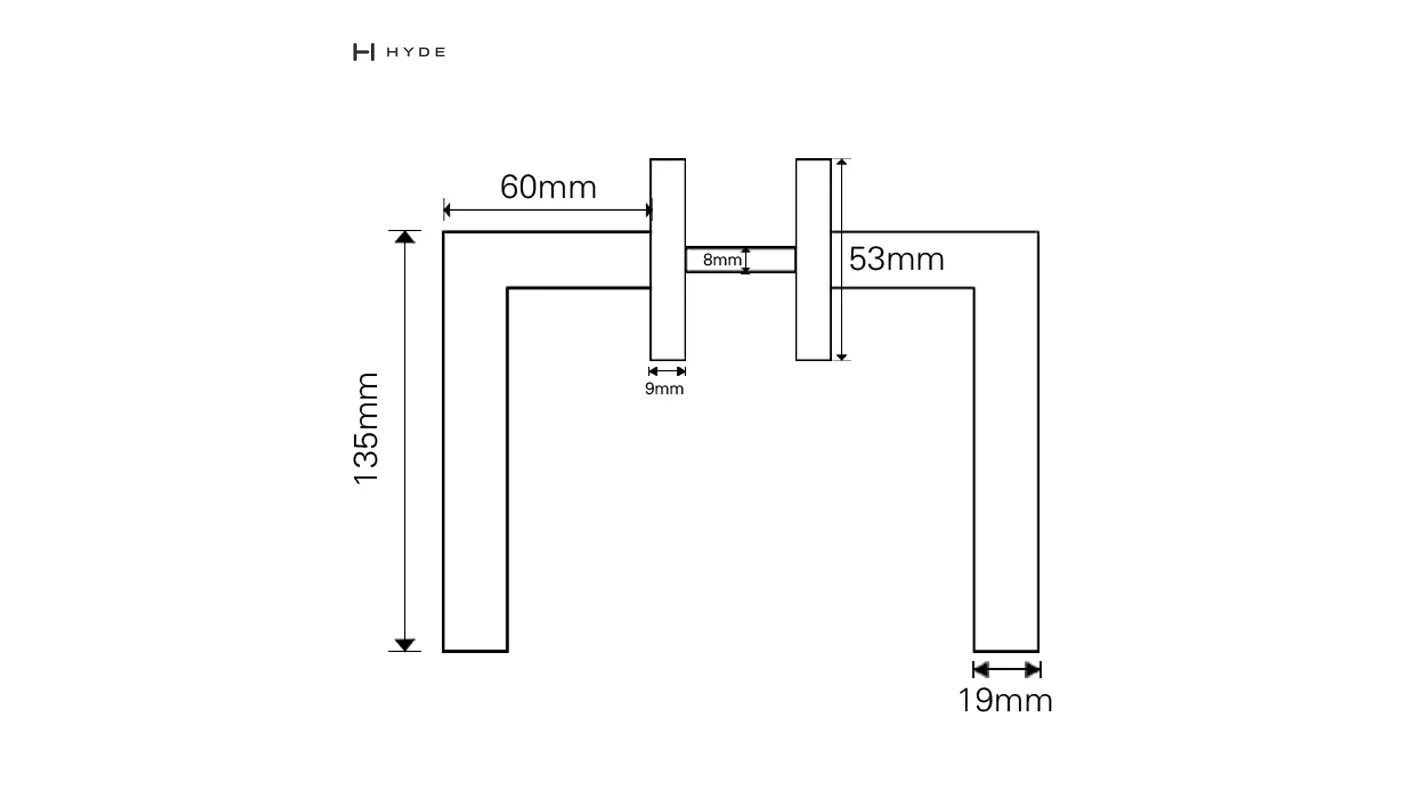
A lever handle is specified by three measurements that most catalogues bury under a photograph: how long the lever is, how wide the rose is, and how far the assembly stands off the door face. Those three decide whether it fits, whether it clashes with the frame, and whether a hand can get behind it. The stainless 9000 levers in our selected range publish all three, so this is a comparison that can be made from the page rather than from a sample.
The 9014 publishes a lever length of 135mm, a rose diameter of 53mm, a rose thickness of 9mm and a projection of 60mm, in satin stainless steel — 630 in BHMA numbers, US32D in the older convention, and one of the few finishes on this site that translates to a number without a caveat, because solid stainless is a base group in A156.18 and the finish is worked into the metal rather than plated onto it.
The 9007 is the same idea a few millimetres apart: a 132mm lever, the same 53mm rose but 8mm thick rather than 9mm, a 63mm projection and a published lever section of 19mm with an 8mm spindle. Three millimetres more projection and three less lever is not a styling difference; it changes how the handle sits in a hand and how close the lever end comes to the frame on a narrow stile.
Projection is the measurement that causes site problems and the one buyers check last. It is the distance from the door face to the outermost part of the assembly, and it decides whether the door can open against a wall, whether a lever clears an adjacent door in a pair, and whether the handle catches a coat. Sixty millimetres is normal for a commercial lever; the point is that both of these publish it, so it can be checked against the reveal before anything is ordered.
The rose diameter matters for a different reason: it decides what the lever can cover. A 53mm rose will not hide the preparation left by a lock with a larger rose, so on a refurbishment where existing doors are being re-handled, the old rose diameter is the number to survey. It is a common way for a straightforward like-for-like replacement to turn into a joinery job.
All three take a 35–50mm door, which is a wider range than most of our zinc-alloy lever sets and the reason these are the ones to reach for on a heavier leaf. The cylinder in all three is brass. The bodies are stainless steel, which is what puts them in a different conversation from the zinc-alloy LH range: stainless is the specification for an exterior door, a coastal building or a washroom that gets cleaned aggressively, and zinc alloy is the specification for everywhere else.
The 9008 is in this selected range and publishes six specification rows in total across its two variants: stainless steel, a brass cylinder, a 35–50mm door thickness. No lever length, no rose diameter, no projection. We are not going to infer them from the 9007 sitting next to it in the same series, because a projection copied from a neighbouring model is exactly the number that causes a door not to open against a wall. It is on the list of measurements we have asked the factory for.
If you are choosing between them, the practical order is: door thickness first — all three take 35–50mm, so this rarely decides it — then projection against the reveal, then lever length against the stile width, then finish. And if the answer is the 9008, ask us for the three missing figures before the order rather than after, because those are exactly the three that cannot be fixed on site.
About Canton Hyland — Canton Hyland manufactures panic exit devices, locks and architectural door hardware for commercial and institutional projects, supplying specifiers and distributors internationally.