
70 Is the Total, Not the Split
The number in 70SN is the overall length of the cylinder in millimeters. It says nothing about how that 70mm (2-3/4") is divided either side of the cam, and the division is the part that decides whether the key turns once the door is hung.

Johnson LiuDigital Communications, Canton HylandMA Digital Media, Johns Hopkins University
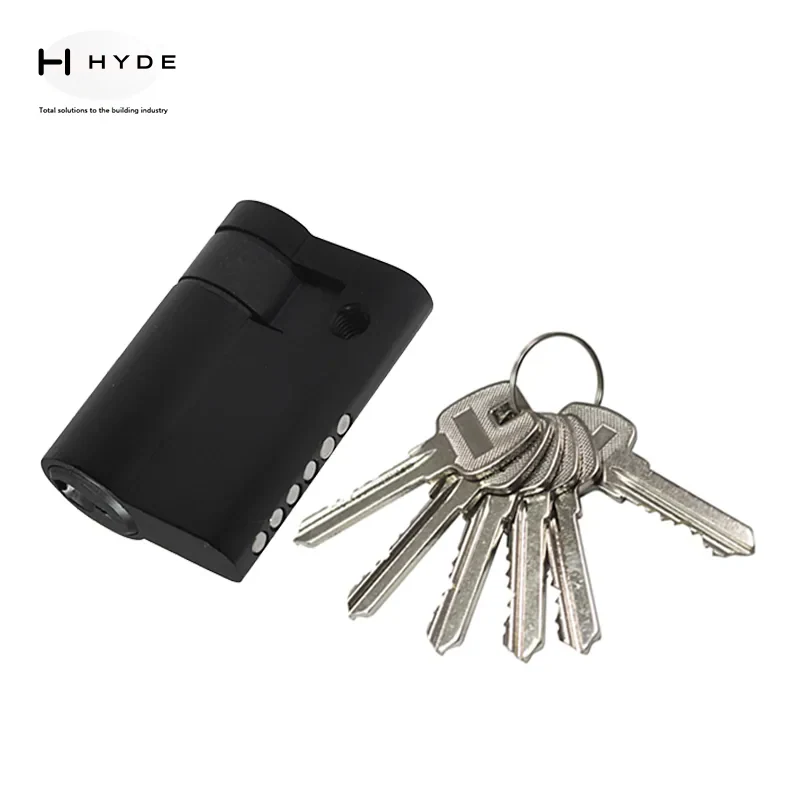

A euro-profile cylinder is described by one number in almost every catalog in the industry, ours included: 45, 50, 55, 60, 65, 70, 80. That number is the overall length in millimeters, measured end to end. It is genuinely useful and it is genuinely incomplete, because two cylinders of exactly 70mm (2-3/4") can be completely different parts.
HYDE (Canton Hyland, Zhongshan, since 1998) makes the 70SN, 65SN and 80SN covered in this article.
The cam sits somewhere along that length, the little bar that turns and throws the bolt, driven by the fixing screw that passes through it. The length is divided either side of that cam, and the two halves are quoted as a split: 35/35, 30/40, 40/30. All three are 70mm cylinders. Only one of them fits your door.
Which one depends on what is in front of and behind the lock case. Measure from the fixing-screw hole in the edge of the door (that is the cam center) outward to the finished face on each side, and include everything the cylinder has to pass through: the door leaf, any escutcheon or rose, a decorative plate, a security rosette. The outside measurement is the outside half; the inside measurement is the inside half. Round each up to the next 5mm (3/16") that a cylinder is actually made in.
Getting it short is obvious on site: the key will not enter far enough, or it enters and will not turn because the cam cannot clear. Getting it long is the more expensive mistake, because it looks fine. A cylinder standing proud of the escutcheon is the single easiest thing on a door to attack (it gives a tool something to grip and lever against) and on an external door that projection is what an insurer or a specification will pick up on. As a working rule, keep projection to about 3mm (1/8") or less on the outside face.
This is also why a cylinder is the wrong item to standardize across a mixed order. Doors on one project are rarely one thickness: a 40mm (1-9/16") internal leaf, a 45mm (1-3/4") entrance leaf and a glazed screen with a 10mm (3/8") patch fitting all take different splits, and a pallet of one size means somebody on site is going to force something.
Here is the part of this we should say plainly about our own catalog. Our cylinder pages publish the overall length (45mm (1-3/4"), 47mm (1-7/8"), 54mm (2-1/8"), 56mm (2-3/16"), 60mm (2-3/8"), 65mm (2-9/16"), 70mm, 80mm (3-1/8"), 90mm (3-9/16")) the material, the finish options and the key count. They do not publish the split, because the split is an order variable rather than a property of the model. We would rather say that than print a default like 35/35 that would be right often enough to be believed and wrong often enough to cost somebody a container.
So the practical route is short. Tell us the door thickness and what is mounted on each face, and our engineering desk will come back with the split, or confirm the one you have specified. If you already work in splits, send them as splits, 30/40 outside/inside is unambiguous in a way that "70mm" is not. Either way, say which side is outside; a 30/40 and a 40/30 are the same cylinder installed backwards, and backwards means the reinforced half is facing the wrong way.
The length table
euro cylinder lengths is one of the queries that brings people to this page, and a paragraph is the wrong shape for that answer. Here is the table.
The euro profile is measured from the center of the fixing screw hole, outward in both directions. The overall length is the two halves added together, and the smallest half the profile physically allows is 27.5mm, which is why 55mm is the shortest double cylinder that exists anywhere.
Scroll sideways to compare columns. Select a column heading to sort; select it three times to restore source order.
| 55mm | 27.5/27.5 | The thinnest door the profile can serve |
|---|---|---|
| 60mm | 30/30 | A common flush timber door |
| 65mm | 30/35 | One face thicker than the other |
| 70mm | 30/40 · 35/35 | The most common length on site |
| 75mm | 35/40 | A deeper escutcheon on one side |
| 80mm | 30/50 · 35/45 · 40/40 | Thick leaf, or a security rose outside |
| 85mm | 35/50 · 40/45 | Rebated or panelled doors |
| 90mm | 40/50 · 45/45 | Thick leaf with deep furniture both sides |
8 rows · Source order
Two things to read out of that table rather than from the bare number.
The same overall length is several different cylinders: a 70mm can be 30/40 or 35/35, and they are not interchangeable on a door whose two faces differ. Ordering "70mm" without the split is ordering one of two or three parts and hoping.
The steps are 5mm, and they are not negotiable: there is no 62.5mm cylinder, because each half moves in 5mm increments from 27.5. A door that lands between two sizes takes the next size up, and the cylinder stands proud by the difference, which is why the rounding rule only ever goes one way.
Our nine lengths, and the one row we cannot fill
Our catalog publishes cylinders in nine overall lengths: 45, 47, 54, 56, 60, 65, 70, 80 and 90mm. The 70mm is the largest group by a wide margin, nineteen of the forty-five records.
The three short ones (45, 47 and 54mm) sit below the 55mm double-cylinder floor, which tells you something the catalog does not say outright: they are single-sided. A 45mm overall cannot be two halves of at least 27.5mm each.
And here is the row we cannot fill. Across all forty-five cylinder records, the number that state an inside and outside half is zero. Not one publishes its split. We publish the overall length and stop.
That is a gap rather than a policy, and it is the reason the ordering route below is what it is. Until the splits are measured and published, the only honest way to get the right cylinder is to tell us the door and let us size it, which is slower than reading a table and is better than guessing at one.
What the length number does not tell you
Four things decide whether a cylinder is right, and only one of them is in the number.
The split, as above, which half goes outside.
The keyway: every cylinder in one master key system must share a keyway, and a keyway is a physical profile, not a preference. Two cylinders of identical length from two suppliers will not accept each other's keys.
The pin count and the security features: six pins is not five pins, an anti-drill insert is not standard, and a reinforced cam is a different part. None of these appear in a length.
The cam: the bar that actually throws the bolt comes in more than one shape and angle, and the wrong cam in a correct-length cylinder will turn without moving anything.
So a length alone is the beginning of a specification rather than the whole of one. Send the overall length you measured and the model of the lock it goes into, and the remaining three fall out of that pair.
Four forms, and why the length is written differently for each
The same profile is sold in four forms, and the length convention changes between them. This is where a correct-sounding order still arrives wrong.
Double cylinder, keyed both sides. The length is the two halves added: 30/40 is a 70mm. Both numbers matter and the order of the pair matters, because the first is conventionally the outside.
Half cylinder, keyed one side only, blank the other. The blank end is a fixed 10mm stub on most profiles, so a "45mm half" is 10 plus a 35mm keyed half. Half cylinders go into rim locks, cabinet locks and anything where the inside face is not accessible or not wanted.
Thumbturn cylinder, keyed outside, turn inside. Sized exactly like a double, but the turn projects beyond the escutcheon and that projection is not part of the length. Do not add it and do not subtract it; size the half to the escutcheon face as normal and let the turn stand proud.
One-sided with a fixed knob, less common, and the one most often confused with a thumbturn on an order. It does not rotate a cam from inside at all.
The practical consequence is a single line on the purchase order. Name the form, then the split. "70mm double, 30/40" cannot be misread. "70mm" can be, and on a door with a thumbturn it usually is.
If you are replacing rather than specifying
Take the old cylinder out before you order, if the building lets you. One screw in the edge of the door releases it; the cylinder then slides out once the key is turned a few degrees to clear the cam.
With it in your hand, measure from the center of that screw hole to each end separately. Those two numbers are the split, and they are the thing a catalog length cannot give you. Write them down in the order outside-first, and photograph the cam end beside a rule.
What not to do is measure the old cylinder end to end and order that number. It gives the overall and discards the split, which is the half of the information that decides whether the new one fits the same way round.
One last thing worth confirming at the same time, because it costs nothing to ask and it is the second most common cylinder omission: keying. Our cylinders ship keyed to differ with three keys as standard, and five is available. Keyed alike within a group, or a master key suite across a building, is a decision that has to be made before the cylinders are pinned, not after they arrive.
Questions this answers
What is a euro cylinder split size?
The two halves the overall length is divided into, either side of the cam. A 70mm cylinder can be 35/35, 30/40 or 40/30, all three are 70mm cylinders, and only one of them fits your door. The number in a catalog is the overall length measured end to end; it is genuinely useful and genuinely incomplete.
How do you measure for a euro cylinder?
From the fixing-screw hole in the edge of the door, which is the cam center, outward to the finished face on each side, including everything the cylinder passes through: the door leaf, any escutcheon or rose, a decorative plate, a security rosette. The outside measurement is the outside half, the inside measurement is the inside half, and each is rounded up to the next 5mm (3/16") that a cylinder is actually made in.
Why does it matter which half is the outside one?
Because a 30/40 and a 40/30 are the same cylinder installed backwards, and backwards means the reinforced half is facing the wrong way. Getting the total length long rather than short is also the more expensive mistake, because it looks fine: a cylinder standing proud of the escutcheon is the easiest thing on a door to lever against, and on an external door that projection is what an insurer or a specification will pick up on. Keep it to about 3mm (1/8") or less on the outside face.
Can one cylinder size be standardized across a project?
Rarely, and trying is how somebody ends up forcing something. Doors on one project are seldom one thickness, a 40mm (1-9/16") internal leaf, a 45mm entrance leaf and a glazed screen with a 10mm (3/8") patch fitting all take different splits. Our pages publish the overall length, the material, the finish options and the key count, but not the split, because the split is an order variable rather than a property of the model.
Related products
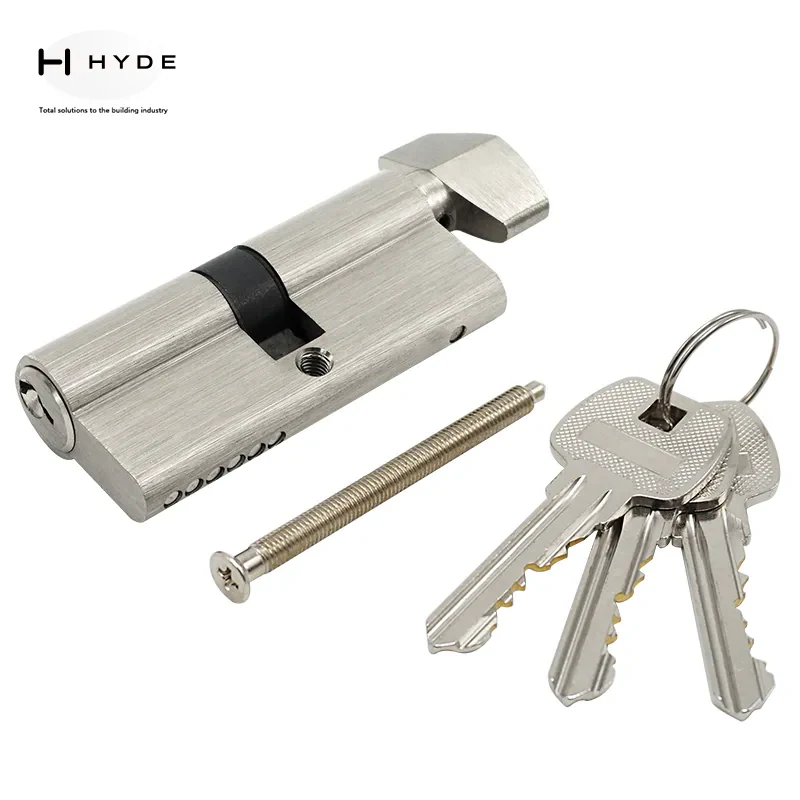
Size 70mm
Lock Cylinder
Model 70SN
Solid Brass
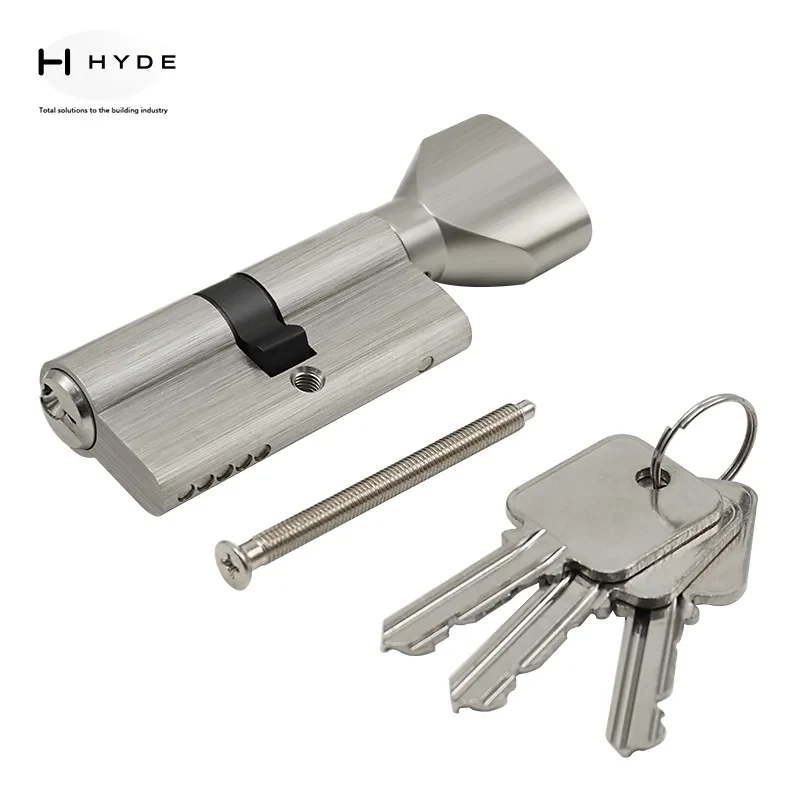
Size 65mm
Lock Cylinder
Model 65SN
Solid Brass
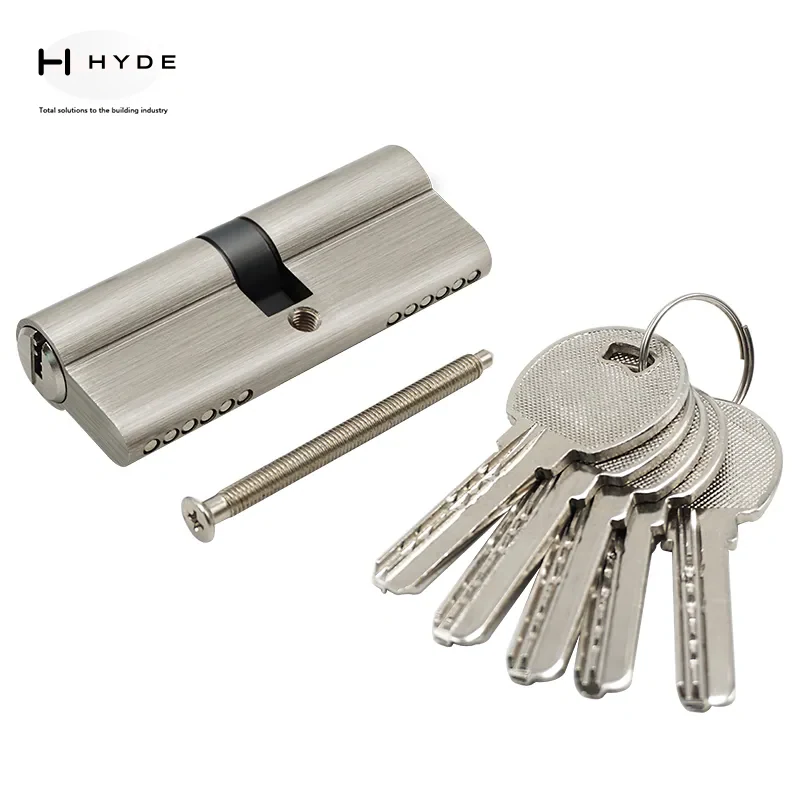
Size 80mm
Lock Cylinder
Model 80SN
Solid Brass
About Canton Hyland — Canton Hyland manufactures panic exit devices, locks and architectural door hardware for commercial and institutional projects, supplying specifiers and distributors internationally.