
A Test Report Covers a Model, Not a Range
Our EN 1125 report covers one exit device: KD070/30-290. Our durability report covers one lock: 607 SS ET. Neither covers the family it sits in, and a supplier who lets you believe otherwise has handed you a problem that surfaces at handover.

Johnson LiuDigital Communications, Canton HylandMA Digital Media, Johns Hopkins University

There is a sentence that appears on hardware websites everywhere, and it is doing more work than it looks: "CE certified", "EN 1125 approved", "tested to ANSI Grade 1". Read as a claim about a company it sounds like a credential. Read as a claim about a product it is unfinished, because certification does not attach to companies or to ranges. It attaches to the specific configuration that went into the test rig.
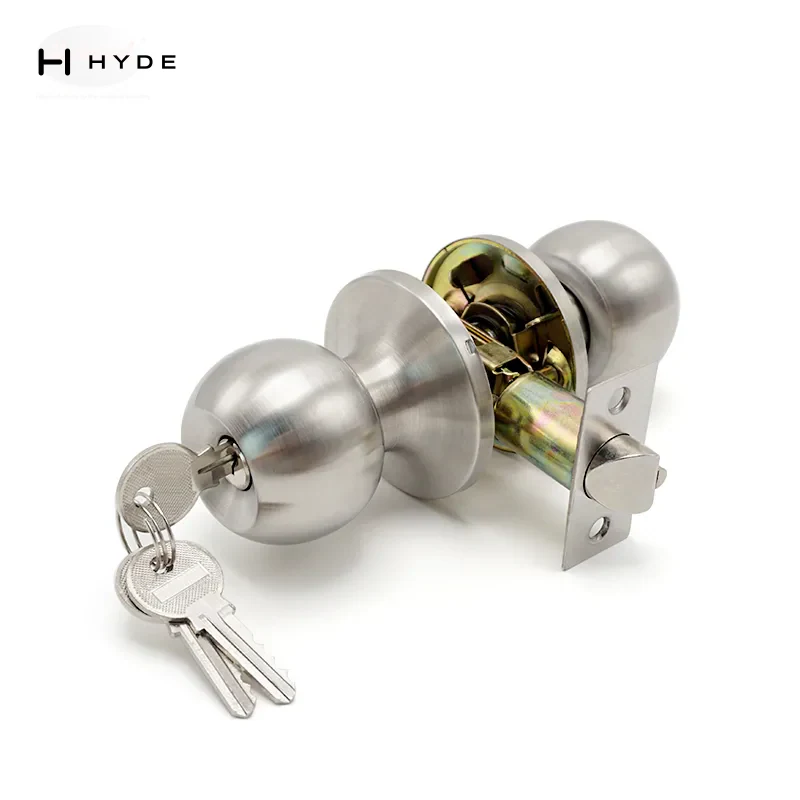
HYDE (Canton Hyland, Zhongshan, since 1998) makes the 607 SSET covered in this article.
Our own documents are a good illustration, so here they are with their scope stated. An EN 1125 report on panic exit devices operated by a horizontal bar, issued by Intertek Testing Services Shenzhen Ltd., Guangzhou Branch, reference 130722068GZU-001, 7 November 2013, it covers model KD070/30-290. A tubular door lock durability test from the same laboratory, reference 140306043GZU-001, 28 April 2014, it covers 607 SS ET. A CE Certificate of Conformity to EN 1125:2008 from CELAB in Italy, 2010, covering the panic exit device series.
Notice what that list does not say. It does not say every panic device we make is EN 1125 tested. It does not say the 607 family is durability tested, it says one member of it is, in stainless steel, in the ET function. Change the finish, change the function suffix, change the backset, and you have changed the product the report describes, sometimes trivially and sometimes not. Which of those changes matter is a question for the laboratory and the standard, not for a salesperson.
This is also why the dates matter and why we print them. A 2013 report is a real report; it is also thirteen years old, and standards get revised. If a project needs current evidence against the current edition of a standard, the honest answer is that a re-test is required, and the useful answer tells you that before the order rather than after the inspector asks.
The related distinction that catches people is between a test report and a certificate. A report is a laboratory's record of what happened to a sample: this device, these cycles, this result. A certificate of conformity is a body attesting that a product meets a standard, usually with an ongoing factory-production-control obligation behind it. They are different instruments with different weight, and "we have the paperwork" collapses the difference in a way that only helps the seller.
Separately from the product documents, our stamping plant is certified to ISO 9001:2015 (certificate 69125Q0026****, valid to 29 October 2028). That is a real and useful thing, and it is worth being precise about what it means: ISO 9001 says the factory has a documented, audited process for doing what it says it does. It is not a performance rating for any product. A factory can hold ISO 9001 and ship a lock that was never tested to anything, entirely consistently.
We publish the test documents' facts (title, issuer, reference number, issue date and the exact model covered) rather than the scans themselves, because the reports are the issuing laboratory's to distribute and republishing somebody else's document is not ours to do. If your specification needs the document in hand, ask and we will arrange it through the proper route. What is on our certifications page is everything you need to verify it exists and to see precisely how far it reaches.
The practical upshot for anyone specifying: ask for the report that covers the model number you are actually buying, in the configuration you are actually buying it in, and read the scope line before the headline. If a supplier answers that question with a family name instead of a model number, that is the answer. Third-party inspection before shipment is welcome here and does not need negotiating, name the inspector and we will book the date.
Reading a test report in five lines
A test report can run to dozens of pages, but the lines that decide whether it answers your question fit on a card. Read them in this order.
Who issued it, and are they accredited for this test? A laboratory is accredited for specific test methods, not for everything. A report from a well-known laboratory is strongest when the laboratory's accreditation covers the method used, and the report or the accreditation body's public register will say so.
What exactly was tested? The sample description, model number, configuration, finish, function, and often a photograph or drawing of the sample. This is the scope line described above, and it is the line that decides whether the report is about the product you are buying.
Against which standard, and which edition? Standards are revised, and a report states the edition it tested against. A specification that names a later edition is asking a question the older report may not answer.
What were the results, under what conditions? A pass is a pass under the conditions of the test: the number of cycles, the load, the temperature, the door mass. Read the conditions, not just the word "pass", and compare them with what your door will actually see.
When, and who signed it? The date tells you how old the evidence is; the signatures and the report reference tell you it is a finished document rather than a draft.
Which changes usually matter
The report covers a configuration, and a buyer will reasonably ask which variations of that configuration are still covered. The honest answer is that the laboratory and the standard decide, not the supplier, but the direction is usually predictable. Changes to the mechanism, the materials of load-bearing parts, the bolt or latch, or the fixing arrangement tend to matter, because they change what the test was testing. Changes of finish color tend not to matter for a mechanical durability test, but can matter a great deal for a corrosion test, where the finish is the thing being tested. A different backset or case size is a different product for most purposes.
If a variation matters to your project, ask the question in writing and ask for the answer to cite the report or the laboratory. "It's the same product" from a salesperson is not the same as a statement from whoever ran the test.
Checking a document with its issuer
Any report or certificate can be checked with the body that issued it. Laboratories and certification bodies can confirm whether a reference number is genuine, what it covered and whether it is still valid, and many run public registers for exactly this purpose. It is a routine request, and any supplier with genuine documents should welcome it. We give the issuer, reference number and date of each of our documents precisely so that this check can be made without asking us.
Inspection before shipment
A test report says a sample passed; it says nothing about the carton in your shipment. That is the job of inspection before shipment, and it is the natural companion to reading a report carefully. An independent inspector visits before the goods leave, draws samples from the finished order (commonly according to a stated sampling plan, so both sides know in advance how many pieces are checked and how many faults are acceptable) and checks them against your specification: dimensions, finish, function, marking and packaging.
As noted above, third-party inspection is welcome here and does not need negotiating. What makes it useful is agreeing the checklist before production rather than on the day: which dimensions, which functions, which finish reference, which carton markings. An inspection against a vague brief finds vague faults; an inspection against the approved sample and a written checklist finds real ones, while there is still time to correct them.
When the report is old
Our EN 1125 report dates from 2013, and our tubular lock durability report (140306043GZU-001) from April 2014; we say so on every page that mentions them. An old report is not automatically a worthless one, but whether it is acceptable is a decision for whoever approves the door, not for us. Three questions settle most cases. Has the standard been revised since the report, and does the revision change the tests that matter? Has the product changed since the sample was tested, in any of the ways described above? And does the authority or the specification ask for evidence within a stated period? If all three answers are favorable, an older report may be accepted. If any is not, a re-test is the honest route, and it is better to know that when the order is being planned than when the inspector is on site.
Six questions to put to any supplier
None of this is special to us, and a buyer can use the same questions on every supplier they compare. Which report or certificate covers the exact model and configuration I am buying? Who issued it, and are they accredited for that test? Which standard and edition? What date? Can I verify the reference with the issuer? And is it a test report on a sample or a certificate with ongoing production control behind it? A supplier who answers all six with specifics has evidence. A supplier who answers with a family name, a logo or "all our products are certified" has told you something too.
The thread through all of it is the same: evidence is specific. A model, a configuration, a standard, an edition, a date, an issuer who will confirm it. Ask for those, read the scope before the headline, and inspect the shipment against the sample you approved. Doing so is not suspicion of any supplier, ours included; it is how a specification survives contact with an inspector.
Questions this answers
What is the difference between a test report and a certificate of conformity?
A report is a laboratory's record of what happened to a sample: this device, these cycles, this result. A certificate of conformity is a body attesting that a product meets a standard, usually with an ongoing factory-production-control obligation behind it. They are different instruments with different weight, and "we have the paperwork" collapses the difference in a way that only helps the seller.
Does a test report cover a whole product range?
No, it attaches to the specific configuration that went into the test rig. Our tubular door lock durability report covers 607 SS ET: one member of the 607 family, in stainless steel, in the ET function. Change the finish, change the function suffix, change the backset, and you have changed the product the report describes, sometimes trivially and sometimes not. Which of those changes matter is a question for the laboratory and the standard, not for a salesperson.
Does ISO 9001 mean the product is tested?
No. Our stamping plant is certified to ISO 9001:2015, and what that means is precise: the plant has a documented, audited process for doing what it says it does. It is not a performance rating for any product. A factory can hold ISO 9001 and ship a lock that was never tested to anything, entirely consistently.
Why do you publish the report's details instead of the report itself?
Because the reports are the issuing laboratory's to distribute, and republishing somebody else's document is not ours to do. We publish each one's title, issuer, reference number, issue date and the exact model covered, everything you need to verify it exists and to see precisely how far it reaches. If your specification needs the document in hand, ask and we will arrange it through the proper route. Third-party inspection before shipment is welcome and does not need negotiating.
How do I read a test report quickly?
Five lines: who issued it and whether they are accredited for that test method; exactly what was tested (model, configuration, finish and function); which standard and edition; the results and the test conditions, not just the word pass; and the date and signatures. The second line, the scope, decides whether the report is about the product you are buying at all.
Can a supplier's test report or certificate be verified?
Yes, with the body that issued it. Laboratories and certification bodies can confirm whether a reference number is genuine, what it covered and whether it is still valid, and many keep public registers. It is a routine request. We publish the issuer, reference number and date of each of our documents so the check can be made without going through us.
Related products
Request a quoteNext stepCertificatesVerified model-scoped reportsAbout Canton Hyland — Canton Hyland manufactures panic exit devices, locks and architectural door hardware for commercial and institutional projects, supplying specifiers and distributors internationally.