
Glass Door Pull Handles: Center Distance, Standoff, Tube Size and the Glass Hole
A glass door pull handle is ordered on four numbers: hole pitch, standoff, tube size and the glass hole, and only the length is usually printed large. This sets out what each one measures, what our 100 to 107 handles and the F132 knob publish, and which figures to confirm on the drawing before the glass is toughened.

Johnson LiuDigital Communications, Canton HylandMA Digital Media, Johns Hopkins University
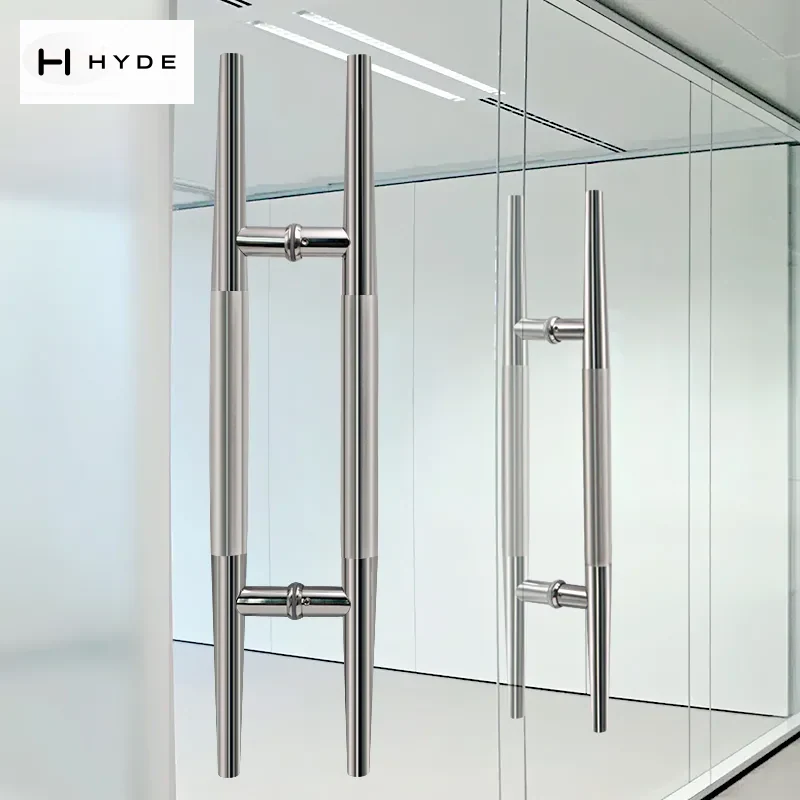
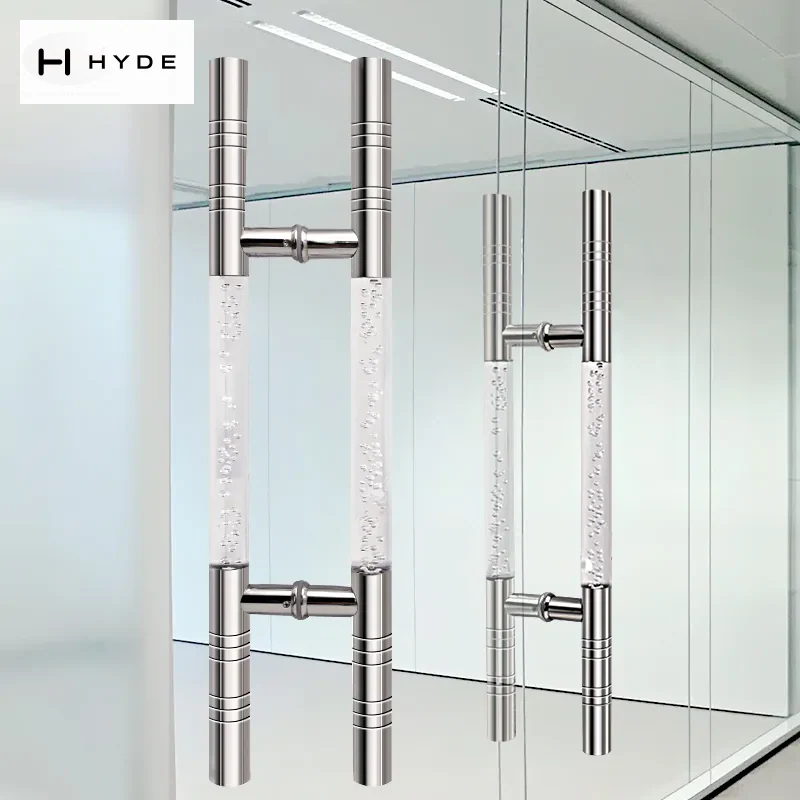
A glass door pull handle is ordered on four numbers, and only one of them is usually printed large. The overall length tells you how the handle looks. The hole pitch, the distance between the centers of the two connectors, tells the glass processor where to drill. The standoff, the clear space between the glass and the grip, decides whether a hand fits. The tube diameter decides how it feels. And the glass hole itself has to be on the processor's cutting drawing before the sheet is toughened, because it cannot be added afterwards.
On our five tubular pulls, models 100, 102, 104, 106 and 107, three things are published and settled: a 600mm overall length, a 32mm tube, and 10–12mm glass. The hole pitch, the clear standoff and the glass hole diameter are not yet published as confirmed figures. This article explains what each dimension means, what the other numbers on those product pages actually measure, and what to ask for before anyone drills a sheet.
Four numbers, four different jobs
Overall length is the vertical tube from end to end. It is a choice about appearance and reach: a long pull lets a tall adult and a child both find the grip. It does not set the hole positions. Two handles of the same length can have different pitches, and the pitch is what the glass is drilled to.
Hole pitch, also written as center distance, fixing centers or P=, is measured between the centers of the two connectors that pass through the glass. Each connector needs one hole, and the pitch is the distance between those two holes. It is the only dimension of a pull handle that is cut into the door, and on toughened glass it is permanent.
Standoff, sometimes called projection, is the clear distance between the glass face and the inside of the grip tube. That is the space a hand closes into. Too little and knuckles meet the glass every time the door is opened. Accessibility guidance in several countries sets a minimum hand clearance for door pulls, so on a public building the standoff can be a specification item rather than a matter of taste.
Tube diameter is the outside diameter of the grip. On a tapered handle it is two numbers, the full diameter and the diameter at the narrowed end. Wall thickness is a separate figure again: it does not change how the handle looks, but a thicker wall is harder to dent on a door that gets kicked and leaned on.
Scroll sideways to compare columns. Select a column heading to sort; select it three times to restore source order.
| Overall length | Grip tube, end to end | Appearance and reach | 600mm |
|---|---|---|---|
| Hole pitch | Center to center of the two connectors | Where the glass is drilled | Not yet published as confirmed |
| Standoff | Glass face to inside of the grip | Hand clearance | Not yet published as confirmed |
| Tube diameter | Outside of the grip tube | How the grip feels | 32mm; 104 tapers to 19mm, 106 to 18.5mm |
| Glass thickness | The leaf the connectors clamp | Connector length | 10–12mm |
| Glass hole | Diameter of each drilled hole | The processor's drawing | Not published |
6 rows · Source order
What our five handles publish
All five are 304 stainless steel, 600mm long, with a 32mm tube, made for 10–12mm glass. The tube wall is 1.0mm with a 0.8mm option; on the 104 both are listed as alternatives. The finishes differ: the 100 is satin; the 102, 104 and 106 are satin with polished sections; the 107 is satin stainless with an acrylic middle part.
The profiles differ too. The 100, 102 and 107 are straight tubes, 32mm along their whole length. The 104 tapers from 32mm to 19mm, and the 106 from 32mm to 18.5mm, with a published grip length of 140mm. On a tapered model, put both diameters on the order, because a buyer who writes only 32mm has described a different handle.
The numbers on the product page that are not the hole pitch
Each of these five product pages also lists a “Center distance” of 147 to 149mm (on the 104, 149mm at the head and 133mm at the foot; on the 106, 125mm), a “Standoff” of 26mm, a “Fixing center” of 30mm or 34mm, and a “Glass gap” of 7 to 8mm. Read against the dimensioned drawing in each product's own gallery, these figures do not measure what their labels say, and we would rather state that plainly than let a processor drill from them.
The 147 to 149mm figure spans the whole back-to-back pair seen from the side: from the outer face of the tube on one side of the glass to the outer face of the tube on the other. It is the depth of the assembled handle through the door, not a spacing between holes. That is also why the 104 carries two values: its tubes taper, so the pair measures less at the foot than at the head.
The 26mm listed as standoff is, on the drawing, the diameter of the connector post, not its length. The clear hand space between the glass and the tube is therefore not published for these models. The 30mm and 34mm figures are written between the two connectors, which is where a hole pitch would normally sit, but neither can be the pitch of a 600mm handle: the drawing shows the connectors much further apart than that. The hole pitch for these five is being confirmed against the factory drawing and is not yet published. The 7 to 8mm “glass gap” is smaller than the 10–12mm glass the handles are made for, so its reference point is unclear as well, and it is not published as a confirmed clearance.
The practical consequence is simple. Do not send any of those four figures to a glass processor as a drilling dimension. Ask for the hole pitch and the hole diameter in writing, on a drawing for the specific model, with the quotation, and lay that drawing beside the processor's cutting drawing before the sheet goes into the furnace.
The glass hole
Every hole is made before toughening, because a toughened sheet cannot be drilled afterwards. So the handle's hole pitch and hole diameter are fixed on the day the cutting drawing is approved, and a handle chosen after that day has to match holes that already exist.
The hole diameter comes from the connector, not from habit. The connector passes through the glass inside an isolating sleeve or washer, so that metal never bears directly on glass; the ring visible midway along each connector in our photographs marks where the glass sits. The hole must clear that sleeve with a tolerance the processor can hold. We do not publish the hole diameter for these handles; ask for it with the drawing.
Where the hole goes is limited by the processor. Glass processors set a minimum distance from a hole to the edge of the sheet and between holes, usually expressed in relation to the glass thickness; a widely used rule of thumb keeps a hole at least twice the glass thickness from any edge. The processor's own limits govern, so ask for them in writing. On a pair of doors, also check the gap between the two handles at the meeting edges, so that two hands on two handles have room.
Glass thickness is the number behind most searches for 12mm glass door fittings. The 100 to 107 are made for 10 to 12mm glass, because the connector has to take up the thickness of the leaf. An 8mm panel is outside that range.
When a knob does the job: F132
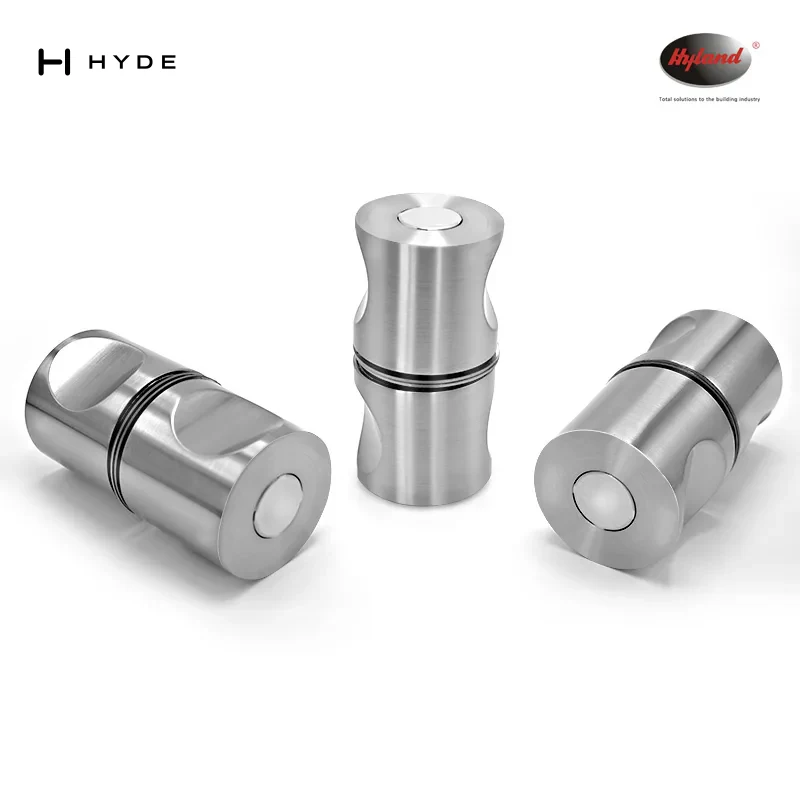
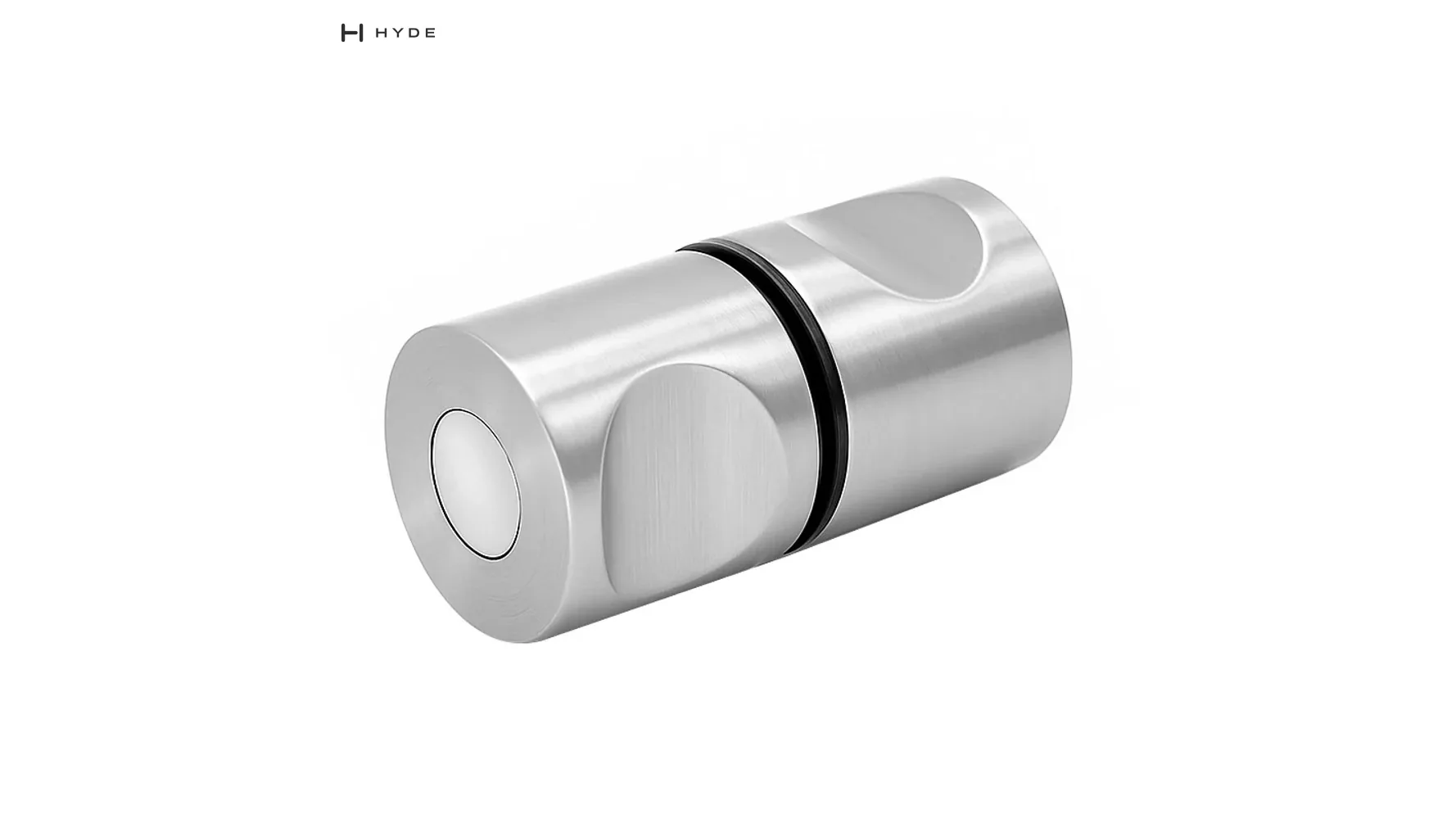
The F132 is a back-to-back knob in zinc alloy with a satin nickel finish, published as 55 × 60mm and for 8–12mm glass. Its gallery drawing shows 55mm as the depth of each half and 60mm as its diameter. One knob means one hole, so there is no pitch to get wrong, and it covers 8mm glass, which the long pulls do not. A knob gives a fingertip grip rather than a whole-hand grip, so on a heavy entrance leaf on a floor spring a long pull is usually the better choice. The F132's glass hole diameter is not published either.
What to send, and what to ask for
Send the glass thickness, whether the opening is a single door or a pair, whether the handle is wanted on both faces or on one face only, the mounting height, and the model and finish. None of these handles locks the door; locking on a frameless leaf is a separate patch lock or floor lock, and it needs its own cut-outs on the same drawing.
Ask for a dimensioned drawing of the specific model showing the hole pitch, the hole diameter and the standoff, and for a list of the fixing parts supplied. The handle is often the cheapest item on a frameless door and the one most often chosen by eye, but its holes are as permanent as anything else in the glass.
Questions this answers
What is the center distance on a glass door pull handle?
It is the distance between the centers of the two connectors that pass through the glass, which is also the spacing of the two holes drilled in the sheet. It is not the overall length of the handle. On our 100, 102, 104, 106 and 107 the confirmed hole pitch is not yet published; ask for it on a drawing of the specific model before the glass is processed.
What size hole is drilled in the glass for a door pull handle?
The hole diameter comes from the handle's connector and the isolating sleeve it passes through, so it is set by the handle's drawing, not by a standard size. We do not publish the hole diameter for our glass pulls or the F132 knob; ask for it with the quotation, and check it against the processor's limits for hole size and edge distance.
Which glass thickness do these glass door handles fit?
Our 100, 102, 104, 106 and 107 pull handles are made for 10–12mm glass. The F132 knob is published for 8–12mm glass, so it is the option for an 8mm panel.
Can holes for a handle be drilled after the glass is toughened?
No. Toughened glass cannot be drilled after toughening. Every hole for a handle, and every cut-out for patch fittings and a lock, has to be on the cutting drawing before the sheet goes into the furnace.
Related products
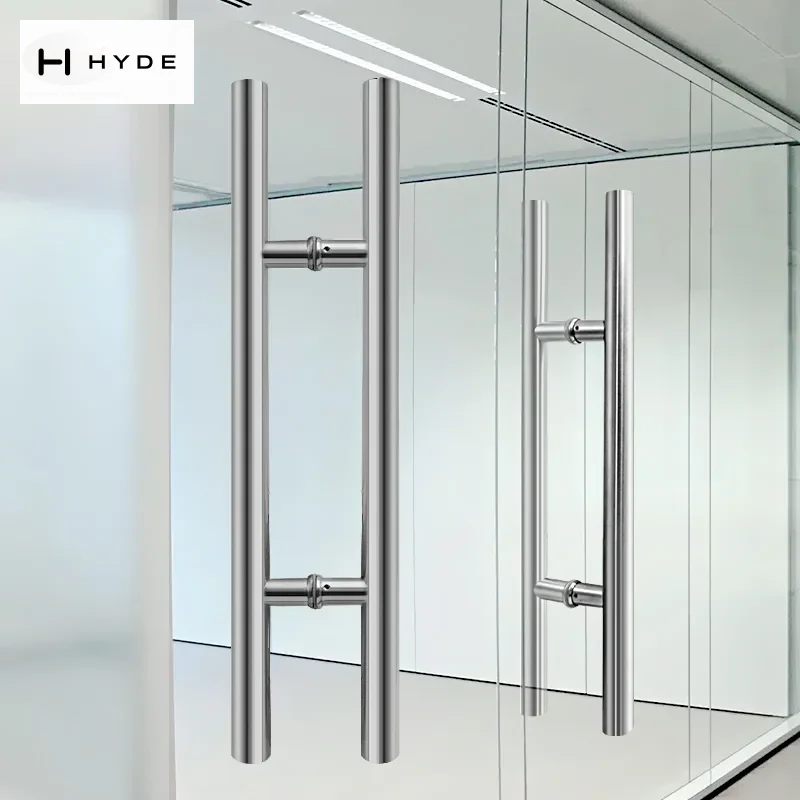
Center distance 148mm
Glass Door Handle
Model 100 · Video
304 Stainless Steel
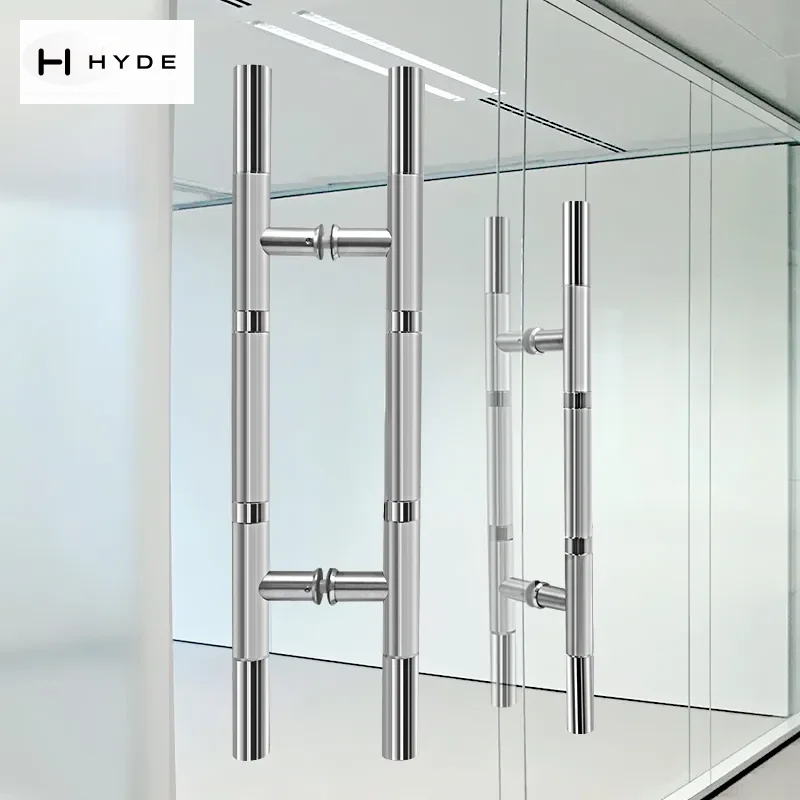
Center distance 147mm
Glass Door Handle
Model 102 · Video
304 Stainless Steel
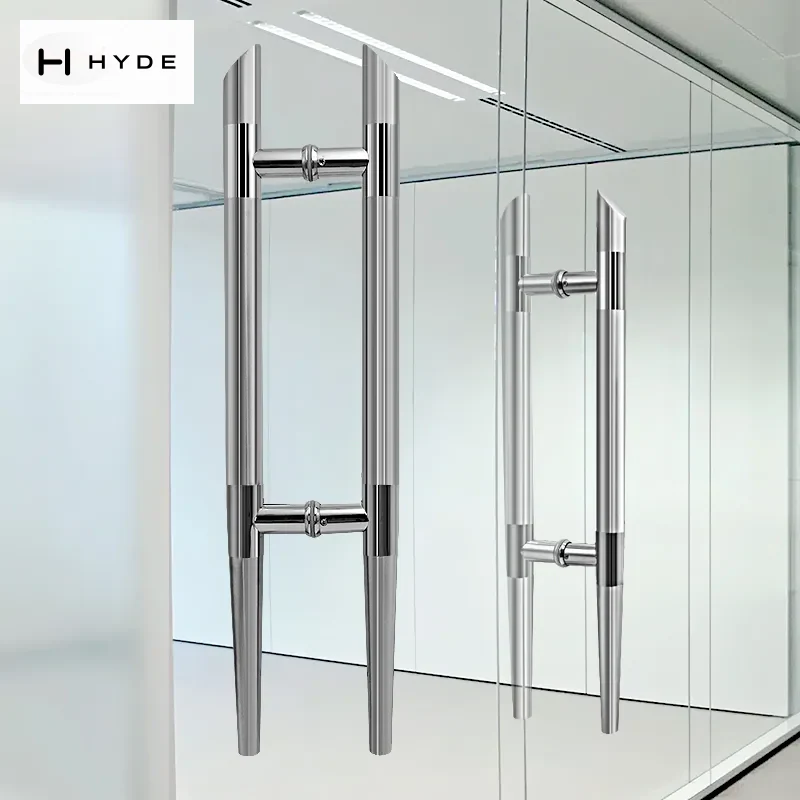
Center distance 149mm at the head, 133mm at the foot, tapered
Glass Door Handle
Model 104 · Video
304 Stainless Steel
About Canton Hyland — Canton Hyland manufactures panic exit devices, locks and architectural door hardware for commercial and institutional projects, supplying specifiers and distributors internationally.