
200,000 Cycles: What the LH Lever Range Is Actually Rated For
LH852, LH853, LH855, 808 and 6491 share a published cycle life of 200,000 operations, a 60/70mm backset, a 35–45mm adjustable door thickness and a solid steel zinc-plated chassis behind a zinc-alloy lever. What separates them is the function set and the shape, and only one of the five offers a dummy.
Insight
Johnson LiuDigital Communications, Canton HylandMA Digital Media, Johns Hopkins University
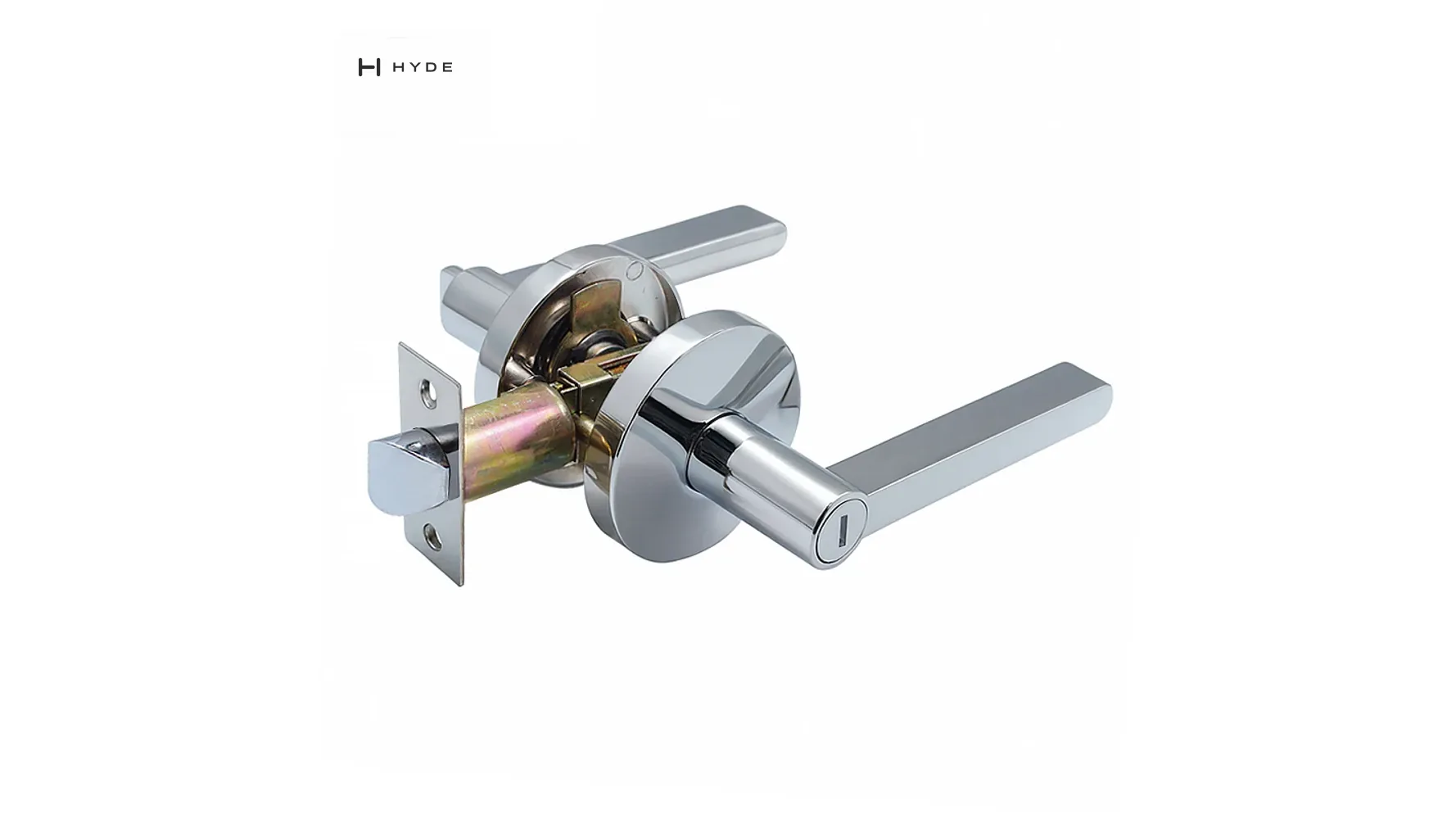
Five lever sets in our selected range — LH852, LH853, LH855, 808 and 6491 — publish the same cycle life: 200,000 operations. That number is the most useful thing on their specification sheets and also the most easily misread, so it is worth being precise about what it describes and what it does not.
A cycle is one full operation: lever down, latch retracted, lever released, latch returned. Two hundred thousand of them is a service expectation for a door in normal use, not a warranty and not a grade in the ANSI sense — A156 grades exit devices and locks on cycle counts, and we hold no ANSI/BHMA certification, so this figure is our own published expectation rather than a graded result. Stating it that way is the difference between a specification and an advertisement.
What makes the number credible is the construction behind it, and that is published too. The lever itself is zinc alloy. The chassis is solid steel, zinc plated for corrosion resistance. That division is deliberate: the lever is the visible part and zinc casts into shapes steel cannot, while the chassis is the part that carries the load every one of those 200,000 times, and it is steel. A lever set that is zinc all the way through wears at the spindle, and it does it long before the finish shows any sign of it.
The dimensions are shared across all five: a 60/70mm backset and a door thickness of 35mm to 45mm adjustable, with the LH853 also published at 60mm on some variants. All five are fully reversible, left or right hand, so handing is an assembly matter rather than a separate part number — which is worth knowing when a schedule arrives with the handing column empty, as they often do.
Where they separate is function. The LH855 is published with the widest set: entrance, privacy, passage or dummy. A dummy is a lever fixed to the door with no mechanism at all, used on the inactive leaf of a pair or on a cupboard, and it is the one function buyers routinely forget to order and then improvise on site with a working set. If your schedule has inactive leaves on it, that is the model to ask about first.
The 808 is the one to look at where the finish is doing the work. It is published in antique brass (US5) and matt black, and antique brass is a relieved finish — colour worked back off the high points — rather than a plating with one uniform tone. That is why it is not translatable to a single BHMA number, as our finish-code article explains, and also why it looks different on a lever than on a flat rose. Order a sample of the actual lever rather than a finish chip.
All five are published as keyable alike with deadbolts, or master keyed. That is the row that turns a lever range into a project specification: the lever set, the deadbolt above it and the cylinder in the door next to it can be one keying group, which is what a building manager is actually buying. The number of levels that group needs is a separate decision and usually a smaller one than the enquiry assumes.
The trim material is published as zinc die-casting electro-plated, or solid brass. That is a genuine choice rather than a grade — solid brass is the option where the door is exterior or coastal, and the electro-plated die casting is the option everywhere else. Say which one you want at enquiry, because it is not a finish decision and cannot be changed by picking a different finish code.
For a quotation on this range, four rows are enough: function per door, backset, leaf thickness, and whether any of it is keyed together. The cycle figure is the same across all five, so it will not choose between them; the function set and the trim material will.
About Canton Hyland — Canton Hyland manufactures panic exit devices, locks and architectural door hardware for commercial and institutional projects, supplying specifiers and distributors internationally.