
Door Closer Mounting 2026: Regular Arm, Top Jamb, Parallel Arm and Slide Track Compared
The same door closer performs differently depending on where it is mounted, and the mounting is usually chosen on site by whoever is holding the drill. This page compares the four standard arrangements on the three things that matter — mechanical efficiency, projection into the opening, and vulnerability — explains why a parallel arm can cost you a power size, and sets out which side of the door each one lives on.
Johnson LiuDigital Communications, Canton HylandMA Digital Media, Johns Hopkins University
Products mentioned
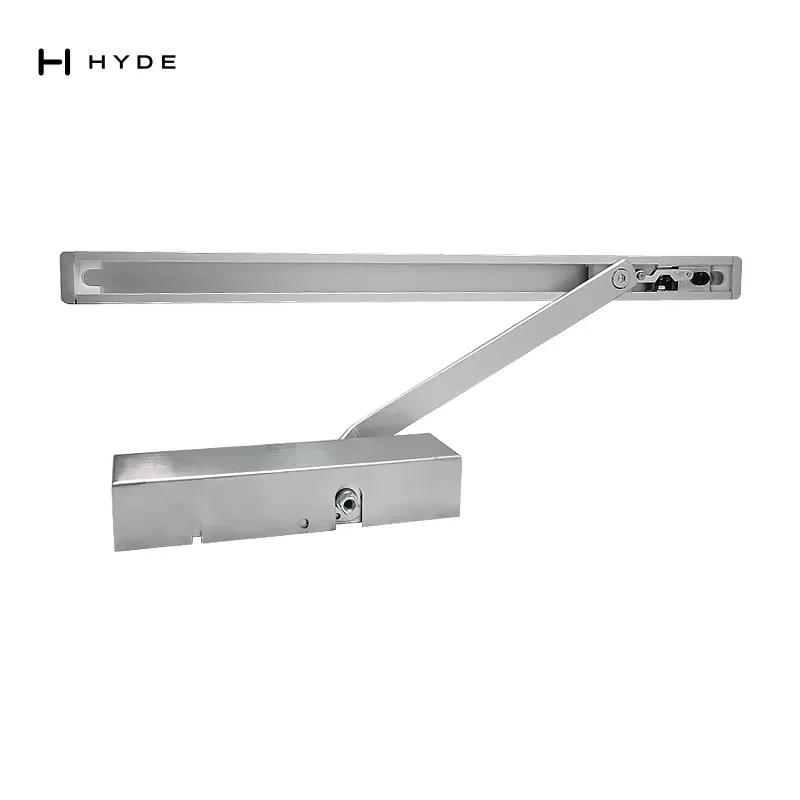
A door closer is specified by power size, and then it is mounted — and the mounting can undo a correct specification. The same closer, on the same door, is a different device depending on which of four arrangements it ends up in.
The choice is frequently made on site, by an installer looking at where the wall, the frame stop and the adjacent doorway actually are. That is reasonable. What is not reasonable is nobody knowing in advance, because two of the four affect what power size the door needs.
FIRST: WHICH SIDE IS THE PULL SIDE
Every description below depends on this, and it is the thing most often stated ambiguously.
The pull side is the face of the door you pull toward you to open. The push side is the face you push. A single door has one of each, and "the corridor side" or "the outside" are not substitutes for the terms, because they describe the building rather than the door.
REGULAR ARM
The closer body mounts on the pull side face of the door, near the top. The arm reaches across to a bracket on the frame's soffit or face.
This is the mechanically efficient arrangement. The geometry gives the closer good leverage, which means a given power size does more work here than anywhere else.
Its cost is projection and exposure. The arm stands out into the opening on the pull side, where people walk, and it is the arrangement most likely to be grabbed, hung from, or hit by a trolley. On an internal office door that is fine. On a school corridor it is a maintenance item.
TOP JAMB
The closer body mounts on the frame face on the push side, above the door. The arm reaches down to a bracket on the door.
This is the arrangement for a door that has no room for a closer on its own face — a fully glazed leaf, a narrow-stile aluminium door, or a door whose face is a finish nobody wants to drill.
It requires enough frame face above the door to take the body, which is the constraint that rules it out most often. Measure the frame face height before specifying it, because the closer body needs a flat, reinforced surface and a decorative architrave is neither.
PARALLEL ARM
The closer body mounts on the push side face of the door, and the arm folds back so that it lies roughly parallel to the door face when the door is closed, attaching to a shoe on the frame soffit.
This is the arrangement that dominates institutional buildings — schools, hospitals, public corridors — for one reason: it keeps the arm tucked against the door and out of the opening, where it cannot be grabbed and is much harder to damage.
It pays for that with efficiency. The parallel geometry gives the closer less mechanical advantage than a regular arm, which means a closer that would be correctly sized on a regular arm can be under-powered on a parallel arm. On some products the effect is enough that the manufacturer recommends going up a power size.
This is the single most useful thing on this page: if you specify a power size for a door and then someone mounts it parallel arm, you may have a door that no longer latches. If parallel arm is likely, say so when the power size is chosen.
SLIDE TRACK
Instead of a jointed arm, a roller runs in a track mounted on the frame or the door. The closer body can be on either side depending on the product.
Two things make it worth its price. It is the flattest arrangement — a track is a slim extrusion rather than a projecting elbow — and the geometry can be designed to give a lower opening force, which is why slide track and cam-action closers turn up on accessible openings where the opening force limit is tight.
The trade is cost and, on some products, a lower maximum door mass than the same closer on a standard arm.
TWO THINGS THAT ARE NOT MOUNTING POSITIONS
Concealed and floor-spring closers are different device classes, not different mountings of the same one. A concealed closer sits inside the door leaf or the transom and has to be planned into the door at manufacture. A floor spring sits in the floor and has to be planned into the slab. Neither can be retrofitted to a door that was not prepared for it.
Hold-open arms are an option on several of the arrangements above, not an arrangement in themselves. And as covered on our power size page, a mechanical hold-open does not belong on a fire door — that requires an electromagnetic device released by the alarm system.
WHAT THE MOUNTING DECIDES BESIDES PERFORMANCE
Reinforcement. A closer's fixings have to land in something solid. On a hollow metal door the reinforcement is welded in at manufacture and is specific to a mounting position — a door reinforced for regular arm may have nothing behind the face where a parallel arm closer wants to fix. This is why the mounting has to be known when the door is ordered, not when the closer is fitted.
Handing. Regular and top jamb mountings are non-handed on many closer bodies. Parallel arm generally is not, because the arm assembly is handed. Check the product rather than assuming.
Backcheck usefulness. Backcheck resists the door being thrown open, and it earns its keep most where a door can swing into a wall or into people. That is more often a pull side condition, which interacts with the mounting choice.
WHAT TO PUT ON A SCHEDULE
The mounting, named — regular arm, top jamb, parallel arm or slide track. Which side of the door the body sits on. The power size or adjustable band, chosen with the mounting in mind. Whether a hold-open is required and, if the door is a fire door, that it must be electromagnetic. Any accessibility opening-force limit that applies.
Our door closer pages state the mountings a model supports and the power size or band where the model publishes one. Where a model does not publish a figure, the row is absent — a closer is one of the few products where being one size out is discovered by everyone who uses the building.
Questions this answers
What is the difference between regular arm and parallel arm mounting?
Regular arm puts the closer body on the pull side face of the door with the arm projecting into the opening; it is the mechanically efficient arrangement. Parallel arm puts the body on the push side with the arm folded back against the door; it is far less exposed to damage but gives the closer less mechanical advantage.
Does parallel arm mounting affect the power size I need?
Yes, and this is the most commonly missed point. The parallel geometry gives less mechanical advantage, so a closer correctly sized for a regular arm can be under-powered on a parallel arm — on some products enough that the manufacturer recommends going up a size. If parallel arm is likely, say so when the size is chosen.
When should I use top jamb mounting?
When the door face cannot take the closer body — a fully glazed leaf, a narrow-stile aluminium door, or a finish nobody wants to drill. It needs enough flat, reinforced frame face above the door, which is the constraint that rules it out most often, so measure before specifying.
Why are slide track closers used on accessible doors?
Because the track geometry can be designed to give a lower opening force, which matters where an accessibility force limit is tight. They are also the flattest arrangement. The trade is cost and, on some products, a lower maximum door mass than the same closer on a standard arm.
Can I change the mounting after the door is installed?
Often not. A closer's fixings have to land in reinforcement, and on a hollow metal door that reinforcement is welded in at manufacture for a specific mounting position. A door reinforced for regular arm may have nothing behind the face where a parallel arm closer needs to fix.
Is a concealed closer just another mounting position?
No, it is a different device class. A concealed closer sits inside the door leaf or transom and has to be planned into the door at manufacture; a floor spring has to be planned into the slab. Neither can be retrofitted to a door or floor that was not prepared for it.
About Canton Hyland — Canton Hyland manufactures panic exit devices, locks and architectural door hardware for commercial and institutional projects, supplying specifiers and distributors internationally.