What OEM Actually Changes, and What It Does Not
Putting your brand on a lock is 4 separate decisions: packaging and marking, branding on the part, finish, and the part itself. Only the fourth needs a mould. This article lists what to send for each of the 4 so the first reply is a real answer.

Johnson LiuDigital Communications, Canton HylandMA Digital Media, Johns Hopkins University

"Do you do OEM?" is the most common question our export desk receives and the least useful one, because yes is always the answer and it settles nothing. What the buyer actually needs to know is which of four different things they are asking for, since they sit at four very different points on the cost and lead-time scale.
HYDE (Canton Hyland, Zhongshan, since 1998) makes the 607 SSET and 70SN covered in this article.
The first is packaging and marking. Your logo on the box, your carton markings, your barcodes, your instruction sheet, your language. Nothing about the hardware changes; what changes is what arrives on the pallet and what a customer sees on a shelf. This is the cheapest form of private label by a wide margin and for a distributor building a house brand it is often the whole of what is required.
The second is branding on the part itself, your mark on the rose, the plate or the lever. This is a tooling question rather than a packaging one, because a logo on a stamped part comes from the die, but it is a small tooling question: it modifies an existing die rather than cutting a new one. Decide it early: planning a mark into a first production run is much cheaper than adding one to a repeat.
The third is finish. Our catalog publishes polished brass, antique brass, satin nickel, satin chrome, black nickel, and satin and polished stainless, and a finish that is not on the standard list for a given model is usually a scheduling question rather than a development one, because the plating line already runs it for something else. A distinctive finish is the fastest way to a product that looks like yours and not like everyone else's, and it needs no new mould at all.
The fourth is the part itself: a lever profile, a rosette shape, a plate, a backset, a case. This is where moulds and dies come in, and where the honest answer stops being a generality. If a mould exists for the form you want, we produce it. If it does not, we tool one, and tooling cost, sampling time and the minimum quantity that makes a custom run worthwhile depend entirely on the part. A rose is not a lock case. We quote those per project rather than publishing a range, because a range wide enough to be true would be too wide to be useful.
What makes the fourth case workable here rather than a special project is that the tooling behind our catalog is our own. That is the difference between a factory and a trading office standing in front of one: when the die is in your building, a change of lever profile is a production decision made by people who can walk to the press. When it is not, the same request becomes an email to a third party whose schedule and quality you do not control, and the reason a buyer cannot get a straight answer on lead time is usually that the person answering does not have one either.
Start with what you have rather than with a specification. A physical sample is best; a drawing is nearly as good; a photograph with a dimension written on it is enough to begin.
What to send, for each of the four
Each kind of OEM work starts from different material, and an inquiry that arrives with the right material gets a real answer in the first reply instead of the third.
Packaging and marking: your logo as a vector file rather than a screenshot; the carton marking text for each market, in the language it will be read in; your barcode numbers; the instruction sheet, or the text you want on it; and how many pieces you want in an inner box and an outer carton. On barcodes, one point that saves trouble later: the numbers belong to the brand owner, issued to you by your national numbering body. We print the numbers you give us; we cannot issue them to you, and a code borrowed from somebody else's range will eventually be rejected by a retailer's system.
A mark on the part: which face it goes on, how large, and whether it is raised or recessed, because on a stamped or cast part the mark comes from the die, and the die is modified once. A drawing or a clear image of the mark at the size it will appear is enough to start.
Finish: a physical sample of the finish you want to match is better than any description, because two suppliers' "antique brass" can be visibly different colors. If you are specifying by code, remember that a BHMA finish number needs the base metal as well as the appearance, as our article on finish codes explains.
The part itself: a sample, a drawing or a dimensioned photograph, as above, and alongside it, the door preparation the part has to fit, the market it will be sold into, and a realistic quantity. The quantity is not a sales question. It is what decides whether a modified mould, a new mould or an existing catalog part is the sensible answer.
Your model number and ours
Private label changes the name on the product. It does not change the name on the test report, and that difference catches out buyers who sell into regulated markets.
A test report or certificate names the product that was tested, by the manufacturer's model number. Our own EN 1125 test report, for example, covers one model, KD070/30-290, as set out on our certifications page. If that device were sold under your brand as, say, your model EX-200, an inspector holding your submittal and our report would see two different numbers and no link between them. The certificate would be genuine and would still fail to answer the question.
The fix is administrative and cheap, and it should be done on the first order: keep a cross-reference sheet that maps each of your model numbers to ours, and put both on any submittal or technical file where a certificate is cited. It also protects you the other way, if a component changes on our side, the cross-reference tells you which of your products it affects.
What does not change under private label
It is worth being clear about the limits, because they are the part of OEM most often assumed rather than asked about. Rebranding a catalog product does not change how it performs or what it was tested to; its evidence stays tied to the model it was issued for. Changing the part itself is different. A new lever profile on an existing mechanism is usually cosmetic in effect, but a changed case, bolt or mechanism is a new product for testing purposes, and anything a certificate covered has to be looked at again.
Approving the sample that everything is judged against
Every private-label program should have one physical reference that both sides keep: a pre-production sample, approved in writing, with the finish, the mark and the packaging exactly as they will be produced. The first order is checked against it, and so is every repeat order after it. Without that sample, the second order is judged against somebody's memory of the first, and small drifts in color or marking become arguments rather than measurements.
Ask for the sample to be sealed or labeled with the date and the order it approved, keep yours somewhere safe where it will still be found in two years, and send a new one for approval whenever anything on the specification changes.
Who owns what
Three things are worth settling in writing before production rather than assuming. Your artwork and your barcode numbers are yours, and it is reasonable to have it written down that they are used only on your orders. Moulds and dies cut for your part are the subject of their own agreement (who pays, who owns them, whether they are exclusive and what happens to them when orders stop). And exclusivity on a form or a finish is something agreed for a defined product and market, not something implied by having asked for it first.
Two things worth fixing before anything else, in any of the four cases. Confirm the function and handing you need, because ET, BK and PS are functions and not finishes and an entire order in the wrong one is unusable. And confirm the finish across every item in the set: if the lever is black, the hinges, the cylinder escutcheon and the visible screws should be black too.
Questions this answers
What are the four kinds of OEM work?
Packaging and marking, your logo, carton markings, barcodes and instruction sheet, with nothing about the hardware changed. Branding on the part itself, which modifies an existing die rather than cutting a new one. Finish, which is usually a scheduling question rather than a development one because the plating line already runs it for something else. And the part itself (a lever profile, a rosette, a plate, a backset, a case) which is where moulds and dies come in.
What is the cheapest way to get a product that looks like ours and not everyone else's?
A distinctive finish, which needs no new mould at all. Our catalog publishes polished brass, antique brass, satin nickel, satin chrome, black nickel, and satin and polished stainless, and a finish that is not on the standard list for a given model is usually a scheduling question rather than a development one.
Why does it matter that the tooling is the factory's own?
Because it is the difference between a factory and a trading office standing in front of one. When the die is in your building, a change of lever profile is a production decision made by people who can walk to the press. When it is not, the same request becomes an email to a third party whose schedule and quality you do not control, which is usually why a buyer cannot get a straight answer on lead time.
What should be fixed before any private-label order?
The function and handing, because ET, BK and PS are functions rather than finishes and an entire order in the wrong one is unusable. And the finish across every item in the set: if the lever is black, the hinges, the cylinder escutcheon and the visible screws should be black too.
Does a private-label product keep the manufacturer's certification?
The product's test evidence stays tied to the manufacturer's model number, not to your brand name. A certificate for our model will not mention your model EX-200, so an inspector sees two numbers and no link. Keep a cross-reference sheet mapping your model numbers to ours, and cite both wherever a certificate is referenced. Changing the mechanism, case or bolt makes it a new product for testing purposes; changing packaging or finish does not.
What do I need to send for private-label packaging?
Your logo as a vector file, the carton marking text for each market in its language, your barcode numbers, the instruction sheet text, and the inner-box and carton quantities you want. The barcode numbers must be your own, issued to your brand by your national numbering body, we print the numbers you supply but cannot issue them.
Related products
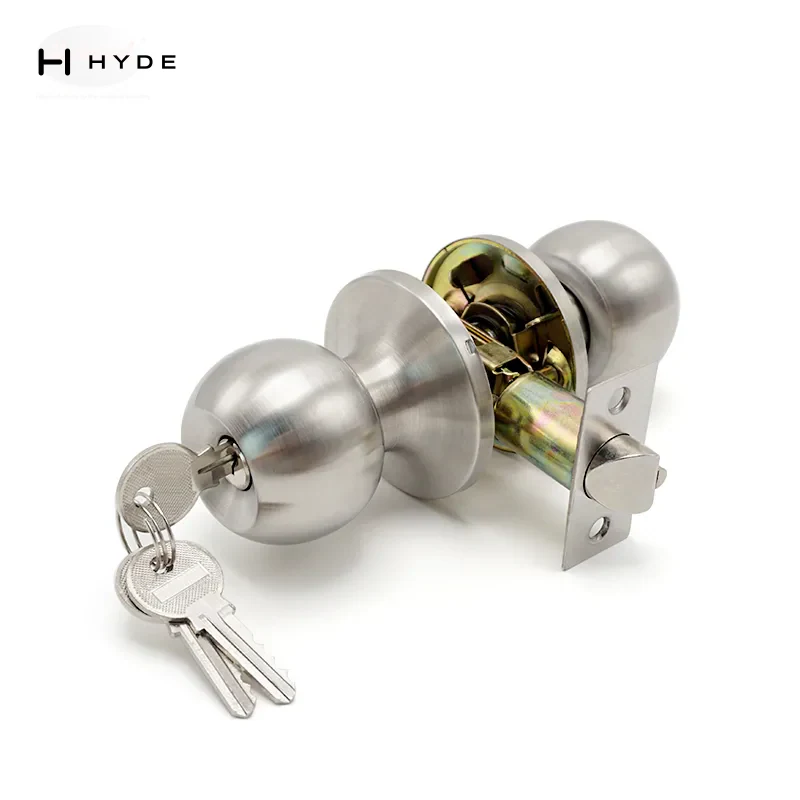
Backset 60mm / 70mm adjustable
Tubular Lock
Model 607 SSET · Video
Stainless steel/Brass/Solid steel
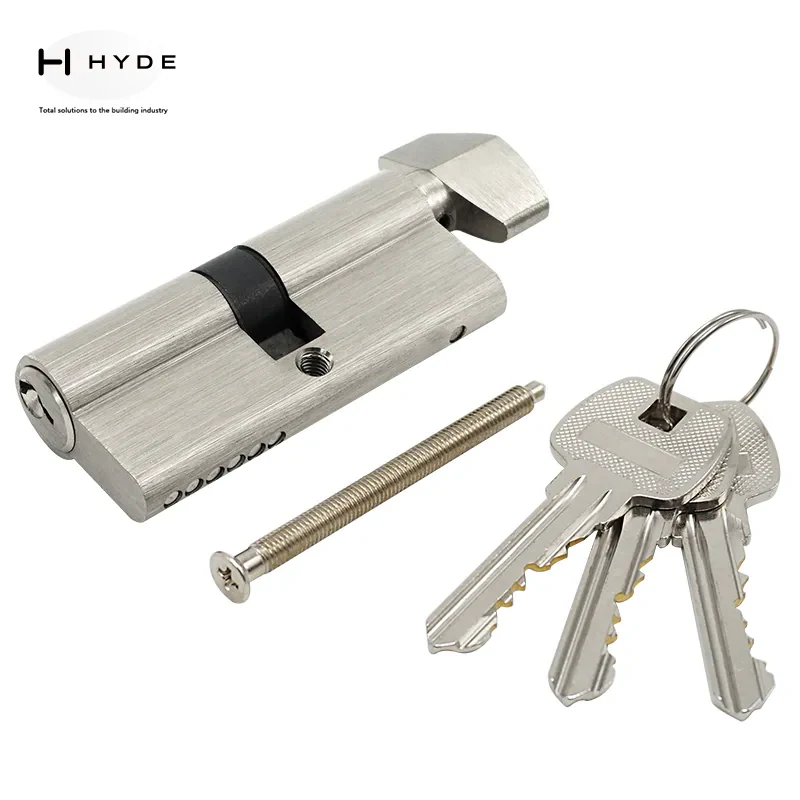
Size 70mm
Lock Cylinder
Model 70SN
Solid Brass
About Canton Hyland — Canton Hyland manufactures panic exit devices, locks and architectural door hardware for commercial and institutional projects, supplying specifiers and distributors internationally.