
The Six Values a Hardware Order Actually Needs
Most inquiries arrive with a model number and a quantity, and most of those go back with a question. Six values decide whether a part can be installed, and an inquiry carrying all six can be quoted the same day.

Johnson LiuDigital Communications, Canton HylandMA Digital Media, Johns Hopkins University
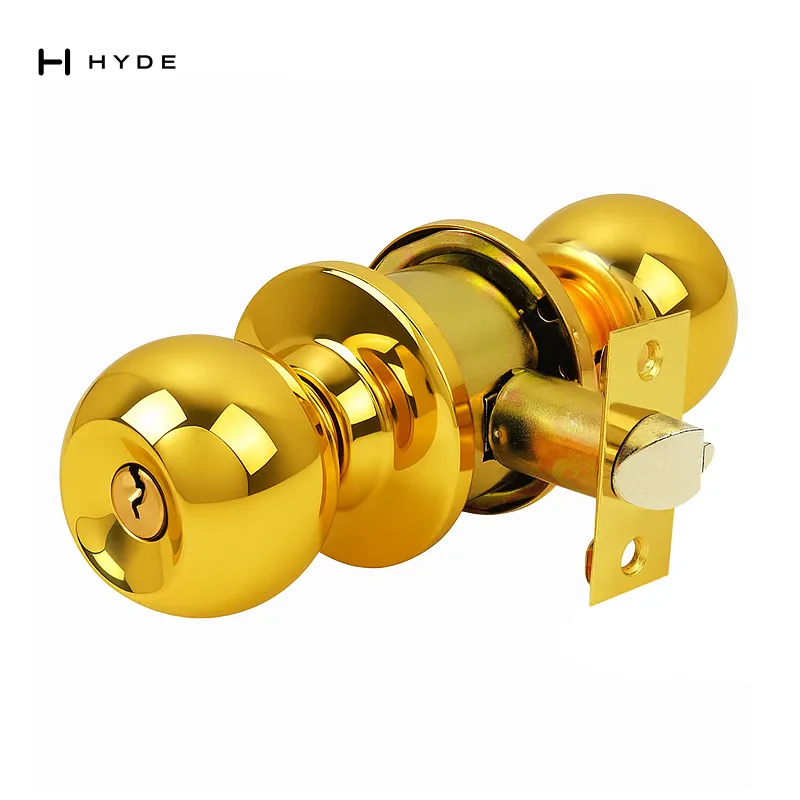

A model number is not an order. It names a family and a form; it does not say which of the variants inside that family fits the door in front of you. The gap between the two is where a week goes, because the questions are asked one at a time by email across an eight-hour time difference.
HYDE (Canton Hyland, Zhongshan, since 1998) makes the 9001, LC07 85×45mm and 70SN covered in this article.
Six values close the gap: model, finish, backset, center distance, handing, door thickness. Written in that order they read as one reference (9001-SSS-60-72-L-45) and every one of them is a fact about the opening rather than a preference. Nothing on that line is negotiable after the mortise is cut.
Model is the family. Finish is the code, not the word: SSS and PSS are both "stainless", they are a satin and a mirror, and they do not sit next to each other on the same floor. Where a US equivalent exists we publish it beside the code, because a schedule written to US32D and a factory reading SSS are describing the same part and should not have to discover that by correspondence.
Backset is the distance from the face of the door edge to the center of the spindle, and it is set by the door, not by the lock. A 60mm (2-3/8") backset lock in a door prepared for 45mm (1-3/4") does not go in. Center distance is the gap between the spindle and the cylinder, and it is what decides whether the handle and the key hole line up with the holes already drilled in the plate.
Handing is a letter (left, right or universal) and it is discussed in its own article because the two conventions in use disagree. Door thickness is the one people assume is standard and is not: our records carry ranges like 35–45mm (1-3/8" to 1-3/4") adjustable and 35–50mm (1-3/8" to 1-15/16"), because the spindle and the fixing screws have a working travel and a 60mm (2-3/8") door is outside it.
What happens when a value is missing depends on which one. A missing finish delays a quotation. A missing backset delays a shipment, because it is not visible until the case is offered up to the door and by then the container has landed. That asymmetry is the argument for writing all six at inquiry rather than the ones that feel important.
Two of the six are frequently unknown at inquiry, and saying so is a valid answer. "Door thickness to be confirmed" is a line an export engineer can work with, it flags the risk and keeps the rest of the quotation moving. A blank is not the same thing: a blank gets filled in by whoever is in the most hurry.
Our guided selector asks four of the six and returns a published model with its specification rather than a category, so the reference can be pasted straight into a schedule. Where a figure is not published for a model, the specification table shows a dash rather than a plausible number, the dash is a question for us, and it is cheaper to ask it now than to answer it on site.
Who actually knows each value
Part of the reason orders arrive with gaps is that no single person holds all six. Knowing who does makes the missing one quick to get.
Model is usually the specifier's or buyer's choice. Finish comes from the architect or the client, often from a general note rather than the row. Backset belongs to the door: the door manufacturer knows it for new doors, and the existing door shows it on a replacement. Center distance belongs to the lock case and the lever plate together, so it comes from whoever chose the lock body. Handing comes from the drawings: the door's swing and which side is "outside". Door thickness comes from the door schedule or the door maker.
So when one value is missing, the fastest route is rarely to ask the person who sent the inquiry. It is to ask whoever owns that value, and to say so in the reply: "backset to be confirmed by the door manufacturer" is a line that gets answered.
The mistakes each value attracts
Every one of the six has a characteristic way of being measured wrong.
Backset is measured to the case instead of to the face of the faceplate, which puts it a few millimeters out, enough to put a lever off-center on its rose. Center distance is confused with other distances called by the same name: on a pull handle, the P= figure is the distance between the two fixing points, which has nothing to do with the spindle-to-cylinder distance on a lock. Door thickness is taken at the edge of a panelled door rather than at the lock position, where the leaf may be thinner. Handing is read from the wrong side of the door, or in the wrong convention, as our article on handing explains. Finish is written as a word that two factories understand differently. And model is written without its suffix, so the function goes missing.
None of these is exotic. They are the ordinary errors of a busy site, and each one is caught by the same habit: write the value together with how it was measured ("backset 60, measured from faceplate face") at least on the first order with a new supplier.
The seventh value for anything with a key
For any product with a cylinder, there is effectively a seventh value, and it is the one most often added late: keying. Keyed alike, keyed to differ, or part of a master key system, and if the last, which level. Cylinders are pinned before they are packed, so keying is part of the order, not a detail to settle on delivery. Our articles on master key systems and on the euro cylinder range cover how to specify it.
Writing the values for a whole project
For more than a handful of doors, a spreadsheet beats prose. One row per variant, with columns in the same order as the reference: model, finish, backset, center distance, handing, door thickness, then quantity, keying and remarks. Two rules make it work. A value that is not yet known is written as "TBC" with the name of whoever will confirm it, never left blank. And a variant that differs in any one of the six gets its own row, even if every other value matches, because to the factory, a lock with a different backset is a different product.
A sheet written that way can be answered row by row, with a model and a price against every line or a question against the one that cannot be answered yet. It also becomes the checklist at goods-in, when the cartons arrive and somebody has to confirm they contain what the doors need.
When a value does not apply
The six values are written for the product they come from (a mortise lock) and not every product has all six. A tubular lever set has a backset but no center distance, because the latch and the lever share one bored hole. A euro cylinder has neither; its equivalents are overall length and split. A pull handle has no backset at all, and its P= figure means something else entirely. The rule for those is simple: write "n/a" in the column, never leave it blank. A blank looks like a value somebody forgot; "n/a" says somebody checked.
Three references, written out
Here is how the reference reads for three different kinds of product, using the conventions above.
A mortise lock case: our LC07 85×45mm publishes a center distance of 85mm and a backset of 45mm, so its reference carries both: LC07 (finish per project) backset 45, center 85, handing per door, door thickness per door. The two figures in the name are only a convenience; they still belong in their own columns.
A tubular lever set: a 607 PBET is published in polished brass (US3) with the entrance function, a 60 or 70mm adjustable backset and a 35–45mm door. Its reference: 607 PBET (US3) backset 60, center n/a, reversible, door 44. The center distance is not applicable, and handing is written as reversible because the product is published that way, which is information, not an omission.
A euro cylinder: our 70SN is a 70mm cylinder whose record lists a set of finishes rather than one. Its reference replaces backset and center distance with length and split, and names the finish from that list: 70SN (finish as ordered) length 70, split to be confirmed against the door, keying per schedule. The split is the value that most often goes missing on cylinders, for the reason set out in our article on euro cylinder length and split.
Why the order of the columns matters
It might seem fussy to insist on the same order every time. The reason is that people read references quickly and pattern-match, and a consistent order is what lets an export engineer see at a glance which value is missing or odd. A backset in the finish column is a mistake that survives three readings when the columns move around, and is caught in one when they do not. Write the values in the same order on every line and on every order, and your supplier's first reply will be about the product rather than about the form.
One reference per line, in one order, with nothing left blank: it is a small discipline, and it is the one that most reliably turns a first inquiry into a first shipment.
Questions this answers
What information does a hardware order actually need?
Six values: model, finish, backset, center distance, handing, door thickness. Written in that order they read as one reference (9001-SSS-60-72-L-45) and every one of them is a fact about the opening rather than a preference. A model number is not an order: it names a family and a form, and it does not say which variant fits the door in front of you.
Which missing value costs the most?
Backset. A missing finish delays a quotation; a missing backset delays a shipment, because it is not visible until the case is offered up to the door and by then the container has landed. That asymmetry is the whole argument for writing all six at inquiry rather than only the ones that feel important.
Is it acceptable to say a value is not known yet?
Yes, and it is a valid answer rather than an omission. "Door thickness to be confirmed" is a line an export engineer can work with, it flags the risk and keeps the rest of the quotation moving. A blank is not the same thing: a blank gets filled in by whoever is in the most hurry.
Is the finish code the same as the finish name?
No. SSS and PSS are both "stainless" (one a satin and one a mirror) and they do not sit next to each other on the same floor. Where a US equivalent exists we publish it beside the code, because a schedule written to US32D and a factory reading SSS are describing the same part and should not have to discover that by correspondence.
Who should provide each of the six order values?
Whoever owns them. The model is the specifier's or buyer's choice; the finish usually comes from the architect or client, often from a general note; the backset belongs to the door, so the door manufacturer or the existing door; the center distance comes with the lock case and plate; handing comes from the drawings; and door thickness from the door schedule or door maker. When a value is missing, ask its owner and say so: "backset to be confirmed by the door manufacturer" gets answered.
Is keying part of a hardware order?
Yes. For anything with a cylinder, it is effectively a seventh value. Say whether cylinders are keyed alike, keyed to differ, or part of a master key system and at which level. Cylinders are pinned before they are packed, so keying decided after the order means reopening it.
Related products
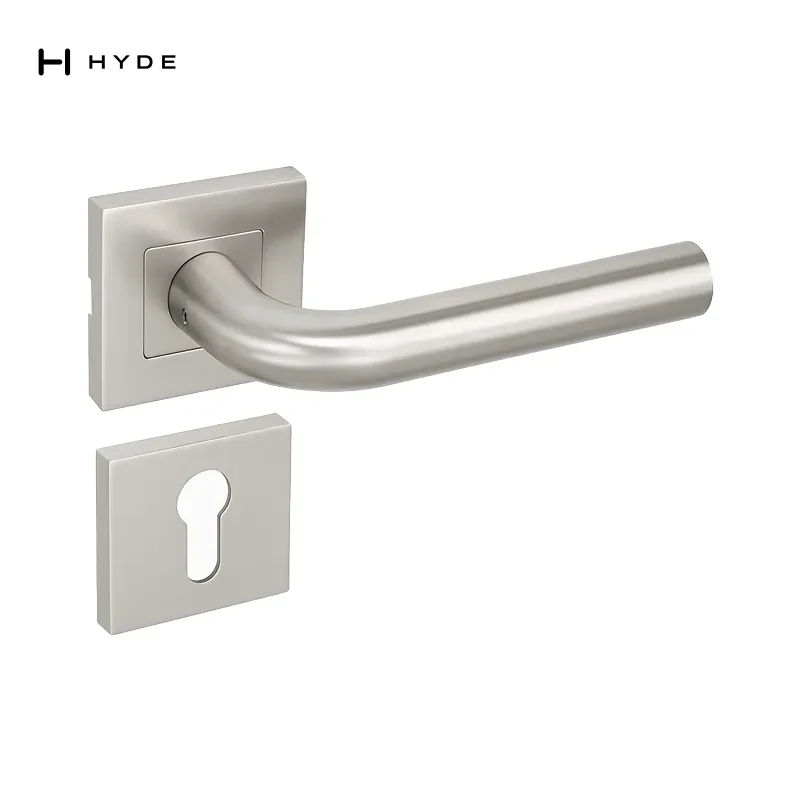
Door thickness 35–50mm
Stainless Steel Handle
Model 9001 · Video
Stainless Steel
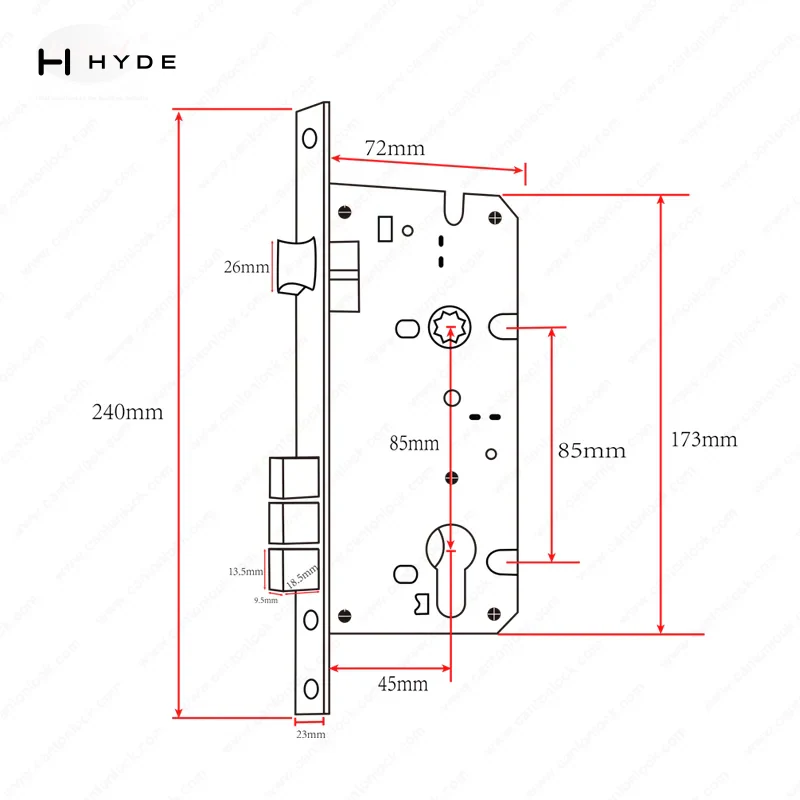
Backset 45mm
Lock Case
Model LC07 85×45mm
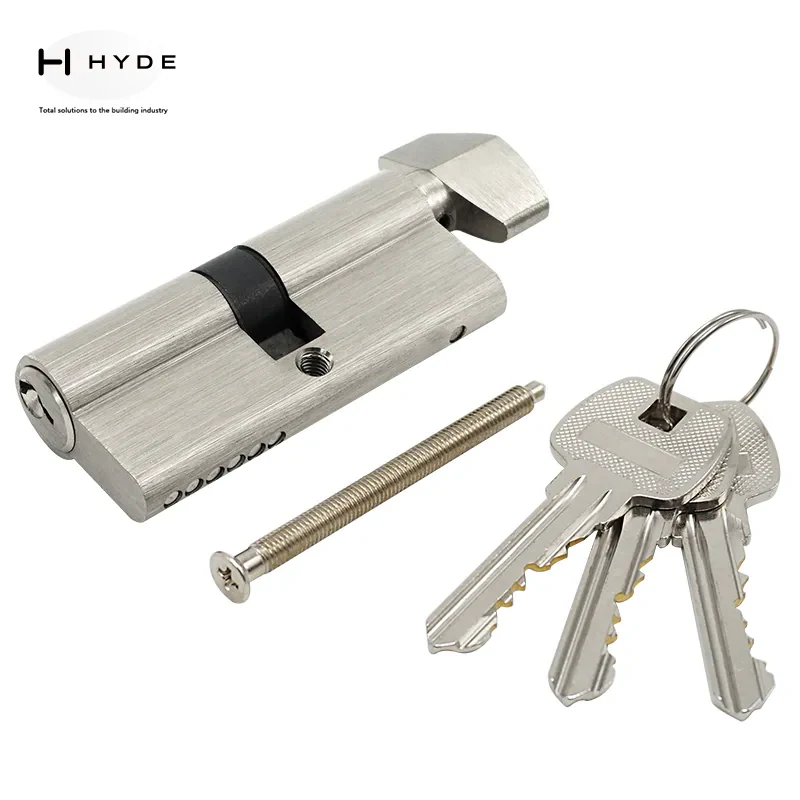
Size 70mm
Lock Cylinder
Model 70SN
Solid Brass
About Canton Hyland — Canton Hyland manufactures panic exit devices, locks and architectural door hardware for commercial and institutional projects, supplying specifiers and distributors internationally.