
A Padlock Chained to a Knight in Germany
Our principal found it on a German street, chained around the ankles of a cast-iron knight outside a hotel, and photographed it because the older a thing is the more it draws you in. We cannot tell you who made it or when — rust removes exactly the evidence that would answer that. We can tell you what is still legible in the metal, which is more than you would expect, and why we are not going to invent the rest.
Insight
Johnson LiuDigital Communications, Canton HylandMA Digital Media, Johns Hopkins University
Products mentioned
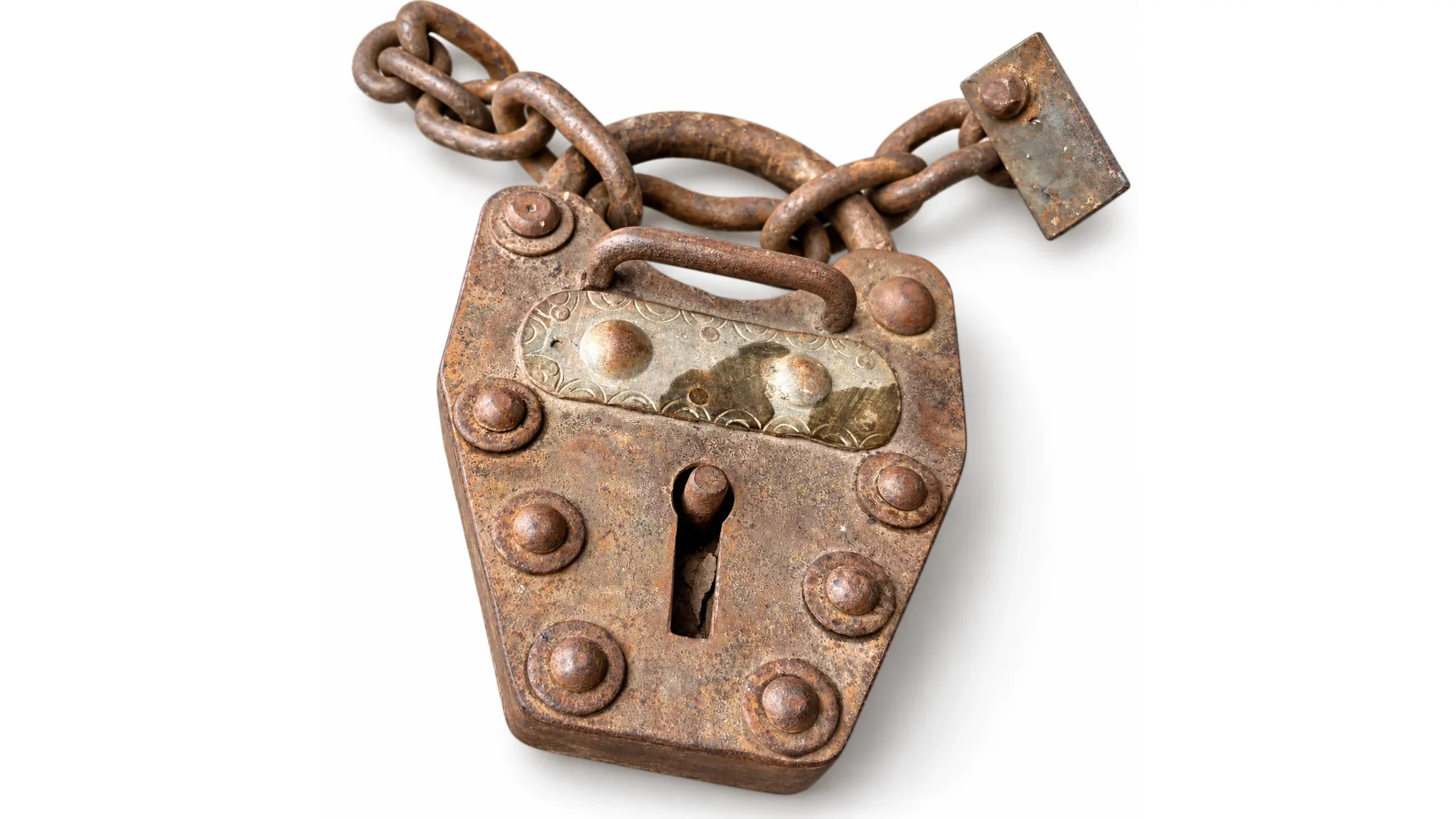
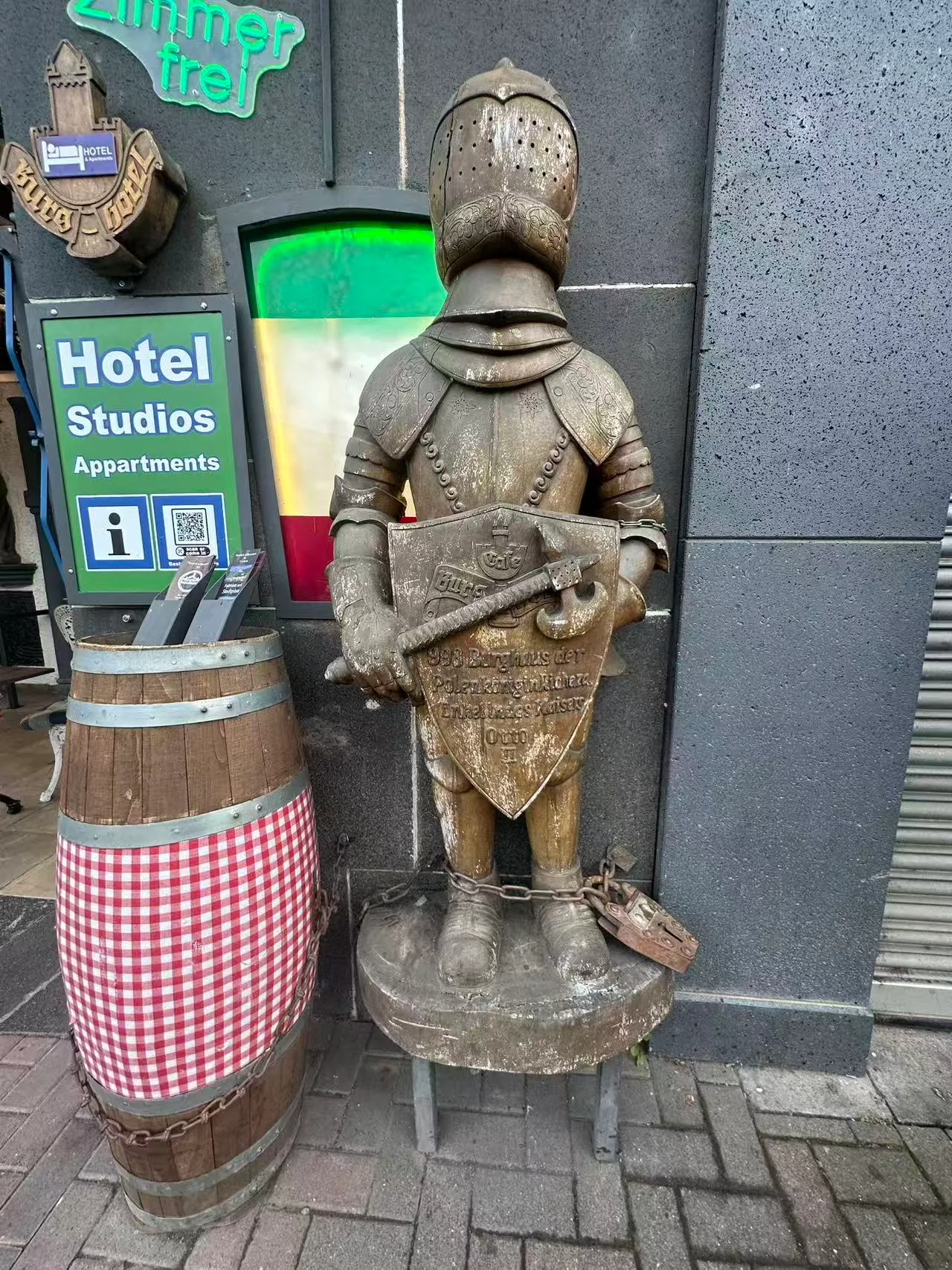
Our principal was walking down a street in Germany when he stopped at a hotel doorway. Outside it stands a cast knight in armour, holding a shield whose inscription claims the year 998 and names Richeza, Queen of Poland, granddaughter of the Emperor Otto II. Chained around the knight's ankles is a padlock, and it was the padlock he photographed. He sent the pictures to the company group with one line: put this on the website. The older something is, the more it pulls people in, and the more it shows we know what we are doing.
He has been cutting moulds for door hardware since 1998, so when he says an object is worth looking at, the right response is to look at it. Here is what we can see, and — because this matters more — here is where our seeing stops.
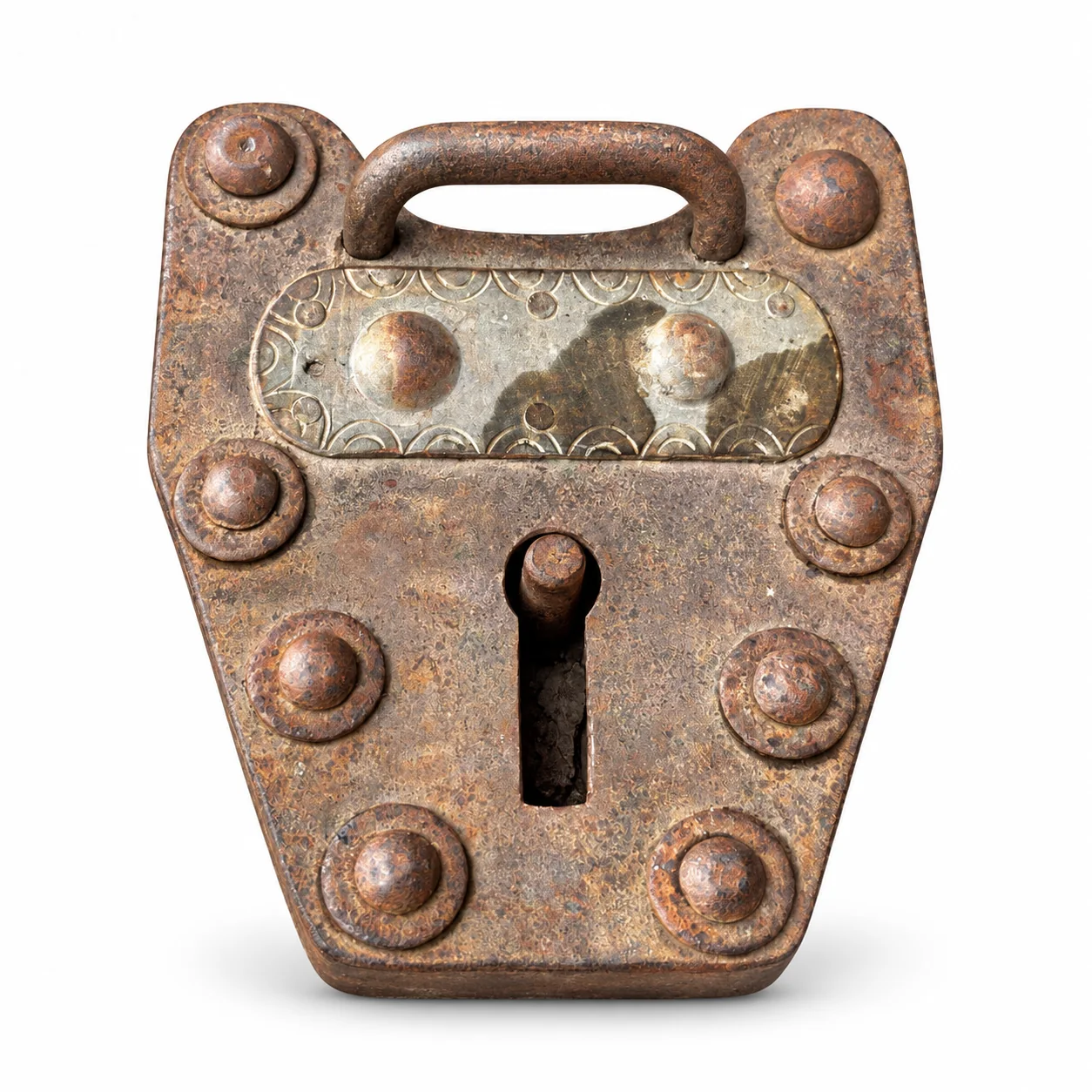
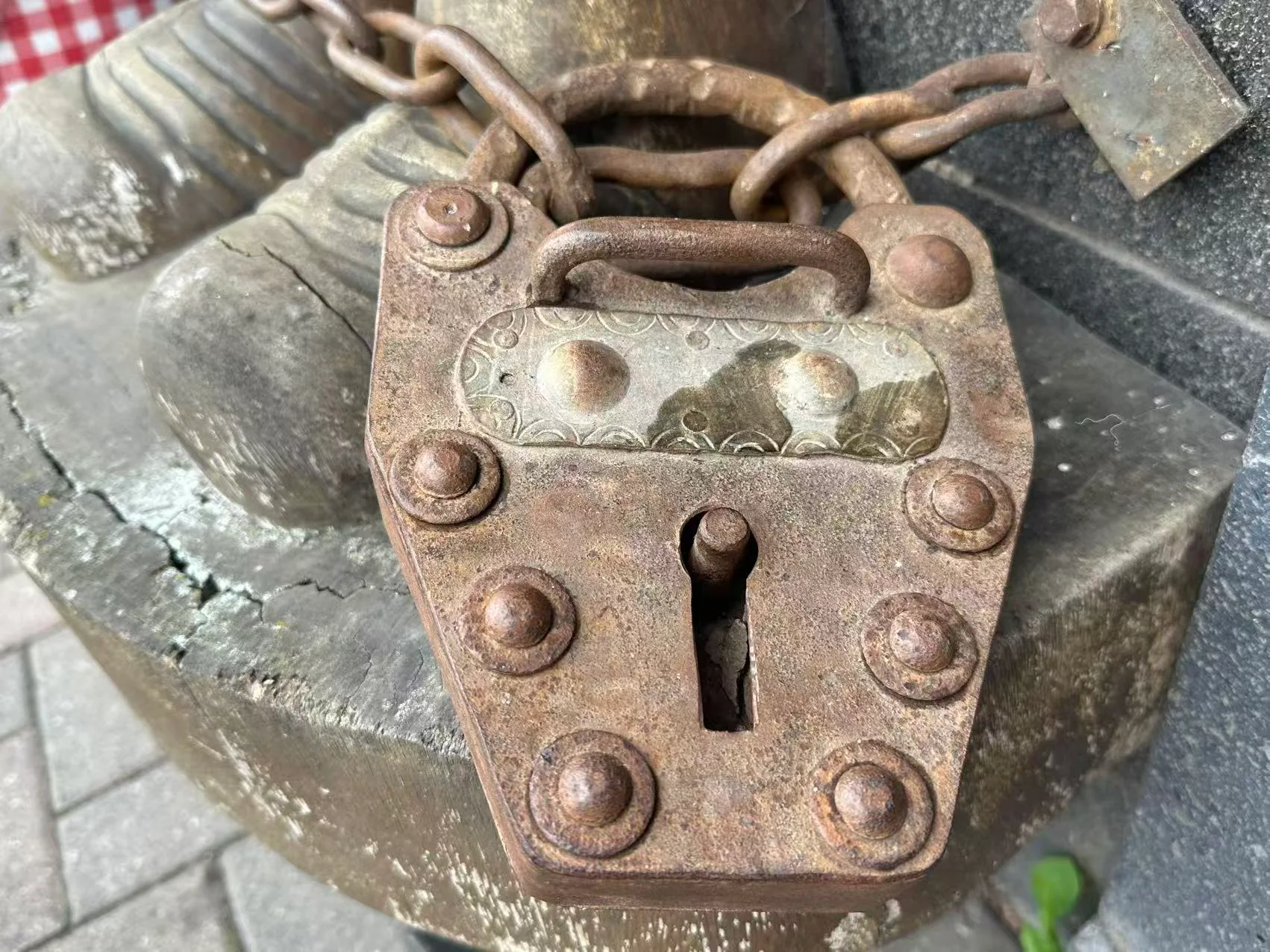
Start with how it is held together. Eight domed rivets ring the body, two at the shoulders, two down each flank, two across the foot. That is a case assembled from plates, not cast in one piece and not welded: cut, stacked, drilled, riveted cold, and the domes are the heads spread by a hammer. It is the construction you use when the joint has to hold without heat, and it is the reason the thing has survived a century of weather with its shape intact while its surface went to rust.
Then the keyhole, which is the most talkative part of the whole object. There is a pin standing in the middle of it. A pin means the key is hollow — a barrel key that slides over it and is centred by it — and a hollow key with a wide slot beneath means a warded lock: fixed obstructions inside that the right key is cut to pass and the wrong one is not. This is not a pin-tumbler cylinder and it was never meant to be one. It is the mechanism that secured Europe for several hundred years before cylinders replaced it, and you can identify it from two metres away once you know what the pin is for.
Then the thing that has no security function at all. Across the upper body sits an oval plate in a brighter metal, engraved with a scalloped arc border, and two of the rivets pass straight through it. Somebody decorated a lock that was going to hang outdoors and get filthy. Nobody paid for that engraving because it made the lock harder to open — they paid for it because a lock is a thing people look at while they decide whether to trust what is behind it. We recognise the impulse. It is the same one that puts a consistent finish on a spec table.
Now the stop. We do not know who made this lock, in what year, or in what country. We do not know whether it is as old as the building it decorates or was bought in a market fifty years ago to dress a statue. Rust removes exactly the evidence that would answer those questions: the stamp, the plating, the paint, the paper. A shape like this was made by hundreds of workshops across Europe and Asia for a very long time, and no honest look at it narrows that down.
We could write the missing paragraph. A German workshop in the 1890s, a family name, a line about the smith who set those rivets — it would read beautifully, and it would be fiction. We are not going to, and the reason is not modesty. A buyer ordering a container of hardware from a factory they have never visited is buying one thing above all others: the belief that we do not make things up. That belief is indivisible. A supplier who will invent a provenance for a padlock on a blog will invent a backset for a lock case in a quotation, and the buyer who catches the first is right to assume the second. On this site, where a dimension is not published, you get a dash instead of a plausible number. This is the same rule applied to a story.
The lock is also interesting for the opposite reason to the one people expect. It is anonymous, and for most of the history of this trade that was normal: a lock was identified by the man who made it, and if you did not know him you could not buy a replacement part. What ended that was not better locks. It was standards. The profile that every European lock case is machined for today is defined by DIN 18252 in Germany and EN 1303 across Europe, to a tolerance that lets a cylinder from one factory drop into a body from another, in another country, forty years later. The country where our principal found this nameless lock is the same country that wrote the standard that made namelessness safe.
That is what we make. Our own euro-profile cylinders run 45, 54, 60, 65, 70, 80 and 90mm, and not one of those figures is ours — they belong to the standard, and the entire value of the part is that we hit them exactly. A cylinder proudly two millimetres different is not a distinctive product; it is a part that does not fit. The anonymity of the old lock and the interchangeability of the new one are the same story told twice: first the maker's name was the guarantee, then the standard replaced it.
Which is where twenty-eight years actually goes. A mould for one exit device takes three to five months before it produces a part anyone would sell, and most of that is not cutting steel — it is running the tool in, measuring what comes out, and correcting the tool, because metal does not do what the drawing says it will. Then come the tests the part has to survive: fire, impact, cycle life, pressure. None of that shows up in a photograph. It shows up in the hundred-thousandth part matching the first.
So the padlock goes on this page as something to look at, not something to claim. It is not ours, we did not make it, and we cannot tell you who did. What we can tell you is how it was put together, what kind of key it takes, and which part of it was pure pride — and that we can read it at all is because we spend our days at the other end of the same object's life.
About Canton Hyland — Canton Hyland manufactures panic exit devices, locks and architectural door hardware for commercial and institutional projects, supplying specifiers and distributors internationally.