
Why the Catalogue Is This Wide: 28 Years of Cutting Moulds for Other People's Doors
Almost nothing in this range was designed by us in the abstract. A buyer somewhere could not find a part in their own market, brought us a drawing or a sample, and we cut the mould. Do that since 1998 and the catalogue ends up looking like a map of other people's doors.
Insight
Johnson LiuDigital Communications, Canton HylandMA Digital Media, Johns Hopkins University
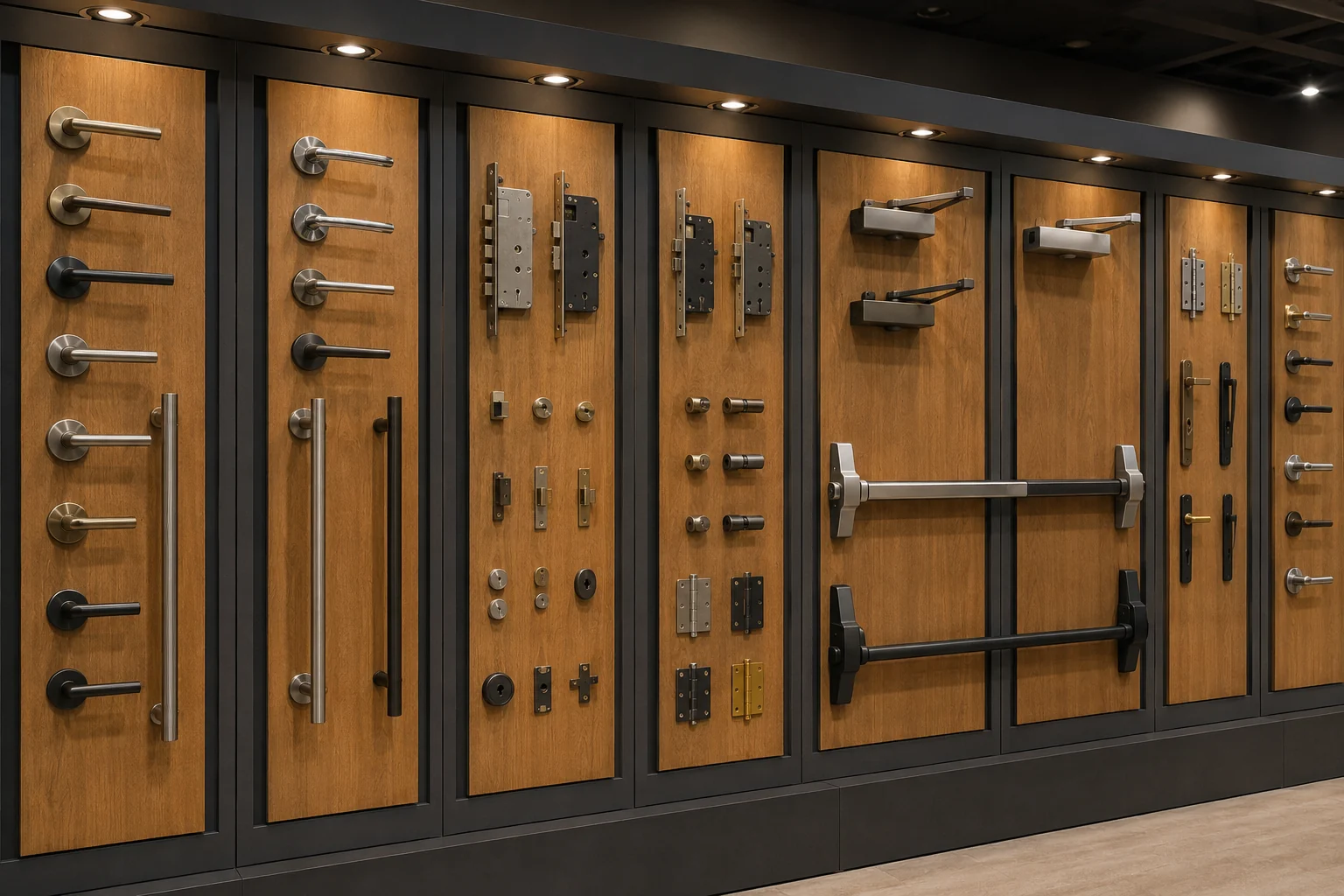
People ask why one factory carries this many different products, and the honest answer is that we did not plan most of them. A buyer in one country goes looking for a part their market takes for granted, cannot find anyone at home who still makes it, and eventually finds us and asks whether we can make it from their sample. Say yes to that question for twenty-eight years and you end up with a catalogue that looks less like a product strategy and more like a map of the doors other people have to fit.
What makes the answer possible is that metal moulds are the thing this factory is actually good at, and they are the work our engineers like most. A buyer arrives with a drawing, or more often with the part itself in a bag. We take the dimensions from it and cut a mould — sometimes changing what is inside the case and leaving the outside alone so it drops into an existing door preparation, sometimes the reverse, because the mechanism is fine and only the visible form has to match what that market expects.
A new metal mould takes three to five months. That figure surprises people who assume tooling is a manufacturing detail, and it is the reason a custom part is a commitment rather than an order: for three to five months there is nothing to show the buyer, and at the end of it the first parts come off the press and are usually not right yet.
What follows is the part nobody photographs. The stamped steel components and the zinc-alloy die castings come out of their moulds and are run in together, and at the start they bind. A fit is a few degrees off; two parts that should slide against each other catch instead. So the mating angles are adjusted and the parts are run again, and again, until every component moves against the next one smoothly and the assembly does what a lock is supposed to do, which is work the same way on the ten-thousandth operation as on the first.
Only then does it go to batch production — and the testing does not stop there, because a thing that works on the bench is not yet a thing that works coming off a line. What the tests are depends on the product: fire tests for a fire-door device, impact tests, cycle-life tests, load and pressure tests. A panic bar and a door viewer are not asked the same questions.
After our own testing, a product goes for whatever the buyer's market recognises. For Europe that is CE, and our exit devices are tested to EN 1125. For North America the relevant listings are UL and ANSI/BHMA, and we should be precise here rather than vague: we do not hold those today. The 307 and the 311 have been submitted for testing, and until certificate numbers exist we will not imply otherwise — both UL's Product iQ and the BHMA directory are public, a specifier can check in a minute, and a supplier caught rounding up on a certification has told that specifier everything they need to know about the rest of the datasheet.
Twenty-eight years of doing this, one buyer's requirement at a time, is how the range got here. The effect is that a buyer from somewhere we have never shipped to often finds the thing they need already sitting in our catalogue, because someone from a neighbouring market asked for it eleven years ago. We are glad when that happens. It means a problem that belonged to them is already solved, and it means the mould we cut for one buyer has gone on being useful long after that first order.
What we get out of it is not only the tooling. Every one of those requests taught us something about a door standard, a fixing convention or an installation habit we did not know before, and it came from the person who had to live with it. The catalogue is the visible part; the education is the part that keeps the factory able to answer the next question.
So: send the drawing, or send the sample. If we already make it, we will tell you the model number and you will have it faster than anything custom. If we do not, we will tell you honestly what the mould costs in months before you commit to it — and that conversation, rather than a price list, is where most of these products started.
About Canton Hyland — Canton Hyland manufactures panic exit devices, locks and architectural door hardware for commercial and institutional projects, supplying specifiers and distributors internationally.