
Custom Door Hardware and Ironmongery: How We Tool a Part for Your Market
From a drawing or a sample to the first shipment: what can be changed on a door hardware part, what needs a new mould, how long tooling took on our own 311, minimum orders and samples, and who is responsible for the dimensions.
Johnson LiuDigital Communications, Canton HylandMA Digital Media, Johns Hopkins University
Plenty of buyers have a part in mind that nobody sells: a lever that has to match an existing building, a lock body for a door preparation that only exists in one country, a hinge with holes where the local frames already have them, a product line with the buyer's own name cast into it. The hard part is rarely the idea. It is finding a factory that will make it, make it right, and still be answering the phone when the second order comes.
That is the work we are built for. We make the metal moulds for our own hardware, so changing a part means changing a tool we already own and understand, not persuading a subcontractor. In the UK and Commonwealth trade this whole field is called architectural ironmongery; in North America it is door hardware. Either way, this guide sets out what a custom part involves, step by step, from a drawing or a sample to the first shipment, with the numbers we can state and the ones that are quoted per project.
What can be changed
Scroll sideways to compare columns. Select a column heading to sort; select it three times to restore source order.
| Hole spacing and fixing centers | A change to the drilling or the stamping die | Fit existing doors, frames or trims |
|---|---|---|
| Backset and center distance | A change to the lock body geometry | A door preparation specific to one market |
| Lever or handle shape | A new or modified casting mould | A design the buyer wants to own, or one that must avoid another maker's patent |
| Finish and color | Process settings, not tooling | A market's preferred color, or matching an existing building |
| Markings | Your logo or name on the part, labels, instructions, cartons | Selling under your own brand |
5 rows · Source order
Some of these are small: a finish or a marking changes no steel at all. Others mean a new mould. The difference decides the cost and the time, which is why the first conversation is always about which row a request belongs to.
The steps, from drawing to first shipment
1. You send a drawing, a sample or a reference photograph, with the market it is for and the quantity you expect. If the design is protected by another maker's patent, our engineers change the internal parts or the appearance until it no longer conflicts, and tell you exactly what changed.
2. We agree the drawing. This is the cheapest place to change anything, and the only one where a change costs nothing, so it is worth spending longer here than feels comfortable.
3. We quote the tooling and the part. Tooling cost, and whether it is invoiced or spread over an agreed quantity, is quoted per project. So is the minimum run for a new part. Who owns the mould, and whether the shape is exclusive to your market, is written into the same document as the price.
4. We cut the tools and shoot trials. Trials find things; the tool is corrected and shot again until the parts assemble and measure right.
5. You approve a sample. Samples are charged and the cost is credited against your first production order. The approved sample is kept by both sides as the physical reference for every order after it.
6. Production and shipment. Once the part is approved, production lead time is quoted like any other order.
How long a new mould takes
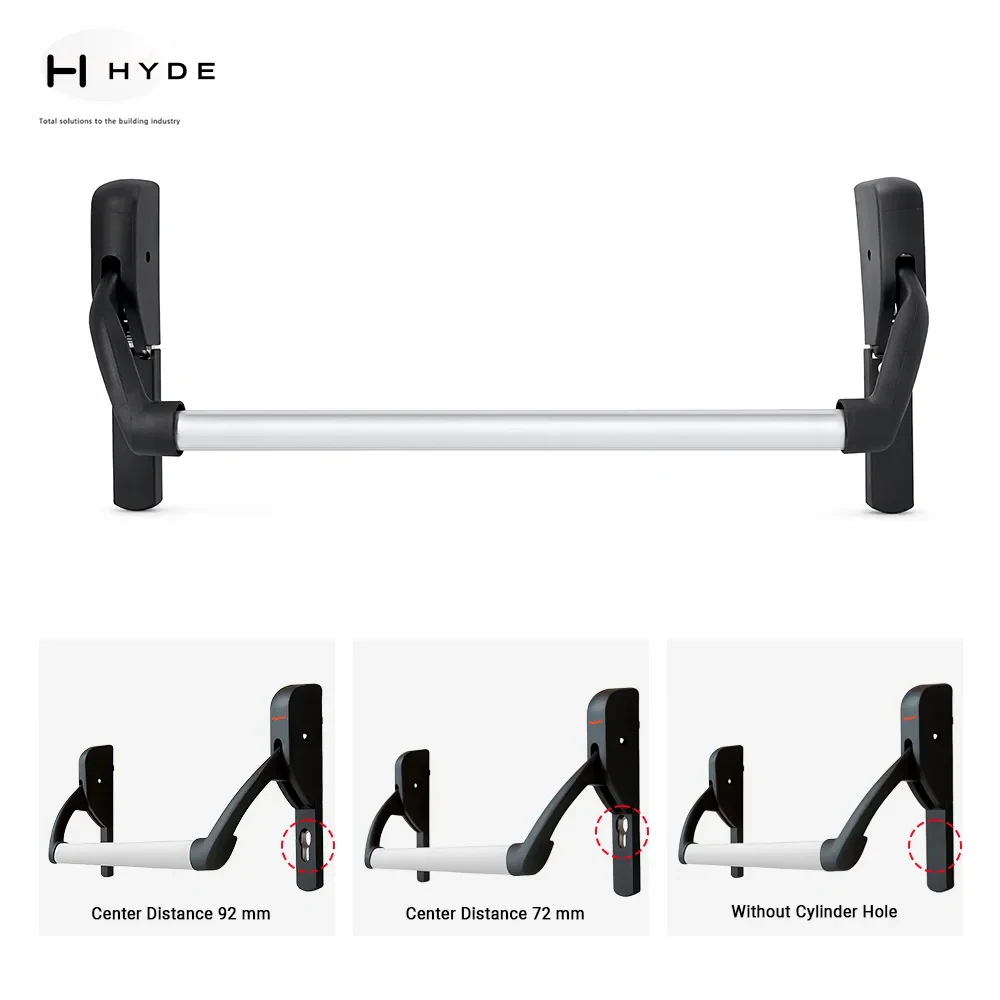
There is no honest single number, because it depends on how many moulds a part needs and how many trials it takes. The one case we can describe in full is our own 311 exit device: it needed three moulds (ABS, stamped steel and die-cast zinc), which were cut in three months, followed by five months of trials and correction before the tool could be trusted to run. A single-part change on an existing tool is far shorter. Ask with your drawing and you get a schedule for that part, not a generic promise.
Minimum orders and samples
For our standard models, most minimum orders fall between 300 and 5,000 pieces, and production lead time starts at 30 days from order confirmation. A new tooled part is different: the minimum that makes the run worthwhile depends on the part and the tool, so it is quoted per project. Samples of a stocked model usually ship within days; samples of a new part come off the tool after the trials.
Who is responsible for the dimensions
We make the part to the drawing both sides approved, and we measure it against that drawing before the sample goes out. You are responsible for the drawing being right for your doors and your market; we are responsible for the part matching the drawing, and the retained sample is what settles it. If you do not have a drawing, we can produce one from your sample, and you approve it before any steel is cut.
Two examples
The 311 exit device exists because a customer brought us a sample of something we did not make. We developed it on our own moulds, which is why its geometry can still be changed for the next customer: it already carries both 72mm and 92mm cylinder centers.
The AR-4 collection is a set of mortise lock bodies configured for the Argentine market: the AR4-101, AR4-110, AR4-140 and the AR4-1121 hook-bolt lock, each with brass or copper-plated zinc latch options and zinc alloy or brass keys. It is a product line made for one country's doors, which is exactly the kind of request this guide is about.
What we will not promise
We do not claim to make anything, and we do not quote lead times or prices before we have seen the part. Send the drawing or the sample, the market and the quantity, and the first reply will tell you which row your request belongs to, and what it takes.
Questions this answers
Can you make custom door hardware to our drawing?
Yes, within what our moulds and processes can make. Send a drawing, a sample or a photograph with the market and quantity. Hole spacing, backset, lever shape, finish and markings can all be changed; some need only process settings, others a new mould, and the first reply tells you which.
How long does a new mould take?
It depends on the part. Our 311 exit device needed three moulds, cut in three months, then five months of trials and correction. A change to a single part on an existing tool is far shorter. Send the drawing and you get a schedule for that part.
What is the minimum order for a custom part?
On standard models most minimums fall between 300 and 5,000 pieces. For a new tooled part the minimum depends on the part and the tool, so it is quoted per project, together with the tooling cost and who owns the mould.
About Canton Hyland — Canton Hyland manufactures panic exit devices, locks and architectural door hardware for commercial and institutional projects, supplying specifiers and distributors internationally.