
Fitting a Euro Cylinder: Five Steps, and the Two Everyone Skips
A euro cylinder goes in and out through the lock case, held by one screw, and the whole job takes two minutes once the cylinder is the right length. Almost every failed fitting is one of two things: the cam was not turned before it was pushed through, or nobody tried the key with the door shut.
Insight
Johnson LiuDigital Communications, Canton HylandMA Digital Media, Johns Hopkins University
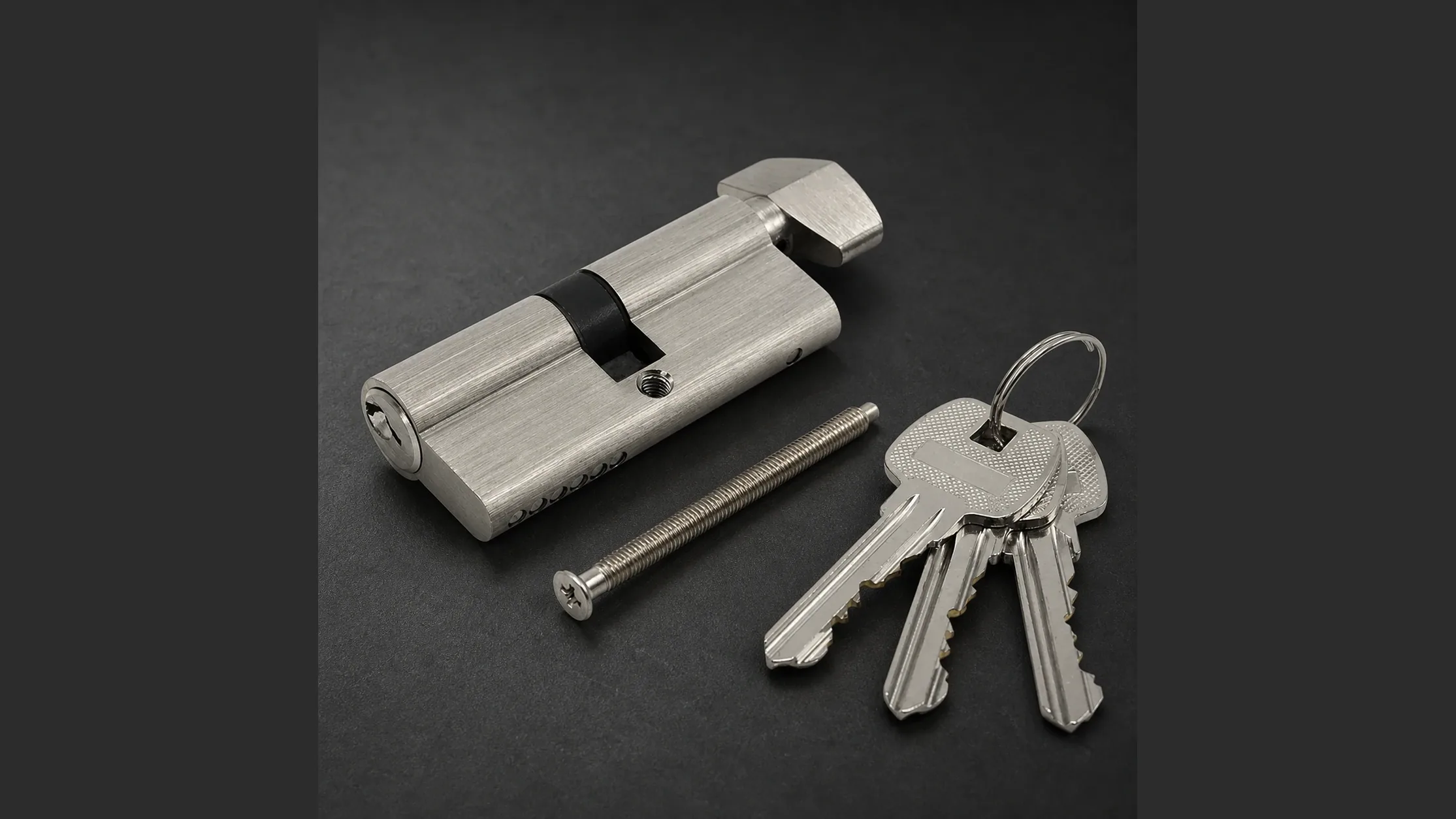
The euro profile exists so that a lock case and the thing that unlocks it can be separate products, made by different factories, replaced independently. That is why the same shape turns up on a door in Buenos Aires and a door in Kraków, and it is why fitting one is a two-minute job rather than a carpentry job. The whole cylinder passes through the lock case from one face of the door and is held by a single screw. Nothing else fastens it.
Before any of that, the cylinder has to be the right length, and that is a measuring job rather than a fitting job, it is covered separately in our note on why 70 is the total and not the split. Everything below assumes you are holding a cylinder that already suits the door. If you are not, no amount of care at the door will help: a cylinder 5mm (3/16") too short will not turn, and one 10mm (3/8") too long is a security problem rather than an inconvenience.
Step one, remove what is there. Put the key in the old cylinder and turn it about fifteen to twenty degrees, far enough that the cam, the small bar underneath that actually throws the bolt, is drawn back inside the profile. The cam sticks out below the barrel; while it does, the cylinder cannot pass through the lock case. Most seized removals are not seized at all, they are a cam still standing proud.
Step two, take out the fixing screw. It sits in the edge of the door, in the lock case faceplate, level with the middle of the cylinder, one screw, usually the only thing on that faceplate that is not holding the lock itself in. With the screw out and the key still turned, the cylinder draws out by the key. If it does not move, the cam is not clear; turn the key a little further rather than pulling harder.
Step three, offer the new one the same way. Key in, cam turned clear, slide it through from the outside face. Step four, fit the screw. It passes through the center of the cylinder (through the cam's own axis) so it will only enter when the cylinder is at the exact depth. That resistance is a feature: a screw that goes in easily at the wrong depth would leave the cylinder loose. Tighten it firmly and stop there. It is a small screw in brass, and it is the part that shears if you treat it like a structural fixing.
Step five is the one that decides whether the door is secure, and it takes ten seconds: look at how far the cylinder stands out from the escutcheon or handle rose. Flush to about three millimeters proud is right. More than that gives a tool something to grip, and a cylinder that can be gripped can be snapped, which is the single most common way a euro-profile door is opened without a key. Too far recessed is a different failure: the key does not seat and the rose fouls the barrel. If the projection is wrong, the cylinder is the wrong length or the wrong split, and no amount of tightening fixes it.
Now the two steps everyone skips. The first: test the key from BOTH faces, and test the thumbturn if there is one, before you put the handles back. The second, and this is the one that comes back as a complaint: test it again with the door CLOSED. A door under its own weight sits differently in the frame than it does swinging open, and a latch or deadbolt that clears comfortably on an open door can bind against a strike that has moved two millimeters. Every cylinder we have ever had returned as faulty and tested fine on the bench was this.
What we supply and what you should confirm with us. Our cylinders are solid brass, in euro profile, and the catalog carries nine overall lengths, 45, 47, 54, 56, 60, 65, 70, 80 and 90mm (3-9/16"), the length being the leading figure of the model number. What the catalog does not publish for every model is the split, the cam type and the keyway, so send the door thickness and what is mounted on each face and we will confirm all three against the model before you order. If the doors are going to be keyed alike or master keyed, settle that in the same conversation, the keyway has to be common across the whole system and it cannot be changed later.
When it will not come out
One of the queries that reaches this page is worth quoting in full, because it is somebody standing at a door right now: "euro profile cylinder removal, door unlocked, retaining screw, cam alignment". That is four separate things going wrong at once, and they have one cause between them.
The cylinder only slides out when the cam (the flat bar on the underside, the part that actually throws the bolt) is turned to sit inside the profile outline. If the cam projects past the profile by even a millimeter, it catches on the lock case and the cylinder will not move, no matter how hard it is pulled.
So the sequence, when it is stuck:
The fixing screw must be fully out, not loosened: it is a long machine screw through the faceplate in the edge of the door, and on a thick door it can be 60mm or more. Half a turn left in the thread is enough to hold the cylinder. Take it right out and put it somewhere, it is the one part that never comes with the new cylinder.
The key must be in, and turned, not at rest: about fifteen to twenty degrees, which is less than it feels. At rest the cam sits proud. Turned too far, it comes proud on the other side. There is a window of a few degrees where it clears, and finding it is a matter of turning slowly while pulling gently rather than turning hard.
"Door unlocked" is the trap in that query. An unlocked door feels like the right state and often is not. What matters is the cam position, not the bolt position, and on some lock cases the cam sits proud precisely when the door is unlocked. If it will not move with the door unlocked, try it with the latch held back and the key turned the other way.
Pull straight, from the outside face: the cylinder comes out the way it went in. Levering it sideways bends the cam and then it will never clear.
If all four are right and it still will not move, stop. A cylinder that is seized in the case is usually a case problem rather than a cylinder problem, and forcing it turns a ten-minute job into a new lock case.
Cam alignment on the way back in
The same geometry going the other way, and one extra thing that catches people.
Turn the key on the new cylinder until the cam is inside the profile, slide it through from the outside, and then (before the fixing screw) look through the screw hole in the faceplate. You should see the threaded hole in the cylinder body lined up behind it. If you see metal instead of a hole, the cylinder is a few millimeters out and forcing the screw will cut a new thread in brass.
That misalignment has two usual causes. The cylinder is in from the wrong face, so the halves are reversed. Or it is the wrong length and the screw hole simply cannot reach.
Once the screw starts by hand, it is aligned. Never start that screw with a driver, brass takes a cross-thread without complaint and you will not feel it happen.
The three tests before you put the tools away
Both faces, with the door open: key from outside, key or turn from inside, four times each way. A cylinder that binds on the fourth turn will bind on the fortieth.
Both faces, with the door closed: this is the one people skip, and it is where a wrong length shows up. A cylinder that works open and binds closed is being squeezed by the escutcheon or is fouling the keep.
Withdraw the key at rest, from both faces: a key that will not come out at zero is a cam that is not returning, and it means the cylinder is under load from the fixing screw, back the screw off a quarter turn and retest.
Ten seconds each, thirty seconds in total, at the one moment when fixing anything costs nothing. Every one of those three failures becomes a return visit if it is found later.
One last note for anyone ordering a replacement rather than a new build. A euro cylinder is a standard profile, not a standard product: the profile guarantees it will pass through the case, not that it will match the key you already have, the cam angle your lock expects, or the finish on the rest of the door. Tell us the model you are replacing if you know it, and photograph the old cylinder beside a ruler if you do not. That photograph settles more questions than any form we could send you.
Keep the old cylinder until all three pass. It is the only reference you have for the split if the new one turns out wrong, and it costs nothing to leave it in a drawer for a week.
And if the new one goes into a master key system, keep the old one until the key schedule has been updated as well: the removed cylinder is the physical record of which key opened that door before.
Questions this answers
Why will an old euro cylinder not come out of the door?
Almost always because the cam is still standing proud. Put the key in and turn it about fifteen to twenty degrees (far enough to draw the cam, the small bar underneath that throws the bolt, back inside the profile) and take out the single fixing screw in the door edge. With the screw out and the key still turned, the cylinder draws out by the key. If it does not move, turn the key a little further rather than pulling harder. Most seized removals are not seized at all.
How far should a euro cylinder stand out from the escutcheon?
Flush to about three millimeters proud. More than that gives a tool something to grip, and a cylinder that can be gripped can be snapped, which is the single most common way a euro-profile door is opened without a key. Too far recessed is a different failure: the key does not seat and the rose fouls the barrel. If the projection is wrong the cylinder is the wrong length or the wrong split, and no amount of tightening fixes it.
Which fitting steps are the ones people skip?
Two. Testing the key from both faces, and the thumbturn if there is one, before the handles go back on. And then testing it again with the door closed, a door under its own weight sits differently in the frame than it does swinging open, and a latch or deadbolt that clears comfortably on an open door can bind against a strike that has moved two millimeters. Every cylinder we have had returned as faulty and tested fine on the bench was this.
What should you send us when ordering a replacement cylinder?
The door thickness and what is mounted on each face, so we can confirm the split, the cam type and the keyway against the model, the catalog publishes the nine overall lengths but not those three for every model. If you are replacing an existing cylinder, tell us the model if you know it and photograph the old one beside a ruler if you do not. That photograph settles more questions than any form we could send you.
عن Canton Hyland — تصنع Canton Hyland أجهزة الخروج الطارئ والأقفال وأجهزة الأبواب المعمارية للمشاريع التجارية والمؤسسية، وتورّدها لواضعي المواصفات والموزعين حول العالم.